
Comparison EcoFlow RIVER 3 UPS vs BLUETTI AC2P
Add to comparison | 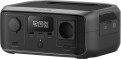 | 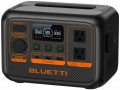 |
|---|---|---|
| EcoFlow RIVER 3 UPS | BLUETTI AC2P | |
from $586.00 | from $159.00 | |
| User reviews | ||
| TOP sellers | ||
The River 3 model has a 20ms switching speed, while the River 3 UPS model has a 10ms switching speed. In model River 3 the UPS switching speed is 20 ms, and in model River 3 UPS it is 10 ms. | ||
| In box | charging station | charging station |
| Rated power | 300 W | 300 W |
| Peak power | 600 W | 600 W |
| Output waveform | sinusoid (PSW) | sinusoid (PSW) |
| UPS function |  | |
| Switchover time to battery | 10 ms | 20 ms |
Outputs | ||
| Sockets (230 V) | 1 | 1 |
| USB-A | 2 pcs 5В/2.4А 12 W | 2 pcs 5В/2.4А 12 W |
| USB-C | 1 pcs 3 A, 5 A 100 W | 1 pcs 3 A, 5 A 100 W |
| Car cigarette lighter | | |
Inputs (station charging) | ||
| From solar panels | | |
| Input port XT60 | | |
| Add. ports | C13/14 (charging) | |
Battery and charging time | ||
| Battery type | LiFePO4 | LiFePO4 |
| Battery capacity | 245 Wh | 230.4 Wh |
| Charging cycles | 3000 | 3000 |
| Charging time (socket) ≈ | 60 min | 70 min |
| Charging time (solar panel) ≈ | 156 min | 90 min |
| Charging time (cigarette lighter) ≈ | 168 min | |
| Charging power (socket) | 320 W | 270 W |
| Charging power (solar panel) | 110 W | 200 W |
| Charging power (cigarette lighter) | 100 W | 96 W |
General | ||
| Smartphone synchronization | Bluetooth | |
| PSU | built into the body | built into the body |
| Display | | |
| Carrying handle | | |
| Operating temperature | 0 °C ~ +45 °C | 0 °C ~ +40 °C |
| Dimensions (LxWxH) | 254x210x112 mm | 250x157x175 mm |
| Weight | 3.5 kg | 3.6 kg |
| Warranty | 5 years | |
| Added to E-Catalog | november 2024 | may 2024 |


Compare EcoFlow RIVER 3 UPS and BLUETTI AC2P
You may be interested in
My comparisons
EcoFlow RIVER 3 UPS often compared


BLUETTI AC2P often compared


Glossary
Switchover time to battery
The delay (usually in milliseconds) between the power going out from the outlet and the moment when the station starts feeding connected devices from its battery, maintaining "pass-through" power. The shorter this time, the higher the chance that devices won't notice the drop at all: for routers, cameras, NAS, and PCs, this is critical because a long pause can cause a reboot, loss of connection, or even filesystem errors. Essentially, this is the same parameter as in a classic UPS, but for charging stations, it greatly depends on implementation: models with a more "UPS-like" switching scheme switch considerably faster, while some stations formally have a UPS mode but actually create a noticeable break or activate the output only after "realizing" the network's loss. In practice, this point helps distinguish a charging station that is truly suitable as a UPS for sensitive electronics from an option "for lights and charging": for example, for home internet and video surveillance, minimal switching time is important, while for lamps, charging phones, or a heater, a brief pause is typically not critical.
Add. ports
Additional input connectors provided in the design of the charging station in addition to those described above.
Battery capacity
Nominal battery capacity, in fact - the amount of energy that is supposed to be stored. The larger it is, the longer the battery life of the charging station will be, all other things being equal. On the other hand, this parameter also affects the dimensions, weight and price of the battery, despite the fact that an energy-intensive battery is not always required. By the indicator of capacity in watt-hours, you can compare batteries with each other.
Charging time (socket) ≈
Time to charge the portable power station from a fully discharged state to 100% charge when using the power adapter from a household outlet. This refers to the original battery and standard charger.
Charging time (solar panel) ≈
Time spent on a full charge when using the original panel in bright sunlight. In cloudy weather, the charging time of the device from the solar panel can be strikingly different downwards.
Charging time (cigarette lighter) ≈
The time required to fully (from zero to 100%) charge the battery, provided that power is supplied to the charging station from the car's cigarette lighter socket (12 V).
Charging power (socket)
The power at which, in normal mode, the portable power station is charged from a household outlet when using the original power supply.
Charging power (solar panel)
The power in watts provided when charging a device from a solar panel.
The higher the charging power, all other things being equal, the less time it will take to replenish the energy reserves in the cells of the device's own battery. This section provides the maximum power value that the charging station can accept. Accordingly, this indicator is supposed to be taken into account when choosing compatible solar panels.
The higher the charging power, all other things being equal, the less time it will take to replenish the energy reserves in the cells of the device's own battery. This section provides the maximum power value that the charging station can accept. Accordingly, this indicator is supposed to be taken into account when choosing compatible solar panels.
Charging power (cigarette lighter)
The power normally received by the charging station when connected from the car's cigarette lighter socket (12 V).