
Comparison EcoFlow RIVER 3 UPS vs EcoFlow RIVER 3
Add to comparison | 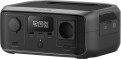 |  |
|---|---|---|
| EcoFlow RIVER 3 UPS | EcoFlow RIVER 3 | |
from $586.00 | Compare prices 2 | |
| TOP sellers | ||
The River 3 model has a 20ms switching speed, while the River 3 UPS model has a 10ms switching speed. In model River 3 the UPS switching speed is 20 ms, and in model River 3 UPS it is 10 ms. | The River 3 model has a 20ms switching speed, while the River 3 UPS model has a 10ms switching speed. In model River 3 the UPS switching speed is 20 ms, and in model River 3 UPS it is 10 ms. | |
| In box | charging station | charging station |
| Rated power | 300 W | 300 W |
| Peak power | 600 W | 600 W |
| Output waveform | sinusoid (PSW) | sinusoid (PSW) |
| UPS function |  | |
| Switchover time to battery | 10 ms | 20 ms |
Outputs | ||
| Sockets (230 V) | 1 | 1 |
| USB-A | 2 pcs 5В/2.4А 12 W | 2 pcs 5В/2.4А 12 W |
| USB-C | 1 pcs 3 A, 5 A 100 W | 1 pcs 3 A, 5 A 100 W |
| Car cigarette lighter | | |
Inputs (station charging) | ||
| From solar panels | | |
| Input port XT60 | | |
| Add. ports | C13/14 (charging) | C13/14 (charging) |
Battery and charging time | ||
| Battery type | LiFePO4 | LiFePO4 |
| Battery capacity | 245 Wh | 245 Wh |
| Charging cycles | 3000 | 3000 |
| Charging time (socket) ≈ | 60 min | 60 min |
| Charging time (solar panel) ≈ | 156 min | 156 min |
| Charging time (cigarette lighter) ≈ | 168 min | 168 min |
| Charging power (socket) | 320 W | 320 W |
| Charging power (solar panel) | 110 W | 110 W |
| Charging power (cigarette lighter) | 100 W | 100 W |
General | ||
| PSU | built into the body | built into the body |
| Display | | |
| Carrying handle | | |
| Operating temperature | 0 °C ~ +45 °C | 0 °C ~ +45 °C |
| Dimensions (LxWxH) | 254x210x112 mm | 254x210x112 mm |
| Weight | 3.5 kg | 3.5 kg |
| Warranty | 2 years | |
| Added to E-Catalog | november 2024 | october 2024 |




Compare EcoFlow RIVER 3 UPS and RIVER 3
Comparing the EcoFlow RIVER 3 UPS charging station and the EcoFlow RIVER 3, it is worth noting that both models have the same nominal and peak power (300 W and 600 W respectively), as well as the same number of outputs and battery type (LiFePO4) with a capacity of 245 Wh. However, the key difference is the switch-over speed of the UPS function: the RIVER 3 UPS model has a switch-over speed of 10 ms, while the RIVER 3 has 20 ms, making the former model more preferable for critical devices. Both devices have similar size and weight (254x210x112 mm and 3.5 kg), as well as the ability to charge from solar panels. Users note the high reliability and ease of use of both models, but the RIVER 3 UPS receives more positive reviews for its quick reaction when switching to UPS.
Price comparison
You may be interested in
My comparisons
EcoFlow RIVER 3 UPS often compared


EcoFlow RIVER 3 often compared


Glossary
Switchover time to battery
The delay (usually in milliseconds) between the power going out from the outlet and the moment when the station starts feeding connected devices from its battery, maintaining "pass-through" power. The shorter this time, the higher the chance that devices won't notice the drop at all: for routers, cameras, NAS, and PCs, this is critical because a long pause can cause a reboot, loss of connection, or even filesystem errors. Essentially, this is the same parameter as in a classic UPS, but for charging stations, it greatly depends on implementation: models with a more "UPS-like" switching scheme switch considerably faster, while some stations formally have a UPS mode but actually create a noticeable break or activate the output only after "realizing" the network's loss. In practice, this point helps distinguish a charging station that is truly suitable as a UPS for sensitive electronics from an option "for lights and charging": for example, for home internet and video surveillance, minimal switching time is important, while for lamps, charging phones, or a heater, a brief pause is typically not critical.
Warranty
Warranties for charging stations usually provide users with protection against manufacturing defects and malfunctions for a certain period, which may vary depending on the manufacturer. Warranty service includes free repair or replacement of components if the problem is not the user's fault. The warranty period can be from one year to several years, and it is important to consider conditions such as correct installation, use of the station for its intended purpose, and compliance with technical requirements.