
Comparison Sahara Table Top vs Enders Polo 2.0
Add to comparison |  | 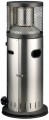 |
|---|---|---|
| Sahara Table Top | Enders Polo 2.0 | |
| Outdated Product | from $390.00 up to $423.60 | |
| TOP sellers | ||
| Power supply | mains | gas |
Specs | ||
| Max. power | 4500 W | 6000 W |
| Heating diameter | 5 m | |
| Gas consumption | 0.43 kg/h | |
| Safety features | tip-over protection | tip-over protection |
General specs | ||
| Installation | floor | floor |
| Dimensions (HxWxD) | 98x54x54 cm | 115x50x50 cm |
| Weight | 7 kg | 14 kg |
| Added to E-Catalog | november 2022 | january 2014 |


Compare Sahara Table Top and Enders Polo 2.0
You may be interested in
Enders Polo 2.0 often compared

Glossary
Power supply
The source from which the patio heater receives the energy it needs to operate.
— Mains. Electric heaters compare favourably with gas ones, first of all, by the ease of switching on: usually, it is enough to plug such a device into a socket. It is much easier and cheaper than providing a gas cylinder. In addition, electrical appliances are easy to use and it is easier to implement some additional functions in them — for example, a timer or a remote control. On the other hand, for several reasons, this option is poorly suited for creating high-power devices — even the most powerful models do not exceed 3000 W. Another drawback is the limited movement due to the presence of a power cord.
— Gas. Heaters use gas burners for heating. The gas source is usually replaceable cylinders; theoretically, connection to a gas pipeline is not excluded, but this option is difficult to implement, requires the participation of specialists, and besides, it practically completely deprives the device of mobility. Cylinders, in turn, will have to be regularly refilled or changed, which creates certain troubles. In general, both options are less convenient than the connection to the electrical network described above. However, gas patio heaters are very popular due to one key advantage: they can easily provide high power in a small size. For comparison: 4000 W, an indicator that electric models do not reach..., is considered almost minimal for gas ones; and in the most powerful devices, the characteristics exceed 10 kW. At the same time, they are much cheaper to operate — both due to the low cost of fuel and due to excellent efficiency. It is also worth noting that gas heaters are not so sensitive to moisture, they do not require special protection.
— Mains. Electric heaters compare favourably with gas ones, first of all, by the ease of switching on: usually, it is enough to plug such a device into a socket. It is much easier and cheaper than providing a gas cylinder. In addition, electrical appliances are easy to use and it is easier to implement some additional functions in them — for example, a timer or a remote control. On the other hand, for several reasons, this option is poorly suited for creating high-power devices — even the most powerful models do not exceed 3000 W. Another drawback is the limited movement due to the presence of a power cord.
— Gas. Heaters use gas burners for heating. The gas source is usually replaceable cylinders; theoretically, connection to a gas pipeline is not excluded, but this option is difficult to implement, requires the participation of specialists, and besides, it practically completely deprives the device of mobility. Cylinders, in turn, will have to be regularly refilled or changed, which creates certain troubles. In general, both options are less convenient than the connection to the electrical network described above. However, gas patio heaters are very popular due to one key advantage: they can easily provide high power in a small size. For comparison: 4000 W, an indicator that electric models do not reach..., is considered almost minimal for gas ones; and in the most powerful devices, the characteristics exceed 10 kW. At the same time, they are much cheaper to operate — both due to the low cost of fuel and due to excellent efficiency. It is also worth noting that gas heaters are not so sensitive to moisture, they do not require special protection.
Max. power
The highest heat output that a patio heater is capable of delivering. This parameter directly determines the area that the device can heat: every 100 W of thermal power approximately corresponds to 1 m2 of the heated area. So, having data on power, it is possible to determine to a certain extent the space covered by the unit.
At the same time, it is worth noting that at high power values, the formula “100 W per 1 m2” is somewhat out of date. This is because when moving away from the heater, heat losses increase, and more power is required to heat distant areas than for close ones. Therefore, for gas models, which have indicators of 4 kW and above, slightly different calculation methods are used.
In addition to all this, it is worth bearing in mind that in models with mains power supply (see above), the maximum power actually corresponds to the total energy consumption of the heater. Therefore, this information will be useful for assessing the expected consumption of electricity and the load on the power mains.
At the same time, it is worth noting that at high power values, the formula “100 W per 1 m2” is somewhat out of date. This is because when moving away from the heater, heat losses increase, and more power is required to heat distant areas than for close ones. Therefore, for gas models, which have indicators of 4 kW and above, slightly different calculation methods are used.
In addition to all this, it is worth bearing in mind that in models with mains power supply (see above), the maximum power actually corresponds to the total energy consumption of the heater. Therefore, this information will be useful for assessing the expected consumption of electricity and the load on the power mains.
Heating diameter
The heating diameter determines the size of the comfort zone around the outdoor heater. If the heating diameter is 10 metres, then the heat will spread 5 metres from the heater in each direction. The heating diameter is closely related to both the heat output of the heater and the fuel consumption.
Gas consumption
Both the diameter of the heating zone and the time of continuous operation of the heater depend on the gas flow. Gas consumption is measured in kilograms per hour (kg/h). On average, a heater with a power of 10 kW consumes about 1 kg/h while heating a zone with a diameter of up to 6-10 m.