
Comparison Earmor M30 vs Earmor M20T
Add to comparison | 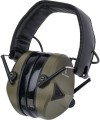 | 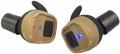 |
|---|---|---|
| Earmor M30 | Earmor M20T | |
| Outdated Product | Outdated Product | |
| TOP sellers | ||
| Design and type | on-ear active | active earplugs |
| Noise Reduction Ratio (NRR) | 22 dB | 26 dB |
| Noise level limit | 82 dB | 82 dB |
| Weight | 380 g | 8 g |
Features | ||
| Audio input |  |  |
| Bluetooth | | |
| Waterproof | IPX5 | IPX4 |
| Helmet compatibility | under helmet | |
| Low profile cups | | |
| Foldable | | |
General | ||
| Control | buttons | buttons |
| Power source | 2xAAA | battery |
| Operating time | 8 h | |
| Auto switch-off | | |
| Operating temperature | -40 °C ~ +60 °C | |
| In box | audio cable | case batteries |
| Added to E-Catalog | january 2024 | january 2024 |


Compare Earmor M30 and M20T
You may be interested in
My comparisons
Earmor M20T often compared


Glossary
Design and type
— Invoices are active. Hearing protection for the shooter in the form of over-ear headphones with a headband or a helmet mount (depending on the specific implementation). Active models are equipped with microphones, amplifiers and speakers - all these electronic components together allow you to transmit speech and environmental sounds that do not exceed a preset volume level. Thus, the shooter hears what is happening around him, and the sound pressure from the shots is reduced. Active tactical headphones are preferable in situations where the ability to hear surrounding sounds and communications is important - hunting, open shooting ranges, when participating in combat operations, etc.
— Passive overhead. Passive over-ear headphones do not use electronic components, but provide hearing protection only due to the physical properties of the materials from which they are made. The ear pads of these headphones are made of sound-absorbing foam, plastic or rubber. It is suggested to use passive headphones when shooting at a shooting range.
— Active earplugs. Hearing protection devices, the name of which comes from the phrase “take care of your ears.” Earplugs are plugs that are inserted directly into the canal of each ear and reduce the volume of gunfire heard. Compared to headphones, earplugs are much more compact, and they...are also compatible with almost any other protective equipment (for example, a full-face mask). Specifically, active earplugs work in the same way as similar shooting headphones - to minimize the sound pressure from shots and ensure the permeability of surrounding sounds, they use special electronic components (microphones, signal amplifiers and speakers).
— Passive earplugs. Passive earplugs are ordinary earplugs that provide noise absorption of all incoming sounds (including noise from gunshots) due to the physical properties of the materials used. Note that to achieve the maximum degree of noise insulation, passive earplugs can be used in conjunction with shooting headphones.
— Passive overhead. Passive over-ear headphones do not use electronic components, but provide hearing protection only due to the physical properties of the materials from which they are made. The ear pads of these headphones are made of sound-absorbing foam, plastic or rubber. It is suggested to use passive headphones when shooting at a shooting range.
— Active earplugs. Hearing protection devices, the name of which comes from the phrase “take care of your ears.” Earplugs are plugs that are inserted directly into the canal of each ear and reduce the volume of gunfire heard. Compared to headphones, earplugs are much more compact, and they...are also compatible with almost any other protective equipment (for example, a full-face mask). Specifically, active earplugs work in the same way as similar shooting headphones - to minimize the sound pressure from shots and ensure the permeability of surrounding sounds, they use special electronic components (microphones, signal amplifiers and speakers).
— Passive earplugs. Passive earplugs are ordinary earplugs that provide noise absorption of all incoming sounds (including noise from gunshots) due to the physical properties of the materials used. Note that to achieve the maximum degree of noise insulation, passive earplugs can be used in conjunction with shooting headphones.
Noise Reduction Ratio (NRR)
An indicator of how much volume in decibels tactical headphones cut during operation. Acoustic efficiency NRR (Noise Reduction Rating) is the sound absorption characteristics according to the requirements of the American quality standard. A similar standard in the European style is called SRR (about it, see above).
NRR is an assessment of how effectively a hearing protection device can reduce ambient noise levels. If headphones are marked with the “NRR 30 dB” mark, then they can reduce the level of external sounds by 30 dB. The higher the NRR value, the more effective the tactical headphones are at protecting the hearing aid.
NRR is an assessment of how effectively a hearing protection device can reduce ambient noise levels. If headphones are marked with the “NRR 30 dB” mark, then they can reduce the level of external sounds by 30 dB. The higher the NRR value, the more effective the tactical headphones are at protecting the hearing aid.
Audio input
Connector for connecting external audio sources to headphones. As a rule, the role of audio input is performed by a 3.5 mm mini-Jack. Tactical headphones with an incoming audio connector provide the ability to combine sounds - both from the environment through built-in microphones, and transmitted information from external sources (for example, a walkie-talkie), which can be useful in tactical operations.
Bluetooth
The presence of a Bluetooth wireless communication module in the headphones. It serves for various tasks: connecting external audio sources or radio stations, pairing with mobile devices (smartphones and tablets), remotely controlling the functions of tactical headphones. It is advisable to clarify the specific implementation of Bluetooth separately.
Waterproof
Tactical headphones are protected from dust and moisture. This paragraph also clarifies the level of such protection in accordance with the IP standard.
The degree of protection is usually denoted by two numbers according to the IP standard. The first number corresponds to dust protection. As a rule, tactical headphones indicate their maximum ratings of “5” and “6” (dust resistance without complete closure and complete dust resistance, respectively). The second digit indicates the degree of protection against water. For moisture-resistant models with splash protection, markings up to the number “6” are used. Full water resistance corresponds to levels 7 (possibility of immersion under water to a depth of 1 m for half an hour) or 8 (possibility of prolonged operation under water at a depth of more than 1 m). Thus, the maximum degree of protection according to this standard is IP68, completely sealed. There are also IPX8 markings, where the first digit is not indicated - this means that the headphones have not undergone official certification for dust resistance. However, water resistance level 8 automatically entails a sealed case that is also impenetrable to dust.
The degree of protection is usually denoted by two numbers according to the IP standard. The first number corresponds to dust protection. As a rule, tactical headphones indicate their maximum ratings of “5” and “6” (dust resistance without complete closure and complete dust resistance, respectively). The second digit indicates the degree of protection against water. For moisture-resistant models with splash protection, markings up to the number “6” are used. Full water resistance corresponds to levels 7 (possibility of immersion under water to a depth of 1 m for half an hour) or 8 (possibility of prolonged operation under water at a depth of more than 1 m). Thus, the maximum degree of protection according to this standard is IP68, completely sealed. There are also IPX8 markings, where the first digit is not indicated - this means that the headphones have not undergone official certification for dust resistance. However, water resistance level 8 automatically entails a sealed case that is also impenetrable to dust.
Helmet compatibility
This paragraph specifies the method of using headphones in conjunction with a tactical helmet or helmet (if such a possibility is provided in principle). Thus, many models can be worn under a helmet - under-helmet earcups usually have a more compact design, a flat headband and a low profile to fit comfortably under tactical head gear. Models of the helmet-mount type are fixed to the helmet using special guides for the rails of the OPS-CORE FAST, TOR-D, etc. systems.
Low profile cups
Low-profile cups in the design of tactical earmuffs have a flatter, more compact, and thinner profile compared to traditional models. They are designed to minimize protrusions and bulk for comfortable earmuffs wear with a helmet or protective headgear (see above).
Foldable
The ability to compactly fold tactical headphones for easy storage and carrying during non-working hours. Folded headphones take up minimal space, and the likelihood of damage is minimized.
Power source
The type of batteries used by tactical headphones to ensure battery life. Technically, these can be either replaceable elements of a standard size or built-in batteries.
- AA batteries. Powered by replaceable AA size cells, also known as AA batteries. Such elements can be either disposable or rechargeable. The advantage of this option is the ability to quickly replace dead batteries, but the user will need to either regularly purchase disposable batteries or spend money on batteries with a charger.
— AAA batteries. Such elements are almost completely similar to the AA described above and outwardly differ from them only in their reduced size. In common parlance, AAA batteries are commonly called “pinky” or “mini-finger”.
— Built-in battery. One of the advantages of this type of power supply over batteries is that the built-in battery is a priori included in the standard package of tactical headphones, and when the charge is exhausted, it is enough to charge it again. Built-in rechargeable batteries often have a higher capacity than batteries. On the other hand, if such a battery runs out, it cannot be quickly replaced: it needs charging, and this requires time and external power.
- AA batteries. Powered by replaceable AA size cells, also known as AA batteries. Such elements can be either disposable or rechargeable. The advantage of this option is the ability to quickly replace dead batteries, but the user will need to either regularly purchase disposable batteries or spend money on batteries with a charger.
— AAA batteries. Such elements are almost completely similar to the AA described above and outwardly differ from them only in their reduced size. In common parlance, AAA batteries are commonly called “pinky” or “mini-finger”.
— Built-in battery. One of the advantages of this type of power supply over batteries is that the built-in battery is a priori included in the standard package of tactical headphones, and when the charge is exhausted, it is enough to charge it again. Built-in rechargeable batteries often have a higher capacity than batteries. On the other hand, if such a battery runs out, it cannot be quickly replaced: it needs charging, and this requires time and external power.