
Comparison Earmor M20T vs Earmor M20
Add to comparison | 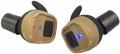 | 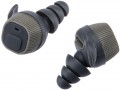 |
|---|---|---|
| Earmor M20T | Earmor M20 | |
| Outdated Product | Outdated Product | |
| TOP sellers | ||
| Design and type | active earplugs | active earplugs |
| Noise Reduction Ratio (NRR) | 26 dB | 22 dB |
| Noise level limit | 82 dB | 82 dB |
| Reaction time | 0.5 с | |
| Weight | 8 g | 8 g |
Features | ||
| Bluetooth |  |  |
| Waterproof | IPX4 | IPX4 |
General | ||
| Control | buttons | buttons |
| Power source | battery | battery |
| Operating time | 8 h | 8 h |
| Auto switch-off | | |
| Operating temperature | -40 °C ~ +60 °C | -20 °C ~ +50 °C |
| In box | case batteries | case batteries |
| Added to E-Catalog | january 2024 | january 2024 |


Compare Earmor M20T and M20
Headphones Earmor M20T and Earmor M20 are active earplugs with similar characteristics but some key differences. The M20T has a noise reduction rating of 26 dB, while the M20 is 22 dB, making the M20T more effective in noisy environments. Both devices have a noise level limit of 82 dB and weigh the same at 8 g. The M20T supports Bluetooth, which the M20 does not, which may be important for users wanting to connect devices wirelessly. Both models have IPX4 water resistance and an operating time of 8 hours. The M20T also operates in a wider temperature range from -40°C to +60°C, while the M20 operates from -20°C to +50°C.
You may be interested in
My comparisons
Earmor M20T often compared


Glossary
Noise Reduction Ratio (NRR)
An indicator of how much volume in decibels tactical headphones cut during operation. Acoustic efficiency NRR (Noise Reduction Rating) is the sound absorption characteristics according to the requirements of the American quality standard. A similar standard in the European style is called SRR (about it, see above).
NRR is an assessment of how effectively a hearing protection device can reduce ambient noise levels. If headphones are marked with the “NRR 30 dB” mark, then they can reduce the level of external sounds by 30 dB. The higher the NRR value, the more effective the tactical headphones are at protecting the hearing aid.
NRR is an assessment of how effectively a hearing protection device can reduce ambient noise levels. If headphones are marked with the “NRR 30 dB” mark, then they can reduce the level of external sounds by 30 dB. The higher the NRR value, the more effective the tactical headphones are at protecting the hearing aid.
Reaction time
Headphone response time to changes in the sound environment. This parameter refers to the interval between the time the noise level exceeds a safe hearing level and the response of the headphones when the external sound is reduced to a safe level. Fast reaction time is important to ensure an immediate protective response to external threats (shots, explosions, etc.).
Bluetooth
The presence of a Bluetooth wireless communication module in the headphones. It serves for various tasks: connecting external audio sources or radio stations, pairing with mobile devices (smartphones and tablets), remotely controlling the functions of tactical headphones. It is advisable to clarify the specific implementation of Bluetooth separately.
Operating temperature
The range of ambient temperatures at which the headphones can function normally. Note that if you go beyond this range, the headphones are unlikely to fail, but their correct operation in such cases is not guaranteed.
As for specific numbers, most modern models have a wide enough operating temperature range to normally withstand both severe frosts (down to about -20 °C) and hot summer heat (up to +50 °C and above). However, it is not advisable to expose even the most “heat-resistant” models to prolonged exposure to the sun: under direct sunlight, the headphone body can become very hot even in cold weather.
As for specific numbers, most modern models have a wide enough operating temperature range to normally withstand both severe frosts (down to about -20 °C) and hot summer heat (up to +50 °C and above). However, it is not advisable to expose even the most “heat-resistant” models to prolonged exposure to the sun: under direct sunlight, the headphone body can become very hot even in cold weather.