
Comparison Hator Vast Junior vs Pro-Gamer D4000
Add to comparison | 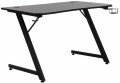 |  |
|---|---|---|
| Hator Vast Junior | Pro-Gamer D4000 | |
| Outdated Product | Outdated Product | |
| TOP sellers | ||
| Form factor | gaming | gaming |
Design | ||
| Dimensions | 1200x700x750 mm | 1200x640x770 mm |
| Height adjustment | in absent | in absent |
| Table top shape | rectangular with recess | rectangular |
| Leg design | Z-shaped | Z-shaped |
| Cable management |  | |
| Cable hole | | |
Features | ||
| RGB backlight |  | |
| Cup holder | | |
| Headphone holder | | |
| Game controller holder | | |
| Max. load | 80 kg | |
| Weight | 17 kg | 31 kg |
| Color | ||
| Added to E-Catalog | october 2023 | september 2023 |


Compare Hator Vast Junior and Pro-Gamer D4000
You may be interested in
My comparisons
Hator Vast Junior often compared


Pro-Gamer D4000 often compared
Glossary
Dimensions
The size of an office desk directly affects how comfortable it is to work: a depth of 60–80 cm is considered optimal so there’s enough space for a laptop, a monitor, and stationery, while the width is chosen between 100 and 160 cm depending on how much equipment and how many accessories you have. For gaming desks, the standard is wider—70–80 cm and 120–180 cm respectively—since you need to fit multiple monitors, a PC tower, peripherals, and still have free space to move. Unlike compact office models, gaming versions often have a rounded front edge or a corner design, which boosts ergonomics. In reality, office options are more common in minimalist interiors for working with documents or a laptop, whereas gaming ones are used in setups with more devices, LED lighting, and accessories.
Table top shape
— Rectangular. The most traditional and versatile format, suitable for office and home workspaces. A rectangular desktop is easy to install, fits harmoniously into any space, and is optimal for users who need a standard work surface without unnecessary elements. This option is convenient for writing, working on a laptop, or setting up a minimal set of equipment.
— Rectangular with cutout. This desktop is ergonomic and creates a more comfortable workspace: due to the recess, the user is positioned closer to the center of the table, providing quick access to the keyboard, mouse, and monitor. This is especially relevant for gamers and professionals who work long hours at a PC, as it reduces strain on the hands and back.
— Corner. Represents an L-shaped solution, allowing for efficient use of the room's corner and significantly increasing usable space. This format is ideal for those who work with multiple monitors, large equipment, or appreciate the organization of the workspace while maintaining easy access to all areas of the table.
— Rectangular with cutout. This desktop is ergonomic and creates a more comfortable workspace: due to the recess, the user is positioned closer to the center of the table, providing quick access to the keyboard, mouse, and monitor. This is especially relevant for gamers and professionals who work long hours at a PC, as it reduces strain on the hands and back.
— Corner. Represents an L-shaped solution, allowing for efficient use of the room's corner and significantly increasing usable space. This format is ideal for those who work with multiple monitors, large equipment, or appreciate the organization of the workspace while maintaining easy access to all areas of the table.
RGB backlight
Built-in lighting function for office and gaming desks. Addressable LED modules with a controller are integrated into the design of the tabletop, edges, and/or supports, creating an even "bias lighting" for the wall and working surface. Modes and brightness can be adjusted via a remote control, USB controller, or PC and smart home software. A diverse palette helps choose the right color for various needs. For instance, static white shades are great for work, while dynamic effects and color event indications are suitable for gaming and streaming. Compared to no lighting or monochrome, RGB provides precise color temperature, reduces contrast around the monitor in the dark, improves surface readability, and allows the desk to synchronize with peripherals.
Game controller holder
A wall mount or mini-dock under the edge of the countertop, which frees up the surface and protects the controller from falls and spills. The construction is usually metallic with a soft pad, sometimes with two slots for a pair of gamepads and a channel for a charging cable. Compared to a desktop stand, such a holder doesn't take up space on the mat and doesn't interfere with the mouse, while compared to sticky "universal" hooks, it wins with its sturdy attachment and resistance to heavy models (Xbox/PlayStation/Switch Pro). In practice, it offers quick access during a match, neat storage of two controllers in a family setup, and charging from the table hub.
Max. load
The weight capacity that the tabletop and frame can safely support without bending or becoming unstable. Manufacturers typically specify the static (evenly distributed) and less often the dynamic load when adjusting the height. The strongest influence in practice is the frame design, presence of a crossbar, thickness and material of the tabletop, as well as the overhang of supports: fixed desks usually have a higher margin, while adjustable ones have a lower margin at higher positions due to leverage. It is important to understand that monitor brackets, racing wheel clamps, and placing a computer at the edge create point loads and high moments, so identical "80 kg" ratings on paper may be safe in one scenario but lead to vibrations in another. A sensible guideline is to distribute weight closer to the center and supports, avoid sitting on the edge, and for setups with two 27–32″ monitors on mounts, speakers, and a printer, choose a desk with a sturdy steel frame and reserve in static load capacity to have a buffer during everyday use.