
Comparison Roland E-X10 vs Roland E-X30
Add to comparison | 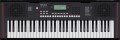 |  |
|---|---|---|
| Roland E-X10 | Roland E-X30 | |
| Outdated Product | Outdated Product | |
| TOP sellers | ||
| Type | synthesizer (rompler) | synthesizer (rompler) |
Keys | ||
| Number of keys | 61 | 61 |
| Size | full size | full size |
| Mechanics | active | active |
| Rigidity | semi-weighted | semi-weighted |
Specs | ||
| Polyphony | 64 voices | 256 voices |
| Built-in timbres | 610 шт | 689 шт |
| Auto accompaniment |  | |
| Accompaniment styles | 207 шт | 347 шт |
| Tempo change | 5 – 280 | 30 – 280 |
| Metronome | | |
| Sequencer (recording) | | |
| Built-in compositions | | |
Effects and control | ||
| Octave shift | | |
| Reverberation | | |
| Chorus | | |
| Transposition | | |
| Pitch controller | | |
Connectors | ||
| Inputs | USB to device (type A) | |
| Microphone | 1 pcs | |
| Connectable pedals | 1 шт | 1 шт |
| Outputs | USB to host (type B) headphones | USB to host (type B) headphones |
| Linear outputs | 2 | 2 |
In box | ||
| In box | music stand PSU | music stand PSU |
General | ||
| Built-in acoustics | 5 W | 20 W |
| Number of bands | 1 | 2 |
| Display | monochrome | monochrome |
| Autonomous power supply | aA batteries | aA batteries |
| Operating hours | 2 h | |
| Dimensions (WxHxD) | 947x100x317 mm | 956x133x360 mm |
| Weight | 3.9 kg | 6.2 kg |
| Color | ||
| Added to E-Catalog | october 2023 | august 2021 |


Compare Roland E-X10 and E-X30
You may be interested in
My comparisons
Roland E-X10 often compared


Glossary
Polyphony
The polyphony supported by a synthesizer, in other words, is the number of “voices” (tone generators) that can simultaneously sound on it.
This parameter is often described as the number of notes that can be played simultaneously on the keyboard. However, this is not entirely true due to the fact that in many timbres one note can activate several tone generators. As a result, for example, to play a chord of 3 notes in a timbre with 4 tone generators per note, polyphony of at least 3 * 4=12 voices is required. In addition, Auto Accompaniment and Preset Songs (see related sections) also use tone generators, requiring even more voices to work effectively with these features.
The minimum value for a more or less functional modern synthesizer is polyphony for 32 voices — and even then such an instrument can be used mainly for initial training and simple melodies. For a more solid application, it is desirable to have at least 50 – 60 voices, and in professional models (in particular, workstations where you have to deal with several audio tracks at once), there are models with polyphony for 150 tone generators or more.
In general, a more advanced synthesizer is likely to have more extensive polyphony, however, it is only possible to evaluate the class of an instrument by this parameter very approximately — instruments with the same number of voices can differ greatly in level. The only exception to this rule are children's synthesizers (see "T...ype"), which support up to 20 voices.
This parameter is often described as the number of notes that can be played simultaneously on the keyboard. However, this is not entirely true due to the fact that in many timbres one note can activate several tone generators. As a result, for example, to play a chord of 3 notes in a timbre with 4 tone generators per note, polyphony of at least 3 * 4=12 voices is required. In addition, Auto Accompaniment and Preset Songs (see related sections) also use tone generators, requiring even more voices to work effectively with these features.
The minimum value for a more or less functional modern synthesizer is polyphony for 32 voices — and even then such an instrument can be used mainly for initial training and simple melodies. For a more solid application, it is desirable to have at least 50 – 60 voices, and in professional models (in particular, workstations where you have to deal with several audio tracks at once), there are models with polyphony for 150 tone generators or more.
In general, a more advanced synthesizer is likely to have more extensive polyphony, however, it is only possible to evaluate the class of an instrument by this parameter very approximately — instruments with the same number of voices can differ greatly in level. The only exception to this rule are children's synthesizers (see "T...ype"), which support up to 20 voices.
Built-in timbres
The number of built-in sounds provided in the synthesizer.
The number of timbres is often described as the number of instruments that a given model can imitate. However, this is not entirely true — rather, this parameter can be called "the number of instruments and sound effects." For example, the same instrument — an electric guitar — with different "gadgets" (distortion, overdrive) will sound differently, and in the synthesizer each such gadget will be considered a separate timbre. The “drums” timbre usually combines different types of drums and other percussion instruments — in other words, it allows you to portray both the “bass drum” and the cymbals without switching settings, just by pressing the desired keys. And some timbres may not have analogues among real instruments at all.
The more built-in timbres, the more extensive the possibilities of the synthesizer, the more diverse the sounds that can be extracted from it. At the same time, in high-end models like workstations (see "Type"), this number can reach 1000 or even more.
The number of timbres is often described as the number of instruments that a given model can imitate. However, this is not entirely true — rather, this parameter can be called "the number of instruments and sound effects." For example, the same instrument — an electric guitar — with different "gadgets" (distortion, overdrive) will sound differently, and in the synthesizer each such gadget will be considered a separate timbre. The “drums” timbre usually combines different types of drums and other percussion instruments — in other words, it allows you to portray both the “bass drum” and the cymbals without switching settings, just by pressing the desired keys. And some timbres may not have analogues among real instruments at all.
The more built-in timbres, the more extensive the possibilities of the synthesizer, the more diverse the sounds that can be extracted from it. At the same time, in high-end models like workstations (see "Type"), this number can reach 1000 or even more.
Accompaniment styles
The number of auto accompaniment styles (see above) originally provided in the synthesizer, in other words, the number of accompaniment options available to the user.
The more extensive this set, the higher the probability of finding among these melodies suitable options for a particular case. At the same time, the abundance of styles in itself is not yet a 100% guarantee that among them there will be a suitable one, especially since different synthesizer models can differ markedly in a specific set of melodies. So the list does not hurt to clarify before buying. Also note that the situation can be corrected by user styles (see below) — many synthesizers with auto accompaniment support them.
The more extensive this set, the higher the probability of finding among these melodies suitable options for a particular case. At the same time, the abundance of styles in itself is not yet a 100% guarantee that among them there will be a suitable one, especially since different synthesizer models can differ markedly in a specific set of melodies. So the list does not hurt to clarify before buying. Also note that the situation can be corrected by user styles (see below) — many synthesizers with auto accompaniment support them.
Tempo change
The range in which you can change the tempo of the programme played by the synthesizer — auto accompaniment, lesson tune (see above), metronome (see below), recorded sample, etc.
Pace is measured in beats per minute. Changing it allows you to adjust the speed of the synthesizer to the specifics of the situation — for example, slightly slow down the tutorial if it is too hard to master at the initial pace. The wider the range of tempo adjustment, the more options the musician has to choose from, especially in the area of very slow and very fast tempos.
Note that the traditional range of musical tempos covers values from 40 beats / min (“grave”, “very slowly”) to 208 beats / min (“prestissimo”, “very fast”), however, in synthesizers it can be more extensive — for example, 30 – 255 bpm.
Pace is measured in beats per minute. Changing it allows you to adjust the speed of the synthesizer to the specifics of the situation — for example, slightly slow down the tutorial if it is too hard to master at the initial pace. The wider the range of tempo adjustment, the more options the musician has to choose from, especially in the area of very slow and very fast tempos.
Note that the traditional range of musical tempos covers values from 40 beats / min (“grave”, “very slowly”) to 208 beats / min (“prestissimo”, “very fast”), however, in synthesizers it can be more extensive — for example, 30 – 255 bpm.
Inputs
— mini-Jack (3.5 mm). Line-level analogue audio input using a 3.5mm mini-jack. The line input itself is used to connect an external analogue audio signal to the synthesizer — for example, from a computer sound card. The use of such a connection can be different: playing accompaniment through the built-in speakers of the instrument, switching the signal to an external amplifier with “mixing” the sound of the synthesizer itself into it, etc. Specifically, the 3.5 mm mini-Jack connector is small in size, it is popular mainly in portable equipment and inexpensive stationary devices — “serious” audio equipment is usually equipped with more reliable connectors, like Jack (see below). As a result, an input with this type of connector is typical mainly for entry-level synthesizers.
— Jack (6.35 mm). Line-level analogue audio input using a 6.35 mm jack. By purpose, such an input is completely similar to the input with a 3.5 mm mini-Jack jack described above, however, the Jack connector is larger, provides a more reliable and high-quality connection and is considered more suitable for stationary audio equipment, especially high-end ones. Therefore, in synthesizers of an average and advanced level, usually, this type of line input is used. At the same time, we note that a 3.5 mm plug can be connected to a 6.35 mm jack using a simple adapter.
— Digital. Input for connecting to a digital audio signal synthesizer. It is similar in purpose to the linear interfaces descri...bed above, but differs both in signal format and in connector type — most often it is a coaxial S / P-DIF interface using an RCA connector, although other options are possible. Digital outputs are quite popular both in professional audio equipment and in home appliances like PCs and even TVs, so such an input may be useful.
— MIDI. MIDI is originally a digital signal format used in electronic musical instruments. Each key pressed on the synthesizer gives just such a signal: it contains data on the duration, force and speed of pressing, as well as the note number, and based on the control signal (MIDI event), the “hardware” of the synthesizer generates the desired sound. Accordingly, the MIDI input allows the synthesizer to receive MIDI events from external electronic musical devices — other synthesizers, MIDI controllers, etc. This connection can be useful, for example, if the external instrument does not have the desired timbre; in addition, many synthesizers are capable of recording received MIDI signals. In some cases, the possibility of switching such a signal via MIDI thru may also be useful (see "Outputs").
— USB (type A). A classic USB connector that allows you to connect various external devices to the synthesizer — primarily flash drives and other drives, other peripherals are rarely supported. The features available when working with a flash drive depend on the general functionality of the synthesizer and may be different in different models. So, some instruments are capable of playing music from such a carrier, which plays the role of accompaniment for the main part — this can be more convenient than using auto accompaniment. Others are able to record music on a flash drive. It may also include updates to the Voice Set and/or Auto Accompaniment Styles (see above), firmware updates, etc.
— Card Reader. A slot for reading memory cards, most often SD: this is a universal format widely used in many types of modern electronics. Like a USB flash drive (see above), the card reader can be used for different purposes — most often for playing musical accompaniment or recording music, but there are other options (loading additional timbres, updating firmware, etc.).
— Jack (6.35 mm). Line-level analogue audio input using a 6.35 mm jack. By purpose, such an input is completely similar to the input with a 3.5 mm mini-Jack jack described above, however, the Jack connector is larger, provides a more reliable and high-quality connection and is considered more suitable for stationary audio equipment, especially high-end ones. Therefore, in synthesizers of an average and advanced level, usually, this type of line input is used. At the same time, we note that a 3.5 mm plug can be connected to a 6.35 mm jack using a simple adapter.
— Digital. Input for connecting to a digital audio signal synthesizer. It is similar in purpose to the linear interfaces descri...bed above, but differs both in signal format and in connector type — most often it is a coaxial S / P-DIF interface using an RCA connector, although other options are possible. Digital outputs are quite popular both in professional audio equipment and in home appliances like PCs and even TVs, so such an input may be useful.
— MIDI. MIDI is originally a digital signal format used in electronic musical instruments. Each key pressed on the synthesizer gives just such a signal: it contains data on the duration, force and speed of pressing, as well as the note number, and based on the control signal (MIDI event), the “hardware” of the synthesizer generates the desired sound. Accordingly, the MIDI input allows the synthesizer to receive MIDI events from external electronic musical devices — other synthesizers, MIDI controllers, etc. This connection can be useful, for example, if the external instrument does not have the desired timbre; in addition, many synthesizers are capable of recording received MIDI signals. In some cases, the possibility of switching such a signal via MIDI thru may also be useful (see "Outputs").
— USB (type A). A classic USB connector that allows you to connect various external devices to the synthesizer — primarily flash drives and other drives, other peripherals are rarely supported. The features available when working with a flash drive depend on the general functionality of the synthesizer and may be different in different models. So, some instruments are capable of playing music from such a carrier, which plays the role of accompaniment for the main part — this can be more convenient than using auto accompaniment. Others are able to record music on a flash drive. It may also include updates to the Voice Set and/or Auto Accompaniment Styles (see above), firmware updates, etc.
— Card Reader. A slot for reading memory cards, most often SD: this is a universal format widely used in many types of modern electronics. Like a USB flash drive (see above), the card reader can be used for different purposes — most often for playing musical accompaniment or recording music, but there are other options (loading additional timbres, updating firmware, etc.).
Microphone
The number of microphone inputs provided in the design of the synthesizer.
Microphones are mainly used for working with voice or recording sound samples (see "Sampling"). At the same time, in high-end models like professional instruments and workstations (see "Type"), there may be more than one microphone input — for example, for simultaneous recording of two vocalists, recording a sample from several sources on the fly, or recording stereo sound from a pair of microphones . At the same time, such tasks are quite specific and rare, and for most modern synthesizers one microphone is enough (if there is such an input at all).
Microphones are mainly used for working with voice or recording sound samples (see "Sampling"). At the same time, in high-end models like professional instruments and workstations (see "Type"), there may be more than one microphone input — for example, for simultaneous recording of two vocalists, recording a sample from several sources on the fly, or recording stereo sound from a pair of microphones . At the same time, such tasks are quite specific and rare, and for most modern synthesizers one microphone is enough (if there is such an input at all).
Built-in acoustics
Rated power of the built-in acoustics of the synthesizer.
This indicator characterizes, first of all, the volume at which the instrument's built-in speakers can sound. At the same time, one should not forget that in most cases such speakers are intended rather for individual use — so that the music can be heard by the musician himself and the people in close proximity to him. With this application, high power is not needed for normal hearing; and if you still need a loud sound, you can connect the instrument to an external speaker.
Therefore, it makes sense to pay attention to the power of the built-in acoustics if the synthesizer is planned to be used for more serious tasks than individual listening, and if external acoustics may not always be available.
This indicator characterizes, first of all, the volume at which the instrument's built-in speakers can sound. At the same time, one should not forget that in most cases such speakers are intended rather for individual use — so that the music can be heard by the musician himself and the people in close proximity to him. With this application, high power is not needed for normal hearing; and if you still need a loud sound, you can connect the instrument to an external speaker.
Therefore, it makes sense to pay attention to the power of the built-in acoustics if the synthesizer is planned to be used for more serious tasks than individual listening, and if external acoustics may not always be available.
Number of bands
The number of bands provided in the synthesizer's built-in speaker system. A band in this case can be called a separate set of speakers responsible for its part of the frequency range. For example, a system with separate bass and treble speakers would be called a two-way system.
The meaning of this division is due to the fact that for different frequencies the requirements for speakers will also be different. Accordingly, the allocation of its own speakers for each frequency band can significantly improve the sound quality. At the same time, it is worth remembering that in synthesizers, the built-in acoustics are not intended for high-quality sound reproduction, but rather to give a general idea of \u200b\u200bwhat the instrument is currently playing. Therefore, even in the most advanced models, more than two bands are not found, and for the entry-level and intermediate level, one is often enough.
The meaning of this division is due to the fact that for different frequencies the requirements for speakers will also be different. Accordingly, the allocation of its own speakers for each frequency band can significantly improve the sound quality. At the same time, it is worth remembering that in synthesizers, the built-in acoustics are not intended for high-quality sound reproduction, but rather to give a general idea of \u200b\u200bwhat the instrument is currently playing. Therefore, even in the most advanced models, more than two bands are not found, and for the entry-level and intermediate level, one is often enough.
Operating hours
Synthesizer operating time from autonomous power supply (see above) without replacing or recharging batteries. This parameter is quite approximate, because. Actual power consumption of the instrument may vary depending on the length of the songs, the duration of the breaks in the game, the volume of the built-in speakers, the additional functions used, and other factors. In addition, the capacity of replaceable batteries can also be different, depending on the brand. However, the run time listed in the specifications gives some idea of the synthesizer's capabilities and how many sets of batteries may be needed for long-term autonomous use.