
Comparison Casio LK-S450 vs Casio CT-X700
Add to comparison | 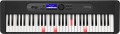 | 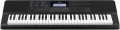 |
|---|---|---|
| Casio LK-S450 | Casio CT-X700 | |
| Compare prices 1 | Compare prices 1 | |
| TOP sellers | ||
| Type | synthesizer (rompler) | synthesizer (rompler) |
Keys | ||
| Number of keys | 61 | 61 |
| Size | full size | full size |
| Mechanics | active | active |
| Sensitivity adjustment |  |  |
| Rigidity | semi-weighted | semi-weighted |
| Backlight | | |
Specs | ||
| Polyphony | 48 voices | 48 voices |
| Built-in timbres | 600 шт | 600 шт |
| Auto accompaniment | | |
| Accompaniment styles | 200 шт | 195 шт |
| Custom styles | 10 шт | |
| Learning mode | | |
| Metronome | | |
| Sequencer (recording) | | |
| Built-in compositions | | |
Effects and control | ||
| Timbres layering | | |
| Keyboard split | | |
| Octave shift | | |
| Arpeggiator | | |
| Reverberation | | |
| Chorus | | |
| Transposition | | |
| Fine tuning | | |
Connectors | ||
| Inputs | mini-Jack (3.5 mm) | mini-Jack (3.5 mm) |
| Connectable pedals | 1 шт | |
| Outputs | USB to host (type B) headphones | USB to host (type B) headphones |
In box | ||
| In box | music stand PSU | |
General | ||
| Built-in acoustics | 4 W | 5 W |
| Number of bands | 1 | 1 |
| Display | monochrome | monochrome |
| Autonomous power supply | aA batteries | aA batteries |
| Operating hours | 16 h | |
| Dimensions (WxHxD) | 930x84x258 mm | 948x109x350 mm |
| Weight | 4.6 kg | 4.3 kg |
| Color | ||
| Added to E-Catalog | july 2021 | february 2018 |

Compare Casio LK-S450 and CT-X700
Price comparison
You may be interested in
My comparisons
Casio LK-S450 often compared


Casio CT-X700 often compared


Glossary
Sensitivity adjustment
Ability to change the sensitivity of active mechanics (see above) in the synthesizer.
This function allows you to adjust the intensity of the key's response to pressing. Simply put, the higher the sensitivity, the louder and sharper the sound will be, with the same pressing force. This allows you to change the characteristics of the instrument's sound.
Also in synthesizers with this function, it is often possible to completely turn off the active mechanics and play on a “passive” keyboard. This can be useful for making certain voices, such as harpsichord or organ, sound realistic.
This function allows you to adjust the intensity of the key's response to pressing. Simply put, the higher the sensitivity, the louder and sharper the sound will be, with the same pressing force. This allows you to change the characteristics of the instrument's sound.
Also in synthesizers with this function, it is often possible to completely turn off the active mechanics and play on a “passive” keyboard. This can be useful for making certain voices, such as harpsichord or organ, sound realistic.
Backlight
The presence of a backlight in the design of the keyboard.
Usually, in this case, the illumination of each individual key is implied. This function is not of great importance for ordinary music-making, but it can be very relevant when learning: the instrument can highlight the keys that need to be pressed at the moment, simplifying the task for the student. Actually, the presence of a backlight is most often just a sign of the presence of a training mode in the instrument (see below), although not every “training” synthesizer has this function.
Usually, in this case, the illumination of each individual key is implied. This function is not of great importance for ordinary music-making, but it can be very relevant when learning: the instrument can highlight the keys that need to be pressed at the moment, simplifying the task for the student. Actually, the presence of a backlight is most often just a sign of the presence of a training mode in the instrument (see below), although not every “training” synthesizer has this function.
Accompaniment styles
The number of auto accompaniment styles (see above) originally provided in the synthesizer, in other words, the number of accompaniment options available to the user.
The more extensive this set, the higher the probability of finding among these melodies suitable options for a particular case. At the same time, the abundance of styles in itself is not yet a 100% guarantee that among them there will be a suitable one, especially since different synthesizer models can differ markedly in a specific set of melodies. So the list does not hurt to clarify before buying. Also note that the situation can be corrected by user styles (see below) — many synthesizers with auto accompaniment support them.
The more extensive this set, the higher the probability of finding among these melodies suitable options for a particular case. At the same time, the abundance of styles in itself is not yet a 100% guarantee that among them there will be a suitable one, especially since different synthesizer models can differ markedly in a specific set of melodies. So the list does not hurt to clarify before buying. Also note that the situation can be corrected by user styles (see below) — many synthesizers with auto accompaniment support them.
Custom styles
The number of user auto accompaniment styles supported by the synthesizer, in other words, the number of additional styles that can be stored in memory in addition to the built-in ones. Note that styles can have different volumes (depending on the number of notes used), so this parameter often turns out to be not exact, but only an average-approximate one.
Modern synthesizers may have a fairly extensive set of built-in auto accompaniment styles (see above), but even the richest set may not contain the desired melody. Thus, many models allow you to supplement the standard list with custom melodies. The addition methods themselves can be different: in some models, these melodies need to be downloaded from external media, in others they can even be composed manually. Nevertheless, the presence of user styles allows you to expand the range of auto accompaniment melodies, moreover, at the request of the user himself.
Modern synthesizers may have a fairly extensive set of built-in auto accompaniment styles (see above), but even the richest set may not contain the desired melody. Thus, many models allow you to supplement the standard list with custom melodies. The addition methods themselves can be different: in some models, these melodies need to be downloaded from external media, in others they can even be composed manually. Nevertheless, the presence of user styles allows you to expand the range of auto accompaniment melodies, moreover, at the request of the user himself.
Learning mode
The presence of a learning mode in the design of the synthesizer.
The purpose of this function is clear from the name. It is most often based on the following principle: the synthesizer itself tells the student which keys to press, displaying the keyboard on the display or highlighting the necessary keys using the backlight (if available, see above). Of course, at different levels of learning, the format of such prompts will also be different: for example, at the very beginning, the synthesizer highlights the necessary notes until they are pressed, and at the final stage it highlights them at the tempo at which you need to play the melody, and evaluates the accuracy of the student pressing the desired keys. There are also other features and nuances of learning — for example, the mode of separate learning of parts for the left and right hands, when the instrument itself plays one part and tells the student how to play the second. In addition, a metronome function is practically mandatory for a synthesizer with this mode (see below).
Regardless of the specific functionality, this mode will be very useful for those who are just developing their keyboard playing skills.
The purpose of this function is clear from the name. It is most often based on the following principle: the synthesizer itself tells the student which keys to press, displaying the keyboard on the display or highlighting the necessary keys using the backlight (if available, see above). Of course, at different levels of learning, the format of such prompts will also be different: for example, at the very beginning, the synthesizer highlights the necessary notes until they are pressed, and at the final stage it highlights them at the tempo at which you need to play the melody, and evaluates the accuracy of the student pressing the desired keys. There are also other features and nuances of learning — for example, the mode of separate learning of parts for the left and right hands, when the instrument itself plays one part and tells the student how to play the second. In addition, a metronome function is practically mandatory for a synthesizer with this mode (see below).
Regardless of the specific functionality, this mode will be very useful for those who are just developing their keyboard playing skills.
Timbres layering
The ability to overlay different timbres of the synthesizer sound on top of each other. This creates the effect of the sound of two (or even more) instruments at once — for example, piano and violin. At the same time, in advanced models, it may be possible to set different settings for different timbres so that the sameness of the extracted notes is not so noticeable — for example, the same "violin" can be set to smooth transitions between notes, while on the "piano" they will sound jerky.
Keyboard split
Possibility of dividing the keyboard of the synthesizer into two parts, each of which is responsible for its own timbre of sound. Thus, on one keyboard, you can play two "instruments" at once in real time — for example, accompany the solo part of the violin with chords of a string orchestra. At the same time, unlike auto accompaniment (see above), all notes are taken by the musician himself, without relying on the automatic settings prescribed in the programme.
Usually, several “split keyboard” combinations are pre-written in the synthesizer’s memory, however, some models allow you to separately select a timbre for each half, at the discretion of the musician.
Usually, several “split keyboard” combinations are pre-written in the synthesizer’s memory, however, some models allow you to separately select a timbre for each half, at the discretion of the musician.
Octave shift
Synthesizer support for octave shift function.
This function allows you to shift the sound of the instrument one or more octaves up or down — for example, so that the keys of the first octave sound the notes of the second, or vice versa. This function can be used for both simple convenience and more practical purposes — it allows you to play very low and very high notes that are not initially covered by the keyboard range. This is especially useful for shortened 49- or 61-key synths that do not initially fit the full range of the piano.
This function allows you to shift the sound of the instrument one or more octaves up or down — for example, so that the keys of the first octave sound the notes of the second, or vice versa. This function can be used for both simple convenience and more practical purposes — it allows you to play very low and very high notes that are not initially covered by the keyboard range. This is especially useful for shortened 49- or 61-key synths that do not initially fit the full range of the piano.
Arpeggiator
The presence of an arpeggiator in the design of the synthesizer.
The term "arpeggio" originally means the technique of playing a chord, in which the notes are not sounded all at once, but one after another. Accordingly, arpeggiator, roughly speaking, is a device for the automated playing of chords using the arpeggio technique. Compared to manual playback by notes, this function is convenient because the arpeggiator can provide various additional settings: set the direction of playback (up or down), speed, interval between notes and their duration, special effects, background accompaniment, etc. At the same time, all effects work automatically, the user only needs to press the keys that make up the chord (and in some synthesizers in some modes, only one key can generally be responsible for a whole chord). The specific capabilities of arpeggiators can be different, often such a device allows you to create entire compositions just by pressing a sequence of chords.
The term "arpeggio" originally means the technique of playing a chord, in which the notes are not sounded all at once, but one after another. Accordingly, arpeggiator, roughly speaking, is a device for the automated playing of chords using the arpeggio technique. Compared to manual playback by notes, this function is convenient because the arpeggiator can provide various additional settings: set the direction of playback (up or down), speed, interval between notes and their duration, special effects, background accompaniment, etc. At the same time, all effects work automatically, the user only needs to press the keys that make up the chord (and in some synthesizers in some modes, only one key can generally be responsible for a whole chord). The specific capabilities of arpeggiators can be different, often such a device allows you to create entire compositions just by pressing a sequence of chords.