
Comparison Harley Benton HB-35 vs Ibanez AS53
Add to comparison | 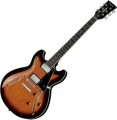 |  |
|---|---|---|
| Harley Benton HB-35 | Ibanez AS53 | |
| Outdated Product | Compare prices 3 | |
| TOP sellers | ||
| Type | semi-acoustic | semi-acoustic |
| Number of strings | 6 | 6 |
| Pickups | passive | passive |
| Pickup diagram | H-H | H-H |
Tone block | ||
| Type | passive | passive |
| Volume controls | 2 | 1 |
| Tone controls | 2 | 1 |
| Pickup switch | 3 position | 3 position |
Body | ||
| Type | hollow | hollow |
| Size | 4/4 | 4/4 |
| Cutaway | double | double |
| Pickguard |  |  |
| Material | maple | sapele |
| Bridge | Tune-o-Matic (fixed) | Tune-o-Matic (fixed) |
Neck | ||
| Mount type | pasted | pasted |
| Number of frets | 22 | 22 |
| Neck profile | C | |
| Nut width | 43 mm | 43 mm |
| Fretboard radius | 13.8 " | 12 " |
| Anchor | double | single |
| Scale | 24.72 " | 24.72 " |
| Pegs | closed | closed |
| Neck material | maple | mahogany |
| Fretboard | amaranth | rosewood |
| Color | ||
| Added to E-Catalog | september 2021 | september 2016 |




Compare Harley Benton HB-35 and Ibanez AS53
Price comparison
You may be interested in
My comparisons
Harley Benton HB-35 often compared


Glossary
Volume controls
The number of volume controls provided in an electric guitar.
If there is only one knob, this means that the musician can only adjust the overall volume of the instrument. However, there are models that have several volume control knobs — usually there are no less of them than pickups (2 or 3), which allows you to separately adjust the volume of each pickup. And since the characteristics of the sound depend on the type of the used pickup (see "Pickup Diagram") and even its location, then by changing the mutual volume of the individual pickups, you can achieve different coloring of the sound. At the same time, the design may also include a general volume control, which allows you to adjust it in the classical way and not mess with the settings of each pickup.
If there is only one knob, this means that the musician can only adjust the overall volume of the instrument. However, there are models that have several volume control knobs — usually there are no less of them than pickups (2 or 3), which allows you to separately adjust the volume of each pickup. And since the characteristics of the sound depend on the type of the used pickup (see "Pickup Diagram") and even its location, then by changing the mutual volume of the individual pickups, you can achieve different coloring of the sound. At the same time, the design may also include a general volume control, which allows you to adjust it in the classical way and not mess with the settings of each pickup.
Tone controls
The number of tone controls provided in the design of an electric guitar.
One tone control is responsible for the sound of the electric guitar as a whole; but if there are several such pens, they can have different formats of work. So, each knob can be responsible either for its own pickup, or for a separate frequency band. In the second case, a set of knobs plays the role of an equalizer that allows you to adjust the sound by changing the volume of low and high (sometimes even separately middle) frequencies.
Anyway, the presence of several tone controls expands the possibilities for changing the coloring of the sound by means of the guitar itself, without the use of additional equipment.
One tone control is responsible for the sound of the electric guitar as a whole; but if there are several such pens, they can have different formats of work. So, each knob can be responsible either for its own pickup, or for a separate frequency band. In the second case, a set of knobs plays the role of an equalizer that allows you to adjust the sound by changing the volume of low and high (sometimes even separately middle) frequencies.
Anyway, the presence of several tone controls expands the possibilities for changing the coloring of the sound by means of the guitar itself, without the use of additional equipment.
Pickguard
The presence of a protective lining (pickguard) on the body of the guitar.
Such an overlay is located on the upper deck, most often made of durable plastic and differs markedly in colour, due to which it is clearly visible. Its main purpose is to protect the soundboard surface from pick strikes (for example, when playing with dynamic fighting), which could damage the varnished wooden surface. The specific shape and size of the fingerboard may vary, but anyway, it covers at least the surface below the strings (when looking at the guitar in the working position), and sometimes under the strings and even above them.
Such an overlay is located on the upper deck, most often made of durable plastic and differs markedly in colour, due to which it is clearly visible. Its main purpose is to protect the soundboard surface from pick strikes (for example, when playing with dynamic fighting), which could damage the varnished wooden surface. The specific shape and size of the fingerboard may vary, but anyway, it covers at least the surface below the strings (when looking at the guitar in the working position), and sometimes under the strings and even above them.
Material
The material from which the body of an electric guitar is made. For models with cutouts (semi-acoustic, see "Type"), in this case, only the material of the back deck and sides can be taken into account, and data on the top deck is given separately (for more details, see "Deck Cover Material").
Now on the market there are cases of such trees: red, maple, agatis, ash, alder.
It makes no sense to dwell on each of the materials found in modern electric guitars. Their variety is very large, however, unlike acoustic guitars, the body in this case does not play such a significant role in shaping the sound, and its material has a relatively small effect on the acoustic properties of the instrument (although the exact degree of such influence is a moot point). If you wish, you can find detailed data on a particular material in special sources, but in fact it makes sense to look primarily at the appearance of the instrument and its price category.
Now on the market there are cases of such trees: red, maple, agatis, ash, alder.
It makes no sense to dwell on each of the materials found in modern electric guitars. Their variety is very large, however, unlike acoustic guitars, the body in this case does not play such a significant role in shaping the sound, and its material has a relatively small effect on the acoustic properties of the instrument (although the exact degree of such influence is a moot point). If you wish, you can find detailed data on a particular material in special sources, but in fact it makes sense to look primarily at the appearance of the instrument and its price category.
Neck profile
Profile of a fretboard mounted on an electric guitar.
The profile of the neck is called its shape in section, more precisely, the shape of the back of the neck. This parameter practically does not affect the sound of the guitar, but it directly affects the convenience of playing. Ideally, the neck should “fill” the hand, but not be too large — otherwise it will not be possible to clasp it to the right extent.
Profiles are denoted by the letters C, D, V and U — depending on which letter the neck resembles in the section. Profile D is the flattest, C is slightly more convex, with almost uniform curvature along the entire length, U is more voluminous, with a wider profile in the area of the lining, and the V profile in its classic form has the form of an angle with a rounded top. There are also modifications of these options — for example, "thin", which provides for a reduced profile thickness, or "modern", with slightly improved (theoretically) ergonomics.
The most popular profile types are C, U and their "modern" (modern) modifications. The C profile is almost semi-circular, the U profile is more voluminous, at the fingerboard its edges are almost parallel and only closer to the back of the neck are sharply rounded. The terms modern C and modern U refer to various improved versions of these profiles, their f...orm may be different.
In fact, the choice of neck profile depends solely on the guitarist's personal preferences, the characteristics of his hands and his preferred playing technique. Thus, there is no "perfect" profile shape — in each case, the optimal choice will be different. The perfect option is to try several types of profile "live", decide which one will be more convenient, and choose an instrument with a neck of the same or similar profile shape.
The profile of the neck is called its shape in section, more precisely, the shape of the back of the neck. This parameter practically does not affect the sound of the guitar, but it directly affects the convenience of playing. Ideally, the neck should “fill” the hand, but not be too large — otherwise it will not be possible to clasp it to the right extent.
Profiles are denoted by the letters C, D, V and U — depending on which letter the neck resembles in the section. Profile D is the flattest, C is slightly more convex, with almost uniform curvature along the entire length, U is more voluminous, with a wider profile in the area of the lining, and the V profile in its classic form has the form of an angle with a rounded top. There are also modifications of these options — for example, "thin", which provides for a reduced profile thickness, or "modern", with slightly improved (theoretically) ergonomics.
The most popular profile types are C, U and their "modern" (modern) modifications. The C profile is almost semi-circular, the U profile is more voluminous, at the fingerboard its edges are almost parallel and only closer to the back of the neck are sharply rounded. The terms modern C and modern U refer to various improved versions of these profiles, their f...orm may be different.
In fact, the choice of neck profile depends solely on the guitarist's personal preferences, the characteristics of his hands and his preferred playing technique. Thus, there is no "perfect" profile shape — in each case, the optimal choice will be different. The perfect option is to try several types of profile "live", decide which one will be more convenient, and choose an instrument with a neck of the same or similar profile shape.
Fretboard radius
The radius of curvature of a fretboard mounted on the fretboard of an electric guitar.
The fingerboard is located directly under the strings, it is to it that the musician presses the strings when playing. If you look at the neck in cross section, its upper part with the overlay will have the shape of an arc; the radius of this arc is implied in this case. The smaller the radius, the more convex this arc will be, and vice versa, a large radius will correspond to an almost flat surface.
In general, it is believed that a smaller fingerboard radius is better for playing chords, and a more even, flat surface makes it easier to play technical passages with an abundance of special techniques such as bands. The average and, one might say, classic diameter value is 12", this is the most popular option among modern electric guitars. The smallest figure is just over 7", it is found in some guitars with Stratocaster bodies (both original Fender instruments and copies ). And the most flat pads have a diameter of 20" or more.
Note that there are often instruments with a variable fretboard radius — smaller at the headstock (where chords are played more often) and larger near the body (where solos are played by notes). In such cases, the radius at the nut is indicated.
The fingerboard is located directly under the strings, it is to it that the musician presses the strings when playing. If you look at the neck in cross section, its upper part with the overlay will have the shape of an arc; the radius of this arc is implied in this case. The smaller the radius, the more convex this arc will be, and vice versa, a large radius will correspond to an almost flat surface.
In general, it is believed that a smaller fingerboard radius is better for playing chords, and a more even, flat surface makes it easier to play technical passages with an abundance of special techniques such as bands. The average and, one might say, classic diameter value is 12", this is the most popular option among modern electric guitars. The smallest figure is just over 7", it is found in some guitars with Stratocaster bodies (both original Fender instruments and copies ). And the most flat pads have a diameter of 20" or more.
Note that there are often instruments with a variable fretboard radius — smaller at the headstock (where chords are played more often) and larger near the body (where solos are played by notes). In such cases, the radius at the nut is indicated.
Anchor
The type of truss provided in the design of the neck of an electric guitar.
The anchor has the form of an elastic metal rod installed along the neck and hidden inside. It reinforces the structure and prevents the neck from deforming from string tension. The truss rod can be made adjustable to suit the characteristics of the strings and compensate for the deformations that inevitably occur over time. The types of this detail can be as follows:
- Single. Anchor consisting of a single rod. The classic version used in most modern electric guitars, regardless of price category. Usually, the strength and rigidity of even a single rod is sufficient for normal applications and use.
- Double. Anchor, consisting, in accordance with the name, of two rods. It is distinguished by greater strength and reliability compared to a single one, in particular, it provides additional resistance to lateral deformations. On the other hand, the double construction is noticeably more expensive.
The anchor has the form of an elastic metal rod installed along the neck and hidden inside. It reinforces the structure and prevents the neck from deforming from string tension. The truss rod can be made adjustable to suit the characteristics of the strings and compensate for the deformations that inevitably occur over time. The types of this detail can be as follows:
- Single. Anchor consisting of a single rod. The classic version used in most modern electric guitars, regardless of price category. Usually, the strength and rigidity of even a single rod is sufficient for normal applications and use.
- Double. Anchor, consisting, in accordance with the name, of two rods. It is distinguished by greater strength and reliability compared to a single one, in particular, it provides additional resistance to lateral deformations. On the other hand, the double construction is noticeably more expensive.
Neck material
The material from which the neck of an electric guitar is made.
The most commonly used in the manufacture of the neck is mahogany. and maple. Theoretically, the acoustic properties of an instrument are determined by all its details, and even more so, these properties are affected by the quality of the fretboard. At the same time, we note that this influence is not so strong compared to other characteristics of the guitar (type and number of pickups, scale size, body type, etc.). So in this case, it makes no sense to describe in detail each type of material found in modern instruments — especially since the same term (for example, “mahogany”) can denote different types of wood that differ markedly in working properties and overall quality. When evaluating the material of the neck, it is quite possible to proceed from the fact that the manufacturer selects it in accordance with the price category and the general specialization of the guitar.
The most commonly used in the manufacture of the neck is mahogany. and maple. Theoretically, the acoustic properties of an instrument are determined by all its details, and even more so, these properties are affected by the quality of the fretboard. At the same time, we note that this influence is not so strong compared to other characteristics of the guitar (type and number of pickups, scale size, body type, etc.). So in this case, it makes no sense to describe in detail each type of material found in modern instruments — especially since the same term (for example, “mahogany”) can denote different types of wood that differ markedly in working properties and overall quality. When evaluating the material of the neck, it is quite possible to proceed from the fact that the manufacturer selects it in accordance with the price category and the general specialization of the guitar.
Fretboard
The material from which the fretboard of an electric guitar is made.
The fretboard is placed under the strings, where the strings are pressed when played. The need to use overlays is due to the fact that the types of wood from which the fingerboard itself is made are often not hard enough, and dents could occur on their surface from constant contact with the strings. Accordingly, the overlays are made of a harder material that retains the shape of the surface even after repeated pressing of the strings. As such a material, both special types of wood ( ebony, rosewood) and high-quality phenolic polymers can be used.
In general, the quality of the fingerboard is usually quite consistent with the price category of the instrument, but it hardly makes sense to dwell on the detailed characteristics of each material (they are not so critical for the normal use of an electric guitar). We only note that the material of the overlay directly affects the appearance of the instrument.
The fretboard is placed under the strings, where the strings are pressed when played. The need to use overlays is due to the fact that the types of wood from which the fingerboard itself is made are often not hard enough, and dents could occur on their surface from constant contact with the strings. Accordingly, the overlays are made of a harder material that retains the shape of the surface even after repeated pressing of the strings. As such a material, both special types of wood ( ebony, rosewood) and high-quality phenolic polymers can be used.
In general, the quality of the fingerboard is usually quite consistent with the price category of the instrument, but it hardly makes sense to dwell on the detailed characteristics of each material (they are not so critical for the normal use of an electric guitar). We only note that the material of the overlay directly affects the appearance of the instrument.