
Comparison Procraft PG 520 vs Procraft PG 400
Add to comparison |  | 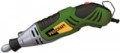 |
|---|---|---|
| Procraft PG 520 | Procraft PG 400 | |
| Outdated Product | from $23.00 | |
| User reviews | ||
| TOP sellers | ||
| Product type | rotary engraver | rotary engraver |
Specs | ||
| Power consumption | 180 W | 400 W |
| Rotation speed | 1000 – 32000 rpm | 10000 – 30000 rpm |
| Collet diameter | 3.2 mm | 2.4, 3.2 mm |
Features | ||
| Functions | speed controller | speed controller |
| Total number of nozzles | 189 | 40 |
Power source | ||
| Power source | mains (230 V) | mains (230 V) |
In box | ||
| Case (bag) |  | |
| Flexible shaft |  | |
| Tripod | | |
General | ||
| Noise level | 87 dB | |
| Weight | 0.5 kg | 0.5 kg |
| Added to E-Catalog | october 2024 | april 2016 |


Compare Procraft PG 520 and PG 400
You may be interested in
Procraft PG 400 often compared


Glossary
Power consumption
The electrical power consumed by the tool during normal operation. Usually, the characteristics indicate the power at the maximum speed / frequency of movements of the working nozzle.
Usually, the higher this indicator, the more intense the tool can act on the material being processed, the better it is suitable for difficult conditions (large volumes of work, hard materials). At the same time, note that high power significantly affects energy consumption; in mains-powered models (see below), this puts strain on the wiring, and in battery-powered models, it requires the use of bulky and heavy batteries and significantly reduces battery life. Yes, and this parameter significantly affects the dimensions, weight and price of the tool itself. Therefore, it is worth choosing a model according to power consumption, taking into account the specifics of the work for which it is planned to be used: for example, it hardly makes sense to purchase a high-performance professional tool for minor repairs around the house or in the country.
Specific recommendations on the optimal power values, depending on the type of tool and the purpose of its use, can be found in special sources.
Usually, the higher this indicator, the more intense the tool can act on the material being processed, the better it is suitable for difficult conditions (large volumes of work, hard materials). At the same time, note that high power significantly affects energy consumption; in mains-powered models (see below), this puts strain on the wiring, and in battery-powered models, it requires the use of bulky and heavy batteries and significantly reduces battery life. Yes, and this parameter significantly affects the dimensions, weight and price of the tool itself. Therefore, it is worth choosing a model according to power consumption, taking into account the specifics of the work for which it is planned to be used: for example, it hardly makes sense to purchase a high-performance professional tool for minor repairs around the house or in the country.
Specific recommendations on the optimal power values, depending on the type of tool and the purpose of its use, can be found in special sources.
Rotation speed
The speed of rotation of the working nozzle provided by the tool. Some models have a fixed rotation speed, others allow you to adjust it within a certain range (see "Number of speeds").
For different types of tools and types of work, different values of this parameter will be optimal; therefore, it is worth choosing taking into account the tasks that are planned to be solved using the tool (it is best to consult with special sources). We note only a couple of general patterns. So, for engraving on relatively soft and pliable materials (wood, glass, soft metals), high speed is not required, but for hard and difficult to process (steel, precious stones), a high-speed tool is better suited. But when drilling, note that for the same power consumption (see above), more revolutions, usually, means lower torque values. That is, here “high-speed” tools are better suited just for soft materials, and low-speed tools are better suited for hard and heavy materials.
For different types of tools and types of work, different values of this parameter will be optimal; therefore, it is worth choosing taking into account the tasks that are planned to be solved using the tool (it is best to consult with special sources). We note only a couple of general patterns. So, for engraving on relatively soft and pliable materials (wood, glass, soft metals), high speed is not required, but for hard and difficult to process (steel, precious stones), a high-speed tool is better suited. But when drilling, note that for the same power consumption (see above), more revolutions, usually, means lower torque values. That is, here “high-speed” tools are better suited just for soft materials, and low-speed tools are better suited for hard and heavy materials.
Collet diameter
The diameter of the collet provided in the design of the rotary engraver (see "Device").
A collet is a specific type of fastening: a split sleeve, the “petals” of which can be compressed and unclenched by twisting / unscrewing the clamp. For a number of technical reasons, this mount is considered optimal for engravers. In order to properly install the working nozzle in such a tool, it is necessary that it fits the diameter of the collet (to be more precise, the mounting size of the nozzle should not exceed this diameter).
Note that there are several standard collet sizes. The most popular is 3.2 mm, but there are other options. And some engravers can be equipped with several mounts of different sizes.
A collet is a specific type of fastening: a split sleeve, the “petals” of which can be compressed and unclenched by twisting / unscrewing the clamp. For a number of technical reasons, this mount is considered optimal for engravers. In order to properly install the working nozzle in such a tool, it is necessary that it fits the diameter of the collet (to be more precise, the mounting size of the nozzle should not exceed this diameter).
Note that there are several standard collet sizes. The most popular is 3.2 mm, but there are other options. And some engravers can be equipped with several mounts of different sizes.
Total number of nozzles
The total number of working attachments supplied with the tool.
The abundance of attachments allows the machine to be used with various materials and for various types of work. At the same time, this parameter significantly affects the cost. Therefore, when choosing, you need to proceed from how important a variety of possibilities is for you - so as not to overpay for extra nozzles that turned out to be useless in fact.
Note that this item is indicated only for engravers (see "Device") - for models of other types, specific types of nozzles are given in the corresponding item (see below).
The abundance of attachments allows the machine to be used with various materials and for various types of work. At the same time, this parameter significantly affects the cost. Therefore, when choosing, you need to proceed from how important a variety of possibilities is for you - so as not to overpay for extra nozzles that turned out to be useless in fact.
Note that this item is indicated only for engravers (see "Device") - for models of other types, specific types of nozzles are given in the corresponding item (see below).
Flexible shaft
The flexible shaft is a special kind of accessory attachment supplied with the rotary engraver (see "Device") – this feature is not found in other tools. Outwardly, this device looks like a hose, sometimes quite long. One end of such a "hose" is attached to the engraver cartridge, and the other has its own cartridge, where the operating attachment is attached - rotation is transmitted to it due to the shaft located inside the "hose". The part of the flexible shaft held in the hands during operation is more compact and lighter than the engraver itself, so the most popular ways to use such equipment are processing hard-to-reach places (where the tool simply cannot crawl through) and fine work (which is difficult to do with a massive machine).
Tripod
A tripod is included with the instrument.
This function is found mainly among rotary engravers (see "Device"). The tripod is designed to hang the tool on it when working with a flexible shaft (see "Attachments") — usually, this is more convenient than simply placing the machine on a table or other surface. Without a tripod, this would have to use carnations, hooks or other similar devices — and they are far from being available everywhere, and they do not always provide reliable placement.
This function is found mainly among rotary engravers (see "Device"). The tripod is designed to hang the tool on it when working with a flexible shaft (see "Attachments") — usually, this is more convenient than simply placing the machine on a table or other surface. Without a tripod, this would have to use carnations, hooks or other similar devices — and they are far from being available everywhere, and they do not always provide reliable placement.
Noise level
The noise level produced by the tool during operation. For comparison, 50 decibels roughly corresponds to the noise in an office room, 60 dB to an average TV volume, 70 dB to a truck at a distance of about 8 m, 80 dB to traffic noise, 90 dB to a loud scream.
The lower the noise level, the more comfortable the use of the tool. At the same time, note that this parameter is usually indicated very approximately — the actual “loudness” of operation can vary markedly depending on the mode, the nozzle used, the material being processed, etc.
The lower the noise level, the more comfortable the use of the tool. At the same time, note that this parameter is usually indicated very approximately — the actual “loudness” of operation can vary markedly depending on the mode, the nozzle used, the material being processed, etc.