
Comparison Intertool FT-1116 vs Intertool FT-1118
Add to comparison | 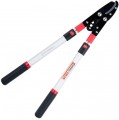 | 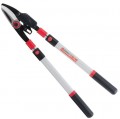 |
|---|---|---|
| Intertool FT-1116 | Intertool FT-1118 | |
| Outdated Product | Outdated Product | |
| User reviews | ||
| TOP sellers | ||
Lopper length adjustable with telescopic handles, from 700 mm to 1030 mm | Lopper length adjustable with telescopic handles, from 700 mm to 1030 mm | |
| Type | loppers | loppers |
| Design | two-handed | two-handed |
Specs | ||
| Max. cutting diameter | 40 mm | 40 mm |
| Blade length | 75 mm | 100 mm |
| Handle adjustment |  | |
| Ratchet mechanism |  | |
General | ||
| Handle material | aluminium | aluminium |
| Handle material | rubber | rubber |
| Length | 1020 mm | 1030 mm |
| Weight | 1600 g | 1650 g |
| Added to E-Catalog | september 2020 | september 2020 |


Compare Intertool FT-1116 and FT-1118
You may be interested in
Intertool FT-1116 often compared

Glossary
Blade length
The length of the blades provided in the tool. Usually, the characteristics indicate the working length of the blades — from the tip to the rotary axis.
Both long and short blades have their own specifics, advantages and disadvantages. So, the long length is optimal for working with relatively thin branches: it allows you to cut several of them at a time, and also makes it possible to reach into hard-to-reach places. At the same time, short blades are more compact and provide more force for the same length of handles, which is convenient when working with thick branches. More detailed recommendations on choosing the length of the blades for a specific situation can be found in special sources.
Both long and short blades have their own specifics, advantages and disadvantages. So, the long length is optimal for working with relatively thin branches: it allows you to cut several of them at a time, and also makes it possible to reach into hard-to-reach places. At the same time, short blades are more compact and provide more force for the same length of handles, which is convenient when working with thick branches. More detailed recommendations on choosing the length of the blades for a specific situation can be found in special sources.
Ratchet mechanism
The presence of a ratchet mechanism in the tool — a device known colloquially as a "ratchet". The principle of operation of such a mechanism is as follows: the blades of the tool can move in compression, but the reverse movement (in opening) is blocked by a gear wheel with a stop dog. This makes it easier to cut thick hard branches: the cut can be carried out in several stages, at each of them pressing the blades a few millimetres and not being afraid that they will move back. This way of working will be especially appreciated by users who do not have great hand strength. And in order to open the blades after cutting, you need to either unclench the handles with force, or vice versa, squeeze them all the way.