
Comparison Logitech MX Master 4 vs Logitech MX Master 3
Add to comparison |  | 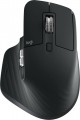 |
|---|---|---|
| Logitech MX Master 4 | Logitech MX Master 3 | |
| Compare prices 21 | Compare prices 7 | |
| User reviews | ||
| TOP sellers | ||
Logitech MX Master 4 is an enhanced MX Master 3S. What's new: haptic feedback, a digital action ring for quick access to tasks, a gesture button (show/hide desktop), improved connectivity. Variants: MX Master 4 for Mac — optimized for Apple devices, does not include a Logi Bolt receiver; MX Master 4 for Business — supports Logitech Sync for remote monitoring and management in large enterprises. | Gesture control. Seamless switching between devices with installed proprietary software (when you move the cursor to the edge of the screen of one device, the mouse switches to another), which also allows you to move files between them. Support for fast charging (port — USB-C). | |
| Product type | mouse | mouse |
| Connection | Bluetooth/radio | Bluetooth/radio |
| Bluetooth version | v5.1 | |
| Multi-Device |  | |
| Sensor | laser, Darkfield | laser, V-Track |
Sensor and control | ||
| Sensor resolution | 200 – 8000 DPI | 200 – 4000 DPI |
| Number of buttons | 7 | 6 |
| Side buttons | | |
| Scroll wheels | 2 | 2 |
| Inertial wheel | | |
Additional features | ||
| quiet click | |  |
| Programmable buttons | | |
Connection and power supply | ||
| Power source | battery | battery |
| Battery capacity | 650 mAh | 500 mAh |
| Battery life | 70 days | 70 days |
| Port on the device | USB-C | USB-C |
General | ||
| In box | USB-C dongle | USB-A dongle |
| Size (LxWxH) | 128x88x51 mm | 125x84x51 mm |
| Weight | 150 g | 141 g |
| Color | ||
| Added to E-Catalog | october 2025 | october 2019 |





Compare Logitech MX Master 4 and MX Master 3
Price comparison
You may be interested in
My comparisons
Logitech MX Master 4 often compared


Logitech MX Master 3 often compared

Glossary
Bluetooth version
It is worth noting that any version of Bluetooth is able to pair devices with each other. And even if both devices have a different version, the connection will occur on the lowest of them — the protocols are interchangeable.
Sensor
— Optical. The working element of an optical mouse consists of an LED that illuminates the underlying surface and an optical sensor that photographs this surface at high frequency. On the basis of a number of received images, the mouse electronics concludes about the direction and speed of movement of the manipulator and outputs the corresponding data to the computer. Optical mice are inexpensive, reliable enough and not too demanding on the working surface. Initially, they were poorly compatible with certain types of surfaces — mirror, fur, leather, etc.; however, in most modern optical sensors, this drawback is eliminated, and mice of this type are often quite "omnivorous".
— Laser. According to the principle of operation, laser mice are similar to optical ones (see above). The main difference is that they do not use an LED, but a laser, to illuminate the image. Thus, a narrower beam directivity is provided, and as a result, more accurate cursor positioning, which is especially important when working with complex detailed graphics, in games, etc. Theoretically, the laser is less versatile and not compatible with such an abundance of surfaces as optics, but this difference is noticeable only on specific surfaces like fur, polished metal, etc. But the unequivocal disadvantage of this technology is the higher cost.
— Optical, Bluetrack. Optical models (see a...bove) using a sensor with BlueTrack technology. This technology was originally developed by Microsoft, but nowadays it is also found in other manufacturers. The most noticeable difference between such sensors and conventional optical ones is the blue colour of the LED (hence the name). In addition, the design provides for a number of improvements: an increased area of illumination of the surface under the mouse, high resolution of the matrix, coated optics. Thanks to this, BlueTrack mice have high accuracy and are able to function even on “difficult” surfaces such as glass, polished stone, carpet pile, etc.
— Optical, V-Track. Optical sensor using V-Track technology. This technology was developed by A4Tech and is used primarily in mice of this brand. One of the key features of V-Track is that the beam of light in such sensors falls on the work surface vertically (rather than obliquely, as in conventional optics). In addition, the light spot size is very small, the light density is high, and the photodetector lens has a very narrow aperture, which gives a large depth of field. Thanks to these improvements, V-Track provides very high accuracy and (according to the creators) is able to work even on volumetric mechs, where other types of sensors are useless. However, mice with this feature are not cheap.
— Laser, V-Track. Laser sensor using V-Track technology. For more information about this technology, see above, but here we note that the use of V-Track in laser mice allows you to get rid of the main drawback of such devices — sensitivity to non-standard surfaces. At the same time, the positioning accuracy characteristic of laser sensors is further increased by V-Track. On the other hand, the price of such devices is high. Therefore, the combination of a laser sensor and V-Track is extremely rare, mainly in premium gaming mice from the same A4Tech.
— Hybrid. The combination of two sensors in the mouse at once — optical and laser. Such a combination allows you to combine the advantages of both technologies and partially compensate for the shortcomings: in terms of accuracy, hybrid mice are not inferior to laser ones, while they are not so sensitive to non-standard surfaces. At the same time, the presence of two sensors significantly affects the price of the device, while it is possible to achieve similar characteristics with one sensor — due to the BlueTrack or V-Track technologies described above. Therefore, hybrid systems have not received distribution.
— Laser. According to the principle of operation, laser mice are similar to optical ones (see above). The main difference is that they do not use an LED, but a laser, to illuminate the image. Thus, a narrower beam directivity is provided, and as a result, more accurate cursor positioning, which is especially important when working with complex detailed graphics, in games, etc. Theoretically, the laser is less versatile and not compatible with such an abundance of surfaces as optics, but this difference is noticeable only on specific surfaces like fur, polished metal, etc. But the unequivocal disadvantage of this technology is the higher cost.
— Optical, Bluetrack. Optical models (see a...bove) using a sensor with BlueTrack technology. This technology was originally developed by Microsoft, but nowadays it is also found in other manufacturers. The most noticeable difference between such sensors and conventional optical ones is the blue colour of the LED (hence the name). In addition, the design provides for a number of improvements: an increased area of illumination of the surface under the mouse, high resolution of the matrix, coated optics. Thanks to this, BlueTrack mice have high accuracy and are able to function even on “difficult” surfaces such as glass, polished stone, carpet pile, etc.
— Optical, V-Track. Optical sensor using V-Track technology. This technology was developed by A4Tech and is used primarily in mice of this brand. One of the key features of V-Track is that the beam of light in such sensors falls on the work surface vertically (rather than obliquely, as in conventional optics). In addition, the light spot size is very small, the light density is high, and the photodetector lens has a very narrow aperture, which gives a large depth of field. Thanks to these improvements, V-Track provides very high accuracy and (according to the creators) is able to work even on volumetric mechs, where other types of sensors are useless. However, mice with this feature are not cheap.
— Laser, V-Track. Laser sensor using V-Track technology. For more information about this technology, see above, but here we note that the use of V-Track in laser mice allows you to get rid of the main drawback of such devices — sensitivity to non-standard surfaces. At the same time, the positioning accuracy characteristic of laser sensors is further increased by V-Track. On the other hand, the price of such devices is high. Therefore, the combination of a laser sensor and V-Track is extremely rare, mainly in premium gaming mice from the same A4Tech.
— Hybrid. The combination of two sensors in the mouse at once — optical and laser. Such a combination allows you to combine the advantages of both technologies and partially compensate for the shortcomings: in terms of accuracy, hybrid mice are not inferior to laser ones, while they are not so sensitive to non-standard surfaces. At the same time, the presence of two sensors significantly affects the price of the device, while it is possible to achieve similar characteristics with one sensor — due to the BlueTrack or V-Track technologies described above. Therefore, hybrid systems have not received distribution.
Sensor resolution
Resolution of the sensor responsible for tracking mouse movements on the work surface. Specified in DPI — dots per inch.
The physical meaning of DPI as a whole is as follows. The sensor of a modern mouse works on the same principle as the camera matrix, and consists of pixels. And DPI is the number of pixels that fall on 1 inch of the underlying surface (length or width), "visible" by the sensor.
It is believed that more DPI means a more advanced sensor and mouse in general; nowadays, models for 3500 – 5000 DPI, 12000 DPI, 16000 DPI even more are not uncommon. In a way, it is — high resolution contributes to accuracy. However, the only thing that is directly determined by this indicator is the speed at which the cursor moves across the screen: the higher the resolution of the sensor, the greater the number of pixels that the cursor will move when the mouse itself moves a certain distance. At the same time, it is worth recalling that too high a speed is even more undesirable than too low. So the real need for high DPI ( 1000 and above) arises mainly when working on large screens (4K resolution and more); for more modest displays (HD and Full HD), smaller values are often enough.
The physical meaning of DPI as a whole is as follows. The sensor of a modern mouse works on the same principle as the camera matrix, and consists of pixels. And DPI is the number of pixels that fall on 1 inch of the underlying surface (length or width), "visible" by the sensor.
It is believed that more DPI means a more advanced sensor and mouse in general; nowadays, models for 3500 – 5000 DPI, 12000 DPI, 16000 DPI even more are not uncommon. In a way, it is — high resolution contributes to accuracy. However, the only thing that is directly determined by this indicator is the speed at which the cursor moves across the screen: the higher the resolution of the sensor, the greater the number of pixels that the cursor will move when the mouse itself moves a certain distance. At the same time, it is worth recalling that too high a speed is even more undesirable than too low. So the real need for high DPI ( 1000 and above) arises mainly when working on large screens (4K resolution and more); for more modest displays (HD and Full HD), smaller values are often enough.
Number of buttons
The number of buttons provided in the design of the mouse. However, the term "buttons" can also refer to specific hardware solutions — for example, a solid touch area used in many Apple mice counts as two buttons, because. it is divided into two working areas. But the clickable wheels, as well as the power button, are not taken into account in this calculation.
The minimum number of buttons for modern mice and other similar manipulators is two : this is the number that is necessary for comfortable work in most modern operating systems. If there are more than two keys, this means that there are additional buttons responsible for specific actions. So, even relatively inexpensive devices can be equipped with 3 – 4 buttons ; in addition to the 2 main buttons, they can have, for example, 2 side thumb keys, or 1 double/triple click button (see below). Solutions for 5 – 6 buttons are extremely popular nowadays; among them are many gaming mice, where the mentioned thumb buttons are supplemented with a double / triple click, a sniper button and/or a DPI switch (see also below about these functions). And in the most multifunctional models, 7 – 8 buttons and even more can be installed. In some cases, this number exceeds a dozen and a half; such mice are usually gaming devices designed for RPGs and other simil...ar genres where it is important to have a wide range of actions at your fingertips.
The minimum number of buttons for modern mice and other similar manipulators is two : this is the number that is necessary for comfortable work in most modern operating systems. If there are more than two keys, this means that there are additional buttons responsible for specific actions. So, even relatively inexpensive devices can be equipped with 3 – 4 buttons ; in addition to the 2 main buttons, they can have, for example, 2 side thumb keys, or 1 double/triple click button (see below). Solutions for 5 – 6 buttons are extremely popular nowadays; among them are many gaming mice, where the mentioned thumb buttons are supplemented with a double / triple click, a sniper button and/or a DPI switch (see also below about these functions). And in the most multifunctional models, 7 – 8 buttons and even more can be installed. In some cases, this number exceeds a dozen and a half; such mice are usually gaming devices designed for RPGs and other simil...ar genres where it is important to have a wide range of actions at your fingertips.
quiet click
This feature means that the mouse keys, when pressed, sound much quieter than most "rodents". This is not necessarily completely silent operation — the sound may be present; but there are also absolutely silent models. Anyway, "quiet click" can be a real lifesaver in situations where normal button clicks are undesirable — for example, if the mouse has to be used intensively at a late time, or if the user or others are very annoyed by clicks. However, note that the presence of a quiet click is indicated based on the manufacturer’s statements, and different brands may invest different meanings in the concept of “quiet”. So if the minimum noise level is critical for you, you should clarify the features of the selected model from additional sources, for example, video reviews or reviews.
Battery capacity
The battery capacity in a mouse affects how long it can operate without recharging and determines how often the device will need to be charged. Although manufacturers usually specify the operating time, the capacity helps assess the battery's resource under intensive use or when additional features, such as backlighting, are activated.
In box
— USB receiver. A device that is found only in models with wireless connectivity. Such a receiver is connected to the USB port of a computer or laptop, and communication is carried out through it. This is the way all mice with a radio connection work, for them the presence of a USB receiver in the kit is almost mandatory. At the same time, this accessory is also found in the Bluetooth model — in them it plays the role of an adapter for equipment that is not equipped with its own Bluetooth modules.
— Replaceable legs. Legs are small protrusions on the bottom surface of the case, on which the mouse rests, standing on the work surface. They reduce resistance, allowing the device to slide freely in any direction, and also compensate for minor irregularities to a certain extent. However, due to constant friction, the legs are subject to heavy wear, over time they wear out or may come off. Thus, modern mice may come with interchangeable legs; such a complete set means that regular overlays can be easily removed by the user.
— Interchangeable side panels. A feature found primarily in game models (see "By Direction"). At the same time, the purpose of removable panels can be different. So, in some models, they are used to fine-tune the width or overall shape to the user's hand. In other devices, rearranging the panel allows you to change the functionality — for example, install four side button...s instead of two, providing additional features in games (and return the panel with two classic side buttons back while surfing the Internet and other everyday tasks). Such nuances should be clarified in each case separately.
— Replaceable top panels. Additional components that can be installed in place of the standard top of the mouse to change its appearance or ergonomics. Their support is implemented in some models of gaming mice (see “Direction”). Replaceable top panels provide the ability to customize the mouse to suit individual ergonomic preferences, and they also serve as a stylistic element in the design of the manipulator.
— Rug. Mice that use the mouse pad as a power source are required (see "Power"), but this accessory can also be supplied with more traditional models. In the latter case, it is worth clarifying what material the pad is made of, what dimensions and design features it has — these points may not meet the user's requirements, in many cases it is more convenient to buy an underarm pad separately.
— Case. The cover will be appropriate if you need to regularly move the mouse from place to place (for example, for frequent competitions or with a work laptop). In a protective case, your “rodent” will not be afraid of external damage to which a mouse can be subjected even while in the personal compartment of a backpack.
— Additional switches (mics) — for example, spare switches of the same type as regular ones, or interchangeable ones that differ in characteristics.
— Interchangeable side buttons. Separate side buttons that can replace regular ones. These may be keys of a different shape or spare parts of a similar design.
— Stickers. Decorative stickers that allow you to personalize your device, giving it an original look.
— Additional cable. A replacement wire that differs from the main one in length and/or other characteristics (for example, the presence / absence of a braid).
— Headphones. Gaming computer headphones supplied with mice of the corresponding specialization (see "By Direction").
— Replaceable legs. Legs are small protrusions on the bottom surface of the case, on which the mouse rests, standing on the work surface. They reduce resistance, allowing the device to slide freely in any direction, and also compensate for minor irregularities to a certain extent. However, due to constant friction, the legs are subject to heavy wear, over time they wear out or may come off. Thus, modern mice may come with interchangeable legs; such a complete set means that regular overlays can be easily removed by the user.
— Interchangeable side panels. A feature found primarily in game models (see "By Direction"). At the same time, the purpose of removable panels can be different. So, in some models, they are used to fine-tune the width or overall shape to the user's hand. In other devices, rearranging the panel allows you to change the functionality — for example, install four side button...s instead of two, providing additional features in games (and return the panel with two classic side buttons back while surfing the Internet and other everyday tasks). Such nuances should be clarified in each case separately.
— Replaceable top panels. Additional components that can be installed in place of the standard top of the mouse to change its appearance or ergonomics. Their support is implemented in some models of gaming mice (see “Direction”). Replaceable top panels provide the ability to customize the mouse to suit individual ergonomic preferences, and they also serve as a stylistic element in the design of the manipulator.
— Rug. Mice that use the mouse pad as a power source are required (see "Power"), but this accessory can also be supplied with more traditional models. In the latter case, it is worth clarifying what material the pad is made of, what dimensions and design features it has — these points may not meet the user's requirements, in many cases it is more convenient to buy an underarm pad separately.
— Case. The cover will be appropriate if you need to regularly move the mouse from place to place (for example, for frequent competitions or with a work laptop). In a protective case, your “rodent” will not be afraid of external damage to which a mouse can be subjected even while in the personal compartment of a backpack.
— Additional switches (mics) — for example, spare switches of the same type as regular ones, or interchangeable ones that differ in characteristics.
— Interchangeable side buttons. Separate side buttons that can replace regular ones. These may be keys of a different shape or spare parts of a similar design.
— Stickers. Decorative stickers that allow you to personalize your device, giving it an original look.
— Additional cable. A replacement wire that differs from the main one in length and/or other characteristics (for example, the presence / absence of a braid).
— Headphones. Gaming computer headphones supplied with mice of the corresponding specialization (see "By Direction").
Weight
The total weight of the mouse. For models with a wired connection, usually, it is indicated without cable, and for devices with weight adjustment (see above) — without weights.
This parameter is important primarily for professional gaming applications, although it is often relevant for ordinary users. Theoretically, less weight promotes speed and reduces fatigue. At the same time, in fact, much depends on the personal habits and preferences of the user: a mouse that is too light may “not be felt in the hands” and not give familiar feedback. Therefore, although most mice have a lower weight limit of 60 – 80 g, however, even among professional gaming models there are much more massive devices — 120 – 140 g or more. The lightest variety of "rodents" is laptop (see "In the direction"), among them devices come across and less than 60 g.
Also note that the weight to some extent depends on the size and “tricked out” of the device, but there is no unambiguous dependence here: models similar in size and functionality can differ markedly in weight.
This parameter is important primarily for professional gaming applications, although it is often relevant for ordinary users. Theoretically, less weight promotes speed and reduces fatigue. At the same time, in fact, much depends on the personal habits and preferences of the user: a mouse that is too light may “not be felt in the hands” and not give familiar feedback. Therefore, although most mice have a lower weight limit of 60 – 80 g, however, even among professional gaming models there are much more massive devices — 120 – 140 g or more. The lightest variety of "rodents" is laptop (see "In the direction"), among them devices come across and less than 60 g.
Also note that the weight to some extent depends on the size and “tricked out” of the device, but there is no unambiguous dependence here: models similar in size and functionality can differ markedly in weight.