
Comparison Hatsan Bullmaster vs Hatsan Gladius Long
Add to comparison |  | 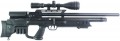 |
|---|---|---|
| Hatsan Bullmaster | Hatsan Gladius Long | |
| Outdated Product | from $839.96 up to $1,030.88 | |
| User reviews | ||
| TOP sellers | ||
| Type | PCP (pre-pumping) | PCP (pre-pumping) |
| Bullpup layout |  | |
Specs | ||
| Caliber | 4.5 mm | 4.5 mm |
| Muzzle velocity | 320 m/sec | 360 m/sec |
| Cocking system | auto-cocking | biathlon action |
| Barrel | rifled | rifled |
| Charging | multiply charged | multiply charged |
| Type of ammunition | balls | bullets |
| Magazine capacity | 14 pcs | 10 pcs |
| Maximum pressure | 200 bar | |
| Storage capacity | 500 cm³ | |
More features | ||
| Sighting device | in absent | optical scope |
| Scope mount | weaver/Picatinny rail | "dovetail" |
| handguard with straps | | |
| Fuse | manual | manual |
| Adjustable trigger | | |
| Cheek adjustment | | |
| Recoil pad/stock adjustment |  | |
| Additional magazines retainer | | |
| Swivels | | |
Characteristics of the optical scope | ||
| Magnification | 6-24 x | |
| Lens diameter | 50 mm | |
General | ||
| Barrel length | 500 mm | 585 mm |
| Total length | 785 mm | 935 mm |
| Pump | | |
| Stock material | plastic | plastic |
| Weight | 4.7 kg | 4.8 kg |
| Added to E-Catalog | july 2017 | october 2016 |


Compare Hatsan Bullmaster and Gladius Long
You may be interested in
My comparisons
Hatsan Gladius Long often compared


Glossary
Muzzle velocity
The muzzle velocity provided by the rifle - that is, the speed of the bullet as it exits the barrel.
All other things being equal, a higher bullet speed provides greater range and accuracy, and also simplifies aiming at long distances: the bullet flies along a smoother trajectory and requires fewer adjustments in height, and the influence of side winds decreases with increasing speed. On the other hand, this indicator directly affects the price of the rifle; and in some countries, legal restrictions on the ownership of pneumatic weapons are also related to the muzzle velocity of the bullet.
As for specific values, in the weakest modern rifles the initial speed does not exceed 150 m/s, and in the most powerful it can be 300 - 350 m/s or even more(remember, the speed of sound is 330 m/s). In general, for recreational shooting at short distances, this parameter is not particularly important, and detailed recommendations for choosing pneumatics for more specific situations can be found in special sources. Let us only note that in AEG electric drives (see “Type”) the initial speed extremely rarely exceeds 150 m/s, but this is done solely for safety reasons: such “weapons” are intended for military-tactical games and initially involve shooting at people, and the high speed would be unsafe for players even with protective equipment.
It is also wor...th considering that this indicator is not strictly defined. In any type of pneumatic it depends on the weight of the bullet (the lighter the faster); therefore, in the characteristics it is usually customary to indicate a certain average velocity for standard ammunition (usually weighing 0.5 g, in AEG - 0.2 g). In addition, in multi-compression rifles the actual speed of the bullet is determined by the degree of inflation, in gas-cylinder rifles it is determined by the ambient temperature, and in PCP models it is possible to achieve higher speeds than declared by replacing the air with a special gas (for example, helium). Nevertheless, this characteristic makes it possible to evaluate the capabilities of the rifle and compare it with other models, including those that differ in type.
All other things being equal, a higher bullet speed provides greater range and accuracy, and also simplifies aiming at long distances: the bullet flies along a smoother trajectory and requires fewer adjustments in height, and the influence of side winds decreases with increasing speed. On the other hand, this indicator directly affects the price of the rifle; and in some countries, legal restrictions on the ownership of pneumatic weapons are also related to the muzzle velocity of the bullet.
As for specific values, in the weakest modern rifles the initial speed does not exceed 150 m/s, and in the most powerful it can be 300 - 350 m/s or even more(remember, the speed of sound is 330 m/s). In general, for recreational shooting at short distances, this parameter is not particularly important, and detailed recommendations for choosing pneumatics for more specific situations can be found in special sources. Let us only note that in AEG electric drives (see “Type”) the initial speed extremely rarely exceeds 150 m/s, but this is done solely for safety reasons: such “weapons” are intended for military-tactical games and initially involve shooting at people, and the high speed would be unsafe for players even with protective equipment.
It is also wor...th considering that this indicator is not strictly defined. In any type of pneumatic it depends on the weight of the bullet (the lighter the faster); therefore, in the characteristics it is usually customary to indicate a certain average velocity for standard ammunition (usually weighing 0.5 g, in AEG - 0.2 g). In addition, in multi-compression rifles the actual speed of the bullet is determined by the degree of inflation, in gas-cylinder rifles it is determined by the ambient temperature, and in PCP models it is possible to achieve higher speeds than declared by replacing the air with a special gas (for example, helium). Nevertheless, this characteristic makes it possible to evaluate the capabilities of the rifle and compare it with other models, including those that differ in type.
Cocking system
The type of cocking system provided in the design of the rifle.
The cocking system is responsible for setting the trigger mechanism to the combat cocking position (ready to fire), and in the case of a multi-shot design, also for feeding the next bullet into the chamber. Such systems are usually divided by the control method. The options encountered today include, in particular, a barrel break, a lever ( side or under-barrel), a pump mechanism, a bolt(including such varieties as biathlon and bolt), and an automatic cocking system. Here are the main features of each of these systems:
— Barrel break. In rifles with this type of cocking, the barrel is fixed on a rotary axis, and folds down with each reload. In this case, not only the trigger mechanism is cocked, but the chamber also opens, allowing you to load the next bullet. This option is found exclusively in spring models - conventional and with a gas spring (see "Type"), it is with such rifles that the barrel break is most compatible. One of the key advantages of such systems is their low cost. In addition, "breaks" are very easy to use, do not require special skills and are suitable even for inexperienced shooters. So such pneumatics...are extremely popular these days. At the same time, they are usually made single-shot (with very rare exceptions), constant folding and unfolding of the barrel can be quite tedious, and the barrel mount tends to loosen as it wears out, which reduces accuracy and power.
— Automatic cocking. Systems that do not require any additional actions from the shooter to cock the weapon; found in PCP pneumatics (see "Type"), gas-cylinder models, and AEGs (the latter are by definition made only with automatic cocking). In accordance with the name, the cocking in such weapons is carried out automatically before each shot - as a rule, with the next bullet being sent into the chamber (although there are also single-shot models where the bullet must be inserted manually). In any case, the automatic cocking is extremely simple and easy to use. In addition, even fully automatic weapons can be created on the basis of such mechanisms (see "Automatic mode"), although most rifles with this feature still operate in the single-fire format. The disadvantages of such systems include the complexity of the design and the rather high cost, as well as the fact that air/gas is additionally consumed for the automatic cocking. This reduces the number of shots per charge, and can also reduce the initial velocity compared to similar models with manual reloading (however, the latter is typical mainly for gas-cylinder rifles).
— Under-barrel lever. Systems that use a lever under the barrel, which must be pressed down with each cocking. Like the barrel break described above, this method is used primarily with spring-piston mechanisms and gas springs. It is more convenient and reliable, since the rifle barrel remains stationary at all times, and its design does not include fasteners that can become loose and fail. On the other hand, the lever design is noticeably more complex and expensive than the break-action design, and therefore is quite rare.
Note that the pumping lever in multi-compression models (see "Type") is usually not responsible for cocking the weapon, so a different cocking method is specified for such rifles (although there are exceptions). And in gas-cylinder models, there is a special type of under-barrel lever - the so-called Henry bracket, like in classic cowboy Winchesters (in fact, such pneumatics usually just copy this weapon).
— Side lever. Systems that use a lever on the side of the rifle — usually on the right. They are found mainly in models with a spring-piston mechanism or a gas spring. As in the case of an under-barrel lever, the main advantage of this method is the immobility of the barrel, which contributes to accuracy and reliability. On the other hand, such a cocking system is usually made for right-handers and can be inconvenient when shooting from the left shoulder; in addition, a side lever is somewhat more difficult to fit into a design than an under-barrel lever. Therefore, this option has not become very popular.
— Bolt. Systems using a classic type of bolt handle — sliding back and forth. This type of cocking does not provide air pumping, and therefore is used only in gas-cylinder rifles, PCP, and some multi-compression models (see "Type"). Pneumatics with bolts are mainly made multi-shot — this is the very idea of such systems (feeding the next bullet from the magazine); however, there are exceptions. In general, this is a fairly simple, practical and reliable method of cocking, but nowadays more specific types of bolts are increasingly used — biathlon and bolt; they are listed separately in our catalog and described below.
— Biathlon bolt. A type of bolt (see above), copied from small-caliber biathlon rifles. In such systems, as in traditional bolt mechanisms, the cocking handle is located on the side and moves back and forth. The key difference is that this handle is fixed on a rotating mount and does not slide along the guides when reloading, but swings on the axis. The biathlon bolt differs from the similar in design side lever (see above) in its location (at the rear of the rifle), shorter lever length, and the fact that it does not provide air inflation. Many shooters consider this bolt more convenient than the classic one — in particular, it has a very small operating force, due to which you can move the lever without taking your eyes off the sight. And in some models, you don’t even need to remove your “shooting” hand from the handle to cock the bolt — just hook the lever with your index finger, pull it towards you with a light movement of the wrist, and then, if necessary, move it forward with your thumb. The biathlon bolt is used almost exclusively in PCP rifles (see "Type").
— Bolt action. A type of bolt (see above) that not only moves back and forth when reloading, but also rotates around its axis — similar to how it happens in many classic firearms like the Mosin rifle or Remington 700. In fact, the resemblance to real weapons is one of the key advantages of such systems: they are valued by fans of traditional rifles, and can also be good training simulators for developing basic shooting skills from more serious "bolt" weapons. Most pneumatics with such cocking systems are PCP or gas-cylinder, only a few models use the multi-compression principle (see "Type").
— Pump mechanism. Systems in which a movable fore-end is used for cocking — as in pump-action shotguns, hence the name. The main convenience of such systems is that cocking can be done without removing your hands from the weapon. On the other hand, the constant movement of the fore-end throws off the sight and has a negative effect on accuracy, so this cocking method is not particularly popular in air rifles.
The cocking system is responsible for setting the trigger mechanism to the combat cocking position (ready to fire), and in the case of a multi-shot design, also for feeding the next bullet into the chamber. Such systems are usually divided by the control method. The options encountered today include, in particular, a barrel break, a lever ( side or under-barrel), a pump mechanism, a bolt(including such varieties as biathlon and bolt), and an automatic cocking system. Here are the main features of each of these systems:
— Barrel break. In rifles with this type of cocking, the barrel is fixed on a rotary axis, and folds down with each reload. In this case, not only the trigger mechanism is cocked, but the chamber also opens, allowing you to load the next bullet. This option is found exclusively in spring models - conventional and with a gas spring (see "Type"), it is with such rifles that the barrel break is most compatible. One of the key advantages of such systems is their low cost. In addition, "breaks" are very easy to use, do not require special skills and are suitable even for inexperienced shooters. So such pneumatics...are extremely popular these days. At the same time, they are usually made single-shot (with very rare exceptions), constant folding and unfolding of the barrel can be quite tedious, and the barrel mount tends to loosen as it wears out, which reduces accuracy and power.
— Automatic cocking. Systems that do not require any additional actions from the shooter to cock the weapon; found in PCP pneumatics (see "Type"), gas-cylinder models, and AEGs (the latter are by definition made only with automatic cocking). In accordance with the name, the cocking in such weapons is carried out automatically before each shot - as a rule, with the next bullet being sent into the chamber (although there are also single-shot models where the bullet must be inserted manually). In any case, the automatic cocking is extremely simple and easy to use. In addition, even fully automatic weapons can be created on the basis of such mechanisms (see "Automatic mode"), although most rifles with this feature still operate in the single-fire format. The disadvantages of such systems include the complexity of the design and the rather high cost, as well as the fact that air/gas is additionally consumed for the automatic cocking. This reduces the number of shots per charge, and can also reduce the initial velocity compared to similar models with manual reloading (however, the latter is typical mainly for gas-cylinder rifles).
— Under-barrel lever. Systems that use a lever under the barrel, which must be pressed down with each cocking. Like the barrel break described above, this method is used primarily with spring-piston mechanisms and gas springs. It is more convenient and reliable, since the rifle barrel remains stationary at all times, and its design does not include fasteners that can become loose and fail. On the other hand, the lever design is noticeably more complex and expensive than the break-action design, and therefore is quite rare.
Note that the pumping lever in multi-compression models (see "Type") is usually not responsible for cocking the weapon, so a different cocking method is specified for such rifles (although there are exceptions). And in gas-cylinder models, there is a special type of under-barrel lever - the so-called Henry bracket, like in classic cowboy Winchesters (in fact, such pneumatics usually just copy this weapon).
— Side lever. Systems that use a lever on the side of the rifle — usually on the right. They are found mainly in models with a spring-piston mechanism or a gas spring. As in the case of an under-barrel lever, the main advantage of this method is the immobility of the barrel, which contributes to accuracy and reliability. On the other hand, such a cocking system is usually made for right-handers and can be inconvenient when shooting from the left shoulder; in addition, a side lever is somewhat more difficult to fit into a design than an under-barrel lever. Therefore, this option has not become very popular.
— Bolt. Systems using a classic type of bolt handle — sliding back and forth. This type of cocking does not provide air pumping, and therefore is used only in gas-cylinder rifles, PCP, and some multi-compression models (see "Type"). Pneumatics with bolts are mainly made multi-shot — this is the very idea of such systems (feeding the next bullet from the magazine); however, there are exceptions. In general, this is a fairly simple, practical and reliable method of cocking, but nowadays more specific types of bolts are increasingly used — biathlon and bolt; they are listed separately in our catalog and described below.
— Biathlon bolt. A type of bolt (see above), copied from small-caliber biathlon rifles. In such systems, as in traditional bolt mechanisms, the cocking handle is located on the side and moves back and forth. The key difference is that this handle is fixed on a rotating mount and does not slide along the guides when reloading, but swings on the axis. The biathlon bolt differs from the similar in design side lever (see above) in its location (at the rear of the rifle), shorter lever length, and the fact that it does not provide air inflation. Many shooters consider this bolt more convenient than the classic one — in particular, it has a very small operating force, due to which you can move the lever without taking your eyes off the sight. And in some models, you don’t even need to remove your “shooting” hand from the handle to cock the bolt — just hook the lever with your index finger, pull it towards you with a light movement of the wrist, and then, if necessary, move it forward with your thumb. The biathlon bolt is used almost exclusively in PCP rifles (see "Type").
— Bolt action. A type of bolt (see above) that not only moves back and forth when reloading, but also rotates around its axis — similar to how it happens in many classic firearms like the Mosin rifle or Remington 700. In fact, the resemblance to real weapons is one of the key advantages of such systems: they are valued by fans of traditional rifles, and can also be good training simulators for developing basic shooting skills from more serious "bolt" weapons. Most pneumatics with such cocking systems are PCP or gas-cylinder, only a few models use the multi-compression principle (see "Type").
— Pump mechanism. Systems in which a movable fore-end is used for cocking — as in pump-action shotguns, hence the name. The main convenience of such systems is that cocking can be done without removing your hands from the weapon. On the other hand, the constant movement of the fore-end throws off the sight and has a negative effect on accuracy, so this cocking method is not particularly popular in air rifles.
Type of ammunition
The type of ammunition that the rifle is designed to use.
— Bullets. In this case, a bullet is a projectile of a directional shape, with a clearly defined front and back. The specific shape of such projectiles may be different, but they all have a number of common features. Thus, any bullet with the same initial speed flies further and hits more accurately than a ball. And lead or another soft metal is usually used as a material, which gives a number of advantages. Firstly, bullets work great with rifled barrels (see "Barrel"): the edges of the bullet fit neatly into the grooves on the inner surface (many bullets are even able to slightly expand at the moment of firing, for the most dense placement in the barrel), the projectile effectively spins and stabilizes, while the wear of the rifling is minimal. Secondly, bullets flatten when hitting a more or less hard surface - this minimizes the risk of ricochets and allows the use of such ammunition even when hunting fairly large game. The only disadvantage of bullets is their higher cost than balls.
— Balls. Most models using this type of ammunition are intended for airsoft and are AEGs (see "Type") or spring-piston ("spring" in airsoft jargon) rifles. The balls in this case are plastic, large in size, which reduces the penetration ability and minimizes the likelihood of injury. Traditional air rifles for this type of ammunition are very rare. They use metal balls - usually made of steel with or without a...copper or zinc coating, less often made of lead. Such shells are very inexpensive and have good penetration, but are noticeably inferior to bullets in terms of convenience and efficiency. Firstly, the balls themselves are less accurate, they have a greater spread and lose speed faster. Secondly, the hard metal makes it difficult to use with rifled barrels, which, again, further reduces accuracy. Thirdly, due to the same hardness, steel balls often ricochet. The last two points are not relevant for the lead balls mentioned, but they are much less common than steel ones. So, in general, this type of ammunition can be recommended for recreational shooting at short distances - up to 10, less often up to 20 m.
— Lead bullets/balls. Rifles that accept both bullets and balls. For more information on each type of ammunition, see above, but here we note that the main option in this case is still bullets; balls should be considered a backup option. As a rule, such "omnivorous" rifles are supplied with separate magazines for different types of projectiles.
— Bullets. In this case, a bullet is a projectile of a directional shape, with a clearly defined front and back. The specific shape of such projectiles may be different, but they all have a number of common features. Thus, any bullet with the same initial speed flies further and hits more accurately than a ball. And lead or another soft metal is usually used as a material, which gives a number of advantages. Firstly, bullets work great with rifled barrels (see "Barrel"): the edges of the bullet fit neatly into the grooves on the inner surface (many bullets are even able to slightly expand at the moment of firing, for the most dense placement in the barrel), the projectile effectively spins and stabilizes, while the wear of the rifling is minimal. Secondly, bullets flatten when hitting a more or less hard surface - this minimizes the risk of ricochets and allows the use of such ammunition even when hunting fairly large game. The only disadvantage of bullets is their higher cost than balls.
— Balls. Most models using this type of ammunition are intended for airsoft and are AEGs (see "Type") or spring-piston ("spring" in airsoft jargon) rifles. The balls in this case are plastic, large in size, which reduces the penetration ability and minimizes the likelihood of injury. Traditional air rifles for this type of ammunition are very rare. They use metal balls - usually made of steel with or without a...copper or zinc coating, less often made of lead. Such shells are very inexpensive and have good penetration, but are noticeably inferior to bullets in terms of convenience and efficiency. Firstly, the balls themselves are less accurate, they have a greater spread and lose speed faster. Secondly, the hard metal makes it difficult to use with rifled barrels, which, again, further reduces accuracy. Thirdly, due to the same hardness, steel balls often ricochet. The last two points are not relevant for the lead balls mentioned, but they are much less common than steel ones. So, in general, this type of ammunition can be recommended for recreational shooting at short distances - up to 10, less often up to 20 m.
— Lead bullets/balls. Rifles that accept both bullets and balls. For more information on each type of ammunition, see above, but here we note that the main option in this case is still bullets; balls should be considered a backup option. As a rule, such "omnivorous" rifles are supplied with separate magazines for different types of projectiles.
Magazine capacity
And in models like AEG (see “Type”) and other airsoft weapons, the capacity is indicated for the standard magazine supplied in the kit; in this case, the magazine, as a rule, is removable, and if desired, it can be replaced with another one that differs in capacity. It is worth noting here that airsoft magazines are usually divided into “bunkers” (high capacity) and “mechanics” (low capacity). Mechanas typically hold up to 150 pellets, and some of these magazines have the same capacity as real weapons. This variety is appreciated by lovers of realism and experienced players. In “bunkers,” in turn, the capacity is already hundreds, and sometimes thousands, of bullets. They are convenient for beginners and undemanding airsoft players, but a serious drawback of such magazines is noise - the balls, hanging in the main compartment of the “bunker”, turn it into a rattle, making it difficult to move covertly.
Maximum pressure
The highest internal gas pressure that a PCP-type rifle cylinder can withstand without consequences (see "Type"). The maximum pressure in the cylinder does not fundamentally affect the characteristics of the rifle — models with the same value can differ significantly in muzzle energy, muzzle velocity, the number of shots at a gas station, etc. This parameter is indicated solely for safety purposes — in particular, so that the user does not “overdo it” when refueling: for example, in scuba cylinders used for this, the pressure can vary from 180 to 300 bar, while in most modern pneumatics the tanks are designed for 200 bar , and connecting more pressure is fraught with unpleasant consequences.
For comparison: the working pressure in a bicycle tyre is on average about 3-4 bar.
For comparison: the working pressure in a bicycle tyre is on average about 3-4 bar.
Storage capacity
Volume of the compressed air tank installed in the PCP rifle (see “Type”); if there are two tanks (see below), their total capacity is usually indicated.
A large tank allows for a greater number of shots per fill, but there is no strict dependence here: this number will also depend on the pressure in the tank, muzzle energy and some other specific factors. So in this sense, the tank capacity is purely for reference. But what it directly affects is the dimensions and weight of the weapon: a larger container will inevitably weigh more and take up more space. However, the latter drawback is often compensated for by the large length and small diameter of the reservoir - such a detail fits well into the proportions of the rifle.
As for specific volumes, they can vary up to 60 – 100 cm3 in relatively simple and inexpensive rifles up to 500 cm3 in high-end models; and if there are two tanks, their capacity can exceed 800 cm3.
A large tank allows for a greater number of shots per fill, but there is no strict dependence here: this number will also depend on the pressure in the tank, muzzle energy and some other specific factors. So in this sense, the tank capacity is purely for reference. But what it directly affects is the dimensions and weight of the weapon: a larger container will inevitably weigh more and take up more space. However, the latter drawback is often compensated for by the large length and small diameter of the reservoir - such a detail fits well into the proportions of the rifle.
As for specific volumes, they can vary up to 60 – 100 cm3 in relatively simple and inexpensive rifles up to 500 cm3 in high-end models; and if there are two tanks, their capacity can exceed 800 cm3.
Sighting device
The type of sighting device that the rifle is initially equipped with. Note that many models allow the installation of other sights - in addition to the standard sighting devices or to replace them. And optics or a collimator can initially be combined with a mechanical sight (front sight + rear sight), which in such cases plays the role of a spare. However, these features are not available in every rifle, so when choosing, it is best to focus on the type of complete sight.
Nowadays, in addition to the traditional sighting bar with a front sight, you can find diopter, optical and collimator sights in air rifles, and in some models, standard sighting devices are completely absent. Here are the features of each of these options:
— Sighting bar and front sight. Devices in the form of a front sight and a rear sight, which looks like a horizontal bar with a slot; when aiming, you need to combine these devices so that the front sight is visible exactly in the middle of the slot and flush with its edges. Such sights are extremely popular in modern pneumatics: they are extremely simple, inexpensive, compact and reliable, and do not depend on batteries and are quite resistant to impacts and vibrations. In addition, the front sight with a bar does not limit the view as much as optics or a collimator, and is better suited for shoo...ting at moving targets. The main disadvantage of this option is that a certain skill is required for effective aiming - after all, you need to control not only the aiming at the target, but also the relative position of the front sight and the slot. On the other hand, this point can also be an advantage - in particular, when learning to shoot: having learned to shoot effectively with such devices, the shooter will feel quite confident with other types of sights. It is also worth noting that the front sight and rear sight do not provide any magnification - this makes it difficult to shoot at small and / or distant targets; however, again, this feature is not always an unambiguous disadvantage.
— Diopter sight. A type of mechanical sighting device (i.e. front sight and rear sight) that uses the diopter principle of operation. The rear sight in such devices is a plate with a small hole through which the shooter looks at the front sight. Such a rear sight is easier to use than a traditional bar with a slot, especially for beginners: even without special skills, the shooter subconsciously chooses a position of the eye in which the front sight will be in the center of the hole (as it should be when aiming). In addition, a small hole gives a slight magnification effect and increases the clarity of the target contours, which is especially important at significant distances. On the other hand, diopters significantly limit the view, are poorly suited for low-light conditions and are easily clogged with various contaminants. Therefore, this type of sight is extremely rarely used in airguns - mainly in powerful long-range rifles, primarily for sporting purposes.
— Optical sight. Traditional optical sights in the form of a "spyglass" with a reticle applied to the shooter's field of view. Initially created for high-precision shooting at long distances, mainly at stationary targets; pneumatics are also used in the same role. True, not every pneumatic rifle with optics is a powerful long-range weapon - there are also relatively "weak" models. But even such pneumatics can be a good training aid in high-precision shooting: a short distance in this case can be compensated for by the small size of the target. On the other hand, optics significantly affect the price of the rifle and require careful handling. Of its features, it is also worth noting that such sights necessarily have a certain magnification; due to this, they allow you to better examine small targets, but at the same time limit the field of view. It is also necessary to take into account that the optics are not well suited for off-hand shooting and require careful insertion: the eye must be located exactly on the optical axis of the sight, otherwise the aiming point may not coincide with the point of impact.
— Collimator sight. The working part of a collimator sight is a glass window onto which a luminous aiming mark is projected using a special optical system — a dot, crosshair, circle with a dot, etc. Sights of this type usually do not have magnification and are intended for shooting at short distances, including at moving targets and offhand. So in use, a collimator is similar to a front sight with a rear sight; and its key advantage is its ease of use: there is no need to combine the front sight and the notch, it is enough to find the aiming mark in the window and point it at the target. At the same time, unlike optics, it is not necessary to keep your eye strictly opposite the center of the sight: the parallax effect (see "Adjusting the parallax") in collimators is very weakly expressed, or even absent altogether. The main disadvantage of this type of sight is that they require batteries to operate; In addition, collimators are significantly more expensive than traditional mechanical sights and also require more careful handling (although they are still less delicate than optics).
It is worth noting that such devices are especially popular in airsoft airguns, such as most AEGs (see "Type"): collimators are great for dynamic combat.
— None. The absence of any sighting devices in the original delivery set — there are only mounts for installing such devices. For more information on the different types of mounts, see below; here we note that such a complete set does not allow you to use the rifle "out of the box", but it does give you the opportunity to choose a sight for it at your own discretion, without relying on the manufacturer's choice. This is especially important if you plan to use optics — nowadays a wide variety of such sights are produced for different tasks and scenarios of use. In fact, most air rifles without a sight are designed specifically for installing optics, although the use of collimators is often also allowed; and in airsoft pneumatics, removable front sights with rear sights are also used.
It is worth noting that spring-piston rifles and gas piston models have a specific double recoil that not every scope can withstand - even if it allows use with powerful firearms. So when looking for optics or a collimator for such pneumatics, you should be especially careful - for it you need to choose scopes originally designed for such rifles.
Nowadays, in addition to the traditional sighting bar with a front sight, you can find diopter, optical and collimator sights in air rifles, and in some models, standard sighting devices are completely absent. Here are the features of each of these options:
— Sighting bar and front sight. Devices in the form of a front sight and a rear sight, which looks like a horizontal bar with a slot; when aiming, you need to combine these devices so that the front sight is visible exactly in the middle of the slot and flush with its edges. Such sights are extremely popular in modern pneumatics: they are extremely simple, inexpensive, compact and reliable, and do not depend on batteries and are quite resistant to impacts and vibrations. In addition, the front sight with a bar does not limit the view as much as optics or a collimator, and is better suited for shoo...ting at moving targets. The main disadvantage of this option is that a certain skill is required for effective aiming - after all, you need to control not only the aiming at the target, but also the relative position of the front sight and the slot. On the other hand, this point can also be an advantage - in particular, when learning to shoot: having learned to shoot effectively with such devices, the shooter will feel quite confident with other types of sights. It is also worth noting that the front sight and rear sight do not provide any magnification - this makes it difficult to shoot at small and / or distant targets; however, again, this feature is not always an unambiguous disadvantage.
— Diopter sight. A type of mechanical sighting device (i.e. front sight and rear sight) that uses the diopter principle of operation. The rear sight in such devices is a plate with a small hole through which the shooter looks at the front sight. Such a rear sight is easier to use than a traditional bar with a slot, especially for beginners: even without special skills, the shooter subconsciously chooses a position of the eye in which the front sight will be in the center of the hole (as it should be when aiming). In addition, a small hole gives a slight magnification effect and increases the clarity of the target contours, which is especially important at significant distances. On the other hand, diopters significantly limit the view, are poorly suited for low-light conditions and are easily clogged with various contaminants. Therefore, this type of sight is extremely rarely used in airguns - mainly in powerful long-range rifles, primarily for sporting purposes.
— Optical sight. Traditional optical sights in the form of a "spyglass" with a reticle applied to the shooter's field of view. Initially created for high-precision shooting at long distances, mainly at stationary targets; pneumatics are also used in the same role. True, not every pneumatic rifle with optics is a powerful long-range weapon - there are also relatively "weak" models. But even such pneumatics can be a good training aid in high-precision shooting: a short distance in this case can be compensated for by the small size of the target. On the other hand, optics significantly affect the price of the rifle and require careful handling. Of its features, it is also worth noting that such sights necessarily have a certain magnification; due to this, they allow you to better examine small targets, but at the same time limit the field of view. It is also necessary to take into account that the optics are not well suited for off-hand shooting and require careful insertion: the eye must be located exactly on the optical axis of the sight, otherwise the aiming point may not coincide with the point of impact.
— Collimator sight. The working part of a collimator sight is a glass window onto which a luminous aiming mark is projected using a special optical system — a dot, crosshair, circle with a dot, etc. Sights of this type usually do not have magnification and are intended for shooting at short distances, including at moving targets and offhand. So in use, a collimator is similar to a front sight with a rear sight; and its key advantage is its ease of use: there is no need to combine the front sight and the notch, it is enough to find the aiming mark in the window and point it at the target. At the same time, unlike optics, it is not necessary to keep your eye strictly opposite the center of the sight: the parallax effect (see "Adjusting the parallax") in collimators is very weakly expressed, or even absent altogether. The main disadvantage of this type of sight is that they require batteries to operate; In addition, collimators are significantly more expensive than traditional mechanical sights and also require more careful handling (although they are still less delicate than optics).
It is worth noting that such devices are especially popular in airsoft airguns, such as most AEGs (see "Type"): collimators are great for dynamic combat.
— None. The absence of any sighting devices in the original delivery set — there are only mounts for installing such devices. For more information on the different types of mounts, see below; here we note that such a complete set does not allow you to use the rifle "out of the box", but it does give you the opportunity to choose a sight for it at your own discretion, without relying on the manufacturer's choice. This is especially important if you plan to use optics — nowadays a wide variety of such sights are produced for different tasks and scenarios of use. In fact, most air rifles without a sight are designed specifically for installing optics, although the use of collimators is often also allowed; and in airsoft pneumatics, removable front sights with rear sights are also used.
It is worth noting that spring-piston rifles and gas piston models have a specific double recoil that not every scope can withstand - even if it allows use with powerful firearms. So when looking for optics or a collimator for such pneumatics, you should be especially careful - for it you need to choose scopes originally designed for such rifles.
Scope mount
The type of mount for mounting sights provided in the design of the rifle. Most often in such cases we are talking about an optical or collimator sight; and the most popular mounting options are Weaver/Picatinny rail and dovetail. Here are their features:
— "Dovetail". This type of mount has a cross-sectional view of an inverted trapezoid (expanding upwards); the clamp on the sight covers this trapezoid from two sides, and the transverse cutouts, unlike the Weaver / Picatinny rails, are not provided for in the design — fixing in place is carried out in other ways. Dovetail mounts were originally used in civilian hunting rifles, as well as in Soviet-style military weapons. Nowadays, due to their simplicity, low cost and versatility, they are extremely common in air rifles. In addition, we note that you can even install a Weaver / Picatinny rail on a dovetail (such rails are available separately) and use a sight with the appropriate type of mount.
— Weaver / Picatinny rail. Fastening in the form of a bar with a T-shaped profile and characteristic transverse slots — they serve to rigidly fix the installed accessories in one place. Technically, Weaver and Picatinny rails are different types of mounts, they differ in the size of the slots; these differences are such that the sights and other “body kit” for the Weaver rails easily get on the Picatinny rail, but the opposite option is far fro...m always possible. However, in the civilian market, most weapon accessories for such slats are made specifically for the weaver, so this nuance, most often, is not fundamental, and both types of slats are combined into one category.
In general, for a number of reasons, such straps are much less common in air rifles than the dovetail. At the same time, classic pneumatics are most often equipped with Weaver mounts, but in airsoft copies of real weapons, Picatinny rails (or compatible NATO STANAG 4694 rails, also known as RIS 22 mm) can also be used.
— Is absent. The absence of any standard mounts for the sight in the design of the rifle. Most often, this designation means that the rifle is equipped with a classic front sight with a whole and does not require the installation of additional sights. However, there is also a more specific option — pneumatics, in which original mounts are used to install optics or a collimator, which are not related to the standards described above. Such rifles can be supplied with or without scopes; there are even models with non-removable optics, although extremely rare.
— "Dovetail". This type of mount has a cross-sectional view of an inverted trapezoid (expanding upwards); the clamp on the sight covers this trapezoid from two sides, and the transverse cutouts, unlike the Weaver / Picatinny rails, are not provided for in the design — fixing in place is carried out in other ways. Dovetail mounts were originally used in civilian hunting rifles, as well as in Soviet-style military weapons. Nowadays, due to their simplicity, low cost and versatility, they are extremely common in air rifles. In addition, we note that you can even install a Weaver / Picatinny rail on a dovetail (such rails are available separately) and use a sight with the appropriate type of mount.
— Weaver / Picatinny rail. Fastening in the form of a bar with a T-shaped profile and characteristic transverse slots — they serve to rigidly fix the installed accessories in one place. Technically, Weaver and Picatinny rails are different types of mounts, they differ in the size of the slots; these differences are such that the sights and other “body kit” for the Weaver rails easily get on the Picatinny rail, but the opposite option is far fro...m always possible. However, in the civilian market, most weapon accessories for such slats are made specifically for the weaver, so this nuance, most often, is not fundamental, and both types of slats are combined into one category.
In general, for a number of reasons, such straps are much less common in air rifles than the dovetail. At the same time, classic pneumatics are most often equipped with Weaver mounts, but in airsoft copies of real weapons, Picatinny rails (or compatible NATO STANAG 4694 rails, also known as RIS 22 mm) can also be used.
— Is absent. The absence of any standard mounts for the sight in the design of the rifle. Most often, this designation means that the rifle is equipped with a classic front sight with a whole and does not require the installation of additional sights. However, there is also a more specific option — pneumatics, in which original mounts are used to install optics or a collimator, which are not related to the standards described above. Such rifles can be supplied with or without scopes; there are even models with non-removable optics, although extremely rare.
Recoil pad/stock adjustment
The ability to adjust the back of the stock mounted in the rifle.
Most often, we are talking about adjusting the length, which allows you to adjust the length of the butt to the growth and, accordingly, the length of the hands of a particular user. In some models, such adjustment is carried out due to the telescopic design of the butt itself, in others, interchangeable or retractable butt pads are provided. Anyway, this feature provides additional comfort when shooting. And it will be especially useful in two cases: if several people of different builds use the same rifle and if they have to shoot at different times of the year (in the latter case, the ability to adjust the stock depending on the thickness of the layer of clothing is useful).
In addition, more specific adjustments can be provided in modern pneumatics — for example, moving the butt plate up or down, used when shooting from non-standard positions or as an analogue of cheek adjustment (see above).
Most often, we are talking about adjusting the length, which allows you to adjust the length of the butt to the growth and, accordingly, the length of the hands of a particular user. In some models, such adjustment is carried out due to the telescopic design of the butt itself, in others, interchangeable or retractable butt pads are provided. Anyway, this feature provides additional comfort when shooting. And it will be especially useful in two cases: if several people of different builds use the same rifle and if they have to shoot at different times of the year (in the latter case, the ability to adjust the stock depending on the thickness of the layer of clothing is useful).
In addition, more specific adjustments can be provided in modern pneumatics — for example, moving the butt plate up or down, used when shooting from non-standard positions or as an analogue of cheek adjustment (see above).