
Comparison Philips 24PFT4022 vs Philips 22PFS4232
Add to comparison | 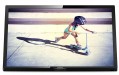 | 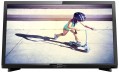 |
|---|---|---|
| Philips 24PFT4022 | Philips 22PFS4232 | |
| Outdated Product | Outdated Product | |
| TOP sellers | ||
| Size | 24 " | 22 " |
Display | ||
| Matrix | *VA | *VA |
| Screen surface | anti-glare | anti-glare |
| Resolution | 1920x1080 px | 1920x1080 px |
| Brightness | 250 cd/m² | 250 cd/m² |
| Frame rate | 50/60 Hz | 50/60 Hz |
| Brightness / contrast enhancement |  | |
Multimedia | ||
| Sound power | 6 W | 6 W |
| Number of speakers | 2 | 2 |
| Audio decoders | Incredible Surround | Incredible Surround |
| Digital tuner | DVB-T2 (terrestrial) DVB-C (cable) | DVB-T2 (terrestrial) DVB-C (cable) DVB-S (satellite) DVB-S2 (satellite) |
Connectors | ||
| HDMI | 2 | 2 |
| Additional inputs | USB-A VGA | USB-A VGA |
| Outputs | mini-Jack (3.5 mm) headphones optical | mini-Jack (3.5 mm) headphones optical |
General | ||
| Wall mount | VESA 75x75 mm | VESA 75x75 mm |
| Power consumption | 19 W | 19 W |
| Dimensions (WxHxD) | 562x340x118 mm | 512.3x317x133.2 mm |
| Dimensions without stand (WxHxD) | 562x337x62 mm | 512.3x317x54.1 mm |
| Weight | 3.27 kg | 2.65 kg |
| Color | ||
| Added to E-Catalog | july 2017 | july 2017 |


Compare Philips 24PFT4022 and 22PFS4232
You may be interested in
My comparisons
Philips 24PFT4022 often compared


Philips 22PFS4232 often compared

Glossary
Size
The optimal size of the TV depends primarily on the distance from which it is planned to watch. If the diagonal on the screen is too small, it will be difficult to see the details, you will have to strain; if too large, the image will be much larger than the field of view, which is also undesirable. The best option is the situation when the distance to the TV corresponds to 3 - 4 of its diagonals: for example, for a size of 32 "(80 cm), the recommended distance is about 2.5 - 3 m.
The size of the diagonal of the screen affects both the cost of the TV and its general equipment. So, among models smaller than 32" there are often TVs without Smart TV and other advanced features; TVs for 32 - 55" can be both quite simple and advanced; and a large screen, more than 55", in most cases is combined with extensive additional functionality.
Now the following popular diagonals are on the market: 32 ", 39 - 40", 43", 49", 49 - 50", 55", 65", 75", 85" and more than 90".
The size of the diagonal of the screen affects both the cost of the TV and its general equipment. So, among models smaller than 32" there are often TVs without Smart TV and other advanced features; TVs for 32 - 55" can be both quite simple and advanced; and a large screen, more than 55", in most cases is combined with extensive additional functionality.
Now the following popular diagonals are on the market: 32 ", 39 - 40", 43", 49", 49 - 50", 55", 65", 75", 85" and more than 90".
Digital tuner
Types of digital tuners (receivers) provided for in the design of the TV.
Such tuners are necessary for receiving digital TV broadcasts; for normal operation, the broadcast standard must match the type of tuner (with some exceptions, see below). Note that the receivers are also available as separate devices; however, it is easier (and often cheaper) to buy a TV with a built-in tuner of the desired format. In modern TV you can find terrestrial tuners DVB-T2, cable DVB-C and satellite DVB-S and DVB-S2, here are their main features:
— DVB-T2 (terrestrial). The main modern standard for digital broadcasting. Such broadcasting has a number of advantages over traditional analogue broadcasting: it allows higher resolution and multi-channel audio transmission, with better sound and picture quality, and this quality is fully preserved until the signal weakens to a critical level. However, in some countries digital terrestrial broadcasting is just being put into operation, so it will not hurt to check the availability of DVB-T2 coverage in your area.
— DVB-C (cable). The main modern standard for digital broadcasting in cable networks. Despite the advent of the more advanced DVB-C2, it still continues to be widely used, and most likely this situation will not change for a long time.
— DVB-S (satellite). The first...generation of the digital DVB standard for satellite broadcasting. Nowadays, it is relatively rare due to the advent of a more advanced DVB-S2, which is also backwards compatible with the original DVB-S.
— DVB-S2 (satellite). The most advanced and popular of today's digital satellite broadcasting standards. Being the heir to DVB-S, has retained compatibility with it; therefore, manufacturers often limit themselves to installing only a DVB-S2 tuner on their TVs — it allows you to receive both major satellite broadcast formats.
Such tuners are necessary for receiving digital TV broadcasts; for normal operation, the broadcast standard must match the type of tuner (with some exceptions, see below). Note that the receivers are also available as separate devices; however, it is easier (and often cheaper) to buy a TV with a built-in tuner of the desired format. In modern TV you can find terrestrial tuners DVB-T2, cable DVB-C and satellite DVB-S and DVB-S2, here are their main features:
— DVB-T2 (terrestrial). The main modern standard for digital broadcasting. Such broadcasting has a number of advantages over traditional analogue broadcasting: it allows higher resolution and multi-channel audio transmission, with better sound and picture quality, and this quality is fully preserved until the signal weakens to a critical level. However, in some countries digital terrestrial broadcasting is just being put into operation, so it will not hurt to check the availability of DVB-T2 coverage in your area.
— DVB-C (cable). The main modern standard for digital broadcasting in cable networks. Despite the advent of the more advanced DVB-C2, it still continues to be widely used, and most likely this situation will not change for a long time.
— DVB-S (satellite). The first...generation of the digital DVB standard for satellite broadcasting. Nowadays, it is relatively rare due to the advent of a more advanced DVB-S2, which is also backwards compatible with the original DVB-S.
— DVB-S2 (satellite). The most advanced and popular of today's digital satellite broadcasting standards. Being the heir to DVB-S, has retained compatibility with it; therefore, manufacturers often limit themselves to installing only a DVB-S2 tuner on their TVs — it allows you to receive both major satellite broadcast formats.