
Comparison Philips 22PFS4022 vs Philips 22PFS4232
Add to comparison | 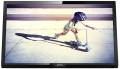 | 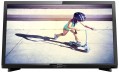 |
|---|---|---|
| Philips 22PFS4022 | Philips 22PFS4232 | |
| Outdated Product | Outdated Product | |
| TOP sellers | ||
| Size | 22 " | 22 " |
Display | ||
| Matrix | *VA | *VA |
| Screen surface | glossy | anti-glare |
| Resolution | 1920x1080 px | 1920x1080 px |
| Brightness | 250 cd/m² | 250 cd/m² |
| Frame rate | 50/60 Hz | 50/60 Hz |
| Brightness / contrast enhancement |  | |
Multimedia | ||
| Sound power | 6 W | 6 W |
| Number of speakers | 2 | 2 |
| Audio decoders | Incredible Surround | Incredible Surround |
| Digital tuner | DVB-T2 (terrestrial) DVB-C (cable) DVB-S (satellite) DVB-S2 (satellite) | DVB-T2 (terrestrial) DVB-C (cable) DVB-S (satellite) DVB-S2 (satellite) |
Connectors | ||
| HDMI | 2 | 2 |
| Additional inputs | USB-A VGA | USB-A VGA |
| Outputs | mini-Jack (3.5 mm) headphones optical | mini-Jack (3.5 mm) headphones optical |
General | ||
| Wall mount | VESA 75x75 mm | VESA 75x75 mm |
| Power consumption | 20 W | 19 W |
| Dimensions (WxHxD) | 512x311x118 mm | 512.3x317x133.2 mm |
| Dimensions without stand (WxHxD) | 512x308x54 mm | 512.3x317x54.1 mm |
| Weight | 2.65 kg | 2.65 kg |
| Color | ||
| Added to E-Catalog | october 2017 | july 2017 |


Compare Philips 22PFS4022 and 22PFS4232
You may be interested in
Philips 22PFS4022 often compared


Philips 22PFS4232 often compared
Glossary
Screen surface
The type of coating used on the TV screen.
— Matte. Historically, the first type of coating for LCD screens, which is often found today. Screens with such a coating generally have average characteristics of brightness, saturation and colour reproduction quality, in terms of these indicators they are inferior to glossy counterparts. However, the matte coating has one important advantage: it has virtually no glare from ambient light. In some situations, this can be an important advantage — for example, if the TV is installed opposite the window. And for some users it is more pleasant to look at the screen without glare, albeit relatively dim.
— Glossy. A coating designed to improve the brightness and colour quality of the visible image compared to matte screens. The creators have managed to achieve this goal: "glossy" screens really provide rich, vibrant colours and a brighter image. The key disadvantage of such screens is the appearance of glare from ambient light on them — this can ruin the whole viewing experience. Because of this, the classic glossy coating is practically not used today, anti-glare solutions have taken its place (see below).
— Glossy (anti-glare). Modification of the glossy coating, created, as the name implies, in order to eliminate the main drawback of the classic gloss — glare from external lighting. This is not to say th...at such screens do not glare at all, but there are much less reflections on them than on ordinary glossy ones. As for the image quality, it is at least not much worse, and often even better (especially since such coatings are constantly being improved). Thanks to all this, most modern TVs of all price categories are equipped with anti-glare screens.
— Matte. Historically, the first type of coating for LCD screens, which is often found today. Screens with such a coating generally have average characteristics of brightness, saturation and colour reproduction quality, in terms of these indicators they are inferior to glossy counterparts. However, the matte coating has one important advantage: it has virtually no glare from ambient light. In some situations, this can be an important advantage — for example, if the TV is installed opposite the window. And for some users it is more pleasant to look at the screen without glare, albeit relatively dim.
— Glossy. A coating designed to improve the brightness and colour quality of the visible image compared to matte screens. The creators have managed to achieve this goal: "glossy" screens really provide rich, vibrant colours and a brighter image. The key disadvantage of such screens is the appearance of glare from ambient light on them — this can ruin the whole viewing experience. Because of this, the classic glossy coating is practically not used today, anti-glare solutions have taken its place (see below).
— Glossy (anti-glare). Modification of the glossy coating, created, as the name implies, in order to eliminate the main drawback of the classic gloss — glare from external lighting. This is not to say th...at such screens do not glare at all, but there are much less reflections on them than on ordinary glossy ones. As for the image quality, it is at least not much worse, and often even better (especially since such coatings are constantly being improved). Thanks to all this, most modern TVs of all price categories are equipped with anti-glare screens.
Power consumption
The electrical power normally consumed by the TV. This parameter strongly depends on the screen size and sound power (see above), however, it can be determined by other parameters — primarily additional features and technologies implemented in the design. It is worth noting that most modern LCD TVs are quite economical, and most often this parameter does not play a significant role — in most cases, power consumption is about several tens of watts. And even large models with a diagonal of 70 – 90" consume about 200 – 300 W — this can be compared with the system unit of a low-power desktop PC.