
Comparison Kentavr MB-2012DE vs Kentavr MB-2012D
Add to comparison | 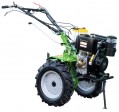 |  |
|---|---|---|
| Kentavr MB-2012DE | Kentavr MB-2012D | |
| Outdated Product | Outdated Product | |
| TOP sellers | ||
| Motor type | diesel | diesel |
Soil cultivation | ||
| Working width | 138 cm | 138 cm |
| Working depth | 36 cm | 36 cm |
| Number of blades | 10 | 10 |
Design characteristics | ||
| Design | power take-off shaft handle height adjustment adjustable by side handle | power take-off shaft handle height adjustment adjustable by side handle |
| Reducer | gear | gear |
| Gears | 2 forward / 1 back | 2 forward / 1 back |
Motor | ||
| ICE type | 4-stroke | 4-stroke |
| Engine size | 438 cm³ | 438 cm³ |
| Motor power | 12 hp | 12 hp |
| Motor power | 8800 W | 8800 W |
| Fuel tank volume | 4 L | 4 L |
| Start type | electric starter | manual |
| Engine-cooling system | air | air |
General | ||
| Wheels diameter | 60 cm | 60 cm |
| Dimensions | 178x67x91 cm | 178x67x91 cm |
| Weight | 168 kg | 154 kg |
| Added to E-Catalog | september 2020 | september 2020 |


Compare Kentavr MB-2012DE and MB-2012D
You may be interested in
Kentavr MB-2012DE often compared


Glossary
Start type
The method of starting a petrol or diesel engine (see "Motor type") provided in the unit.
— Manual. Starting by human muscle power: the operator pulls a special cable or turns a handle, which causes the shaft to rotate and the engine to receive the initial impulse necessary for operation. Manual starting systems are inexpensive, lightweight and compact, and do not depend on batteries that can run out at the most inopportune moment. On the other hand, the starting process itself may require significant effort, especially in a heavy, powerful engine. Therefore, this option is used mainly in relatively low-power models.
— Electric . Starting with starter — small electric motor powered by a battery. Such systems are much more convenient than manual ones — the operator is actually required to press a button or turn a key; they are suitable even for the most powerful motors. On the other hand, a starter with a battery significantly increases the weight, dimensions and cost of the entire unit, and if left idle for a long time, the battery may run down, and the system will become useless (however, a spare manual "starter" may be provided for this case). Therefore, this starting method is used exclusively in heavy equipment, for which the ability to do without manual starting is more important than the described disadvantages.
— Manual. Starting by human muscle power: the operator pulls a special cable or turns a handle, which causes the shaft to rotate and the engine to receive the initial impulse necessary for operation. Manual starting systems are inexpensive, lightweight and compact, and do not depend on batteries that can run out at the most inopportune moment. On the other hand, the starting process itself may require significant effort, especially in a heavy, powerful engine. Therefore, this option is used mainly in relatively low-power models.
— Electric . Starting with starter — small electric motor powered by a battery. Such systems are much more convenient than manual ones — the operator is actually required to press a button or turn a key; they are suitable even for the most powerful motors. On the other hand, a starter with a battery significantly increases the weight, dimensions and cost of the entire unit, and if left idle for a long time, the battery may run down, and the system will become useless (however, a spare manual "starter" may be provided for this case). Therefore, this starting method is used exclusively in heavy equipment, for which the ability to do without manual starting is more important than the described disadvantages.