
Comparison Doogee T35 256 GB vs Doogee T30 Pro 256 GB
Add to comparison | 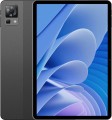 | 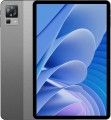 |
|---|---|---|
| Doogee T35 256 GB | Doogee T30 Pro 256 GB | |
from $179.99 | from $149.99 | |
| User reviews | ||
| TOP sellers | ||
4-pin pogo pins for connecting a keyboard. The speakers are Hi-Res certified. | 7 GB RAM expansion function. Widevine L1 support. | |
| Operating system | Android 14 | Android 13 |
Screen | ||
| Screen | 11 " 2560x1600 px 274 ppi IPS 60 Hz light sensor | 11 " 2560x1600 px 274 ppi IPS 60 Hz light sensor |
| Screen to body ratio | 81 % | 81 % |
| TÜV Rheinland certificate |  |  |
Hardware | ||
| Processor (graphics) | Helio G99 (Mali-G57) | Helio G99 (Mali-G57) |
| CPU speed | 2.2 GHz | 2.2 GHz |
| CPU cores | 8 | 8 |
| RAM | 8 GB | 8 GB |
| RAM type | LPDDR4X | LPDDR4X |
| Storage capacity | 256 GB | 256 GB |
| Storage type | UFS 2.2 | UFS 2.2 |
| Card reader | | |
| Max. memory card storage | 2048 GB | 2048 GB |
Test results | ||
| AnTuTu Benchmark | 409 000 points | 409 000 points |
| Geekbench | 1791 points | |
Communication | ||
| SIM card | x2 nano-SIM | x2 nano-SIM |
| Communication standard | 4G (LTE) | 4G (LTE) |
| Wi-Fi | Wi-Fi 5 (802.11aс) | Wi-Fi 5 (802.11aс) |
| Bluetooth | v5.0 | v5.2 |
| Connections | USB-C mini-Jack (3.5 mm) | USB-C mini-Jack (3.5 mm) |
Navigation | ||
| aGPS | | |
| GPS | | |
| GLONASS | | |
| Galileo support | | |
Camera | ||
| Main | 2 modules 20 MP auxiliary lens autofocus flash | 2 modules 20 MP 2 MP auxiliary lens autofocus flash |
| Full HD filming (1080p) | 1920x1080 px 30 fps | 1920x1080 px 30 fps |
| Camera (front) | 8 MP | 8 MP |
Features | ||
| More features | FM receiver | |
| Acoustics | stereo | stereo |
Power source | ||
| Battery capacity | 8580 mAh | 8580 mAh |
| Operating time (PCMark) | 10.02 | |
| Fast charging | Pump Express | |
| Charger power | 33 W | 27 W |
General | ||
| Stylus | | |
| Material | metal | metal |
| Size | 257x168.7x7.6 mm | 257x168.7x7.6 mm |
| Weight | 543 g | |
| Added to E-Catalog | january 2025 | june 2023 |


Compare Doogee T35 and T30 Pro
You may be interested in
Doogee T35 often compared


Doogee T30 Pro often compared


Glossary
Operating system
The operating system (OS) that the tablet runs on.
The most popular operating systems in modern tablets are such operating systems as Android of different versions,iPadOS (modern version of iOS), as well as Windows 10 and Windows 11. Here is a more detailed description of the different options:
— Android. Free open source OS from Google. Used by almost all modern manufacturers except Apple. Presented on the market in many versions — in particular, Android 10 Q, Android 10 Go Edition, Android 11 R, 11 Go Edition, Android 12, Android 12 Go Edition, Android 13, Android 13 Go Edition, Android 14, Android 15. It is worth considering that at the time of the release of the device, one version of the OS could be installed, and at the time of sale it could be updated to a more modern one. Functionally, this OS is notable primarily for its full-fledged multitasking and an extensive set of available applications - in both of these points it surpasses both iOS and Windows. On the...other hand, in general, the quality of Android applications is somewhat lower than in iOS, and the system itself is designed mainly for entertainment use (unlike Windows). Initially, Android has tight integration with Google services - the Google Play app and content store, Gmail mail, Google Drive cloud storage, etc.; however, exceptions to this rule are possible. Note that the latest versions of this OS can be found on the market both in its original form and in one of two specific editions:
— Windows. The operating system developed by Microsoft, originally created for PCs and laptops, but nowadays also used in tablets. Such tablets are considered mainly professional and business-class devices, they are well suited, in particular, for study and regular work with documents. The 11th revision of the operating system from Microsoft, which debuted in 2021, is now considered relevant. Of the qualitative improvements in the system, the taskbar has been redesigned, which is now located in the centre of the bottom edge of the desktop, new widget menus have been introduced, window resizing and position changes (Snap), and the operating system has become friends with Android applications. The system remains the prerogative of tablets for work and study with support for office and specialized programs written under Windows.
— HarmonyOS. Huawei's Universal Operating System, also known as Hongmeng. Provides operation of a wide range of devices: appliances from the smart home ecosystem, smartwatches, smartphones and tablets. Specifically, in the tablet league of gadgets, the Harmony OS system is a kind of add-on on top of Android without Google services. The app store for Harmony OS devices is called AppGallery.
In modern tablets, you can find other operating systems, in addition to those described above. However, these are very rare and specific systems that have not received significant distribution.
The most popular operating systems in modern tablets are such operating systems as Android of different versions,iPadOS (modern version of iOS), as well as Windows 10 and Windows 11. Here is a more detailed description of the different options:
— Android. Free open source OS from Google. Used by almost all modern manufacturers except Apple. Presented on the market in many versions — in particular, Android 10 Q, Android 10 Go Edition, Android 11 R, 11 Go Edition, Android 12, Android 12 Go Edition, Android 13, Android 13 Go Edition, Android 14, Android 15. It is worth considering that at the time of the release of the device, one version of the OS could be installed, and at the time of sale it could be updated to a more modern one. Functionally, this OS is notable primarily for its full-fledged multitasking and an extensive set of available applications - in both of these points it surpasses both iOS and Windows. On the...other hand, in general, the quality of Android applications is somewhat lower than in iOS, and the system itself is designed mainly for entertainment use (unlike Windows). Initially, Android has tight integration with Google services - the Google Play app and content store, Gmail mail, Google Drive cloud storage, etc.; however, exceptions to this rule are possible. Note that the latest versions of this OS can be found on the market both in its original form and in one of two specific editions:
- Go Edition. Modification of Android, designed for inexpensive gadgets with "weak" hardware. Both the OS itself and standard applications (Assistant, Gmail, etc.) have been redesigned in this edition in such a way as to ensure reliable operation even with low computing power. At the same time, the developers tried to preserve the functionality of full-fledged Android as much as possible — however, some specific functions in the Go Edition were still not available (for example, standard maps do not support turn-by-turn navigation).
- HMS. Edition of Android without Google services, used in devices from Huawei. Due to US sanctions against China, this company cannot fully cooperate with Google — in particular, use Google services (Google Mobile Services — GMS) in its Android gadgets. As a replacement, HMS — Huawei Mobile Services were introduced. These services include Huawei ID, AppGallery, branded equivalents of Google's core services (assistant, browser, cloud storage, music/video, etc.), and app developer tools.
- 7.0. Released in August 2016. In this version, for the first time, a multi-window mode appeared — the ability to display two windows with two different applications on the same screen — as well as a virtual reality mode.
- 7.1. Update version 7.0, released at the end of 2016. Introduced a number of minor improvements related to appearance and usability.
- 8.0. A major update that was released at the end of the summer of 2017. Among the most notable innovations are picture-in-picture multitasking when watching videos, compatibility with Bluetooth 5, support for applications for VoIP (Internet telephony) at the system level, the ability to group notifications into “channels”. It is also the first version of Android to feature a Go edition (see above).
- 8.1. An update released at the end of 2017. From the user's point of view, this version is almost the same as the original 8.0, the main innovations are related to minor improvements and bug fixes.
- 9.0. Update introduced in August 2018. One of the most notable changes was the look, with a redesigned design and more customization options. In addition, instead of the three standard buttons in the navigation bar, only one (Home) button is displayed by default, the Back button appears only when it is relevant, and the list of open applications is displayed by moving the Home button to the right. Other important innovations include optimization of background power consumption based on the actual frequency of use of applications, compatibility with additional types of biometric authorization (in addition to a fingerprint), and the ability to simultaneously use several cameras at once with one application.
- 10. Version released in September 2019. This version introduced an expanded set of full-screen gestures (with the possibility of optimization in individual applications — in particular, disabling gestures on certain areas of the screen to avoid conflicts), a "dark" display mode at the system level, a number of important security updates (including a separate encryption standard for weak devices that do not support the AES format at the hardware level), full support for 5G communications and improved capabilities for working with augmented reality. In addition, a number of solutions have been introduced to optimize work on foldable gadgets with a flexible screen.
- 11.The next major Anroid update, released in the fall of 2020. The most noticeable innovations in this version are related to messages and notifications. So, a separate section "Conversations" for messages was created in notifications, it also became possible to display various correspondence in the form of a "bubble" on top of any running application (Bubbles function). The functionality of the Do Not Disturb mode has been expanded — now you can add exceptions for individual correspondence to it. Other important innovations include a system tool for recording video from the screen (including fixing touch points), a single control centre for smart home components, quick switching between playback devices (phone speaker, wireless headphones, Smart TV, etc.) , built-in support for Android Auto, as well as advanced options for managing the access of individual applications to certain data.
— Windows. The operating system developed by Microsoft, originally created for PCs and laptops, but nowadays also used in tablets. Such tablets are considered mainly professional and business-class devices, they are well suited, in particular, for study and regular work with documents. The 11th revision of the operating system from Microsoft, which debuted in 2021, is now considered relevant. Of the qualitative improvements in the system, the taskbar has been redesigned, which is now located in the centre of the bottom edge of the desktop, new widget menus have been introduced, window resizing and position changes (Snap), and the operating system has become friends with Android applications. The system remains the prerogative of tablets for work and study with support for office and specialized programs written under Windows.
— HarmonyOS. Huawei's Universal Operating System, also known as Hongmeng. Provides operation of a wide range of devices: appliances from the smart home ecosystem, smartwatches, smartphones and tablets. Specifically, in the tablet league of gadgets, the Harmony OS system is a kind of add-on on top of Android without Google services. The app store for Harmony OS devices is called AppGallery.
In modern tablets, you can find other operating systems, in addition to those described above. However, these are very rare and specific systems that have not received significant distribution.
TÜV Rheinland certificate
TÜV Rheinland certified for reduced screen emissions and good eye protection.
Geekbench
The result shown by the device when passing the performance test (benchmark) Geekbench.
Geekbench is a specialized benchmark designed for processors. Since version 4.0, the test has also been applied to graphics accelerators, and towards the end of 2019, a benchmark edition numbered "5" was released. In the specifications of portable gadgets, data is usually given specifically for the CPU. During testing, Geekbench simulates loads that occur during the execution of real tasks and takes into account both the capabilities of a single core and the efficiency of simultaneous multi-core operation. Thanks to this, the final results give a good characterization of the processor's capabilities in everyday use. Moreover, the test is cross-platform and allows for the comparison of CPUs from different devices (smartphones, tablets, laptops, PCs). The reference information only provides values for the multithreaded test for the processor.
Geekbench is a specialized benchmark designed for processors. Since version 4.0, the test has also been applied to graphics accelerators, and towards the end of 2019, a benchmark edition numbered "5" was released. In the specifications of portable gadgets, data is usually given specifically for the CPU. During testing, Geekbench simulates loads that occur during the execution of real tasks and takes into account both the capabilities of a single core and the efficiency of simultaneous multi-core operation. Thanks to this, the final results give a good characterization of the processor's capabilities in everyday use. Moreover, the test is cross-platform and allows for the comparison of CPUs from different devices (smartphones, tablets, laptops, PCs). The reference information only provides values for the multithreaded test for the processor.
Bluetooth
Bluetooth version supported by the tablet.
Bluetooth itself is a technology for direct wireless communication between various electronic devices. It can be used for various purposes, in particular, exchanging files with another Bluetooth device (laptop, mobile phone), connecting wireless headphones and headsets, peripheral devices (keyboards, mice), etc. The Bluetooth connection does not require both devices to be in line of sight and is stable as they move within range. The range and additional features depend on the connection version:
Bluetooth itself is a technology for direct wireless communication between various electronic devices. It can be used for various purposes, in particular, exchanging files with another Bluetooth device (laptop, mobile phone), connecting wireless headphones and headsets, peripheral devices (keyboards, mice), etc. The Bluetooth connection does not require both devices to be in line of sight and is stable as they move within range. The range and additional features depend on the connection version:
- 2.0. The earliest of the Bluetooth variations used in today's tablets. Provides a data transfer rate of about 2.1 Mbps.
- 2.1. This version differs from 2.0 in a number of improvements: enhanced security, reduced power consumption and compatibility with NFC technology.
- 3.0. This version is a combination of a Bluetooth 2.1 module and a high-speed add-on that allows you to transfer data at speeds up to 24 Mbps. Thanks to this, the connection is able to automatically adapt to the situation: for small amounts of data, a slow channel is used that does not consume much energy, and for large volumes, the high-speed part is used.
- 4.0. June 2010 version. It is notable for the fact that it combines three protocols: classic, high-speed and BLE (low power consumption). The latter is the most economical at the time of release - the power consumption is so low that the CR2032 "tablet" batteries la...st for several years of operation. The data transfer rate via the BLE protocol is up to 1 Mbps. According to the classical and high-speed protocol, Bluetooth 4.0 is almost the same as version 3.0 (see above).
- 4.1. Development of the version 4.0 described above. One of the key improvements was the optimization of collaboration with LTE cellular modules in order to avoid mutual interference. In addition, it became possible to operate Bluetooth devices simultaneously in several roles (for example, to broadcast audio to a headset and remotely control another device).
- 4.2. The next, after 4.1, is a key update to the Bluetooth standard. Introduced a number of key innovations for working in the "Internet of Things" (Internet of Things), as well as general improvements in speed and noise immunity.
- 5.0. Bluetooth version 5.0, introduced in 2016. In general, it continued the trend set by the 4.2 standard, has even more extensive opportunities for working with the Internet of Things. In particular, in the Bluetooth Low Energy protocol (see "4.0" above), it became possible to double the data transfer rate (up to 2 Mbps) at the cost of reducing the range, as well as quadruple the range at the cost of reducing the speed; in addition, a number of improvements have been introduced regarding simultaneous operation with a large number of connected devices.
- Bluetooth v 5.1. Update of the version described above v 5.0. In addition to general improvements in the quality and reliability of communication, this update has implemented such an interesting feature as determining the direction from which the Bluetooth signal is coming. Thanks to this, it becomes possible to determine the location of connected devices with an accuracy of a centimeter, which can be useful when searching for various accessories - for example, Bluetooth headphones or a wireless gamepad.
- Bluetooth v 5.2. The next, after 5.1, is the Bluetooth 5th generation update. The main innovations in this version are a number of security improvements, additional power optimization in LE mode, and a new audio signal format for synchronized parallel playback on multiple devices.
- Bluetooth v5.3. The Bluetooth v5.3 wireless protocol was introduced at the dawn of 2022. Among the innovations, it accelerated the process of negotiating the communication channel between the controller and the device, implemented the function of quickly switching between the state of operation in a small duty cycle and high-speed mode, improved the throughput and stability of the connection by reducing the susceptibility to interference. In case of unexpected interference in the Low Energy mode of operation, the procedure for selecting a communication channel for switching is now accelerated. There are no fundamental innovations in protocol 5.3, but a number of qualitative improvements are seen in it.
Main
— The number of lenses. The characteristics of the main (rear) camera of the tablet are represented primarily by the number of modules, which in most cases are 1, but there are also tablets with a dual camera.
— Resolution. The second important factor of the camera is the number of megapixels. Many really believe that the more MP, the better the quality of filming. However, this is not entirely true: only the maximum resolution of the resulting images depends on the resolution of the matrix, and their quality is determined by many other parameters. However a large sensor resolution may be a sign of an advanced camera, but this is not necessary — two "eyes" with the same number of megapixels can radically differ in the quality of shooting. Rear cameras in tablets may well be used for photo and video shooting; therefore, they have cameras of 8 MP, 10 MP and even higher (12 and 13 MP).
— Autofocus. For focus in such cameras, a movable lens system controlled by automation is responsible. It takes some time for the automation to work, and the lenses themselves turn out to be more complicated and more expensive than optics with a fixed focus (fixed lenses that are initially set to a large range of distances). However, the quality of the pictures is disproportionate...ly higher than that of cameras without autofocus, and the systems themselves are constantly being improved, and their response time is increasingly approaching instantaneous.
— Flash. Flash significantly expands the capabilities of the camera. First of all, it allows you to shoot in low light conditions; in this case, the backlight, usually, can also be used in the constant glow mode — for video shooting. The second situation where a flash can come in handy is backlighting when the subject is in shadow. In addition, in many tablets, the flash LED can also be used as a regular flashlight, without a camera.
— Resolution. The second important factor of the camera is the number of megapixels. Many really believe that the more MP, the better the quality of filming. However, this is not entirely true: only the maximum resolution of the resulting images depends on the resolution of the matrix, and their quality is determined by many other parameters. However a large sensor resolution may be a sign of an advanced camera, but this is not necessary — two "eyes" with the same number of megapixels can radically differ in the quality of shooting. Rear cameras in tablets may well be used for photo and video shooting; therefore, they have cameras of 8 MP, 10 MP and even higher (12 and 13 MP).
— Autofocus. For focus in such cameras, a movable lens system controlled by automation is responsible. It takes some time for the automation to work, and the lenses themselves turn out to be more complicated and more expensive than optics with a fixed focus (fixed lenses that are initially set to a large range of distances). However, the quality of the pictures is disproportionate...ly higher than that of cameras without autofocus, and the systems themselves are constantly being improved, and their response time is increasingly approaching instantaneous.
— Flash. Flash significantly expands the capabilities of the camera. First of all, it allows you to shoot in low light conditions; in this case, the backlight, usually, can also be used in the constant glow mode — for video shooting. The second situation where a flash can come in handy is backlighting when the subject is in shadow. In addition, in many tablets, the flash LED can also be used as a regular flashlight, without a camera.
More features
- FM receiver. A feature that allows you to listen to FM radio on your tablet. It should be borne in mind that for reliable reception, you may need to connect wired headphones (usually via a 3.5 mm mini-Jack connector) - their cable in this case will play the role of an antenna.
- Fingerprint scanner. Fingerprint sensor. Used to recognize the user in appropriate situations: when unlocking the tablet, when authorizing in different accounts, when confirming payments, etc. It can be located in different places on the tablet - in front, behind, on the side, on the screen. This authentication method is much more convenient and safer than passwords: they can be forgotten or accidentally opened to strangers, while the finger is not lost, and it is very difficult to fake a fingerprint.
- 3D face scanner. A special technology for recognizing the user's face - not just by photographing, but by building a three-dimensional model of the face based on data from a special module on the front panel. This technology is constantly being improved, in our time it is able to take into account the change in hairstyles and facial hair, the presence of glasses, makeup, etc. At the same time, the recognition of twins and children's faces still remains weak points (they have fewer individual features than adults ). The main use of a face scanner is...authentication when unlocking a tablet, entering applications, making payments, etc. At the same time, other, more original use cases are possible. For example, in some applications, the face scanner reads the user's facial expressions, and then this facial expression is repeated by a smiley on the screen.
- Gyroscope. A device that tracks the rotation of the tablet in space. Modern gyroscopes work on all three axes and are able to determine both the speed and the angle of deviation. This expands the control of the tablet, allowing you to give commands by tilting the device in one direction or another; This feature is especially popular in games.
- Fingerprint scanner. Fingerprint sensor. Used to recognize the user in appropriate situations: when unlocking the tablet, when authorizing in different accounts, when confirming payments, etc. It can be located in different places on the tablet - in front, behind, on the side, on the screen. This authentication method is much more convenient and safer than passwords: they can be forgotten or accidentally opened to strangers, while the finger is not lost, and it is very difficult to fake a fingerprint.
- 3D face scanner. A special technology for recognizing the user's face - not just by photographing, but by building a three-dimensional model of the face based on data from a special module on the front panel. This technology is constantly being improved, in our time it is able to take into account the change in hairstyles and facial hair, the presence of glasses, makeup, etc. At the same time, the recognition of twins and children's faces still remains weak points (they have fewer individual features than adults ). The main use of a face scanner is...authentication when unlocking a tablet, entering applications, making payments, etc. At the same time, other, more original use cases are possible. For example, in some applications, the face scanner reads the user's facial expressions, and then this facial expression is repeated by a smiley on the screen.
- Gyroscope. A device that tracks the rotation of the tablet in space. Modern gyroscopes work on all three axes and are able to determine both the speed and the angle of deviation. This expands the control of the tablet, allowing you to give commands by tilting the device in one direction or another; This feature is especially popular in games.
Operating time (PCMark)
Against the background of the fact that manufacturers in the characteristics of their gadgets indicate a very conditional operating time (in an unknown mode, with incomprehensible brightness indicators and settings), which is more marketing and is not confirmed in reality, we decided to display a more accurate picture. The operating time indicated in this paragraph is characterized by the results of the PCMark Work 2.0 Battery Life benchmark, which evaluates energy efficiency in five work formats: web surfing, video viewing / editing, photo editing, working with text documents and working with data (extracting them from different file formats, plotting). These are the main tasks that the tablet is supposed to perform in everyday life. And thanks to this testing format, the results very accurately correspond to the actual battery life of the gadget with active use during the day; using them, you can fairly reliably estimate how long the battery will last if you “don’t let go of the tablet.”
Fast charging
By itself, fast charging, as the name suggests, reduces the charging time compared to the standard procedure. For this, increased voltage and/or current strength is used, as well as a special "smart" process control. But the possibilities and features of such charging may be different, depending on the specific technology used in the device. The same technology must be supported by the charger — this is the only way to 100% guarantee correct operation. However some types of fast charging are mutually compatible — however, this point should be clarified separately, and compatibility is not always complete.
Here is a brief description of the most popular technologies nowadays:
— Quick Charge (1.0, 2.0, 3.0, 4.0, 5.0). Technology created by Qualcomm and used in gadgets with Qualcomm processors. The later the version, the more perfect the technology: for example, Quick Charge 2.0 had 3 fixed voltage options, and version 3.0 introduced smooth adjustment in the range from 3.6 to 20 V. Most often, gadgets with a newer version of Quick Charge are also compatible with older chargers, but for full use it is desirable to match the versions.
Also note that certain versions of Quick Charge have become the basis for some other technologies, such as Asus BoostMaster and Meizu mCharge. However, again, the mutual compatibility of devices supporting these technologies needs to be clarified separately.
— Pump Express. Ow...n development of MediaTek, used in gadgets with processors of this brand. Also available in several versions, with improvements and additions as it develops.
— Samsung Charge (Samsung Fast Charge, Adaptive Fast Charging). Samsung's proprietary fast charging technology. It has been used without any changes since 2015, in light of which it looks rather modest against the background of newer standards. Nevertheless, it is able to provide good speed, especially in the first 50% of the charge.
— Huawei PowerUp. One of Huawei's proprietary technologies. Formally similar to Quick Charge 2.0, but used with both Qualcomm and other brands of mobile processors, so compatibility is not guaranteed. In general, it is considered obsolete, gradually being replaced by more advanced standards like the SuperCharge Protocol.
— Huawei FastCharge Protocol. Relatively simple fast charging technology used in gadgets from Huawei. In fact, it is an analogue of Huawei Power Up, fundamentally different only in name.
— Huawei SuperCharge Protocol. Another proprietary technology from Huawei introduced in 2016; for 2021 is available in several versions. In some devices, the power of such charging exceeds 60 V — not a record, but a very solid indicator.
Here is a brief description of the most popular technologies nowadays:
— Quick Charge (1.0, 2.0, 3.0, 4.0, 5.0). Technology created by Qualcomm and used in gadgets with Qualcomm processors. The later the version, the more perfect the technology: for example, Quick Charge 2.0 had 3 fixed voltage options, and version 3.0 introduced smooth adjustment in the range from 3.6 to 20 V. Most often, gadgets with a newer version of Quick Charge are also compatible with older chargers, but for full use it is desirable to match the versions.
Also note that certain versions of Quick Charge have become the basis for some other technologies, such as Asus BoostMaster and Meizu mCharge. However, again, the mutual compatibility of devices supporting these technologies needs to be clarified separately.
— Pump Express. Ow...n development of MediaTek, used in gadgets with processors of this brand. Also available in several versions, with improvements and additions as it develops.
— Samsung Charge (Samsung Fast Charge, Adaptive Fast Charging). Samsung's proprietary fast charging technology. It has been used without any changes since 2015, in light of which it looks rather modest against the background of newer standards. Nevertheless, it is able to provide good speed, especially in the first 50% of the charge.
— Huawei PowerUp. One of Huawei's proprietary technologies. Formally similar to Quick Charge 2.0, but used with both Qualcomm and other brands of mobile processors, so compatibility is not guaranteed. In general, it is considered obsolete, gradually being replaced by more advanced standards like the SuperCharge Protocol.
— Huawei FastCharge Protocol. Relatively simple fast charging technology used in gadgets from Huawei. In fact, it is an analogue of Huawei Power Up, fundamentally different only in name.
— Huawei SuperCharge Protocol. Another proprietary technology from Huawei introduced in 2016; for 2021 is available in several versions. In some devices, the power of such charging exceeds 60 V — not a record, but a very solid indicator.
Charger power
The power at which the tablet is charged in normal mode.
On the practical side, the higher the charging power, the less time spent on it (with the same battery capacity). But this parameter does not directly affect compatibility with chargers: modern devices are able to work with “chargers” of both higher and lower power. At the same time, in the first case, the battery controller will automatically limit the charging current, and in the second, charging will simply take more time. Accordingly, the standard charger may be of less power. And when looking for a third-party charger, you should focus on the allowable charging power indicated in the specifications — this will give the maximum guarantee against malfunctions.
On the practical side, the higher the charging power, the less time spent on it (with the same battery capacity). But this parameter does not directly affect compatibility with chargers: modern devices are able to work with “chargers” of both higher and lower power. At the same time, in the first case, the battery controller will automatically limit the charging current, and in the second, charging will simply take more time. Accordingly, the standard charger may be of less power. And when looking for a third-party charger, you should focus on the allowable charging power indicated in the specifications — this will give the maximum guarantee against malfunctions.