
Comparison Phantom DVA-7105 vs Phantom DVA-7102
Add to comparison | 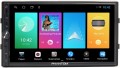 | 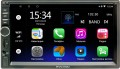 |
|---|---|---|
| Phantom DVA-7105 | Phantom DVA-7102 | |
| Outdated Product | Outdated Product | |
| TOP sellers | ||
| Application area | car | car |
| DIN size | 2DIN | 2DIN |
| Short body |  |  |
| Media types | microSD USB storage (front) USB flash drive (rear) iPod/iPhone connection Android connection | microSD USB storage (front) USB flash drive (rear) iPod/iPhone connection Android connection |
| FLAC support | | |
| Maximum memory card / flash drive capacity | 32 GB | 32 GB |
Screen | ||
| Screen size | 7 " | 7 " |
| Resolution | 1024x600 px | 1024x600 px |
| Screen type | IPS | |
| Touch screen | | |
| Anti-glare coating | | |
Equipment | ||
| Multimedia | Android v 10.0 GPS module Bluetooth Wi-Fi 4G (LTE) ready AirPlay MirrorLink | Android v 10.0 GPS module Bluetooth Wi-Fi 4G (LTE) ready AirPlay MirrorLink |
Equalizer | ||
| Number of bands | 12 | 10 |
| Number of fixed settings | 8 | 5 |
| High Pass Filter (HPF) | | |
| Low Pass Filter (LPF) | | |
| Bass Boost function | | |
Amplifier specs | ||
| Power per channel | 50 W | 50 W |
| Number of channels | 4 | 4 |
| DSP | | |
Control | ||
| Volume control | knob control | knob control |
| Control functions | steering wheel controls | steering wheel controls |
Outputs | ||
| Speaker connection | ISO/RCA | ISO/RCA |
| Line out | 2 | 2 |
| Video output (composite) | 1 | 1 |
| Subwoofer output | | |
Inputs | ||
| Video input (composite) | 1 | 1 |
| front AUX | | |
| For backup camera | | |
More features | ||
| Built-in memory | 16 GB | 16 GB |
| RAM | 1 GB | 1 GB |
| CPU speed | 1300 MHz | 1200 MHz |
| Tuner bands | FM/AМ | FM/AМ |
| Illumination colour selection | | |
| Backlight | RGB | RGB |
| Added to E-Catalog | november 2021 | february 2021 |


Compare Phantom DVA-7105 and DVA-7102
You may be interested in
My comparisons
Phantom DVA-7105 often compared

Phantom DVA-7102 often compared


Glossary
Short body
Tape recorders with a shortened body.
In this case, shortened means a case that has a shallower depth than classic radio tape recorders equipped with CD drives. Due to this, such models are quite compact, which, in particular, simplifies installation and facilitates wiring. Of course, CD / DVD discs are not supported in principle by such radio tape recorders, but this is not a serious drawback — nowadays there are quite enough alternatives to such media. Also note that the shortened layout does not affect the mounting size (see above) — it can be 1 DIN or 2 DIN, and standard solutions are even larger.
In this case, shortened means a case that has a shallower depth than classic radio tape recorders equipped with CD drives. Due to this, such models are quite compact, which, in particular, simplifies installation and facilitates wiring. Of course, CD / DVD discs are not supported in principle by such radio tape recorders, but this is not a serious drawback — nowadays there are quite enough alternatives to such media. Also note that the shortened layout does not affect the mounting size (see above) — it can be 1 DIN or 2 DIN, and standard solutions are even larger.
Screen type
The type of screen matrix installed in the radio.
This parameter is indicated mainly in cases where the screen uses a high-end IPS type matrix. This technology provides high colour quality, good brightness and wide viewing angles, and thanks to the improvement and reduction in price, the price of IPS screens is constantly decreasing. At the same time, it makes no sense to use this technology in a small display intended only for service information; therefore, the presence of an IPS matrix usually means a rather large screen, often a touch screen (see below).
This parameter is indicated mainly in cases where the screen uses a high-end IPS type matrix. This technology provides high colour quality, good brightness and wide viewing angles, and thanks to the improvement and reduction in price, the price of IPS screens is constantly decreasing. At the same time, it makes no sense to use this technology in a small display intended only for service information; therefore, the presence of an IPS matrix usually means a rather large screen, often a touch screen (see below).
Number of bands
The number of bands in the radio equalizer.
In this case, the band means a separate part of the frequency range, the volume of which can be adjusted using the equalizer independently of the other parts. The more bands the equalizer has, the more accurately it allows you to adjust the overall sound of the car radio acoustics. However, note that multi-band equalizers are quite difficult to set up, therefore they are recommended primarily for experienced users.
In this case, the band means a separate part of the frequency range, the volume of which can be adjusted using the equalizer independently of the other parts. The more bands the equalizer has, the more accurately it allows you to adjust the overall sound of the car radio acoustics. However, note that multi-band equalizers are quite difficult to set up, therefore they are recommended primarily for experienced users.
Number of fixed settings
The number of fixed settings (presets) provided in the car radio equalizer.
The presence of such settings can greatly simplify the adjustment: choosing the right preset is easier than manually adjusting each EQ band. At the same time, presets are often selected by the manufacturer for certain genres of music and have the appropriate names — "Rock", "Pop", "Jazz", etc.; this simplifies the task even more. And the more fixed settings in the device, the wider the choice of the user. In some radio tape recorders, in addition to pre-flashed ones, user presets are also provided — they can be programmed in advance and turned on in the same way as the preset ones.
The presence of such settings can greatly simplify the adjustment: choosing the right preset is easier than manually adjusting each EQ band. At the same time, presets are often selected by the manufacturer for certain genres of music and have the appropriate names — "Rock", "Pop", "Jazz", etc.; this simplifies the task even more. And the more fixed settings in the device, the wider the choice of the user. In some radio tape recorders, in addition to pre-flashed ones, user presets are also provided — they can be programmed in advance and turned on in the same way as the preset ones.
CPU speed
The clock frequency of the processor (CPU) installed in the radio.
Many modern car radios (especially premium ones, with large displays and an abundance of additional functions, as well as regular models — see "Installation size") are actually multimedia computers. Therefore, their characteristics may indicate moments characteristic of computers — including the frequency of the processor. Theoretically, the higher this indicator — the more operations per second the CPU can perform and the higher its computing power. However, the actual speed of the processor depends on so many other factors that, compared to them, the clock speed is secondary; and it's not uncommon for a "slower" chip to be more powerful in fact. Do not forget that the capabilities of the entire system depend not only on the CPU, but also on the amount of RAM, the operating system used, and a number of other characteristics. And manufacturers usually select such processors that would allow radio tape recorders to cope with all the main tasks normally. In the light of all this, we can say that information about the frequency of the processor in fact has a purely reference and marketing (advertising) value.
Many modern car radios (especially premium ones, with large displays and an abundance of additional functions, as well as regular models — see "Installation size") are actually multimedia computers. Therefore, their characteristics may indicate moments characteristic of computers — including the frequency of the processor. Theoretically, the higher this indicator — the more operations per second the CPU can perform and the higher its computing power. However, the actual speed of the processor depends on so many other factors that, compared to them, the clock speed is secondary; and it's not uncommon for a "slower" chip to be more powerful in fact. Do not forget that the capabilities of the entire system depend not only on the CPU, but also on the amount of RAM, the operating system used, and a number of other characteristics. And manufacturers usually select such processors that would allow radio tape recorders to cope with all the main tasks normally. In the light of all this, we can say that information about the frequency of the processor in fact has a purely reference and marketing (advertising) value.