
Comparison Kugoo Kirin M4 vs Kugoo M3 Pro
Add to comparison | 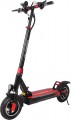 | 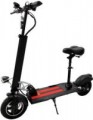 |
|---|---|---|
| Kugoo Kirin M4 | Kugoo M3 Pro | |
| Outdated Product | from $507.89 | |
| User reviews | ||
| TOP sellers | ||
Platform width: 21 cm. Removable seat. Direction indicators. | ||
| Max. load | 150 kg | 150 kg |
| Foldable design |  | |
Performance | ||
| Range | 40 km | 40 km |
| Power | 500 W | 500 W |
| Max. speed | 45 km/h | 35 km/h |
| Speed modes | 3 | |
| Max. climbing angle | 15 ° | 30 ° |
| Drive | rear | rear |
| Wheels | rubber air-filled 10 " | rubber air-filled 10 " |
| Suspension | front and rear | front and rear |
| Front brake | disc | disc |
| Rear brake | disc | disc |
Battery | ||
| Battery capacity | 11 Ah | 10 Ah |
| Voltage | 48 В | 36 В |
| Full charge time | 6 h | 5 h |
Features | ||
| Handlebar height adjustment | | |
| Seat | | |
| Headlight | | |
| Turn signals | |  |
| Brake lights | | |
| Stand | | |
| Dustproof, waterproof | IPX4 | IP54 |
General | ||
| Frame material | aluminium | aluminium |
| Clamp | 3 bolts | |
| Clearance | 12 cm | |
| Size | 115x56x120 cm | |
| Dimensions (folded) | 118x22x43 cm | |
| Weight | 23.2 kg | 18 kg |
| Color | ||
| Added to E-Catalog | march 2023 | september 2018 |


Compare Kugoo Kirin M4 and M3 Pro
Electric scooters Kugoo Kirin M4 and Kugoo M3 Pro share similar specifications, but there are several key differences. The Kirin M4 offers a range of up to 45 km and a maximum speed of 40 km/h, while the M3 Pro has a range of 40 km and a speed of 35 km/h. Both scooters have a motor power of 500 W and can support a load of up to 150 kg, however, the M3 Pro has a higher climbing angle of 30° compared to the 15° of the Kirin M4. The charging time for the M3 Pro is 5 hours, which is one hour faster than the Kirin M4 (6 hours). It is also worth noting that the Kirin M4 has an IPX4 protection level, while the M3 Pro is IP54. Overall, the choice between them depends on preferences for speed and travel range.
You may be interested in
My comparisons
Kugoo Kirin M4 often compared


Kugoo M3 Pro often compared


Glossary
Max. speed
A high top speed gives you more riding options and reduces travel time. However, it requires powerful motors and capacious batteries, which affects the price and weight of the scooter. In addition, the faster the scooter, the more careful you need to be when driving. Therefore, most of the electric scooters have a speed of 25 km / h or a little more - 30 km / h.
Speed modes
The number of speed modes in the electric scooter. By switching between them, the rider has the right to choose the most comfortable pace of the trip and change the upper speed limit bar.
Max. climbing angle
The maximum climbing angle that an electric scooter can overcome on engine power alone, without the help of legs. Models with engines of the same power may differ in this indicator (due to the difference in torque and wheel size).
Note that in the specifications the angle is usually indicated in degrees, while on road signs it is given as a percentage (1% corresponds to a rise of 1 m for every 100 m of horizontal movement). However, this moment is not particularly critical: if you often have to overcome a certain hill, you can clarify its slope by converting percentages into degrees (and vice versa) according to special tables. In addition, if the angle turns out to be too large, nothing prevents you from helping the scooter with your foot, in extreme cases, to overcome the climb on foot.
Note that in the specifications the angle is usually indicated in degrees, while on road signs it is given as a percentage (1% corresponds to a rise of 1 m for every 100 m of horizontal movement). However, this moment is not particularly critical: if you often have to overcome a certain hill, you can clarify its slope by converting percentages into degrees (and vice versa) according to special tables. In addition, if the angle turns out to be too large, nothing prevents you from helping the scooter with your foot, in extreme cases, to overcome the climb on foot.
Battery capacity
Battery capacity installed in the electric scooter.
Theoretically, a higher battery capacity allows for a longer range, but in fact, not everything is so clear. Firstly, motors of even the same power can differ in efficiency; secondly, the actual amount of energy stored in the battery depends not only on the capacity in amp-hours but also on the voltage in volts. So this parameter is secondary, and when choosing, it is worth focusing not so much on the battery capacity, but on the directly claimed range. You can compare capacity only for models with similar characteristics and the same supply voltage.
Theoretically, a higher battery capacity allows for a longer range, but in fact, not everything is so clear. Firstly, motors of even the same power can differ in efficiency; secondly, the actual amount of energy stored in the battery depends not only on the capacity in amp-hours but also on the voltage in volts. So this parameter is secondary, and when choosing, it is worth focusing not so much on the battery capacity, but on the directly claimed range. You can compare capacity only for models with similar characteristics and the same supply voltage.
Voltage
In general, this parameter is of secondary importance; in fact, it is needed mainly when looking for a spare / replacement battery or a third-party charger. When choosing, it is worth paying attention to characteristics that are closer to practice - in particular, directly claimed speed and power reserve.
Full charge time
Time to fully charge the battery from zero to 100%.
The more powerful the device, the more capacious batteries it needs and, as a rule, the longer the charging time. In the heaviest models, it can reach 20 hours. However, such indicators are rare - most electric scooters are charged for a maximum of 8-9 hours, which allows you to put the device on charge “from evening to morning”.
The more powerful the device, the more capacious batteries it needs and, as a rule, the longer the charging time. In the heaviest models, it can reach 20 hours. However, such indicators are rare - most electric scooters are charged for a maximum of 8-9 hours, which allows you to put the device on charge “from evening to morning”.
Turn signals
Turn signals warn other drivers of your intention to make a manoeuvre. The presence of turn signals is especially useful when driving on public roads — warning others about a change in trajectory in such conditions is never superfluous.
Brake lights
The classic brake light is a red tail light that illuminates when the brakes are applied to warn road users behind that the scooter is slowing down. This feature is especially useful when driving on public roads - warning others about braking in such conditions is never superfluous.
Dustproof, waterproof
The degree of protection against dust and moisture provided in the scooter.
This indicator is shown according to the IP standard and in the classic format is indicated by two numbers — for example, IP54. In this case, the first digit means the level of protection against dust and foreign objects, its value can be as follows:
- 4 - protection against foreign objects with a size of 1 mm or more;
- 5 - dust resistance (a small amount of dust can get inside, which does not affect the operation of the device);
- 6 - full dustproof.
The level of water protection, in turn, can be as follows:
- 4 - protection against splashes from any direction, allows you to endure rain without consequences;
- 5 - protection against water jets from any direction, resistance even to severe weather;
In some models, instead of the first digit, "X" is put - for example, IPX4. This means that dust resistance has not been tested, and only moisture resistance should be taken into account.
This indicator is shown according to the IP standard and in the classic format is indicated by two numbers — for example, IP54. In this case, the first digit means the level of protection against dust and foreign objects, its value can be as follows:
- 4 - protection against foreign objects with a size of 1 mm or more;
- 5 - dust resistance (a small amount of dust can get inside, which does not affect the operation of the device);
- 6 - full dustproof.
The level of water protection, in turn, can be as follows:
- 4 - protection against splashes from any direction, allows you to endure rain without consequences;
- 5 - protection against water jets from any direction, resistance even to severe weather;
In some models, instead of the first digit, "X" is put - for example, IPX4. This means that dust resistance has not been tested, and only moisture resistance should be taken into account.