
Comparison Kugoo Kirin M4 vs Crosser T4
Add to comparison | 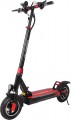 | 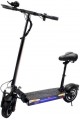 |
|---|---|---|
| Kugoo Kirin M4 | Crosser T4 | |
| Outdated Product | Outdated Product | |
| TOP sellers | ||
Platform width: 21 cm. Removable seat. Direction indicators. | Check the equipment in stores before purchasing. This model may not be equipped with a seat.
This model can be equipped with a soft seat. There is also a deck light. | |
| Max. load | 150 kg | 120 kg |
| Foldable design |  | |
Performance | ||
| Range | 40 km | 50 km |
| Power | 500 W | 1000 W |
| Max. speed | 45 km/h | 45 km/h |
| Speed modes | 3 | 3 |
| Max. climbing angle | 15 ° | 20 ° |
| Drive | rear | all-wheel |
| Wheels | rubber air-filled 10 " | rubber air-filled 10 " |
| Suspension | front and rear | front and rear |
| Front brake | disc | disc |
| Rear brake | disc | disc |
| Regenerative |  | |
| Cruise control | | |
Battery | ||
| Battery capacity | 11 Ah | 12.5 Ah |
| Voltage | 48 В | 48 В |
| Full charge time | 6 h | |
Features | ||
| Handlebar height adjustment | | |
| Seat | | |
| Headlight | | |
| Turn signals | | |
| Brake lights | | |
| Signal / bell | | |
| Stand | | |
| Dustproof, waterproof | IPX4 | IP54 |
General | ||
| Frame material | aluminium | aluminium |
| Clamp | 3 bolts | 3 bolts |
| Clearance | 12 cm | 13.5 cm |
| Size | 115x56x120 cm | |
| Dimensions (folded) | 118x22x43 cm | 118x49x25 cm |
| Weight | 23.2 kg | 22.8 kg |
| Color | ||
| Added to E-Catalog | march 2023 | september 2022 |


Compare Kugoo Kirin M4 and Crosser T4
Electric scooters Kugoo Kirin M4 and Crosser T4 have similar characteristics, but there are key differences. The Kugoo Kirin M4 supports a maximum load of up to 150 kg and offers a range of 45 km with a motor power of 500 W and a maximum speed of 40 km/h. Meanwhile, the Crosser T4 has a lower maximum load of 120 kg but a more powerful motor of 1000 W, allowing it to reach speeds of up to 45 km/h and provide a range of 50 km. The Crosser T4 also offers all-wheel drive and features like regenerative braking and cruise control, which the Kugoo Kirin M4 lacks. Both scooters have disc brakes and shock absorption, but the Crosser T4 has a higher level of water resistance (IP54 versus IPX4 for Kugoo). Choosing between them depends on preferences for power and functionality.
You may be interested in
My comparisons
Kugoo Kirin M4 often compared


Crosser T4 often compared


Glossary
Max. load
The maximum weight of the rider that the design of the scooter can withstand without breakdowns and accidents. This moment is partly determined by the age group, and mainly by the materials used in the frame. Note that manufacturers can indicate the maximum load for perfect conditions - when the scooter rides on a perfectly flat surface or even stands still. Therefore, it is worth choosing a model for this parameter with a certain margin. And even more so, you should not exceed the weight indicated in the characteristics - even if the scooter does not break down immediately, this can happen at any time after, which is fraught with accidents and injuries.
Range
The maximum distance that an electric scooter can travel on a single battery charge.
Usually the range is indicated for a flat road and driving only on an electric motor, without the help of a rider. So this indicator is quite conditional, in practice, the distance of the trip may be either less or more, depending on the characteristics of the road and driving style. Nevertheless, according to the claimed range, it is quite possible to estimate the autonomy of different models and compare them with each other.
Note that a large range (more than 50 km) requires capacious batteries, which affects the dimensions and weight of the device. The real need for such autonomy is not required so often, especially since many electric scooters are quite capable of driving in the usual way, without the use of an electric motor.
Usually the range is indicated for a flat road and driving only on an electric motor, without the help of a rider. So this indicator is quite conditional, in practice, the distance of the trip may be either less or more, depending on the characteristics of the road and driving style. Nevertheless, according to the claimed range, it is quite possible to estimate the autonomy of different models and compare them with each other.
Note that a large range (more than 50 km) requires capacious batteries, which affects the dimensions and weight of the device. The real need for such autonomy is not required so often, especially since many electric scooters are quite capable of driving in the usual way, without the use of an electric motor.
Power
The power of the motor installed in the electric scooter. In models with two motors (one per wheel), their total power is usually indicated.
A more powerful motor, on the one hand, has a positive effect on the speed and acceleration characteristics; on the other hand, it affects the cost of the device and requires more capacious batteries, which affect both the price and weight. In addition, at acceleration and low speeds, the scooter can be “helped” by pushing off with your foot. Therefore, in most modern models, the motor power is low — most often in range of 250 W, 300 W, 350 W. Power of 500 W is considered quite high, it allows you to reach speeds of 40 km/h and even higher. In the most advanced models, power is already measured in kilowatts, and the maximum speed can exceed 80 km/h; however, such "monsters" cost accordingly.
However, power also affects the ability to drive a vehicle, because depending on the country, various traffic rules are provided for driving a scooter.
A more powerful motor, on the one hand, has a positive effect on the speed and acceleration characteristics; on the other hand, it affects the cost of the device and requires more capacious batteries, which affect both the price and weight. In addition, at acceleration and low speeds, the scooter can be “helped” by pushing off with your foot. Therefore, in most modern models, the motor power is low — most often in range of 250 W, 300 W, 350 W. Power of 500 W is considered quite high, it allows you to reach speeds of 40 km/h and even higher. In the most advanced models, power is already measured in kilowatts, and the maximum speed can exceed 80 km/h; however, such "monsters" cost accordingly.
However, power also affects the ability to drive a vehicle, because depending on the country, various traffic rules are provided for driving a scooter.
Max. climbing angle
The maximum climbing angle that an electric scooter can overcome on engine power alone, without the help of legs. Models with engines of the same power may differ in this indicator (due to the difference in torque and wheel size).
Note that in the specifications the angle is usually indicated in degrees, while on road signs it is given as a percentage (1% corresponds to a rise of 1 m for every 100 m of horizontal movement). However, this moment is not particularly critical: if you often have to overcome a certain hill, you can clarify its slope by converting percentages into degrees (and vice versa) according to special tables. In addition, if the angle turns out to be too large, nothing prevents you from helping the scooter with your foot, in extreme cases, to overcome the climb on foot.
Note that in the specifications the angle is usually indicated in degrees, while on road signs it is given as a percentage (1% corresponds to a rise of 1 m for every 100 m of horizontal movement). However, this moment is not particularly critical: if you often have to overcome a certain hill, you can clarify its slope by converting percentages into degrees (and vice versa) according to special tables. In addition, if the angle turns out to be too large, nothing prevents you from helping the scooter with your foot, in extreme cases, to overcome the climb on foot.
Drive
The type of drive in the design of the scooter determines to which wheels the traction from the electric motor is transmitted.
- Front. The drive to the front wheel pulls the entire electric scooter. It provides improved stability on the road, minimizes the likelihood of skidding in corners, and guarantees a soft start and smooth acceleration. On the other hand, the electric motor at the front increases the weight of the wheel assembly and increases the effort when turning the handlebar.
- Rear. Rear-wheel drive electric scooters are not as stable on the road as front-wheel drive models. However, they are more frisky, demonstrate dynamic acceleration and easily conquer hills.
- All-wheel. Scooters with all-wheel drive combine all the positive qualities of front- and rear-wheel drive models in one package. They are also best suited for off-road driving — the all-wheel drive chassis does not care about pits and steep hills, other road irregularities, or mud deposits on the road.
- Front. The drive to the front wheel pulls the entire electric scooter. It provides improved stability on the road, minimizes the likelihood of skidding in corners, and guarantees a soft start and smooth acceleration. On the other hand, the electric motor at the front increases the weight of the wheel assembly and increases the effort when turning the handlebar.
- Rear. Rear-wheel drive electric scooters are not as stable on the road as front-wheel drive models. However, they are more frisky, demonstrate dynamic acceleration and easily conquer hills.
- All-wheel. Scooters with all-wheel drive combine all the positive qualities of front- and rear-wheel drive models in one package. They are also best suited for off-road driving — the all-wheel drive chassis does not care about pits and steep hills, other road irregularities, or mud deposits on the road.
Regenerative
Possibility of electric scooter operation in recuperation mode. In this mode, the direction of the current starts “in the opposite direction”: the electric motors in the wheels work like generators, generating electricity and recharging the battery. In this case, the speed must be maintained either due to repulsion from the ground, or due to coasting from a hill. Properly using recuperation, you can significantly increase the power reserve: for example, it is good to turn on this mode on long descents or on long, flat sections of the road where it is easy to drive in the usual way, without using electric motors.
Cruise control
A feature that allows you to ride the scooter at a preset speed without having to hold down the throttle button. Cruise control is a convenient option when travelling over long sections of the route while maintaining a constant speed.
Battery capacity
Battery capacity installed in the electric scooter.
Theoretically, a higher battery capacity allows for a longer range, but in fact, not everything is so clear. Firstly, motors of even the same power can differ in efficiency; secondly, the actual amount of energy stored in the battery depends not only on the capacity in amp-hours but also on the voltage in volts. So this parameter is secondary, and when choosing, it is worth focusing not so much on the battery capacity, but on the directly claimed range. You can compare capacity only for models with similar characteristics and the same supply voltage.
Theoretically, a higher battery capacity allows for a longer range, but in fact, not everything is so clear. Firstly, motors of even the same power can differ in efficiency; secondly, the actual amount of energy stored in the battery depends not only on the capacity in amp-hours but also on the voltage in volts. So this parameter is secondary, and when choosing, it is worth focusing not so much on the battery capacity, but on the directly claimed range. You can compare capacity only for models with similar characteristics and the same supply voltage.
Full charge time
Time to fully charge the battery from zero to 100%.
The more powerful the device, the more capacious batteries it needs and, as a rule, the longer the charging time. In the heaviest models, it can reach 20 hours. However, such indicators are rare - most electric scooters are charged for a maximum of 8-9 hours, which allows you to put the device on charge “from evening to morning”.
The more powerful the device, the more capacious batteries it needs and, as a rule, the longer the charging time. In the heaviest models, it can reach 20 hours. However, such indicators are rare - most electric scooters are charged for a maximum of 8-9 hours, which allows you to put the device on charge “from evening to morning”.