
Comparison Skyzone SKY04X Pro vs Skyzone SKY04O
Add to comparison | 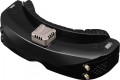 | 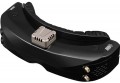 |
|---|---|---|
| Skyzone SKY04X Pro | Skyzone SKY04O | |
from $424.39 | from $406.97 | |
| TOP sellers | ||
Receiver - 5.8Ghz, 48 channels. Connectors HT OUT, A/V. | Receiver - 5.8Ghz, 48 channels. Connectors HT OUT, A/V. | |
| Device type | FPV goggles | FPV goggles |
| Purpose (compatibility) | quadcopter (drone) | quadcopter (drone) |
| Receiver (FPV) | 5.8 GHz, 48 channels | 5.8 GHz, 48 channels |
Specs | ||
| Screen resolution | 1920x1080 px | 1024x768 px |
| Field of view | 52 ° | 38 ° |
| Refresh rate | 60 fps | 60 fps |
| Accelerometer |  | |
| Gyroscope | | |
| Lens distance adjusting | | |
| Pupillary distance adjustment | | |
Multimedia | ||
| Card reader | | |
| USB-C | + | + |
| HDMI | + | + |
| Headphone output | | |
General | ||
| Control | button controls | button controls |
| Material | plastic | plastic |
| Dimensions (HxWxD) | 185x75x67 mm | 185x75x67 mm |
| Weight | 267 g | 262 g |
| Added to E-Catalog | december 2023 | december 2023 |


Compare Skyzone SKY04X Pro and SKY04O
You may be interested in
Skyzone SKY04X Pro often compared


Skyzone SKY04O often compared
Glossary
Screen resolution
Resolution of built-in displays in glasses equipped with such equipment — that is, models for PC / consoles, as well as standalone devices (see "Intended use").
The higher the resolution, the more smooth and detailed the “picture” is given out by glasses, all other things being equal. Thanks to the development of technology nowadays, models with Full HD (1920x1080) screens and even higher resolutions are not uncommon. On the other hand, this parameter significantly affects the cost of points. In addition, it is worth remembering that in order to fully work with high-resolution displays, you need powerful graphics capable of playing relevant content. In the case of glasses for PCs and set-top boxes, this puts forward corresponding requirements for external devices, and in standalone models you have to use advanced integrated video adapters (which affects the cost even more).
The higher the resolution, the more smooth and detailed the “picture” is given out by glasses, all other things being equal. Thanks to the development of technology nowadays, models with Full HD (1920x1080) screens and even higher resolutions are not uncommon. On the other hand, this parameter significantly affects the cost of points. In addition, it is worth remembering that in order to fully work with high-resolution displays, you need powerful graphics capable of playing relevant content. In the case of glasses for PCs and set-top boxes, this puts forward corresponding requirements for external devices, and in standalone models you have to use advanced integrated video adapters (which affects the cost even more).
Field of view
The viewing angle provided by virtual reality glasses is the angular size of the space that falls into the user's field of view. Usually, the characteristics indicate the size of this space horizontally; however, if you need the most accurate information, this point needs to be specified separately.
The wider the viewing angle — the more the game space the user can see without turning his head, the more powerful the immersion effect and the less likely that the image will be subject to the "tunnel vision" effect. On the other hand, making the field of view too wide also does not make sense, given the characteristics of the human eye. In general, a large viewing angle is considered to be an angle of 100° or more. On the other hand, there are models where this indicator is 30° or even less — these are, usually, specific devices (for example, drone piloting glasses and augmented reality glasses), where such characteristics are quite justified given the overall functionality.
The wider the viewing angle — the more the game space the user can see without turning his head, the more powerful the immersion effect and the less likely that the image will be subject to the "tunnel vision" effect. On the other hand, making the field of view too wide also does not make sense, given the characteristics of the human eye. In general, a large viewing angle is considered to be an angle of 100° or more. On the other hand, there are models where this indicator is 30° or even less — these are, usually, specific devices (for example, drone piloting glasses and augmented reality glasses), where such characteristics are quite justified given the overall functionality.