
Comparison AIMA A700 vs Yadea E8S
Add to comparison | 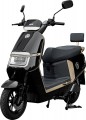 | 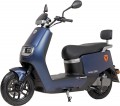 |
|---|---|---|
| AIMA A700 | Yadea E8S | |
| Outdated Product | Outdated Product | |
| User reviews | ||
| TOP sellers | ||
Spacious storage box under the seat. | ||
| Product type | electric scooterbike | electric scooterbike |
| Max. load | 150 kg | 200 kg |
Driving performance | ||
| Range | 140 km | 110 km |
| Power | 2.7 hp | |
| Power | 1.2 kW | 2 kW |
| Max speed | 55 km/h | 50 km/h |
| Wheels | 10 " | rubber inflatable tubeless 16 " |
| Front brake | disk | |
| Rear brake | disk | |
Battery | ||
| Battery type | graphene | graphene |
| Battery capacity | 38 Ah | 38 Ah |
| Energy capacity | 2736 Wh | |
| Full charge time | 8 h | 8 h |
| USB output for charging |  |  |
Functions and features | ||
| Headlight and position lamps | | |
| Turn signals | | |
| Horn | | |
| Anti-theft system | | |
| Passenger seat | | |
| Kickstand | | |
General | ||
| Dimensions | 177x77x114 cm | 175x58x86 cm |
| Weight | 130 kg | 137 kg |
| Added to E-Catalog | july 2023 | july 2023 |


Compare AIMA A700 and Yadea E8S
You may be interested in
AIMA A700 often compared

Yadea E8S often compared


Glossary
Max. load
The maximum additional weight that a vehicle is designed to carry is, in fact, the weight of the payload that it is allowed to carry.
The maximum load includes both the passenger himself and the things he carries. In this case, the value is usually indicated based on a flat road and a quiet ride. So, ideally, it is best to have a maximum weight margin of at least 10-15 kg — this will give an additional guarantee in case of emergencies, such as a wheel falling into a pothole.
The maximum load includes both the passenger himself and the things he carries. In this case, the value is usually indicated based on a flat road and a quiet ride. So, ideally, it is best to have a maximum weight margin of at least 10-15 kg — this will give an additional guarantee in case of emergencies, such as a wheel falling into a pothole.
Range
The range of a vehicle is the distance it can travel on a single battery charge.
Note that the range usually indicates the value for perfect operating conditions: driving at optimal speed with a small load, flat road, no ups and downs, etc. The actual range may differ from the claimed one, sometimes quite noticeably. In addition, to improve range, manufacturers can deliberately use low-power motors that consume little energy.
Note that the range usually indicates the value for perfect operating conditions: driving at optimal speed with a small load, flat road, no ups and downs, etc. The actual range may differ from the claimed one, sometimes quite noticeably. In addition, to improve range, manufacturers can deliberately use low-power motors that consume little energy.
Power
The motor power of a vehicle, in horsepower.
In general, the power of electric motors is indicated in watts. However, in electric transport, this designation is also often indicated. This is done for the convenience of comparison with internal combustion engines: for internal combustion engines, especially in vehicles, horsepower is traditionally used, and it is more convenient for some users to evaluate the power of motors by this designation. At the same time, if the need arises, some units are easily converted to others: 1 hp. ≈ 735 W.
For the power value in general, see the relevant paragraph below.
In general, the power of electric motors is indicated in watts. However, in electric transport, this designation is also often indicated. This is done for the convenience of comparison with internal combustion engines: for internal combustion engines, especially in vehicles, horsepower is traditionally used, and it is more convenient for some users to evaluate the power of motors by this designation. At the same time, if the need arises, some units are easily converted to others: 1 hp. ≈ 735 W.
For the power value in general, see the relevant paragraph below.
Power
The motor power of a vehicle, in kilowatts. In addition to them, horsepower is also used (for more details, see above).
Let us clarify that in this case, we are talking about maximum power; the actual power can be adjusted while driving with the help of the accelerator. And in some models, it may even be possible to set a limit on the maximum power.
A more powerful motor allows you to carry more weight, reach higher speeds and/or have more torque. However, the energy consumption from the battery will also be high, and the battery life, with the same battery capacity, will be correspondingly less than when using a less powerful motor. Also note that in many countries, motor power is a criterion for classifying an electric vehicle as one or another variety. For example, according to this criterion, motorcycles and scooters can be formally separated, requiring different driving licences.
Let us clarify that in this case, we are talking about maximum power; the actual power can be adjusted while driving with the help of the accelerator. And in some models, it may even be possible to set a limit on the maximum power.
A more powerful motor allows you to carry more weight, reach higher speeds and/or have more torque. However, the energy consumption from the battery will also be high, and the battery life, with the same battery capacity, will be correspondingly less than when using a less powerful motor. Also note that in many countries, motor power is a criterion for classifying an electric vehicle as one or another variety. For example, according to this criterion, motorcycles and scooters can be formally separated, requiring different driving licences.
Max speed
The highest speed that a vehicle can reach.
When choosing according to this parameter, it is worth considering that in dense city traffic, it is rarely possible to accelerate faster than 40 km/h; so if the vehicle is bought mainly for a comfortable ride through traffic jams, then there is no need to look for a high-speed model. In addition, for the same motor power, low speed means more torque, which makes it easier to climb hills.
When choosing according to this parameter, it is worth considering that in dense city traffic, it is rarely possible to accelerate faster than 40 km/h; so if the vehicle is bought mainly for a comfortable ride through traffic jams, then there is no need to look for a high-speed model. In addition, for the same motor power, low speed means more torque, which makes it easier to climb hills.
Wheels
— Rubber Inflatable Tubeless. Tires without an inner tube, where the air is held by the tire itself on a sealed rim. They comfortably handle small bumps, tiles, and poor asphalt, and they better withstand small punctures: pressure usually doesn't drop immediately, and the rider often manages to reach a repair point. Unlike tubed wheels, they are less dependent on the condition of the tube and require less frequent replacement. However, they are more demanding in terms of rim quality and installation, making this type more common on practical city electric scooters, where reliability and daily use convenience are important.
— Rubber Inflatable. In the classic sense, they have a separate tube inside the tire that retains air and cushions road shocks. In terms of comfort, they are close to tubeless, making them well-suited for riding in yards, on tiles, uneven asphalt, and suburban areas. The main difference from tubeless wheels is their behavior when punctured: the tube usually loses pressure faster, but it is simpler and cheaper to patch or replace. This option is often found on affordable electric mopeds and electric scooters, where smoothness, simple construction, and inexpensive maintenance are important.
— Rubber Inflatable. In the classic sense, they have a separate tube inside the tire that retains air and cushions road shocks. In terms of comfort, they are close to tubeless, making them well-suited for riding in yards, on tiles, uneven asphalt, and suburban areas. The main difference from tubeless wheels is their behavior when punctured: the tube usually loses pressure faster, but it is simpler and cheaper to patch or replace. This option is often found on affordable electric mopeds and electric scooters, where smoothness, simple construction, and inexpensive maintenance are important.
Front brake
The front brake in an electric scooter or electric moped is responsible for the main part of deceleration, as the weight shifts forward during braking. Its efficiency affects not only the braking distance but also the rider's confidence during sudden stops, downhill descents, or riding with a passenger.
— Disc. The disc brake consists of a brake disc and pads that clamp it from both sides. It is considered a more effective solution for the front wheel as it responds faster to the lever press, better withstands heat, and provides clearer braking force. This option dissipates heat better, allows for more precise modulation, and works more effectively on more powerful electric scooters, especially at high speeds, with frequent stops, and for urban riding.
— Drum. The drum front brake is located inside the wheel: the pads expand and press against the inner surface of the drum. It is simpler, cheaper, and better protected from dirt, but generally inferior to the disc brake in terms of sharpness and stability during active braking, so it is more commonly found on lightweight electric mopeds and calm urban models.
— Disc. The disc brake consists of a brake disc and pads that clamp it from both sides. It is considered a more effective solution for the front wheel as it responds faster to the lever press, better withstands heat, and provides clearer braking force. This option dissipates heat better, allows for more precise modulation, and works more effectively on more powerful electric scooters, especially at high speeds, with frequent stops, and for urban riding.
— Drum. The drum front brake is located inside the wheel: the pads expand and press against the inner surface of the drum. It is simpler, cheaper, and better protected from dirt, but generally inferior to the disc brake in terms of sharpness and stability during active braking, so it is more commonly found on lightweight electric mopeds and calm urban models.
Rear brake
The rear brake on an electric scooter or e-moped helps stabilize the vehicle when decelerating and complements the front brake. It is especially useful at low speeds, for smooth stopping, riding with a passenger, or on slippery surfaces where it's important not to overload the front wheel.
— Disc. A disc rear brake uses a brake disc and pads that quickly and confidently slow the wheel. This option is better suited for more powerful electric scooters as it withstands active braking, overheats less, and gives the rider more precise control.
— Drum. A drum rear brake has a closed mechanism inside the hub, making it well-protected from dirt, dust, and moisture. It is simpler and cheaper to maintain but usually less effective during sharp braking, so it is more commonly found on lightweight e-mopeds and models for relaxed city riding.
— Disc. A disc rear brake uses a brake disc and pads that quickly and confidently slow the wheel. This option is better suited for more powerful electric scooters as it withstands active braking, overheats less, and gives the rider more precise control.
— Drum. A drum rear brake has a closed mechanism inside the hub, making it well-protected from dirt, dust, and moisture. It is simpler and cheaper to maintain but usually less effective during sharp braking, so it is more commonly found on lightweight e-mopeds and models for relaxed city riding.
Energy capacity
The capacity of the battery that is installed in the vehicle, in watt-hours.
To correctly compare batteries of different capacities and voltages, the designation in watt-hours is used. In addition, such a designation is convenient for estimating the operating time on a charge: for example, with an engine power of 2 kW, a battery of 3000 Wh is enough to power it at maximum power for 3000/2000 = 1.5 hours.
As for the capacity of the battery as a whole, theoretically, the battery life of the vehicle directly depends on it. However, the operating time will also be determined by the power consumption of the unit itself — and it is influenced by both the mentioned motor power and several other parameters.
To correctly compare batteries of different capacities and voltages, the designation in watt-hours is used. In addition, such a designation is convenient for estimating the operating time on a charge: for example, with an engine power of 2 kW, a battery of 3000 Wh is enough to power it at maximum power for 3000/2000 = 1.5 hours.
As for the capacity of the battery as a whole, theoretically, the battery life of the vehicle directly depends on it. However, the operating time will also be determined by the power consumption of the unit itself — and it is influenced by both the mentioned motor power and several other parameters.