
Comparison Aferiy P010 vs Fossibot F800
Add to comparison | 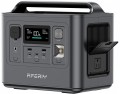 | 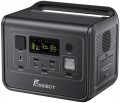 |
|---|---|---|
| Aferiy P010 | Fossibot F800 | |
| Compare prices 1 | from $299.00 | |
| TOP sellers | ||
| In box | charging station | charging station |
| Rated power | 800 W | 800 W |
| Peak power | 1600 W | |
| Output waveform | sinusoid (PSW) | sinusoid (PSW) |
| UPS function |  | |
| Switchover time to battery | 10 ms | 10 ms |
Outputs | ||
| Sockets (230 V) | 1 | 1 |
| USB-A (quick charge) | 2 5В/3A, 9В/2A, 12В/1.5A 18 W | 2 5В/3A, 9В/2A, 12В/1.5A 18 W |
| USB-C | 3 pcs 100 W | 3 pcs 100 W |
| Car cigarette lighter | | |
Inputs (station charging) | ||
| From solar panels | | |
| Input port XT60 | | |
Battery and charging time | ||
| Battery type | LiFePO4 | LiFePO4 |
| Battery capacity | 512 Wh | 512 Wh |
| Charging cycles | 3500 | 3500 |
| Charging time (socket) ≈ | 90 min | 90 min |
| Charging time (socket + solar panel) ≈ | 60 min | 72 min |
| Charging time (solar panel) ≈ | 210 min | 150 min |
| Charging time (cigarette lighter) ≈ | 360 min | |
| Charging power (socket) | 400 W | 400 W |
| Charging power (solar panel) | 200 W | 200 W |
| Charging power (cigarette lighter) | 120 W | 120 W |
General | ||
| PSU | built into the body | built into the body |
| Display | | |
| Backlight | | |
| Carrying handle | | |
| Operating temperature | -10 °C ~ +40 °C | -10 °C ~ +40 °C |
| Dimensions (LxWxH) | 272x185x240 mm | 276x209x230 mm |
| Weight | 6.5 kg | 6.5 kg |
| Warranty | 2 years | |
| Added to E-Catalog | may 2024 | october 2023 |



Compare Aferiy P010 and Fossibot F800
Both charging stations, Aferiy P010 and Fossibot F800, have the same rated power of 800 W and use a pure sine wave (PSW) output, ensuring stable operation. However, the Fossibot F800 stands out with a peak power of 1600 W, which can be beneficial for devices with high starting currents. Both devices have the same number of outputs and support solar panel charging. The charging time from an outlet for both models is approximately 90 minutes, but the Fossibot F800 charges faster when using a solar panel (72 minutes versus 60 minutes for the Aferiy P010). Both devices have similar battery characteristics, but Fossibot F800 offers a wider range of offers and stores on E-Katalog, which might indicate greater popularity. Overall, if you need extra power, the Fossibot F800 is the better choice, while the Aferiy P010 may be suitable for less demanding tasks.
Price comparison
You may be interested in
My comparisons
Aferiy P010 often compared


Fossibot F800 often compared


Glossary
Peak power
Some electrical appliances (in particular, units with electric motors - refrigerators, air conditioners, etc.) consume significantly more energy at startup than after reaching the operating mode. For such a load, the peak power of the charging station must be taken into account - its indicator must be higher than the starting power of the load.
Charging time (socket + solar panel) ≈
The parameter allows you to estimate the approximate battery charging time in the mode of combined connection of a portable power station - from a power outlet and a solar panel overnight. This method of replenishing energy reserves allows you to speed up the charging process.
Charging time (solar panel) ≈
Time spent on a full charge when using the original panel in bright sunlight. In cloudy weather, the charging time of the device from the solar panel can be strikingly different downwards.
Charging time (cigarette lighter) ≈
The time required to fully (from zero to 100%) charge the battery, provided that power is supplied to the charging station from the car's cigarette lighter socket (12 V).
Warranty
Warranties for charging stations usually provide users with protection against manufacturing defects and malfunctions for a certain period, which may vary depending on the manufacturer. Warranty service includes free repair or replacement of components if the problem is not the user's fault. The warranty period can be from one year to several years, and it is important to consider conditions such as correct installation, use of the station for its intended purpose, and compliance with technical requirements.