
Comparison Chieftec CEB-M2C-TLE vs Chieftec CEB-M2C-TL
Add to comparison | 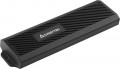 | 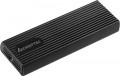 |
|---|---|---|
| Chieftec CEB-M2C-TLE | Chieftec CEB-M2C-TL | |
| Outdated Product | from $76.80 | |
| TOP sellers | ||
| Type | external | external |
| Features | portable | |
| Drive form factor | M.2 | M.2 |
| Drive interface | SATA/PCIe 3.0 4x | SATA/PCIe 3.0 4x |
| Connectivity | USB-C 10Gbps | USB-C 10Gbps |
| Material | plastic | metal |
| Storage slots | 1 | |
| Power source | USB port | USB port |
| Size | 116x32x13 mm | 104x36x13 mm |
| Color | ||
| Added to E-Catalog | february 2023 | february 2022 |


Compare Chieftec CEB-M2C-TLE and CEB-M2C-TL
You may be interested in
My comparisons
Chieftec CEB-M2C-TLE often compared


Chieftec CEB-M2C-TL often compared

Glossary
Features
General purpose of the pocket.
Note that different types of such accessories (see above) are divided according to their purpose. External pockets are categorized as portable and stationary, while internal ones are divided into models for laptops, for PC chassis, and solutions for servers. This parameter is generally not specified for docking stations and cases: the former are originally intended for stationary use, while the latter, by definition, are portable.
Here's a more detailed description of the options relevant for external pockets:
— Portable. Models designed for frequent movement from place to place and even for use on the go (for example, connecting to a laptop while traveling). Most modern external pockets fall into this category, as external storage devices, which these pockets are an alternative to, are mainly made portable. The specific features of such accessories can vary, but they are all compact enough and designed for only one internal drive, receiving power from the same USB port they connect to (see "Power").
— Stationary. External pockets intended to remain in one place and not meant for frequent relocations or use on the go. These models are significantly less common than portable ones; most of them are fairly large constructions designed to...hold two or more drives and often represent a kind of "NAS servers without network functions." However, there are single-slot models that differ from portable counterparts by having a stand to position the pocket vertically (saving space on a desk), and powered by a PSU.
In turn, internal pockets for different purposes have the following specifics:
— For laptops. This variety is usually designed for installing drives of the 2.5" or M.2 form factor into the optical drive bay (CD/DVD) — due to the compact size of laptops, this is often the only possible way to install an additional drive.
— Chassis. Pockets intended for standard desktop PCs. Note that the term "chassis" traditionally refers to a specific variety of such pockets — known as Mobile Rack, or "sleds". The main purpose of these accessories is to allow quick transfer of drives from one enclosure to another. Their construction includes two parts: a base that mounts in a 5.25" slot on the case, and a removable cartridge where the drive is installed. To prevent theft or unauthorized physical access, "sleds" can be equipped with a lock that blocks the removal of the drive. Such devices are quite rare today, mostly used with disk arrays and in certain specific circumstances — for example, to take a drive containing materials with you at the end of the workday or to lock it in a safe for confidentiality. Another type of pockets for PCs is adapters for installing drives in non-standard slots. A classic case is using a 2.5" "laptop-sized" drive in a 3.5" bay of a desktop case, but nowadays a more specific variant can be found — using an M.2 SSD as a PCI-E expansion card (see "Form factor" for more details).
— For server. Server systems often deal with large volumes of information that require high reliability and/or access speed. In light of this, most pockets for this purpose are designed for multiple drives (from two to six), allowing for necessary volumes and RAID arrays of different levels if needed. Built-in RAID support (see below) is not found in such devices — it's simpler and more sensible to organize it through the server itself. It's also worth noting that these pockets, by the way to install disks, are usually "sleds" (see "Chassis" above), providing added convenience, allowing, for example, quick swapping of a failed drive in a RAID array. Server pockets may use specialized interfaces like SAS, although traditional SATA is more popular.
Note that different types of such accessories (see above) are divided according to their purpose. External pockets are categorized as portable and stationary, while internal ones are divided into models for laptops, for PC chassis, and solutions for servers. This parameter is generally not specified for docking stations and cases: the former are originally intended for stationary use, while the latter, by definition, are portable.
Here's a more detailed description of the options relevant for external pockets:
— Portable. Models designed for frequent movement from place to place and even for use on the go (for example, connecting to a laptop while traveling). Most modern external pockets fall into this category, as external storage devices, which these pockets are an alternative to, are mainly made portable. The specific features of such accessories can vary, but they are all compact enough and designed for only one internal drive, receiving power from the same USB port they connect to (see "Power").
— Stationary. External pockets intended to remain in one place and not meant for frequent relocations or use on the go. These models are significantly less common than portable ones; most of them are fairly large constructions designed to...hold two or more drives and often represent a kind of "NAS servers without network functions." However, there are single-slot models that differ from portable counterparts by having a stand to position the pocket vertically (saving space on a desk), and powered by a PSU.
In turn, internal pockets for different purposes have the following specifics:
— For laptops. This variety is usually designed for installing drives of the 2.5" or M.2 form factor into the optical drive bay (CD/DVD) — due to the compact size of laptops, this is often the only possible way to install an additional drive.
— Chassis. Pockets intended for standard desktop PCs. Note that the term "chassis" traditionally refers to a specific variety of such pockets — known as Mobile Rack, or "sleds". The main purpose of these accessories is to allow quick transfer of drives from one enclosure to another. Their construction includes two parts: a base that mounts in a 5.25" slot on the case, and a removable cartridge where the drive is installed. To prevent theft or unauthorized physical access, "sleds" can be equipped with a lock that blocks the removal of the drive. Such devices are quite rare today, mostly used with disk arrays and in certain specific circumstances — for example, to take a drive containing materials with you at the end of the workday or to lock it in a safe for confidentiality. Another type of pockets for PCs is adapters for installing drives in non-standard slots. A classic case is using a 2.5" "laptop-sized" drive in a 3.5" bay of a desktop case, but nowadays a more specific variant can be found — using an M.2 SSD as a PCI-E expansion card (see "Form factor" for more details).
— For server. Server systems often deal with large volumes of information that require high reliability and/or access speed. In light of this, most pockets for this purpose are designed for multiple drives (from two to six), allowing for necessary volumes and RAID arrays of different levels if needed. Built-in RAID support (see below) is not found in such devices — it's simpler and more sensible to organize it through the server itself. It's also worth noting that these pockets, by the way to install disks, are usually "sleds" (see "Chassis" above), providing added convenience, allowing, for example, quick swapping of a failed drive in a RAID array. Server pockets may use specialized interfaces like SAS, although traditional SATA is more popular.
Material
The main material from which the body of the pocket is made.
— Plastic / rubber. This category includes models that use plastic and/or rubber in the construction of cases. The specific ratio and features of the use of these materials are different: the body can be all-plastic, have rubber lining at the ends to increase impact protection, be completely covered with rubber, etc. And in covers (see "Type"), these materials can also be supplemented with others — such as EVA, neoprene or even cloth. Anyway, plastic / rubber cases are found exclusively in external models, including docking stations. Such pockets are somewhat inferior to metal pockets in terms of strength and reliability, but they are cheaper, and in normal everyday use, the mentioned difference is not critical.
— Steel. Cases made of metal are most often made of steel, but there are other options (for example, aluminium alloys). In the inner pockets, only this option is found — this is due to a number of features of such accessories. As for external models in this design, they are much stronger and more reliable than plastic ones, besides, the metal case creates an additional feeling of solidity. The downside of these advantages is the higher price.
— Plastic / rubber. This category includes models that use plastic and/or rubber in the construction of cases. The specific ratio and features of the use of these materials are different: the body can be all-plastic, have rubber lining at the ends to increase impact protection, be completely covered with rubber, etc. And in covers (see "Type"), these materials can also be supplemented with others — such as EVA, neoprene or even cloth. Anyway, plastic / rubber cases are found exclusively in external models, including docking stations. Such pockets are somewhat inferior to metal pockets in terms of strength and reliability, but they are cheaper, and in normal everyday use, the mentioned difference is not critical.
— Steel. Cases made of metal are most often made of steel, but there are other options (for example, aluminium alloys). In the inner pockets, only this option is found — this is due to a number of features of such accessories. As for external models in this design, they are much stronger and more reliable than plastic ones, besides, the metal case creates an additional feeling of solidity. The downside of these advantages is the higher price.
Storage slots
The number of separate slots for drives provided in the design of the pocket, in other words, the number of drives for which this model is designed.
In addition to models for one slot, nowadays you can find more capacious solutions — for two drives, or even more. Such "multiplying" is found in three types of devices. The first is large-format pockets for stationary purposes (see above), operating in the format of separate storages for a large amount of data. Such models may support RAID arrays (see above) and other special features. The second type of devices with more than one slot are separate docking stations (see "Type") with similar functionality. The third type is server models (see "Purpose") with an internal installation; they again allow the organization of arrays, but by means of the server itself.
Note that external devices with one slot can be powered from the USB port, but several drives in this case inevitably require a separate PSU (see "Power").
In addition to models for one slot, nowadays you can find more capacious solutions — for two drives, or even more. Such "multiplying" is found in three types of devices. The first is large-format pockets for stationary purposes (see above), operating in the format of separate storages for a large amount of data. Such models may support RAID arrays (see above) and other special features. The second type of devices with more than one slot are separate docking stations (see "Type") with similar functionality. The third type is server models (see "Purpose") with an internal installation; they again allow the organization of arrays, but by means of the server itself.
Note that external devices with one slot can be powered from the USB port, but several drives in this case inevitably require a separate PSU (see "Power").