
Comparison facial Cleansing Brushes
Save List
Add to comparison | 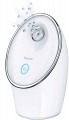 |
|---|---|
| Beurer FC 72 | |
| Compare prices 2 | |
| TOP sellers | |
Removable water tank for 100 ml. | |
| Form factor | facial sauna |
| Number of modes | 1 |
| Number of speeds | 1 |
| Modes | warming |
| Ionization |  |
| Timer | |
Power supply | |
| Power source | mains |
General | |
| In box | measuring capacity |
| Dimensions | 210x120x135 mm |
| Weight | 1000 g |
| Color | |
| Added to E-Catalog | december 2019 |


Price comparison
You may be interested in
My comparisons
Glossary
Form factor
— Massage brush. Devices for cleansing the leather, improving blood circulation and stimulating the facial leather. As a rule, electric massage brushes are equipped with nylon or synthetic bristles, which rotate when the device is turned on and exfoliate the stratum corneum. Thanks to their effect, deep leather pores are cleansed, blood circulation and lymphatic drainage are improved, and dirt, makeup residues and sebum are easily removed. Cleansed and exfoliated leather absorbs facial products better.
— Silicone brush. The bristles of these brushes are made of hypoallergenic and soft medical silicone. They have the most gentle and effective effect on the leather, as a result of which the relief is evened out, deep pores are cleaned, and the tone and complexion are improved. Silicone brushes are suitable for sensitive and problematic leather.
— Ultrasonic scrubber. Models of the ultrasonic principle of operation generate high-frequency sound waves inaudible to the human ear (usually from 20 to 30 kHz). Ultrasonic scrubbing improves blood flow and lymphatic drainage, cleanses deep pores through microvibrations, ensures high-quality removal of the keratinized layer of epidermal cells, and helps reduce swelling. In addition, high-frequency micro-exposure to ultrasound effectively relaxes the facial muscle group, which leads to the smoothing of wrinkles.
— Silicone brush. The bristles of these brushes are made of hypoallergenic and soft medical silicone. They have the most gentle and effective effect on the leather, as a result of which the relief is evened out, deep pores are cleaned, and the tone and complexion are improved. Silicone brushes are suitable for sensitive and problematic leather.
— Ultrasonic scrubber. Models of the ultrasonic principle of operation generate high-frequency sound waves inaudible to the human ear (usually from 20 to 30 kHz). Ultrasonic scrubbing improves blood flow and lymphatic drainage, cleanses deep pores through microvibrations, ensures high-quality removal of the keratinized layer of epidermal cells, and helps reduce swelling. In addition, high-frequency micro-exposure to ultrasound effectively relaxes the facial muscle group, which leads to the smoothing of wrinkles.
Number of modes
The number of modes allows a single device to be adapted for different situations: in the morning, choose a gentle mode for 5-10 minutes, and in the evening, a more intense one with heating or light therapy, when you want to relax your face and improve skin appearance without additional strain. However, the number itself doesn't always mean better: sometimes 3-5 really understandable modes are more convenient than 12 similar ones, and what's more important is stable performance, the presence of a timer, and that the modes differ noticeably, not just in name.
Number of speeds
The number of operating speeds provided in the design of the facial brush.
The higher the speed, the more intense the impact. Conversely, gentle stimulation is usually performed at lower speeds. The presence of multiple speeds allows for selecting the optimal option for a particular task.
The higher the speed, the more intense the impact. Conversely, gentle stimulation is usually performed at lower speeds. The presence of multiple speeds allows for selecting the optimal option for a particular task.
Modes
A set of programs that define the nature of the impact and allow you to customize the procedure according to the task and skin sensitivity without delving into complex settings. Usually, the modes differ in intensity, session duration, rhythm, and combination of functions, so the same device can be convenient for a quick "refresh" in the morning and for a more relaxing evening routine. The following are common:
— Vibration. A gentle mechanical micro-massage due to rapid oscillations of the nozzle or body, making the skin visually "awake," and often reducing puffiness. Unlike ultrasound, this has a more "physical" and comprehensible feel, and compared to manual massage, the advantage is in the consistent rhythm, without the need to press and pull the skin with fingers. This mode is best for express care: 2-5 minutes in the morning over serum or cream to enhance tone and distribute the product more evenly, or in the evening to relax the forehead and cheekbones after a day spent in front of a screen.
— Ultrasonic. Works through high-frequency micro-vibrations that create a sensation of subtle "humming" and help gently massage the skin and improve the distribution of cosmetics. Unlike the vibration mode, ultrasound feels weaker but works more "evenly" on the surface, and compared with purely thermal modes, it does not overheat the skin and can be more comfortable for daily rituals. It is usually used after cleansing with serum or gel for 5-10 minutes to add moisture and visual...smoothness without aggressive procedures.
— Microcurrent. Very weak electrical impulses delivered through metal contacts or balls, usually perceived as a slight tingling or almost not felt at all. It gives an effect of "firmness" to the face and reduces puffiness with regular use: unlike vibration, microcurrents work more "functionally" but require conductive gel and careful technique; otherwise, there will be poor contact. In everyday use, the microcurrent mode is often run in a course of 5-10 minutes, for example, in the evening along the face oval and cheekbones, to maintain tone and visually refresh contours.
— Heating. Gentle, controlled warmth of the nozzle that makes the procedure more comfortable and helps distribute cream or serum better without turning the care into "overheating." Unlike deep warming, heating usually feels like a warm mask or massage device and is often suitable for daily use, especially in winter when the skin lacks comfort. An example is 3-5 minutes of warm mode over cream for relaxation and alleviation of tightness, after which the skin looks calmer.
— Deep warming. This mode is designed for more pronounced warming of tissues than regular heating and is often found in devices with radiofrequency impact or enhanced thermal contour, which feels more noticeable and requires time discipline. Unlike light warmth "for comfort," deep warming is often used as part of lifting care because it can give the effect of firmer skin and a more "gathered" oval when used in courses. An example of use is 5-8 minutes with conductive gel on the cheeks and chin line, not lingering in one place and considering skin sensitivity.
— Infrared. IR radiation, perceived as gentle warmth, usually aimed at comfort, improved microcirculation, and muscle relaxation of the face. Unlike regular heating, the infrared mode warms more "pleasantly and deeply." It is often used before applying cosmetics or in conjunction with massage for 5-10 minutes when you want to relieve tension and make the skin less "tight" after cold or dry air.
— Cold therapy. A mode particularly loved after active care or in hot weather, as it quickly restores a sense of calm and helps the skin look more even. Unlike heating, cold works as a quick "anti-stress" for the skin, and compared with a roller from the refrigerator or regular washing with cool water, it is more precise and controlled, especially in the area under the eyes. An example of use is a short session after applying a soothing gel, or as a final step after a massage when you want to "fix" the freshness effect.
— Pulsed. A mode where the impact does not come continuously, but in short "jolts" — this can be pulsed vibration, pulsed current, or combined stimulation perceived as rhythmic pulsations. Unlike constant microcurrent, pulses often feel more intense and may better engage muscles and lymphatic drainage, and compared with continuous warming, this mode is less tiresome with heat and suitable for short express sessions. An example — 3-7 minutes along the face oval and cheeks when you need to quickly relieve "heaviness" from the face and gain a more lively appearance.
Ionization
Ionization often serves not as an independent "program" but as an additional feature that can be activated alongside the main mode — for instance, during heating, vibration, ultrasound, or massage, if intended by the manufacturer. The purpose of ionization is not to replace the basic procedure but to provide an "extra": helping to gently cleanse the skin of residual impurities during use with a toner/lotion or to make serum application feel more even when the device contacts the skin through a conductive medium. Unlike a mode that changes the nature of the impact (such as "heating" or "cooling"), ionization usually works as a background option, which people appreciate for its flexibility: they can use their usual program and, if needed, activate ionization without switching scenarios.
Timer
The timer allows you to accurately regulate the duration of the procedure without the need to monitor the time yourself: after a specified period , the timer turns off the device without user intervention. The specific features of this function may vary depending on the implementation - for example, in some models the timer is divided into separate intervals and is used for precise control during zonal treatment of facial skin.
Power source
The type of power provided in the design of the face brush.
— Batteries. Powered by replaceable elements of a standard size (“finger” AA, “pinky” AAA, etc.). These can be either disposable batteries or rechargeable batteries. The operating time on their charge is limited, but when the energy reserves are depleted, the batteries can be easily replaced (unlike the built-in battery, see below).
— Battery. Powered by its own battery. Note that the battery does not allow for quick replacement and is usually made non-removable, which means that when the charge is depleted, it will have to be charged. On the other hand, the battery itself is initially included in the package and does not require additional costs.
— Batteries. Powered by replaceable elements of a standard size (“finger” AA, “pinky” AAA, etc.). These can be either disposable batteries or rechargeable batteries. The operating time on their charge is limited, but when the energy reserves are depleted, the batteries can be easily replaced (unlike the built-in battery, see below).
— Battery. Powered by its own battery. Note that the battery does not allow for quick replacement and is usually made non-removable, which means that when the charge is depleted, it will have to be charged. On the other hand, the battery itself is initially included in the package and does not require additional costs.
In box
— Case. The presence of a cover or case included with the face brush. The main difference between these devices is the materials: covers are made soft, cases are made hard. Both types of cases are designed to provide ease of storage and transportation of the device, which minimizes the likelihood of loss of attachments or damage to the device due to contact with foreign objects.
— Charging stand. A special stand on which the brush is installed to charge the built-in battery. At the same time, such a stand can be used to store the device during inactivity and for aesthetic beauty.
— Charging stand. A special stand on which the brush is installed to charge the built-in battery. At the same time, such a stand can be used to store the device during inactivity and for aesthetic beauty.