
Comparison Garmin Forerunner 265 vs Garmin Venu 2
Add to comparison | 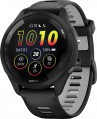 | 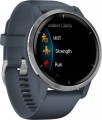 |
|---|---|---|
| Garmin Forerunner 265 | Garmin Venu 2 | |
| Compare prices 25 | Compare prices 3 | |
| TOP sellers | ||
SATIQ technology to manage satellite connections to save energy. Tips for intersections on the route. Measure cadence, stride length, ground contact time, and more. The main differences from the Forerunner 255 are: a touchscreen display (AMOLED with Always-on) is installed and the resolution is significantly increased, there is no Solar version, advanced running features have been added. Music is available in any modification, 2 times more memory (8 GB). | Storage for 650 music tracks. Steel case. Touch AMOLED display. Energy monitoring, stress and respiration tracking. Function fitness age to assess your physical condition. Animated workouts on the screen. 25 preinstalled sports apps. Fall detection with automatic location sending to favorite contacts. | |
| Type | smartwatch | smartwatch |
| Interface | Bluetooth v5.0 | Bluetooth v4.2 |
| ANT+ |  | |
Telephony | ||
| Calls and alerts | notifications vibration | notifications vibration |
Sports and tourism | ||
| Possible measurements | heart rate monitor blood oxygen level ambient temperature number of steps distance traveled movement speed calories burned activity time sleep tracking stress level women's calendar | heart rate monitor blood oxygen level ambient temperature number of steps distance traveled movement speed calories burned activity time sleep tracking stress level women's calendar energy level |
| Sports modes | 25 | |
| Swimming mode | | |
| Navigation | GPS module GLONASS Galileo GPS track guidance compass altimeter (altitude) barometer (pressure) | GPS module GLONASS Galileo GPS track guidance compass altimeter (altitude) barometer (pressure) |
Display | ||
| Touch screen | | |
| Type | colour | colour |
| Display type | AMOLED | AMOLED |
| Size | 1.3 " | 1.3 " |
| Screen resolution | 416x416 px | 416x416 px |
| PPI | 453 ppi | 320 ppi |
| Light sensor | | |
| Watch face protection | Gorilla Glass 3 | Gorilla Glass 3 |
Hardware | ||
| Memory storage | 8 GB | 8 GB |
| Extra features | built-in player Wi-Fi NFC Garmin Pay contactless payment accelerometer gyroscope | built-in player Wi-Fi NFC Garmin Pay contactless payment accelerometer gyroscope |
Power source | ||
| Device charging | proprietary connector | proprietary connector |
| Source of power | Li-Pol | Li-Ion |
| Operating time (normal mode) | 13 days | 11 days |
| Battery life (GPS) | 20 h | 14 h |
Case and strap | ||
| Material | plastic | plastic |
| Strap | quick release | quick release |
| Strap Options | rubber/silicone | rubber/silicone |
| Clasp options | classic buckle | classic buckle |
| Band Width | 22 mm | 22 mm |
| Wrist strap | 135 – 205 mm | 135 – 200 mm |
General | ||
| Protection rating | 50 WR (5 ATM) | 50 WR (5 ATM) |
| Dimensions (without strap) | 46.1x46.1x12.9 mm | 45x45x12 mm |
| Weight | 47 g | 49 g |
| Color | ||
| Added to E-Catalog | march 2023 | august 2021 |






Compare Garmin Forerunner 265 and Venu
Price comparison
You may be interested in
My comparisons
Garmin Forerunner 265 often compared


Garmin Venu often compared


Glossary
Interface
The primary way to connect a wrist gadget with external devices. For smartwatches and fitness bands (see "Type"), it is assumed to be connected to a smartphone or tablet, while in the case of watch-phones, it's usually about headsets.
— Bluetooth. A wireless technology for direct communication between various devices. There are different versions that indicate the device's capabilities.
— Bluetooth. A wireless technology for direct communication between various devices. There are different versions that indicate the device's capabilities.
- — 5.0. The fifth generation of Bluetooth was released in 2016. The key innovation in version 5.0 was expanding the capabilities related to the "Internet of Things." For example, the Bluetooth Low Energy protocol introduced the ability to double data transfer speed (up to 2 Mbps) at the cost of reducing range, as well as quadruple the range at the cost of reducing speed; additionally, several improvements were introduced concerning simultaneous operation with a large number of connected devices.
- — v 5.1. An update of the version v 5.0 described above. In addition to general improvements in connection quality and reliability, this update implemented an interesting feature such as determining the direction from which the Bluetooth signal comes. This makes it possible to determine the location of connected devices with centimeter accuracy.
- — v 5.2. The update following 5.1 of the fifth-generation Bluetooth. The main innovations in this version included several security improvements, additional optimization of power consumption in LE mode, and a new audio signal format for synchronizing parallel playback on multiple devices.
- — v 5.3.... The Bluetooth v 5.3 wireless communication protocol was introduced in early 2022. Innovations included speeding up the process of coordinating the communication channel between the controller and the device, implementing a feature for rapid switching between low-duty cycle and high-speed modes, improved bandwidth and connection stability by reducing susceptibility to interference. In the event of unexpected interference in Low Energy mode, the procedure for selecting a communication channel for switching is sped up. There were no fundamental innovations in protocol 5.3; however, it is evident that there are several qualitative improvements.
- — v 5.4. The standard generation approved in 2023, which became an intermediate step before Bluetooth 6. The main innovation was the introduction of the PAwR (Periodic Advertising with Responses) mode, allowing watches and other devices to exchange data in large sensor networks with minimal power consumption. Also added was the Encrypted Advertising Data mechanism, enhancing protection against eavesdropping and packet forgery, which is important when using watches for contactless keys or payments. Compared to earlier versions 5.2 and 5.3, Bluetooth 5.4 focuses on security, energy efficiency, and operation in a "noisy" radio environment. In real-world use, this is manifested in more stable data transmission from sensors (heart rate, steps, sleep), battery savings with constant phone connection, and the reliability of functions like notifications or fitness tracking even with many connected devices around.
- — v 6.0. Bluetooth 6 has been officially approved by Bluetooth SIG and offers a number of significant benefits in smartwatches compared to version 5.4. Thanks to the improved Channel Sounding system and LE Audio optimization, such devices maintain connections faster and more stably, determine the distance to the smartphone more accurately (to centimeters), lose frames less frequently during calls or Auracast broadcasts, and provide longer battery life. In practice, this manifests in functions like unlocking a laptop upon approach, precise indoor watch search, reliable operation of heart rate sensors and sports sensors, as well as stable calls even in crowded gyms.
Naturally, to utilize all the capabilities of a particular Bluetooth version, it must be supported not only by the gadget itself but also by the smartphone/tablet to which it is connected.
Possible measurements
Types of sports and medical data collected by the gadget (plus some features of a similar purpose, such as sleep tracking, smart alarms, stress levels and women's calendar). Note that the features from this list can be found not only in specialized fitness trackers (see "Type"), but also in more traditional devices like smartwatches. Here are the most popular options:
— Pulse rate. Heart rate is one of the most important physiological parameters of a person. So that sports training is as effective as possible, the heart rate must be in a certain range (the specific value depends on the purpose of the training and the personal data of the user). And for some illnesses and treatments, a faster or slower heart rate can be an important signal, including a warning of danger.
— Pressure (tonometer). A sensor that measures the user's blood pressure. Note that the accuracy of such a sensor is usually quite low, the measurement error can be 10% or even more; so it will not replace a full-fledged medical tonometer. On the other hand, a gadget with this feature is quite capable of detecting a critical increase or decrease in pressure, which will allow you to take the necessary measures in a timely manner.
— ECG. A sen...sor that allows you to get detailed data about the work of the user's heart. Note that such a sensor is not a full-fledged electrocardiograph — in fact, it is an advanced type of heart rate monitor that can track the features of the heart rhythm. However, even this is enough to detect some dangerous phenomena — for example, atrial fibrillation, which at first is imperceptible to a person — and take appropriate measures in time.
— The blood oxygen. A sensor (the so-called pulse oximeter) that determines the saturation of the blood with oxygen (saturation); at the same time, the measurement is carried out by a non-invasive method — without punctures and other damage to the skin. Like most medical sensors in wearable gadgets, it is not accurate and is not a full-fledged medical device, but it is quite capable of responding to a critical decrease in the level of oxygen in the blood. It is believed that the presence of a pulse oximeter is relevant primarily for certain diseases, when saturation may decrease due to the disease itself or the characteristics of the treatment being taken. However, this feature can also be useful for quite healthy users who often travel at high altitudes — primarily climbers and aeronauts.
— Body temperature. The presence of a sensor for measuring temperature allows you to take measurements without the use of thermometers. Naturally, errors can occur, so a slight deviation from the norm may not be determined, but the device will easily fix a significant increase in temperature.
— T° of the environment. Even though smartwatches are worn on the body, the built-in sensors in them are usually designed to measure the ambient temperature. This information can be useful both for a general assessment of the surrounding conditions, and for specific purposes — in particular, weather forecasting. It is not uncommon for watches with this feature to also have a barometer (see "Navigation").
— Number of steps. The traditional pedometer is a feature for counting the number of steps taken by the user. These measurements usually use data from the accelerometer, and the results are quite accurate: most modern accelerometers are well calibrated and are quite capable of distinguishing tremors during steps from hand waves and other extraneous movements. The exception is trips in land transport: many wearable gadgets perceive shaking as steps, which should be taken into account when evaluating the results.
— Distance travelled. Measurement of the total distance traveled by the user. For this, either data from a pedometer or a GPS module are usually used (see "Navigation"); each option has its own merits. So, the pedometer is cheaper, it can be used even in rooms without windows, where the signal from satellites does not reach, and on simulators like treadmills, where the user does not move relative to the ground. GPS, in turn, gives higher accuracy, especially over long distances, and is not prone to false positives in vehicles. In some advanced gadgets, these methods can be combined — this is not cheap, but it allows you to combine the advantages of both options and achieve maximum accuracy.
— Movement speed. Determining the speed of the user's movement. As with distance travelled, measurement can be done in a variety of ways; see above for more details. Also note here that many gadgets with this feature are able not only to determine the current speed, but also to constantly record its value and display various indicators: the maximum achieved speed, the average value for training, etc.
— Energy spent (calories). Measurement of the number of calories burned by the user in the process of movement. These data are rather approximate, as they are calculated by indirect parameters (speed and range of movement, personal specs of a person, etc.). However, even this accuracy is quite enough to determine the overall effectiveness of training.
— The amount of fat burned. Measuring the amount of fat burned per workout. As in the case of calories (see above), the result of such measurements is quite approximate. However, in fact, absolute accuracy is not required, and fat loss data can be a powerful motivator.
— Activity time. A measurement of the total time during which the user is actively moving. In many models, such metering may provide additional options, such as fixing several periods of activity with breaks between them and determining the ratio between the time of movement and the time of rest.
— Smart alarm. An alarm clock that monitors the user's sleep phases and gives a signal to wake up at the optimal time for this. Human sleep consists of alternating phases, and waking up in the unfortunate phase creates a feeling of lethargy and fatigue, even if there was enough time to sleep. A smart alarm clock avoids such situations; its work is based on tracking the pulse, breathing rate and other parameters that differ depending on the phase of sleep. Note that the deviation of the signal from the set time can be up to half an hour, but this is usually a deviation towards an earlier rise. As a result, the risk of being late with a smart alarm clock is close to zero, and the lack of sleep time is compensated by the optimal moment of awakening.
— Sleep tracking. Sleep quality assessment is based on data from on-board sensors of fitness trackers or smartwatches. In particular, the heart rate monitor controls the number of contractions of the heart muscle, the accelerometer controls the user's movements. A blood oxygen sensor, if available on the wearable, improves the accuracy of sleep quality data collection. According to the readings of the sensors, the moments of entering and exiting the deep sleep phase are recorded. It is during this period that the restoration of the nervous system and the accumulation of energy for the coming day take place. In deep sleep, a person can completely reboot and gain strength, while in REM sleep, brain activity practically does not differ from the state of wakefulness. The sleep quality analysis feature helps you determine the best time to go to sleep and provides personalized recommendations to improve your night's sleep.
— The level of stress. The level of stress of the body allows you to evaluate the metric that determines the variability of the heartbeat — the difference in time between successive contractions of the heart muscle. Respiration rate, maximum oxygen consumption and excess oxygen consumption after exercise are also taken into account. The stress level score gives a clear picture of the user's experience during the day, however, the value of this parameter is in determining the most optimal body regimen for training. A high heart rate variability usually indicates you are in good shape for playing sports, while a low one can indicate fatigue, dehydration, or feeling unwell. All this directly affects the ability to train effectively. There are no clear units for measuring the level of stress — in smartwatches, the parameter is usually shown as a scale from 0 to 100, often indicating the number of hours the body is under stress and the time it takes to recover to a normal state.
— Women's calendar. The tool for tracking the menstrual cycle keeps abreast of the events of the expected dates of the menstrual period, allows you to determine the most favorable days for conception, helps to notice alarming symptoms in time and prevent many diseases in case of cycle disorders. Based on your total cycle length, the device calculates a predicted date for your next period. The women's calendar records cycle dates, fertility windows, and the day of ovulation. By adding your own notes to it, you can track fluctuations in sleep, appetite, fitness, mood changes and predict well-being for a particular day.
In addition to those described above, more specific types of measurements can be found in modern wearable gadgets.
— Pulse rate. Heart rate is one of the most important physiological parameters of a person. So that sports training is as effective as possible, the heart rate must be in a certain range (the specific value depends on the purpose of the training and the personal data of the user). And for some illnesses and treatments, a faster or slower heart rate can be an important signal, including a warning of danger.
— Pressure (tonometer). A sensor that measures the user's blood pressure. Note that the accuracy of such a sensor is usually quite low, the measurement error can be 10% or even more; so it will not replace a full-fledged medical tonometer. On the other hand, a gadget with this feature is quite capable of detecting a critical increase or decrease in pressure, which will allow you to take the necessary measures in a timely manner.
— ECG. A sen...sor that allows you to get detailed data about the work of the user's heart. Note that such a sensor is not a full-fledged electrocardiograph — in fact, it is an advanced type of heart rate monitor that can track the features of the heart rhythm. However, even this is enough to detect some dangerous phenomena — for example, atrial fibrillation, which at first is imperceptible to a person — and take appropriate measures in time.
— The blood oxygen. A sensor (the so-called pulse oximeter) that determines the saturation of the blood with oxygen (saturation); at the same time, the measurement is carried out by a non-invasive method — without punctures and other damage to the skin. Like most medical sensors in wearable gadgets, it is not accurate and is not a full-fledged medical device, but it is quite capable of responding to a critical decrease in the level of oxygen in the blood. It is believed that the presence of a pulse oximeter is relevant primarily for certain diseases, when saturation may decrease due to the disease itself or the characteristics of the treatment being taken. However, this feature can also be useful for quite healthy users who often travel at high altitudes — primarily climbers and aeronauts.
— Body temperature. The presence of a sensor for measuring temperature allows you to take measurements without the use of thermometers. Naturally, errors can occur, so a slight deviation from the norm may not be determined, but the device will easily fix a significant increase in temperature.
— T° of the environment. Even though smartwatches are worn on the body, the built-in sensors in them are usually designed to measure the ambient temperature. This information can be useful both for a general assessment of the surrounding conditions, and for specific purposes — in particular, weather forecasting. It is not uncommon for watches with this feature to also have a barometer (see "Navigation").
— Number of steps. The traditional pedometer is a feature for counting the number of steps taken by the user. These measurements usually use data from the accelerometer, and the results are quite accurate: most modern accelerometers are well calibrated and are quite capable of distinguishing tremors during steps from hand waves and other extraneous movements. The exception is trips in land transport: many wearable gadgets perceive shaking as steps, which should be taken into account when evaluating the results.
— Distance travelled. Measurement of the total distance traveled by the user. For this, either data from a pedometer or a GPS module are usually used (see "Navigation"); each option has its own merits. So, the pedometer is cheaper, it can be used even in rooms without windows, where the signal from satellites does not reach, and on simulators like treadmills, where the user does not move relative to the ground. GPS, in turn, gives higher accuracy, especially over long distances, and is not prone to false positives in vehicles. In some advanced gadgets, these methods can be combined — this is not cheap, but it allows you to combine the advantages of both options and achieve maximum accuracy.
— Movement speed. Determining the speed of the user's movement. As with distance travelled, measurement can be done in a variety of ways; see above for more details. Also note here that many gadgets with this feature are able not only to determine the current speed, but also to constantly record its value and display various indicators: the maximum achieved speed, the average value for training, etc.
— Energy spent (calories). Measurement of the number of calories burned by the user in the process of movement. These data are rather approximate, as they are calculated by indirect parameters (speed and range of movement, personal specs of a person, etc.). However, even this accuracy is quite enough to determine the overall effectiveness of training.
— The amount of fat burned. Measuring the amount of fat burned per workout. As in the case of calories (see above), the result of such measurements is quite approximate. However, in fact, absolute accuracy is not required, and fat loss data can be a powerful motivator.
— Activity time. A measurement of the total time during which the user is actively moving. In many models, such metering may provide additional options, such as fixing several periods of activity with breaks between them and determining the ratio between the time of movement and the time of rest.
— Smart alarm. An alarm clock that monitors the user's sleep phases and gives a signal to wake up at the optimal time for this. Human sleep consists of alternating phases, and waking up in the unfortunate phase creates a feeling of lethargy and fatigue, even if there was enough time to sleep. A smart alarm clock avoids such situations; its work is based on tracking the pulse, breathing rate and other parameters that differ depending on the phase of sleep. Note that the deviation of the signal from the set time can be up to half an hour, but this is usually a deviation towards an earlier rise. As a result, the risk of being late with a smart alarm clock is close to zero, and the lack of sleep time is compensated by the optimal moment of awakening.
— Sleep tracking. Sleep quality assessment is based on data from on-board sensors of fitness trackers or smartwatches. In particular, the heart rate monitor controls the number of contractions of the heart muscle, the accelerometer controls the user's movements. A blood oxygen sensor, if available on the wearable, improves the accuracy of sleep quality data collection. According to the readings of the sensors, the moments of entering and exiting the deep sleep phase are recorded. It is during this period that the restoration of the nervous system and the accumulation of energy for the coming day take place. In deep sleep, a person can completely reboot and gain strength, while in REM sleep, brain activity practically does not differ from the state of wakefulness. The sleep quality analysis feature helps you determine the best time to go to sleep and provides personalized recommendations to improve your night's sleep.
— The level of stress. The level of stress of the body allows you to evaluate the metric that determines the variability of the heartbeat — the difference in time between successive contractions of the heart muscle. Respiration rate, maximum oxygen consumption and excess oxygen consumption after exercise are also taken into account. The stress level score gives a clear picture of the user's experience during the day, however, the value of this parameter is in determining the most optimal body regimen for training. A high heart rate variability usually indicates you are in good shape for playing sports, while a low one can indicate fatigue, dehydration, or feeling unwell. All this directly affects the ability to train effectively. There are no clear units for measuring the level of stress — in smartwatches, the parameter is usually shown as a scale from 0 to 100, often indicating the number of hours the body is under stress and the time it takes to recover to a normal state.
— Women's calendar. The tool for tracking the menstrual cycle keeps abreast of the events of the expected dates of the menstrual period, allows you to determine the most favorable days for conception, helps to notice alarming symptoms in time and prevent many diseases in case of cycle disorders. Based on your total cycle length, the device calculates a predicted date for your next period. The women's calendar records cycle dates, fertility windows, and the day of ovulation. By adding your own notes to it, you can track fluctuations in sleep, appetite, fitness, mood changes and predict well-being for a particular day.
In addition to those described above, more specific types of measurements can be found in modern wearable gadgets.
Sports modes
The number of types of sports training supported by the smartwatch. The more of them, the wider the coverage of the potential audience is provided by a wearable gadget on the wrist.
The most common sports modes include running, walking, cycling, swimming, elliptical exercise, and so on. The quantity and quality of data for different sports depends on the technical level of equipment of a particular device. While some models only record heart rate and roughly calculate the number of calories burned, other smartwatches evaluate the effectiveness of a workout using a detailed list of data and even draw a conditional run track based on information from GPS satellites.
The most common sports modes include running, walking, cycling, swimming, elliptical exercise, and so on. The quantity and quality of data for different sports depends on the technical level of equipment of a particular device. While some models only record heart rate and roughly calculate the number of calories burned, other smartwatches evaluate the effectiveness of a workout using a detailed list of data and even draw a conditional run track based on information from GPS satellites.
PPI
The density of dots on the screen of the gadget, namely, the number of pixels that are on each inch of the panel vertically or horizontally.
The higher the PPI, the higher the detail of the screen, the clearer and smoother the image is. On the other hand, this indicator affects the price accordingly. Therefore, the higher the density of points, the more advanced, usually, this gadget is in terms of general capabilities. However, when choosing a screen, manufacturers take into account the general purpose and functionality of the device; so that even a small number of PPIs usually does not interfere with comfortable use.
The higher the PPI, the higher the detail of the screen, the clearer and smoother the image is. On the other hand, this indicator affects the price accordingly. Therefore, the higher the density of points, the more advanced, usually, this gadget is in terms of general capabilities. However, when choosing a screen, manufacturers take into account the general purpose and functionality of the device; so that even a small number of PPIs usually does not interfere with comfortable use.
Source of power
The type of battery that is installed in the watch/bracelet.
— Li-Ion (lithium-ion). Battery of the original format, made using Li-Ion technology. Such batteries combine compact dimensions with good capacity, they are unpretentious in use, durable and reliable, and among the significant drawbacks, one can only note some sensitivity to low temperatures. As a result, this technology is one of the most popular in modern portable electronics, including wearable accessories.
— Li-Pol (lithium polymer). An updated and improved version of Li-Ion technology (see above). With the same basic advantages, lithium-polymer cells have even greater capacity with the same small dimensions and weight, they hold voltage more stable as they are discharged and are more resistant to low temperatures. At the same time, these batteries are somewhat more expensive.
— Battery. Powered by a replaceable battery — usually a compact "tablet" of one type or another. Such batteries have a relatively low capacity and are usually made disposable, that is, they cannot be recharged. Therefore, such power is found mainly among two categories of devices: in fitness trackers without a display, as well as watches of a classic design with a minimum of smart features that do not require a lot of energy.
— Li-Ion (lithium-ion). Battery of the original format, made using Li-Ion technology. Such batteries combine compact dimensions with good capacity, they are unpretentious in use, durable and reliable, and among the significant drawbacks, one can only note some sensitivity to low temperatures. As a result, this technology is one of the most popular in modern portable electronics, including wearable accessories.
— Li-Pol (lithium polymer). An updated and improved version of Li-Ion technology (see above). With the same basic advantages, lithium-polymer cells have even greater capacity with the same small dimensions and weight, they hold voltage more stable as they are discharged and are more resistant to low temperatures. At the same time, these batteries are somewhat more expensive.
— Battery. Powered by a replaceable battery — usually a compact "tablet" of one type or another. Such batteries have a relatively low capacity and are usually made disposable, that is, they cannot be recharged. Therefore, such power is found mainly among two categories of devices: in fitness trackers without a display, as well as watches of a classic design with a minimum of smart features that do not require a lot of energy.
Operating time (normal mode)
The time that the gadget can work on one battery charge (or the supplied battery) in normal use.
Normal mode, as a rule, means working with a relatively low load. At this time, the display can display some data, and basic functions can also work (counting steps, periodically checking heart rate, etc.), but in any case, power consumption is low. Therefore, the operating time in normal mode can be quite impressive, up to several weeks, or even months. However, when choosing, it doesn’t hurt to also pay attention to the stated time in active mode (see below) — especially if a long operating time is critical, or you plan to use the gadget intensively. The actual autonomy of the device will most likely be somewhere in between these two values, depending on the actual load. If only the time in normal mode is indicated for the gadget, you should choose with a certain reserve.
Normal mode, as a rule, means working with a relatively low load. At this time, the display can display some data, and basic functions can also work (counting steps, periodically checking heart rate, etc.), but in any case, power consumption is low. Therefore, the operating time in normal mode can be quite impressive, up to several weeks, or even months. However, when choosing, it doesn’t hurt to also pay attention to the stated time in active mode (see below) — especially if a long operating time is critical, or you plan to use the gadget intensively. The actual autonomy of the device will most likely be somewhere in between these two values, depending on the actual load. If only the time in normal mode is indicated for the gadget, you should choose with a certain reserve.
Battery life (GPS)
The time that the gadget is able to work on one charge of the battery (or supplied battery) when using a GPS sensor.
This parameter is specified mainly for high-end tourist watches designed for experienced travelers, military, rescuers, divers, pilots, etc. Such devices use advanced GPS receivers, which themselves can consume quite a significant amount of energy; in addition, the operation of the receiver is inevitably accompanied by the use of other features — transferring navigation data to another device (usually via Bluetooth), working with its own built-in maps, etc. Therefore, the battery life while using GPS turns out to be rather modest — it can be significantly less time in active and even less in normal mode (for both, see above).
We also remind that the battery life mentioned in specs is approximate — in fact it may differ (in one direction or another, depending on the use scenario). Nevertheless, it is quite possible to evaluate the actual capabilities of the watch and compare them with each other: the difference in the claimed battery life usually proportionally corresponds to the difference in practical battery life.
This parameter is specified mainly for high-end tourist watches designed for experienced travelers, military, rescuers, divers, pilots, etc. Such devices use advanced GPS receivers, which themselves can consume quite a significant amount of energy; in addition, the operation of the receiver is inevitably accompanied by the use of other features — transferring navigation data to another device (usually via Bluetooth), working with its own built-in maps, etc. Therefore, the battery life while using GPS turns out to be rather modest — it can be significantly less time in active and even less in normal mode (for both, see above).
We also remind that the battery life mentioned in specs is approximate — in fact it may differ (in one direction or another, depending on the use scenario). Nevertheless, it is quite possible to evaluate the actual capabilities of the watch and compare them with each other: the difference in the claimed battery life usually proportionally corresponds to the difference in practical battery life.
Wrist strap
Wrist coverage suitable for the included watch strap. Usually, the length of the strap can be adjusted, so this paragraph usually indicates not one number, but a range — for example, "130 – 200" (millimetres). If there are several straps in the kit, then several ranges are indicated in the specs, if necessary, with a clarification like “fabric: 115 – 185, metal: 130 – 220” (if the straps are made of different materials).
We emphasize that in this case we are talking not just about the length of the strap, but about the girth of the wrist, for which it is designed. Thus, by measuring your hand in an appropriate way, you can accurately determine whether a particular strap is suitable for a particular person or not. This possibility is especially important if the watch is bought for a user with a non-standard hand size — miniature or, conversely, very large.
We emphasize that in this case we are talking not just about the length of the strap, but about the girth of the wrist, for which it is designed. Thus, by measuring your hand in an appropriate way, you can accurately determine whether a particular strap is suitable for a particular person or not. This possibility is especially important if the watch is bought for a user with a non-standard hand size — miniature or, conversely, very large.
Weight
In most cases, the weight of the watch body itself is indicated as the weight of the model, since the strap is removable and can be replaced with another one. However, there are also models when the weight is presented with an included strap. Anyway, if the manufacturer indicates a specific method of measuring weight (with or without a strap), we add this information.