
Comparison Samsung C24F396F 24 " vs Samsung C24F390F 24 "
Add to comparison | 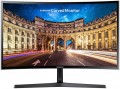 | 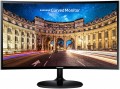 |
|---|---|---|
| Samsung C24F396F 24 " | Samsung C24F390F 24 " | |
from $112.02 | Compare prices 1 | |
| User reviews | ||
| TOP sellers | ||
Curved screen. Quality colour rendering. High level of contrast. Support for AMD Free Sync technology. Thin frames. Glossy plastic on the front. External power supply. | ||
| Product type | monitor | monitor |
| Size | 24 " | 24 " |
Screen | ||
| Curved screen | 1800R | 1800R |
| Panel type | *VA | *VA |
| Surface treatment | matte | matte |
| Resolution | 1920x1080 (16:9) | 1920x1080 (16:9) |
| FPS | 60 Hz | 60 Hz |
| Pixel size | 0.27 mm | 0.27 mm |
| Response time (GtG) | 4 ms | 4 ms |
| Vertical viewing angle | 178 ° | 178 ° |
| Horizontal viewing angle | 178 ° | 178 ° |
| Brightness | 250 cd/m² | 250 cd/m² |
| Static contrast | 3 000:1 | 3 000:1 |
| Colour depth | 8-bit (16.7M Colors) | |
| Colour space (NTSC) | 72 % | 72 % |
Connection | ||
| Video transmission | VGA HDMI | VGA HDMI |
| Connectors (optional) | mini-Jack output (3.5 mm) | mini-Jack output (3.5 mm) |
Features | ||
| Features | Flicker-Free AMD FreeSync | Flicker-Free AMD FreeSync |
General | ||
| Wall mount | VESA 75x75mm | VESA 75x75mm |
| Power consumption | 25 W | 25 W |
| Dimensions (WxHxD) | 547.8x423.9x218.8 mm | 547.8x418.2x206.5 mm |
| Weight | 3.3 kg | 3.3 kg |
| Color | ||
| Added to E-Catalog | august 2016 | march 2016 |



Compare Samsung C24F396F and C24F390F
Price comparison
You may be interested in
My comparisons
Samsung C24F396F often compared

Samsung C24F390F often compared


Glossary
Colour depth
The colour depth supported by the monitor.
This parameter characterizes the number of shades that the screen can display. And here it is worth recalling that the image in modern monitors is based on 3 basic colours — red, green, blue (RGB scheme). And the number of bits is indicated not for the entire screen, but for each base colour. For example, 6 bits (the minimum colour depth for modern monitors) means that the screen is capable of producing 2 ^ 6, that is, 64 shades of red, green and blue; the total number of shades will be 64 * 64 * 64 = 262,144 (0.26 million). An 8-bit colour depth (256 shades for each base colour) already gives a total of 16.7 million colours; and the most advanced modern monitors support 10-bit colour, allowing you to work with more than a billion shades.
Screens with support for FRC technology are worth a special mention; nowadays, you can find models marked " 6 bit + FRC " and " 8 bit + FRC ". This technology was developed to improve picture quality in situations where the incoming video signal has a greater colour depth than the screen, such as when 10-bit video is fed to an 8-bit matrix. If such a screen supports FRC, the picture on it will be noticeably better than on a regular 8-bit monitor (although somewhat worse than on a full-fledged 10-bit monitor, but “8 bit + FRC” screens are much...cheaper).
High colour depth is important primarily for professional graphics and other tasks that require high colour fidelity. On the other hand, such features significantly affect the cost of the monitor. In addition, it is worth remembering that the quality of colour reproduction depends not only on the colour depth, but also on other parameters — in particular, colour gamut (see below).
This parameter characterizes the number of shades that the screen can display. And here it is worth recalling that the image in modern monitors is based on 3 basic colours — red, green, blue (RGB scheme). And the number of bits is indicated not for the entire screen, but for each base colour. For example, 6 bits (the minimum colour depth for modern monitors) means that the screen is capable of producing 2 ^ 6, that is, 64 shades of red, green and blue; the total number of shades will be 64 * 64 * 64 = 262,144 (0.26 million). An 8-bit colour depth (256 shades for each base colour) already gives a total of 16.7 million colours; and the most advanced modern monitors support 10-bit colour, allowing you to work with more than a billion shades.
Screens with support for FRC technology are worth a special mention; nowadays, you can find models marked " 6 bit + FRC " and " 8 bit + FRC ". This technology was developed to improve picture quality in situations where the incoming video signal has a greater colour depth than the screen, such as when 10-bit video is fed to an 8-bit matrix. If such a screen supports FRC, the picture on it will be noticeably better than on a regular 8-bit monitor (although somewhat worse than on a full-fledged 10-bit monitor, but “8 bit + FRC” screens are much...cheaper).
High colour depth is important primarily for professional graphics and other tasks that require high colour fidelity. On the other hand, such features significantly affect the cost of the monitor. In addition, it is worth remembering that the quality of colour reproduction depends not only on the colour depth, but also on other parameters — in particular, colour gamut (see below).