
Comparison be quiet! Dark Power Pro 13 BN331 vs MSI MEG AiP Ai1300P
Add to comparison | 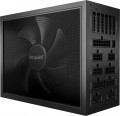 |  |
|---|---|---|
| be quiet! Dark Power Pro 13 BN331 | MSI MEG AiP Ai1300P | |
from $479.99 | Compare prices 4 | |
| TOP sellers | ||
Digital control with "Full Bridge + LLC + SR + DC/DC" topology provides high voltage stability, 135mm Silent Wings fan with hydrodynamic bearing. 10 year manufacturer's warranty. The "Overclocking Key" switch allows you to combine six independent +12 V lines into one heavy duty one. The device is made in an aluminium case 200 mm long. | ||
| Power | 1300 W | 1300 W |
| Form factor | ATX | ATX |
Specs | ||
| PFC | active | active |
| Efficiency | 92 % | 92 % |
| Cooling system | semi-passive | semi-passive |
| Fan size | 135 mm | 120 mm |
| Fan bearing | hydrodynamic | hydrodynamic |
| Certification | 80+ Titanium | 80+ Platinum |
| Cybenetics Efficiency | Platinum | |
| Cybenetics Noise | Standard ++ | |
| ATX12V version | 3 | 3 |
| EPS12V version | 2.92 | |
Power connectors | ||
| MB/CPU power supply | 24+8+8(4+4) pin | 24+8+8(4+4) pin |
| SATA | 16 | 16 |
| MOLEX | 5 | 4 |
| PCIe 8pin (6+2) | 6 | 8 |
| PCIe 16pin | 2 pcs | 1 pcs |
| Floppy |  |  |
| Cable system | modular | modular |
| Braided wires | | |
Cable length | ||
| MB | 600 mm | 600 mm |
| CPU | 700 mm | 700 mm |
| SATA | 600 mm | |
| MOLEX | 600 mm | |
| PCIe | 600 mm | 600 mm |
Max. power | ||
| +3.3V | 25 А | 25 А |
| +5V | 25 А | 25 А |
| +12V1 | 35 А | 108.33 А |
| +12V2 | 35 А | |
| +12V3 | 40 А | |
| +12V4 | 40 А | |
| -12V | 0.5 А | 0.3 А |
| +5Vsb | 3.5 А | 3 А |
| +12V | 1300 W | 1300 W |
| +3.3V +5V | 150 W | 130 W |
| -12V | 3.6 W | |
| +5Vsb | 15 W | |
General | ||
| Over voltage protection (OVP) | | |
| Over power protection (OPP) | | |
| Short circuit protection (SCP) | | |
| Protection | OTP, OCP, UVP, SIP | OCP, OTP, UVP |
| Noise level | 23 dB | |
| Manufacturer's warranty | 10 years | 10 years |
| Dimensions (HxWxD) | 86x150x200 mm | 86x150x160 mm |
| Weight | 2.41 kg | |
| Added to E-Catalog | july 2023 | april 2023 |





Compare be quiet! Dark Power Pro 13 and MSI MEG AiP be quiet! BN331 и MSI Ai1300P?
Price comparison
You may be interested in
be quiet! Dark Power Pro 13 often compared

MSI MEG AiP often compared


Glossary
Fan size
The diameter of the fan(s) in the power supply cooling system.
The large diameter allows to achieve good efficiency at relatively low RPMs, which in turn reduces noise and power consumption. On the other hand, large fans are more expensive than small ones and take up a lot of space, which affects the dimensions of the entire PSU. We also emphasize that a small fan is not yet a sign of a cheap power supply — quite advanced models can also have such equipment, in order to reduce dimensions.
As for specific diameters, the smallest value that can be found in modern consumer-grade PSUs is 80 mm. The most popular option is 120 mm, this size gives good efficiency and a relatively low noise level at a reasonable price and dimensions. Larger diameters are somewhat less common — 135 mm and 140 mm.
The large diameter allows to achieve good efficiency at relatively low RPMs, which in turn reduces noise and power consumption. On the other hand, large fans are more expensive than small ones and take up a lot of space, which affects the dimensions of the entire PSU. We also emphasize that a small fan is not yet a sign of a cheap power supply — quite advanced models can also have such equipment, in order to reduce dimensions.
As for specific diameters, the smallest value that can be found in modern consumer-grade PSUs is 80 mm. The most popular option is 120 mm, this size gives good efficiency and a relatively low noise level at a reasonable price and dimensions. Larger diameters are somewhat less common — 135 mm and 140 mm.
Certification
The presence or absence of an 80+ certificate for the power supply. This certificate indicates high energy efficiency: to obtain it, the efficiency (see above) must be at least 80%, and in different modes (20%, 50% and 100% of the maximum load). There are several degrees of 80+:
— 80+. The original version of the certificate, assuming an efficiency of at least 82% (at least 85% for 50% load).
— 80+ White. The second name of the original 80+ certificate (see above).
— 80+ Bronze — efficiency not less than 85% (for half load — 88%).
— 80+ Silver — respectively 87% (90% for half load).
— 80+ Gold — 89% (92% for half load)
— 80+ Platinum — 90% (94% for half load).
— 80+ Titanium — 94% (96% for half load).
The power factor (see "PFC Type") must be at least 0.9 for the lower levels and at least 0.95 for the Platinum level. Also note that for redundant power used in server systems, the efficiency requirements are somewhat lower.
— 80+. The original version of the certificate, assuming an efficiency of at least 82% (at least 85% for 50% load).
— 80+ White. The second name of the original 80+ certificate (see above).
— 80+ Bronze — efficiency not less than 85% (for half load — 88%).
— 80+ Silver — respectively 87% (90% for half load).
— 80+ Gold — 89% (92% for half load)
— 80+ Platinum — 90% (94% for half load).
— 80+ Titanium — 94% (96% for half load).
The power factor (see "PFC Type") must be at least 0.9 for the lower levels and at least 0.95 for the Platinum level. Also note that for redundant power used in server systems, the efficiency requirements are somewhat lower.
Cybenetics Efficiency
Cybenetics Efficiency is a power supply unit (PSU) energy efficiency certification system that serves as an alternative to the 80 PLUS standard. It is more accurate as it considers efficiency at various load levels (10%, 20%, 50%, 100%) and at different input voltages (115V, 230V). The labeling of this system is identical to 80 PLUS:
Bronze — overall efficiency from 82% to 85% at 115V input voltage and from 84% to 87% at 230V;
Silver — 85 – 87% and 87 – 89% respectively;
Gold — from 87% to 89% (115V) and from 89% to 91% (230V);
Platinum — 89 – 91% at 115V and 91 – 93% at 230V;
Titanium — 91 – 93% (115V) and 93 – 95% (230V);
Diamond — ≥ 93/95%.
Bronze — overall efficiency from 82% to 85% at 115V input voltage and from 84% to 87% at 230V;
Silver — 85 – 87% and 87 – 89% respectively;
Gold — from 87% to 89% (115V) and from 89% to 91% (230V);
Platinum — 89 – 91% at 115V and 91 – 93% at 230V;
Titanium — 91 – 93% (115V) and 93 – 95% (230V);
Diamond — ≥ 93/95%.
Cybenetics Noise
The Cybenetics Lambda Certification System evaluates the noise levels of power supply units (PSUs), providing consumers with information about their acoustic characteristics. As a result, you can rely not only on the efficiency of the PSU but also on its noise level. Cybenetics Lambda certification levels include:
Standard — from 40 dB(A) to 45 dB(A) – noticeable noise;
Standard+ — from 35 dB(A) to 40 dB(A) – noticeable noise;
Standard++ — from 30 dB(A) to 35 dB(A) – moderate noise;
A- — from 25 dB(A) to 30 dB(A) – moderately quiet;
A — from 20 dB(A) to 25 dB(A) – quiet;
A+ — from 15 dB(A) to 20 dB(A) – very quiet;
A++ — less than 15 dB(A) – nearly silent.
Standard — from 40 dB(A) to 45 dB(A) – noticeable noise;
Standard+ — from 35 dB(A) to 40 dB(A) – noticeable noise;
Standard++ — from 30 dB(A) to 35 dB(A) – moderate noise;
A- — from 25 dB(A) to 30 dB(A) – moderately quiet;
A — from 20 dB(A) to 25 dB(A) – quiet;
A+ — from 15 dB(A) to 20 dB(A) – very quiet;
A++ — less than 15 dB(A) – nearly silent.
EPS12V version
The version of the EPS12V standard that the power supply complies with. The EPS12V standard was created primarily for high consumption PCs (with a power of more than 700 W, see "Power") and entry-level servers. Such power supplies have a 24-pin plug for the motherboard and an 8-pin processor power connector (sometimes more than one, see “MB / CPU Power” for more details). They are also more reliable than ATX12V. They are compatible with most ATX standard motherboards, however, in older motherboards, there may be problems with matching connectors, so this issue should be clarified separately (however, to solve this problem, in some power supplies, parts of the plugs are made removable, which allows them to be reduced if necessary to the dimensions of the connectors on the motherboard).
MOLEX
The number of Molex (IDE) connectors provided in the design of the power supply.
Initially, such a connector was intended to power peripherals for the IDE interface, primarily hard drives. And although the IDE itself is completely obsolete today and is not used in new components, however, the Molex power connector continues to be installed in power supplies, and almost without fail. Almost any modern PSU has at least 1 – 2 of these connectors, and in high-end models this number can be 7 or more. This situation is due to the fact that Molex IDE is a fairly universal standard, and with the help of the simplest adapters, components with a different power interface can be powered from it. For example, there are Molex - SATA adapters for drives, Molex - 6 pin for video cards, etc.
Initially, such a connector was intended to power peripherals for the IDE interface, primarily hard drives. And although the IDE itself is completely obsolete today and is not used in new components, however, the Molex power connector continues to be installed in power supplies, and almost without fail. Almost any modern PSU has at least 1 – 2 of these connectors, and in high-end models this number can be 7 or more. This situation is due to the fact that Molex IDE is a fairly universal standard, and with the help of the simplest adapters, components with a different power interface can be powered from it. For example, there are Molex - SATA adapters for drives, Molex - 6 pin for video cards, etc.
PCIe 8pin (6+2)
Number of 8-pin PCIe power connectors (6+2) provided in the PSU design.
Additional PCIe power connectors (of all formats) are used for additional power to types of internal peripherals that require more than the 75W supplied directly through the PCIe slot on the motherboard (a typical example is graphics cards). In PC components, there are two types of such connectors — 6-pin, providing up to 75W of additional power, and 8-pin, giving up to 150W. The 8-pin (6+2) connectors used in power supplies are universal: they can work with both 6-pin and 8-pin connectors on the expansion board. Therefore, this type of connector is the most popular in modern PSUs.
As for the quantity, there are models on sale with 1 PCIe 8-pin (6+2) connector, 2 such connectors, 3 connectors, 4 connectors, and in some cases — 6 or more. Several of these connectors can be useful, for example, when connecting multiple graphics cards — or for a powerful high-performance video adapter equipped with multiple additional PCIe power connectors.
Additional PCIe power connectors (of all formats) are used for additional power to types of internal peripherals that require more than the 75W supplied directly through the PCIe slot on the motherboard (a typical example is graphics cards). In PC components, there are two types of such connectors — 6-pin, providing up to 75W of additional power, and 8-pin, giving up to 150W. The 8-pin (6+2) connectors used in power supplies are universal: they can work with both 6-pin and 8-pin connectors on the expansion board. Therefore, this type of connector is the most popular in modern PSUs.
As for the quantity, there are models on sale with 1 PCIe 8-pin (6+2) connector, 2 such connectors, 3 connectors, 4 connectors, and in some cases — 6 or more. Several of these connectors can be useful, for example, when connecting multiple graphics cards — or for a powerful high-performance video adapter equipped with multiple additional PCIe power connectors.
PCIe 16pin
The 16-pin PCIe power connector is designed to replace the existing 8-pin counterparts. It consists of twelve lines for current supply and four more for data transmission. The connector provides up to 600 watts of additional power, which is a fourfold increase in power compared to the 8-pin versions of the interface. Additional PCIe connectors of all formats are used to power those types of internal peripherals that no longer have enough with the 75 watts delivered directly through the PCIe slot on the motherboard.
Floppy
The presence of at least one Floppy power connector in the PSU.
Initially, this connector was intended to power floppy disk drives, hence the name. It is also known under the designation "mini-Molex". Anyway, this standard is generally considered obsolete, but it is still used by some specific types of components, and therefore continues to be used in power supplies.
Initially, this connector was intended to power floppy disk drives, hence the name. It is also known under the designation "mini-Molex". Anyway, this standard is generally considered obsolete, but it is still used by some specific types of components, and therefore continues to be used in power supplies.