
Comparison Ugreen HiTune Max5 vs Ugreen HiTune Max3
Add to comparison | 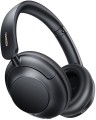 | 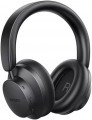 |
|---|---|---|
| Ugreen HiTune Max5 | Ugreen HiTune Max3 | |
| Outdated Product | Outdated Product | |
| TOP sellers | ||
Active noise cancellation, long battery life. | Active noise reduction, long battery life, surround sound support. | |
Connection and design | ||
| Design | overhead, closed full size Over-Ear swiveling earcups | overhead, closed full size Over-Ear swiveling earcups |
| Connection type | combined | combined |
| Connection | mini-Jack (3.5 mm) Bluetooth v5.0 | mini-Jack (3.5 mm) Bluetooth v5.0 |
| Plug | straight | straight |
| Cable supply | single-sided | single-sided |
| Range | 10 m | 10 m |
| Cable type | round | round |
| Detachable cable |  | |
Specs | ||
| Hi-Res Audio | |  |
| Frequency range | 20 – 40000 Hz | 20 – 20000 Hz |
| Speaker size | 40 mm | 40 mm |
| Emitter type | dynamic | dynamic |
Microphone specs | ||
| Microphone | built into the case | built into the case |
| Microphone noise canceling | ENC | ENC |
Features | ||
| Volume control | | |
| Noise cancellation | ANC | ANC |
| Transparent mode | | |
| Codec support | AAC LDAC | AAC |
Power supply | ||
| Power source | battery | battery |
| Headphone battery capacity | 600 mAh | 650 mAh |
| Charging time | 1.5 h | 1.5 h |
| Operating time (music) | 55 h | 40 h |
| Operating time (no noise canceling) | 90 h | 60 h |
| Charging port | USB-C | USB-C |
General | ||
| Touch control | | |
| Ear cushion material | leatherette | leatherette |
| Weight | 246 g | 287 g |
| In box | case | case airplane adapter |
| Color | ||
| Added to E-Catalog | april 2024 | december 2023 |


Compare Ugreen HiTune Max5 and HiTune Max3
Headphones Ugreen HiTune Max5 and HiTune Max3 have similar design and main features, but there are a few key differences. The Max5 supports Hi-Res Audio and offers longer music playtime — up to 55 hours, while the Max3 provides 40 hours. Additionally, the Max5 supports AAC and LDAC codecs, whereas the Max3 supports only AAC. In terms of noise cancellation, both models offer active noise cancellation (ANC), but the Max3 does not have a transparency mode, which is present in the Max5. The choice between them may depend on preferences in sound quality and battery life.
You may be interested in
My comparisons
Ugreen HiTune Max5 often compared


Glossary
Hi-Res Audio
Headphone support for Hi-Res Audio. The corresponding format is designed to provide a sound close to that recorded in the studio. Hi-Res Audio refers to a digital signal with parameters from 96 kHz / 24 bits, and for analog technology, the requirement for an extended frequency response is set from 40 kHz. Audio tracks in this format sound as close as possible to the original ideas of the authors of the compositions. The Hi-Res license marks premium headphones for avid audiophiles.
Frequency range
The range of sound frequencies that headphones can reproduce.
The wider this range, the more fully the headphones reproduce the spectrum of sound frequencies, the lower the likelihood that too low or too high frequencies will be inaccessible. However, there are some nuances to consider here. First of all, let us remind you that the perceptual range of the human ear is on average from 16 Hz to 22 kHz, and for the complete picture it is enough for headphones to cover this range. However, modern models can significantly exceed these boundaries: in many devices the lower threshold does not exceed 15 Hz, or even 10 Hz, and the upper limit can reach 25 kHz, 30 kHz and even more. Such wide ranges in themselves do not provide practical advantages, but they usually indicate a high class of headphones, and are sometimes given only for advertising purposes.
The second important point is that a wide frequency range in itself is not a guarantee of good sound: sound quality also depends on a number of parameters, primarily the amplitude-frequency response of the headphones.
The wider this range, the more fully the headphones reproduce the spectrum of sound frequencies, the lower the likelihood that too low or too high frequencies will be inaccessible. However, there are some nuances to consider here. First of all, let us remind you that the perceptual range of the human ear is on average from 16 Hz to 22 kHz, and for the complete picture it is enough for headphones to cover this range. However, modern models can significantly exceed these boundaries: in many devices the lower threshold does not exceed 15 Hz, or even 10 Hz, and the upper limit can reach 25 kHz, 30 kHz and even more. Such wide ranges in themselves do not provide practical advantages, but they usually indicate a high class of headphones, and are sometimes given only for advertising purposes.
The second important point is that a wide frequency range in itself is not a guarantee of good sound: sound quality also depends on a number of parameters, primarily the amplitude-frequency response of the headphones.
Transparent mode
A feature that allows the user to hear the sounds of the surrounding world without removing the headphones.
This possibility is relevant mainly for models with a high degree of sound insulation; so the transparent mode can be found mainly among in-ear models, as well as overhead "ears" of the Over Ear format in a closed acoustic design. A special microphone is responsible for the operation of the function, which “listens” to the surrounding sounds and broadcasts them to the headphones. In Talk Through mode, you can, for example, listen to the interlocutor or control the environment on a busy street. And some headphones with this feature also have more advanced functions, including automatic adjustment to the situation: such models turn on on their own to transmit speech, “hearing” the loud voice of a person nearby. Individual headphones react to loud street noises in the transparent Ambient Aware mode — it means broadcasting noises through the speaker that can be potential danger signals (screams, car signals, etc.).
Note that most models with Talk through also have an active noise reduction function (see above), and the “transparent mode” in them is one of the noise reduction modes. However, exceptions to this rule are possible — technically transparent mode does not have to be combined with noise reduction.
This possibility is relevant mainly for models with a high degree of sound insulation; so the transparent mode can be found mainly among in-ear models, as well as overhead "ears" of the Over Ear format in a closed acoustic design. A special microphone is responsible for the operation of the function, which “listens” to the surrounding sounds and broadcasts them to the headphones. In Talk Through mode, you can, for example, listen to the interlocutor or control the environment on a busy street. And some headphones with this feature also have more advanced functions, including automatic adjustment to the situation: such models turn on on their own to transmit speech, “hearing” the loud voice of a person nearby. Individual headphones react to loud street noises in the transparent Ambient Aware mode — it means broadcasting noises through the speaker that can be potential danger signals (screams, car signals, etc.).
Note that most models with Talk through also have an active noise reduction function (see above), and the “transparent mode” in them is one of the noise reduction modes. However, exceptions to this rule are possible — technically transparent mode does not have to be combined with noise reduction.
Codec support
Codecs and additional audio processing technologies supported by Bluetooth headphones (see “Connection”). Initially, sound transmission via Bluetooth involves fairly strong signal compression; This is not critical when transmitting speech, but can greatly spoil the impression when listening to music. To eliminate this shortcoming, various technologies are used, in particular aptX, aptX HD, aptX Low Latency, aptX Adaptive, AAC, LDAC and LHDC. Of course, to use any of the technologies, it must be supported not only by the “ears”, but also by the Bluetooth device with which they are used. Here are the main features of each option:
- aptX. A Bluetooth codec designed to significantly improve the quality of audio transmitted over Bluetooth. According to the creators, it allows you to achieve quality comparable to Audio CD (16-bits/44.1kHz). The benefits of aptX are most noticeable when listening to high-quality content (such as lossless formats), but even on regular MP3 it can provide a noticeable sound improvement.
- aptX HD. Development and improvement of the original aptX, allowing for sound purity comparable to Hi-Res audio (24-bits/48kHz). As in the original, the benefits of aptX HD are noticeable mainly on high-quality...audio, although this codec will not be out of place for MP3.
- aptX Low Latency. A specific version of aptX described above, designed not so much to improve sound quality, but to reduce delays in signal transmission. Such delays inevitably occur when working via Bluetooth; They are not critical for listening to music, but when watching videos or playing games, there may be a noticeable desynchronization between the image and sound. The aptX LL codec eliminates this phenomenon, reducing latency to 32 ms - such a difference is imperceptible to human perception (although for serious tasks like studio audio work it is still too high). aptX LL support is found mainly in gaming headphones.
- aptX Adaptive. Further development of aptX; actually combines the capabilities of aptX HD and aptX Low Latency, but is not limited to this. One of the main features of this standard is the so-called adaptive bitrate: the codec automatically adjusts the actual data transfer rate based on the characteristics of the broadcast content (music, game audio, voice communications, etc.) and the congestion of the frequencies used. This, in particular, helps reduce energy consumption and increase communication reliability; and special algorithms allow you to broadcast sound quality comparable to aptX HD (24 bits/48 kHz), using several times less amount of transmitted data. And the minimum data transfer latency (at the aptX LL level) makes this codec excellent for games and movies.
- aptX Lossless. The next stage in the development of aptX technology, which involves transmitting CD-quality sound over a wireless Bluetooth network without loss or compression. Audio broadcasting with sampling parameters of 16 bits / 44.1 kHz is carried out with a bitrate of about 1.4 Mbit/s - this is about three times faster than it was in the aptX Adaptive edition (see above). Support for aptX Lossless began to be introduced at the end of 2021 as part of the Snapdragon Sound initiative from Qualcomm.
- A.A.C. A Bluetooth codec used primarily in portable Apple gadgets. In terms of capabilities, it is noticeably inferior to more advanced standards like aptX or LDAC: the sound quality when using AAC is comparable to an average MP3 file. However, for listening to the same MP3s, this is quite enough; the difference becomes noticeable only on more advanced formats. AAC hardware requirements are low, and its support in headphones is inexpensive.
— LDAC. Sony's proprietary Bluetooth codec. It surpasses even aptX HD in terms of bandwidth and potential sound quality, providing performance at the Hi-Res level of 24-bits/96kHz audio; there is even an opinion that this is the maximum quality that it makes sense to provide in wireless headphones - further improvement will simply be imperceptible to the human ear. On the other hand, supporting this standard is not cheap, and there are still quite a few gadgets with such support - these are, in particular, Sony smartphones, as well as mid- and high-end devices running Android 8.0 Oreo and later versions.
- LHDC. LHDC (Low latency High-Definition audio Codec) is a high-definition, low-latency codec developed by the Hi-Res Wireless Audio Alliance and Savitech. In the vast majority of cases, its support is implemented at the hardware level in Huawei and Xiaomi smartphones. The codec is also known as HWA (Hi-Res Wireless Audio). When using LHDC, signal transmission from the phone to the headphones is carried out with a bits rate of up to 900 kbps, a bits depth of up to 24 bits and a sampling frequency of up to 96 kHz. This ensures a stable and reliable communication with reduced latency. The codec is optimally suited for high-end wireless headphones and advanced digital audio formats.
- aptX. A Bluetooth codec designed to significantly improve the quality of audio transmitted over Bluetooth. According to the creators, it allows you to achieve quality comparable to Audio CD (16-bits/44.1kHz). The benefits of aptX are most noticeable when listening to high-quality content (such as lossless formats), but even on regular MP3 it can provide a noticeable sound improvement.
- aptX HD. Development and improvement of the original aptX, allowing for sound purity comparable to Hi-Res audio (24-bits/48kHz). As in the original, the benefits of aptX HD are noticeable mainly on high-quality...audio, although this codec will not be out of place for MP3.
- aptX Low Latency. A specific version of aptX described above, designed not so much to improve sound quality, but to reduce delays in signal transmission. Such delays inevitably occur when working via Bluetooth; They are not critical for listening to music, but when watching videos or playing games, there may be a noticeable desynchronization between the image and sound. The aptX LL codec eliminates this phenomenon, reducing latency to 32 ms - such a difference is imperceptible to human perception (although for serious tasks like studio audio work it is still too high). aptX LL support is found mainly in gaming headphones.
- aptX Adaptive. Further development of aptX; actually combines the capabilities of aptX HD and aptX Low Latency, but is not limited to this. One of the main features of this standard is the so-called adaptive bitrate: the codec automatically adjusts the actual data transfer rate based on the characteristics of the broadcast content (music, game audio, voice communications, etc.) and the congestion of the frequencies used. This, in particular, helps reduce energy consumption and increase communication reliability; and special algorithms allow you to broadcast sound quality comparable to aptX HD (24 bits/48 kHz), using several times less amount of transmitted data. And the minimum data transfer latency (at the aptX LL level) makes this codec excellent for games and movies.
- aptX Lossless. The next stage in the development of aptX technology, which involves transmitting CD-quality sound over a wireless Bluetooth network without loss or compression. Audio broadcasting with sampling parameters of 16 bits / 44.1 kHz is carried out with a bitrate of about 1.4 Mbit/s - this is about three times faster than it was in the aptX Adaptive edition (see above). Support for aptX Lossless began to be introduced at the end of 2021 as part of the Snapdragon Sound initiative from Qualcomm.
- A.A.C. A Bluetooth codec used primarily in portable Apple gadgets. In terms of capabilities, it is noticeably inferior to more advanced standards like aptX or LDAC: the sound quality when using AAC is comparable to an average MP3 file. However, for listening to the same MP3s, this is quite enough; the difference becomes noticeable only on more advanced formats. AAC hardware requirements are low, and its support in headphones is inexpensive.
— LDAC. Sony's proprietary Bluetooth codec. It surpasses even aptX HD in terms of bandwidth and potential sound quality, providing performance at the Hi-Res level of 24-bits/96kHz audio; there is even an opinion that this is the maximum quality that it makes sense to provide in wireless headphones - further improvement will simply be imperceptible to the human ear. On the other hand, supporting this standard is not cheap, and there are still quite a few gadgets with such support - these are, in particular, Sony smartphones, as well as mid- and high-end devices running Android 8.0 Oreo and later versions.
- LHDC. LHDC (Low latency High-Definition audio Codec) is a high-definition, low-latency codec developed by the Hi-Res Wireless Audio Alliance and Savitech. In the vast majority of cases, its support is implemented at the hardware level in Huawei and Xiaomi smartphones. The codec is also known as HWA (Hi-Res Wireless Audio). When using LHDC, signal transmission from the phone to the headphones is carried out with a bits rate of up to 900 kbps, a bits depth of up to 24 bits and a sampling frequency of up to 96 kHz. This ensures a stable and reliable communication with reduced latency. The codec is optimally suited for high-end wireless headphones and advanced digital audio formats.
Headphone battery capacity
The capacity of the battery installed in the headphones of the corresponding design (see "Power").
Theoretically, a higher capacity allows to achieve greater battery life, but in fact, the operating time also depends on the power consumption of the headphones — and it can be very different, depending on the characteristics and design features. So this parameter is secondary, and when choosing it is worth paying attention not so much to the battery capacity, but to the directly claimed operating time (see below).
Theoretically, a higher capacity allows to achieve greater battery life, but in fact, the operating time also depends on the power consumption of the headphones — and it can be very different, depending on the characteristics and design features. So this parameter is secondary, and when choosing it is worth paying attention not so much to the battery capacity, but to the directly claimed operating time (see below).
Operating time (music)
The declared operating time of headphones with autonomous power supply (see above) when listening to music on a single battery charge or a set of batteries.
As a rule, the characteristics indicate a certain average operating time in music listening mode, for standard conditions; in practice, it will depend on the intensity of use, volume level and other operating parameters, and in models with replaceable batteries - also on the quality of specific batteries. However, based on the stated time, you can fairly reliably assess the autonomy of the selected headphones and compare them with other models. As for specific values, relatively “short-lived” devices have a battery life of up to 8 hours, a figure of 8 – 12 hours can be called quite good, 12 – 20 hours – very good, and in the most “long-lasting” headphones the operating time can exceed 20 hours.
As a rule, the characteristics indicate a certain average operating time in music listening mode, for standard conditions; in practice, it will depend on the intensity of use, volume level and other operating parameters, and in models with replaceable batteries - also on the quality of specific batteries. However, based on the stated time, you can fairly reliably assess the autonomy of the selected headphones and compare them with other models. As for specific values, relatively “short-lived” devices have a battery life of up to 8 hours, a figure of 8 – 12 hours can be called quite good, 12 – 20 hours – very good, and in the most “long-lasting” headphones the operating time can exceed 20 hours.
Operating time (no noise canceling)
How long does the active noise canceling headphones (see above) last on a single battery charge (or a set of batteries) when noise canceling is not used.
This function is quite “gluttonous” in terms of battery consumption, up to half of the total energy consumed by the headphones can go to its work. Thus, models with noise reduction can indicate both overall battery life (see "Operating time"), and battery life with the noise reduction turned off.
This function is quite “gluttonous” in terms of battery consumption, up to half of the total energy consumed by the headphones can go to its work. Thus, models with noise reduction can indicate both overall battery life (see "Operating time"), and battery life with the noise reduction turned off.
Touch control
This feature means that the controls in the headphones are not traditional buttons that you need to press, but sensors that are triggered by touch.
Touch control is somewhat more expensive than push-button control, but it has a number of advantages over it. Firstly, it gives the headphones a neat and technological appearance, with a minimum of protruding parts. Secondly, due to the absence of moving parts, the sensors are more reliable and compact. Thirdly, it is purely physically more convenient to use them, especially with the small size of the headphones. These moments are especially relevant for the "ears" of the true wireless format (see "Type of cable"), so it is in them that touch control is most often found. However, there are exceptions to this rule. Also note that the difference in price between buttons and sensors is often almost imperceptible compared to the cost of headphones in general.
Touch control is somewhat more expensive than push-button control, but it has a number of advantages over it. Firstly, it gives the headphones a neat and technological appearance, with a minimum of protruding parts. Secondly, due to the absence of moving parts, the sensors are more reliable and compact. Thirdly, it is purely physically more convenient to use them, especially with the small size of the headphones. These moments are especially relevant for the "ears" of the true wireless format (see "Type of cable"), so it is in them that touch control is most often found. However, there are exceptions to this rule. Also note that the difference in price between buttons and sensors is often almost imperceptible compared to the cost of headphones in general.
Weight
The total weight of the headphones; for true wireless models (see "Cable Type"), the weight of each individual earbud is listed.
This parameter is directly related to the design (see above) and some features of the functionality. Thus, the mentioned true wireless devices are very light, their weight does not exceed 25 g. More traditional in-ears and in-ears can be noticeably heavier, up to 50g for in-ears and up to 100g for most in-ears. Overhead models, for the most part, are quite massive: among them there are many models weighing 200 – 250 g, 250 – 300 g and even more than 300 g. It should be noted that a significant weight for false ears is often not a disadvantage, but an advantage: it allows them to stay on the head more securely, creates an impression of solidity and reliability, and most often does not create significant inconvenience.
This parameter is directly related to the design (see above) and some features of the functionality. Thus, the mentioned true wireless devices are very light, their weight does not exceed 25 g. More traditional in-ears and in-ears can be noticeably heavier, up to 50g for in-ears and up to 100g for most in-ears. Overhead models, for the most part, are quite massive: among them there are many models weighing 200 – 250 g, 250 – 300 g and even more than 300 g. It should be noted that a significant weight for false ears is often not a disadvantage, but an advantage: it allows them to stay on the head more securely, creates an impression of solidity and reliability, and most often does not create significant inconvenience.