
Comparison Sony WF-C700 vs Sony LinkBuds S
Add to comparison | 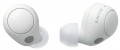 | 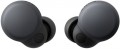 |
|---|---|---|
| Sony WF-C700 | Sony LinkBuds S | |
| Compare prices 7 | Compare prices 5 | |
| User reviews | ||
| TOP sellers | ||
Active noise cancellation, DSEE sound enhancement technology. | Adaptation of sound volume to the environment. Active noise cancellation. Dolby Atmos support. | |
Connection and design | ||
| Design | in-ear | in-ear |
| Connection type | wireless | wireless |
| Connection | Bluetooth v5.2 | Bluetooth v5.2 |
| Range | 10 m | 10 m |
Specs | ||
| Sound | Dolby Atmos | |
| Hi-Res Audio |  |  |
| Frequency range | 20 – 20000 Hz | 20 – 40000 Hz |
| Speaker size | 5 mm | 5 mm |
| Emitter type | dynamic | dynamic |
Microphone specs | ||
| Microphone | built into the case | built into the case |
| Microphone noise canceling | ENC | |
Features | ||
| Volume control | | |
| Autopause | | |
| External sound card | | |
| Noise cancellation | ANC | adaptive ANC |
| Transparent mode | | |
| Multipoint | | |
| Codec support | AAC | LC3 (LE Audio) AAC LDAC |
| Voice assistant | Apple Siri / Google Assistant | Amazon Alexa / Apple Siri / Google Assistant |
Power supply | ||
| Power source | battery | battery |
| Charging time | 1.5 h | 2 h |
| Operating time (music) | 7.5 h | 6 h |
| Operating time (talk) | 5 h | 3.5 h |
| Operating time (no noise canceling) | 10 h | 9 h |
| Operating time (with case) | 25 h | 20 h |
| Fast charge | 5 minutes for 1 hour of work | |
| Charging port | USB-C | USB-C |
General | ||
| Touch control | | |
| Waterproof | IPX4 | IPX4 |
| Weight | 5 g | 5 g |
| In box | silicone tips 3 pairs charging case | silicone tips charging case |
| Color | ||
| Added to E-Catalog | april 2023 | february 2023 |





Compare Sony WF-C700 and LinkBuds S
Price comparison
You may be interested in
My comparisons
Sony WF-C700 often compared


Sony LinkBuds S often compared


Glossary
Sound
The audio format supported by the headphones.
— Stereo. Two-channel sound that allows you to create a surround sound effect to a certain extent (due to the difference in the right and left channels). The design of the headphones (two speakers, one for each ear) was originally “sharpened” specifically for stereo, so the vast majority of models support this particular sound format.
— Mono. Single-channel sound that does not create a surround effect. This marking means that this model is equipped with one earpiece ; At the same time, there are two types of such devices on the market. The first is headphones that initially have only one cup and are designed for situations where the second ear needs to be left open (for example, to work on the phone in the office). The second is true wireless devices (see Cable Type), sold singly to replace a lost earphone from the original pair.
— 5.1. Originally, 5.1 was designed to create surround sound that can come from any direction ("surround"). It assumes the presence of 5 main channels (centre, front left / right, rear left / right) and one bass. In headphones, the effect of this sound is achieved through the use of several speakers in each cup. Such models are very convenient when watching movies with multi-channel sound, as well as in games — they provide a powerful immersive effect. On the other hand, such headphones are not cheap, and besides, they require a specifi...c connection method (for example, via USB).
— 5.1 (virtual). Models with support for 5.1 surround sound (see above), in which the surround effect is achieved not due to the number of speakers, but due to special sound processing technologies. This somewhat reduces the accuracy compared to the "non-virtual" multi-channel, but it can significantly reduce the cost and weight of the headphones. However, there can also be several speakers in such models — for example, for separation by frequency.
— 7.1. The 7.1 format is the multi-channel 5.1 described above, supplemented by two more main channels. The localization of these channels depends on the specific variety of 7.1, but anyway they enhance the effect of volume. On the other hand, full support for this format significantly affects the dimensions, weight and price of the headphones, and content with 7.1 sound is produced much less than 5.1.
— 7.1 (virtual). A “virtual” version of the 7.1 format described above, in which the effect of surround sound is provided primarily through special signal processing, and not due to the presence of separate emitters for each channel. Similar to virtual 5.1, this format of operation somewhat reduces the reliability of the sound, but this difference is often imperceptible, and the headphones themselves turn out to be simpler and more inexpensive. Therefore, most modern 7.1 models support the virtual format of this sound.
— 9.1 (virtual). Further development of the idea of multi-channel sound: 5 channels, as in 5.1 (see above), supplemented by 4 more channels for more accurate localization of audible sound. As in other virtual formats, volume in this case is provided by special processing algorithms.
It is worth remembering that the actual sound will depend not only on the headphones, but also on the signal source: for example, a mono recording even in 9.1 “ears” will not become voluminous.
— 3D sound. Surround sound with the localization of sound sources in three-dimensional space allows you to deeply plunge into the atmosphere of films or immerse yourself in a virtual game world. The mechanics of spatial 3D-sound provides localization of sound sources around the listener and in the vertical scan plane. Algorithms for implementing 3D sound in headphones differ in terms of software and hardware support, but all of them are aimed at achieving the effect of realism of what is happening. Surround sound has long been the standard for movies, and in recent years, 3D sound has become increasingly common in games and music tracks.
— Stereo. Two-channel sound that allows you to create a surround sound effect to a certain extent (due to the difference in the right and left channels). The design of the headphones (two speakers, one for each ear) was originally “sharpened” specifically for stereo, so the vast majority of models support this particular sound format.
— Mono. Single-channel sound that does not create a surround effect. This marking means that this model is equipped with one earpiece ; At the same time, there are two types of such devices on the market. The first is headphones that initially have only one cup and are designed for situations where the second ear needs to be left open (for example, to work on the phone in the office). The second is true wireless devices (see Cable Type), sold singly to replace a lost earphone from the original pair.
— 5.1. Originally, 5.1 was designed to create surround sound that can come from any direction ("surround"). It assumes the presence of 5 main channels (centre, front left / right, rear left / right) and one bass. In headphones, the effect of this sound is achieved through the use of several speakers in each cup. Such models are very convenient when watching movies with multi-channel sound, as well as in games — they provide a powerful immersive effect. On the other hand, such headphones are not cheap, and besides, they require a specifi...c connection method (for example, via USB).
— 5.1 (virtual). Models with support for 5.1 surround sound (see above), in which the surround effect is achieved not due to the number of speakers, but due to special sound processing technologies. This somewhat reduces the accuracy compared to the "non-virtual" multi-channel, but it can significantly reduce the cost and weight of the headphones. However, there can also be several speakers in such models — for example, for separation by frequency.
— 7.1. The 7.1 format is the multi-channel 5.1 described above, supplemented by two more main channels. The localization of these channels depends on the specific variety of 7.1, but anyway they enhance the effect of volume. On the other hand, full support for this format significantly affects the dimensions, weight and price of the headphones, and content with 7.1 sound is produced much less than 5.1.
— 7.1 (virtual). A “virtual” version of the 7.1 format described above, in which the effect of surround sound is provided primarily through special signal processing, and not due to the presence of separate emitters for each channel. Similar to virtual 5.1, this format of operation somewhat reduces the reliability of the sound, but this difference is often imperceptible, and the headphones themselves turn out to be simpler and more inexpensive. Therefore, most modern 7.1 models support the virtual format of this sound.
— 9.1 (virtual). Further development of the idea of multi-channel sound: 5 channels, as in 5.1 (see above), supplemented by 4 more channels for more accurate localization of audible sound. As in other virtual formats, volume in this case is provided by special processing algorithms.
It is worth remembering that the actual sound will depend not only on the headphones, but also on the signal source: for example, a mono recording even in 9.1 “ears” will not become voluminous.
— 3D sound. Surround sound with the localization of sound sources in three-dimensional space allows you to deeply plunge into the atmosphere of films or immerse yourself in a virtual game world. The mechanics of spatial 3D-sound provides localization of sound sources around the listener and in the vertical scan plane. Algorithms for implementing 3D sound in headphones differ in terms of software and hardware support, but all of them are aimed at achieving the effect of realism of what is happening. Surround sound has long been the standard for movies, and in recent years, 3D sound has become increasingly common in games and music tracks.
Hi-Res Audio
Headphone support for Hi-Res Audio. The corresponding format is designed to provide a sound close to that recorded in the studio. Hi-Res Audio refers to a digital signal with parameters from 96 kHz / 24 bits, and for analog technology, the requirement for an extended frequency response is set from 40 kHz. Audio tracks in this format sound as close as possible to the original ideas of the authors of the compositions. The Hi-Res license marks premium headphones for avid audiophiles.
Frequency range
The range of sound frequencies that headphones can reproduce.
The wider this range, the more fully the headphones reproduce the spectrum of sound frequencies, the lower the likelihood that too low or too high frequencies will be inaccessible. However, there are some nuances to consider here. First of all, let us remind you that the perceptual range of the human ear is on average from 16 Hz to 22 kHz, and for the complete picture it is enough for headphones to cover this range. However, modern models can significantly exceed these boundaries: in many devices the lower threshold does not exceed 15 Hz, or even 10 Hz, and the upper limit can reach 25 kHz, 30 kHz and even more. Such wide ranges in themselves do not provide practical advantages, but they usually indicate a high class of headphones, and are sometimes given only for advertising purposes.
The second important point is that a wide frequency range in itself is not a guarantee of good sound: sound quality also depends on a number of parameters, primarily the amplitude-frequency response of the headphones.
The wider this range, the more fully the headphones reproduce the spectrum of sound frequencies, the lower the likelihood that too low or too high frequencies will be inaccessible. However, there are some nuances to consider here. First of all, let us remind you that the perceptual range of the human ear is on average from 16 Hz to 22 kHz, and for the complete picture it is enough for headphones to cover this range. However, modern models can significantly exceed these boundaries: in many devices the lower threshold does not exceed 15 Hz, or even 10 Hz, and the upper limit can reach 25 kHz, 30 kHz and even more. Such wide ranges in themselves do not provide practical advantages, but they usually indicate a high class of headphones, and are sometimes given only for advertising purposes.
The second important point is that a wide frequency range in itself is not a guarantee of good sound: sound quality also depends on a number of parameters, primarily the amplitude-frequency response of the headphones.
Microphone noise canceling
The presence of a noise reduction system in its own headphone microphone.
In accordance with the name, such a system is designed to eliminate extraneous noise - primarily during conversations. It is usually based on an electronic filter that passes the sound of a human voice and cuts off background sounds such as city noise, the rumble of wind in the microphone grille, etc. As a result, even in noisy environments, thanks to the noise reduction of the microphone, speech is clear and intelligible; True, the system inevitably introduces distortions into the final sound, but they are not critical in this case.
— ENC. ENC (Environment Noise Cancellation) technology significantly reduces ambient noise with directional microphones. It is used both in gaming devices so that gamers can easily communicate in voice chat, and in TWS earphone models so that you can comfortably talk on the phone in a noisy environment.
— cVc. Microphone noise reduction cVc (Clear Voice Capture) is an advanced technology that is found mainly in expensive headphone models. cVc algorithms effectively suppress echo and noise from the environment. Sound processing using this technology is carried out at several levels at once - the algorithm determines the reference signal-to-noise level, automatically adjusts speech to the desired volume level, applies adaptive equalizers to process the entire voice, as well as specialized filters to remove...low-frequency bubbling, sibilants and hissing.
In accordance with the name, such a system is designed to eliminate extraneous noise - primarily during conversations. It is usually based on an electronic filter that passes the sound of a human voice and cuts off background sounds such as city noise, the rumble of wind in the microphone grille, etc. As a result, even in noisy environments, thanks to the noise reduction of the microphone, speech is clear and intelligible; True, the system inevitably introduces distortions into the final sound, but they are not critical in this case.
— ENC. ENC (Environment Noise Cancellation) technology significantly reduces ambient noise with directional microphones. It is used both in gaming devices so that gamers can easily communicate in voice chat, and in TWS earphone models so that you can comfortably talk on the phone in a noisy environment.
— cVc. Microphone noise reduction cVc (Clear Voice Capture) is an advanced technology that is found mainly in expensive headphone models. cVc algorithms effectively suppress echo and noise from the environment. Sound processing using this technology is carried out at several levels at once - the algorithm determines the reference signal-to-noise level, automatically adjusts speech to the desired volume level, applies adaptive equalizers to process the entire voice, as well as specialized filters to remove...low-frequency bubbling, sibilants and hissing.
Volume control
The headphones have their own volume control. Such a regulator can be placed both on the wire and on one of the cups (the latter is typical for wireless models). Anyway, this function allows you to easily adjust the volume: for this you do not need to go into the computer settings, press the buttons on the player or smartphone, etc., just use the control at hand. On the other hand, additional equipment complicates and increases the cost of the design, and also increases the likelihood of distortion. In light of the latter, volume control is almost never found in professional headphones.
Autopause
A function that allows you to automatically pause the playback track when you remove the headphones (or one headphone).
Autopause is found mainly in wireless models (see "Connection Type") true wireless format (see "Cable Type"); however, there are other types of headphones with this function — for example, with a combined connection and an overhead design. Anyway, the proximity sensor is usually responsible for the auto-pause operation, which is triggered when the earpiece moves away from the ear. This feature is especially useful in situations where, after removing the headphones, there is no time to manually pause playback — for example, you need to urgently respond to what is happening nearby. At the same time, some models are able to automatically resume playback when the earpiece is returned to its place, however, this function is not strictly required — it will not hurt to clarify its presence separately.
Autopause is found mainly in wireless models (see "Connection Type") true wireless format (see "Cable Type"); however, there are other types of headphones with this function — for example, with a combined connection and an overhead design. Anyway, the proximity sensor is usually responsible for the auto-pause operation, which is triggered when the earpiece moves away from the ear. This feature is especially useful in situations where, after removing the headphones, there is no time to manually pause playback — for example, you need to urgently respond to what is happening nearby. At the same time, some models are able to automatically resume playback when the earpiece is returned to its place, however, this function is not strictly required — it will not hurt to clarify its presence separately.
External sound card
An external sound card is included with the headphones.
An external sound card is usually a kind of adapter connected to the USB port of a computer or laptop and equipped with standard audio outputs (usually of the 3.5 mm mini-Jack type). In fact, this is an external digital-to-analogue converter (DAC), created specifically for a specific model of headphones. This feature is found mainly in two types of headphones — gaming and office (see "Purpose"). In the first case, the purpose of an external DAC is, first of all, to provide high-quality sound with the maximum immersive effect (a PC / laptop's own audio card is far from always able to cope with this task). In addition, a separate sound card can come in handy if your computer's own audio outputs are busy or not available at all. As for office models, they use external converters mainly to simplify work with special software or equipment for telephony. Note that in both cases, external sound cards often also perform the functions of remote controls — for this they are equipped with keys or other controls (sensors, wheels, etc.).
An external sound card is usually a kind of adapter connected to the USB port of a computer or laptop and equipped with standard audio outputs (usually of the 3.5 mm mini-Jack type). In fact, this is an external digital-to-analogue converter (DAC), created specifically for a specific model of headphones. This feature is found mainly in two types of headphones — gaming and office (see "Purpose"). In the first case, the purpose of an external DAC is, first of all, to provide high-quality sound with the maximum immersive effect (a PC / laptop's own audio card is far from always able to cope with this task). In addition, a separate sound card can come in handy if your computer's own audio outputs are busy or not available at all. As for office models, they use external converters mainly to simplify work with special software or equipment for telephony. Note that in both cases, external sound cards often also perform the functions of remote controls — for this they are equipped with keys or other controls (sensors, wheels, etc.).
Noise cancellation
A system that reduces the influence of ambient noise on the audibility of sound through headphones. "Noise reduction" with the help of a separate microphone (or several micro) "listens" to external sounds and sends the same sounds to the headphones, but in antiphase. Due to this, the noise heard by the ears is attenuated almost to zero and the user can enjoy the sound of the headphones without interference even in a rather “loud” environment. For filtering in headphones, Active Noise Cancellation (ANC) and Environment Noise Cancellation (ENC) systems are used. The first suppresses all the noise around the listener, the second - reduces the noise level of the environment. Active noise cancellation affects the purity of the sound, but the noise from the outside spoils the picture when listening to audio tracks even more.
Also in the headphones there is an adaptive active noise reduction system Adaptive ANC, aimed at automatically adjusting the sound of the headphones depending on the level of ambient noise. In a noisy environment (for example, when traveling on the subway), the Adaptive ANC system enhances the work of “noise reduction”, in the absence of loud sounds from outside, it weakens the noise reduction.
Also in the headphones there is an adaptive active noise reduction system Adaptive ANC, aimed at automatically adjusting the sound of the headphones depending on the level of ambient noise. In a noisy environment (for example, when traveling on the subway), the Adaptive ANC system enhances the work of “noise reduction”, in the absence of loud sounds from outside, it weakens the noise reduction.
Multipoint
A technology used in Bluetooth models (see "Connection") that allows the headphones to connect to multiple devices at the same time. Thanks to this, you can, for example, listen to music from a laptop, and when a call comes in on a mobile phone, switch the headphones to a conversation. This technology has its own characteristics for different manufacturers, and therefore, if the multipoint function is critical for you, you should separately clarify the details of its operation in the selected model.