
Comparison Wanbo X2 Max vs Wanbo T2 Max New
Add to comparison | 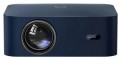 | 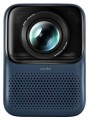 |
|---|---|---|
| Wanbo X2 Max | Wanbo T2 Max New | |
| Outdated Product | Outdated Product | |
| TOP sellers | ||
| Main function | home | portable |
| Operating system | Android 9.0 | Android 9.0 |
Lamp and image | ||
| Lamp type | LED | LED |
| Service life | 20000 h | 20000 h |
| Brightness ANSI Lumens | 450 lm | 450 lm |
| Static contrast | 2 000:1 | 2 000:1 |
| Colour rendering | 16.7 million colours | 16.7 million colours |
Projection system | ||
| Technology | LCD | LCD |
| Real resolution | 1920x1080 px | 1920x1080 px |
| Max. video resolution | 1920x1080 px | 1920x1080 px |
| Image format support | 4:3, 16:9 | 4:3, 16:9 |
| HDR support | + | |
Projecting | ||
| Rear projection |  |  |
| Throw distance, min | 1.2 m | 1.07 m |
| Throw distance, max | 3.6 m | 3.2 m |
| Image size | 40 – 120 " | 40 – 120 " |
| Throw ratio | 1.35:1 | 1.20:1 |
| Zoom and focus | manual | |
| Autofocus | | |
| Auto keystone correction | | |
| Keystone correction (vert), ± | 30 ° | |
| Keystone correction (horizontal), ± | 40 ° | 30 ° |
Features | ||
| Bluetooth | v 5.0 | v 4.2 |
| Wi-Fi | Wi-Fi 6 (802.11ax) | Wi-Fi 4 (802.11n) |
| Miracast | | |
Hardware | ||
| CPU | ICC 9269 | |
| RAM | 1 GB | 1 GB |
| Built-in memory | 8 GB | 16 GB |
| USB-A 2.0 | 1 pcs | 1 pcs |
| Number of speakers | 2 | 2 |
| Sound power | 10 W | 6 W |
| Video connectors | composite AV-input | |
| HDMI inputs | 2 | 1 |
| Audio connectors | 3.5 mm output (mini-Jack) | 3.5 mm output (mini-Jack) |
General | ||
| Noise level (nominal) | 35 dB | |
| Noise level (energy-saving / quiet) | 35 dB | |
| Power source | mains | mains |
| Power consumption | 60 W | 57 W |
| Size (HxWxD) | 94x225x177.6 mm | 156x113x146 mm |
| Weight | 1.24 kg | 1.1 kg |
| Added to E-Catalog | april 2024 | april 2024 |


Compare Wanbo X2 Max and T2 Max New
The Wanbo X2 Max and Wanbo T2 Max New projectors have similar characteristics but differ in some key aspects. Both devices use LED lamps with a lifespan of 20,000 hours and provide a brightness of 450 ANSI lumens. However, the X2 Max is designed for home theater use, whereas the T2 Max New is more portable. The X2 Max supports Wi-Fi 6 and has two HDMI inputs, while the T2 Max New uses Wi-Fi 4 and has only one HDMI input. It is also notable that the X2 Max has a sound output of 10W, whereas the T2 Max New has 6W. In terms of projection, the X2 Max has a projection distance from 1.2 to 3.6 m, while the T2 Max New ranges from 1.07 to 3.2 m, making it more flexible in installation. Overall, if you need a projector for stationary use with better audio capabilities, choose the X2 Max, and for mobility and compactness, opt for the T2 Max New.
You may be interested in
My comparisons
Wanbo X2 Max often compared


Wanbo T2 Max New often compared


Glossary
Main function
The main function of the projector.
This parameter is rather conditional, it largely depends on how the device is positioned by the manufacturer; however, for the most comfortable use, it is best to follow exactly the stated purpose. The options here can be: multipurpose, for presentations, for home theater, professional, portable, gaming. Here is a more detailed description of each option:
— Multipurpose. The simplest kind of projectors, roughly speaking – all models that do not belong to any of the specializations described below. Most of them have non-interchangeable optics, a throw distance of 1-12 m, an image diagonal of about 1-7 m (see below), and a relatively low cost.
— For presentations. Projectors designed primarily for business use, such as presentations. Usually they have a small throw distance with a rather large diagonal, which allows them to be used in small rooms; capable of working with both widescreen and conventional image formats (see below), and also support resolutions typical for computer graphics cards — for example, 1280x800. In this case, the actual resolution itself (see below) can be quite low. In addition, an almost mandatory feature of this type of projectors (with a few exceptions) is the presence of a D-Sub...15 pin input (see "Connectors").
— For home theater. Projectors designed primarily for film viewing. The main criterion for classifying a particular model in this category is how the projector is positioned by the manufacturer itself (in other words, whether this purpose is indicated in the official documentation). However, there are some common features: cinematographic models usually support widescreen image formats, have a high real resolution (see below) that allows you to work with HD video, and are also equipped with the appropriate interfaces (see "Connectors").
— Professional. High-quality projectors with advanced parameters, an abundance of functions and, accordingly, a considerable price. They are characterized by high image contrast, support high-resolution video (including cinematic image formats), have optical zoom to scale the image without losing quality, provide the connection of multi-channel sound systems, and much more. The specific set of options in professional projectors may vary depending on the model, but in any case, these are the most charged devices with top-end characteristics.
— Portable projector. An ultra-compact variety of projectors: most models are pocket-sized. Such devices are intended primarily for improvised presentations. The format of work and power supply may be different. So, some models are made as separate devices with their own built-in storages and batteries (and sometimes even with a full-fledged mobile OS like Android on board). Others are similar in design to external cases or consoles and are put directly on the mobile phone during operation, using it as a source of signal and power. However, anyway, portable projectors, due to their small size, have rather low technical specifications — they have neither brightness nor high image contrast.. Battery life (in models with their own batteries) usually ranges from 40 minutes to one and a half hours. Also, this variety is characterized by cost-effective LED lamps (see below).
— Gaming. Specialized projectors designed for use in video games. Outwardly, they are often distinguished by a characteristic “aggressive” design, while the design can be done in the style of a certain line of gaming PCs or laptops. As for the specifications, they, in accordance with the name, are aimed primarily at providing a high-quality game "picture". To do this, projectors for this purpose provide, in particular, high real resolution (not lower than 1920x720, and more often 1920x1080 or more), colour reproduction at the level of 1 billion colours, support for frame rate (see below) up to 120 Hz, and also at least one HDMI input for receiving a digital signal from a computer graphics card. In addition, such models often provide support for 3D. The maximum image diagonal can reach 7.5 m or more; at the same time, ultra-wide-angle devices are also found in this category, capable of providing an image diagonal of about 3 m from a distance of about half a metre.
This parameter is rather conditional, it largely depends on how the device is positioned by the manufacturer; however, for the most comfortable use, it is best to follow exactly the stated purpose. The options here can be: multipurpose, for presentations, for home theater, professional, portable, gaming. Here is a more detailed description of each option:
— Multipurpose. The simplest kind of projectors, roughly speaking – all models that do not belong to any of the specializations described below. Most of them have non-interchangeable optics, a throw distance of 1-12 m, an image diagonal of about 1-7 m (see below), and a relatively low cost.
— For presentations. Projectors designed primarily for business use, such as presentations. Usually they have a small throw distance with a rather large diagonal, which allows them to be used in small rooms; capable of working with both widescreen and conventional image formats (see below), and also support resolutions typical for computer graphics cards — for example, 1280x800. In this case, the actual resolution itself (see below) can be quite low. In addition, an almost mandatory feature of this type of projectors (with a few exceptions) is the presence of a D-Sub...15 pin input (see "Connectors").
— For home theater. Projectors designed primarily for film viewing. The main criterion for classifying a particular model in this category is how the projector is positioned by the manufacturer itself (in other words, whether this purpose is indicated in the official documentation). However, there are some common features: cinematographic models usually support widescreen image formats, have a high real resolution (see below) that allows you to work with HD video, and are also equipped with the appropriate interfaces (see "Connectors").
— Professional. High-quality projectors with advanced parameters, an abundance of functions and, accordingly, a considerable price. They are characterized by high image contrast, support high-resolution video (including cinematic image formats), have optical zoom to scale the image without losing quality, provide the connection of multi-channel sound systems, and much more. The specific set of options in professional projectors may vary depending on the model, but in any case, these are the most charged devices with top-end characteristics.
— Portable projector. An ultra-compact variety of projectors: most models are pocket-sized. Such devices are intended primarily for improvised presentations. The format of work and power supply may be different. So, some models are made as separate devices with their own built-in storages and batteries (and sometimes even with a full-fledged mobile OS like Android on board). Others are similar in design to external cases or consoles and are put directly on the mobile phone during operation, using it as a source of signal and power. However, anyway, portable projectors, due to their small size, have rather low technical specifications — they have neither brightness nor high image contrast.. Battery life (in models with their own batteries) usually ranges from 40 minutes to one and a half hours. Also, this variety is characterized by cost-effective LED lamps (see below).
— Gaming. Specialized projectors designed for use in video games. Outwardly, they are often distinguished by a characteristic “aggressive” design, while the design can be done in the style of a certain line of gaming PCs or laptops. As for the specifications, they, in accordance with the name, are aimed primarily at providing a high-quality game "picture". To do this, projectors for this purpose provide, in particular, high real resolution (not lower than 1920x720, and more often 1920x1080 or more), colour reproduction at the level of 1 billion colours, support for frame rate (see below) up to 120 Hz, and also at least one HDMI input for receiving a digital signal from a computer graphics card. In addition, such models often provide support for 3D. The maximum image diagonal can reach 7.5 m or more; at the same time, ultra-wide-angle devices are also found in this category, capable of providing an image diagonal of about 3 m from a distance of about half a metre.
HDR support
Support for HDR technology — expanded dynamic range — by the projector.
This technology allows for extending the brightness range displayed within a single frame — in simpler terms, it enables displaying both very bright and very dark colors on screen simultaneously. This significantly improves color reproduction; furthermore, small details on very bright or very dark parts of the frame that would be invisible on a regular image remain visible. However, it's worth noting that all the advantages of HDR become noticeable only on a high-quality screen with maximum dimming. Additionally, this function significantly affects the cost of the projector, and the content being played back must initially be recorded in HDR — using exactly the technology supported by the projector (this detail can be clarified in the manual). In light of this, HDR support is mainly found among high-end models for home theaters. It should also be noted that there are several different HDR technologies that are not compatible with each other. Therefore, when purchasing a projector with this function, it's crucial to clarify which exact version of HDR it supports. The following are available:
— HDR10. Historically the first of the consumer HDR formats, less advanced than the options described below but extremely widespread. In particular, HDR10 is supported by virtually all streaming services that provide HDR content at all, and it's also standard for...Blu-ray discs. It allows for working with a color depth of 10 bits (hence the name). At the same time, devices with this format are compatible with HDR10+ content, although its quality will be limited by the capabilities of the original HDR10.
— HDR10+. An enhanced version of HDR10. With the same color depth (10 bits), it uses so-called dynamic metadata, which allows transmitting information about color depth not only for groups of several frames but also for individual frames. This leads to further improvement in color reproduction.
— Dolby Vision. An advanced standard used, for example, in professional filmmaking. It achieves a color depth of 12 bits, uses the aforementioned dynamic metadata, and also allows transmitting two image variants simultaneously in one video stream — HDR and regular (SDR). Dolby Vision is based on the same technology as HDR10, so in modern video equipment, this format is usually combined with HDR10 or HDR10+.
— HLG. An HDR format initially designed for TV broadcasting and live transmissions; hence, it is designed for "working without metadata" and is easier to transfer between different sources. Unlike HDR10, which uses static metadata, and particularly HDR10+ / Dolby Vision, which can dynamically adjust the picture frame by frame, HLG often provides a more universal and predictable HDR signal, although not as precisely tuned for a specific display. However, HLG has a strong point — excellent compatibility: the same stream can appear acceptable even on devices that are not fully HDR-capable, which is crucial for broadcast/satellite content. An example of use is viewing HDR broadcasts and TV content from a set-top box/tuner or streaming where HLG is encountered: the projector will correctly receive the signal and display the extended brightness range and more vibrant colors without manual tweaking of settings.
This technology allows for extending the brightness range displayed within a single frame — in simpler terms, it enables displaying both very bright and very dark colors on screen simultaneously. This significantly improves color reproduction; furthermore, small details on very bright or very dark parts of the frame that would be invisible on a regular image remain visible. However, it's worth noting that all the advantages of HDR become noticeable only on a high-quality screen with maximum dimming. Additionally, this function significantly affects the cost of the projector, and the content being played back must initially be recorded in HDR — using exactly the technology supported by the projector (this detail can be clarified in the manual). In light of this, HDR support is mainly found among high-end models for home theaters. It should also be noted that there are several different HDR technologies that are not compatible with each other. Therefore, when purchasing a projector with this function, it's crucial to clarify which exact version of HDR it supports. The following are available:
— HDR10. Historically the first of the consumer HDR formats, less advanced than the options described below but extremely widespread. In particular, HDR10 is supported by virtually all streaming services that provide HDR content at all, and it's also standard for...Blu-ray discs. It allows for working with a color depth of 10 bits (hence the name). At the same time, devices with this format are compatible with HDR10+ content, although its quality will be limited by the capabilities of the original HDR10.
— HDR10+. An enhanced version of HDR10. With the same color depth (10 bits), it uses so-called dynamic metadata, which allows transmitting information about color depth not only for groups of several frames but also for individual frames. This leads to further improvement in color reproduction.
— Dolby Vision. An advanced standard used, for example, in professional filmmaking. It achieves a color depth of 12 bits, uses the aforementioned dynamic metadata, and also allows transmitting two image variants simultaneously in one video stream — HDR and regular (SDR). Dolby Vision is based on the same technology as HDR10, so in modern video equipment, this format is usually combined with HDR10 or HDR10+.
— HLG. An HDR format initially designed for TV broadcasting and live transmissions; hence, it is designed for "working without metadata" and is easier to transfer between different sources. Unlike HDR10, which uses static metadata, and particularly HDR10+ / Dolby Vision, which can dynamically adjust the picture frame by frame, HLG often provides a more universal and predictable HDR signal, although not as precisely tuned for a specific display. However, HLG has a strong point — excellent compatibility: the same stream can appear acceptable even on devices that are not fully HDR-capable, which is crucial for broadcast/satellite content. An example of use is viewing HDR broadcasts and TV content from a set-top box/tuner or streaming where HLG is encountered: the projector will correctly receive the signal and display the extended brightness range and more vibrant colors without manual tweaking of settings.
Rear projection
The ability of the projector to operate in the rear projection mode (“mirroring” the image).
There are two main types of rear projection. Most often, horizontal mirroring is found in projectors — it is used when installing the device behind a translucent screen. Vertical inversion, in turn, is used in projectors with fixed keystone correction — due to their design, when mounted under the ceiling, such devices must be turned upside down, which requires the corresponding correction of the displayed image.
There are two main types of rear projection. Most often, horizontal mirroring is found in projectors — it is used when installing the device behind a translucent screen. Vertical inversion, in turn, is used in projectors with fixed keystone correction — due to their design, when mounted under the ceiling, such devices must be turned upside down, which requires the corresponding correction of the displayed image.
Throw distance, min
The closest distance to the screen that the projector can be used on. Typically, this is the minimum distance at which the image from the projector remains in focus.
This parameter is especially important if the device is to be placed at a small distance from the screen (for example, in a cramped room). Some modern projectors are able to work normally at a distance of 10 – 20 cm. Also note that the throw distances are determined primarily by the lens, and if the initial range of these distances does not suit you, perhaps the situation can be solved by replacing the optics.
This parameter is especially important if the device is to be placed at a small distance from the screen (for example, in a cramped room). Some modern projectors are able to work normally at a distance of 10 – 20 cm. Also note that the throw distances are determined primarily by the lens, and if the initial range of these distances does not suit you, perhaps the situation can be solved by replacing the optics.
Throw distance, max
The farthest distance from the screen that the projector can be used on. This is the maximum distance at which the image remains in focus and maintains acceptable brightness — at least enough for viewing in a darkened room on a high-quality screen.
It is necessary to choose according to this parameter taking into account the expected operating conditions and the distances to be dealt with. At the same time, it's ok to have a certain margin for the maximum distance — since, as already mentioned, it is usually indicated for an perfect screen and a darkened room, and such conditions are not always available. Also note that although the throw distances depend on the lens, not every projector with an interchangeable lens allows the installation of more "long-range" optics than the standard one — the device may simply not have enough brightness for an increased distance.
It is necessary to choose according to this parameter taking into account the expected operating conditions and the distances to be dealt with. At the same time, it's ok to have a certain margin for the maximum distance — since, as already mentioned, it is usually indicated for an perfect screen and a darkened room, and such conditions are not always available. Also note that although the throw distances depend on the lens, not every projector with an interchangeable lens allows the installation of more "long-range" optics than the standard one — the device may simply not have enough brightness for an increased distance.
Throw ratio
The projector's throw distance is vital in determining what size projection screen to use and how far away it should be from the projector. Most projectors have a variable throw ratio. In the extreme positions, these are wide-angle mode (smallest value) and telephoto lens mode (largest value). Knowing these values, you will be able to determine the range of throw distances within which the projector must be placed in order for the projected image to match the specified dimensions of the projection screen.
According to these values, you need to check or set the optical zoom. We divide the larger value by the smaller value, and we get a figure, for example 1.33-2.16: 1.
If we want to calculate whether this projector is suitable for a certain image size, we do this: 1.33*3 (image width)=the distance at which the projector should hang.
According to these values, you need to check or set the optical zoom. We divide the larger value by the smaller value, and we get a figure, for example 1.33-2.16: 1.
If we want to calculate whether this projector is suitable for a certain image size, we do this: 1.33*3 (image width)=the distance at which the projector should hang.
Zoom and focus
The type of zoom and focus provided in the projector's design..
These procedures are carried out by moving individual elements of the lens and changing its general optical properties. The mentioned movement can be provided in different ways, on this basis, the following types of zoom and focus are distinguished:
— Manual. As the name implies, in this case the user must manually adjust the projector's optics (most often by turning special rings on the lens). The advantages of this option are simplicity, low cost and reliability. On the other hand, remote control of zoom and focus is not applicable in such projectors, which can cause problems, especially when installing the device in a hard-to-reach place (for example, under the ceiling).
— Motorized. Zoom and focus systems powered by an electric motor. This design allows you to control the optics of the projector remotely — for example, from the remote control or through the RS-232 management port (see below). Its main disadvantages are complexity and high cost.
In models without a lens (see below), this parameter is indicated by whether lenses with motors are supported by the device. If such optics can be installed on a projector, it is classified as a motorized model, otherwise it is referred to as a manual one.
These procedures are carried out by moving individual elements of the lens and changing its general optical properties. The mentioned movement can be provided in different ways, on this basis, the following types of zoom and focus are distinguished:
— Manual. As the name implies, in this case the user must manually adjust the projector's optics (most often by turning special rings on the lens). The advantages of this option are simplicity, low cost and reliability. On the other hand, remote control of zoom and focus is not applicable in such projectors, which can cause problems, especially when installing the device in a hard-to-reach place (for example, under the ceiling).
— Motorized. Zoom and focus systems powered by an electric motor. This design allows you to control the optics of the projector remotely — for example, from the remote control or through the RS-232 management port (see below). Its main disadvantages are complexity and high cost.
In models without a lens (see below), this parameter is indicated by whether lenses with motors are supported by the device. If such optics can be installed on a projector, it is classified as a motorized model, otherwise it is referred to as a manual one.
Keystone correction (vert), ±
Vertical keystone correction allows you to align the image when the projection ray is shifted from the centre of the screen in a vertical plane. If the projector is suspended from the ceiling and shines from top to bottom, a vertical keystone occurs. And the function of vertical keystone correction allows you to align the picture.
In most cases, projectors can only correct vertical keystone. But the keystone can also be horizontal if the projection ray is offset from the centre of the screen in the horizontal plane. Advanced models are often equipped with an auto keystone correction feature (see the relevant paragraph). In this case, the keystone is aligned in a fully automatic mode, without user participation.
Keystone correction (horizontal), ±
Horizontal keystone correction allows you to straighten the picture if the projection ray is offset from the centre of the screen in the horizontal plane. A horizontal keystone effect occurs when the projector shines on the screen not from above, as in most cases, but from the side. A horizontal keystone is often combined with a vertical one. In this case, it is necessary to correct the distortion both horizontally and vertically.
Projectors with horizontal keystone correction almost always have vertical keystone correction capability (see the relevant paragraph).