
Comparison Cybex Coya vs Cybex Orfeo
Add to comparison | 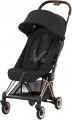 | 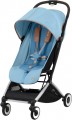 |
|---|---|---|
| Cybex Coya | Cybex Orfeo | |
| Outdated Product | from $279.97 | |
| TOP sellers | ||
| Design | pushchairs | pushchairs |
| Type | single | single |
| Folding system | booklike type | booklike type |
Carrycot and walking unit | ||
| Backrest tilt adjustment |  | |
| Adjustable footrest | | |
| Harness type | 5-point | 5-point |
Frame and chassis | ||
| Depreciation | spring | spring |
| Number of wheels | 4 | 4 |
| Car seat installation | | |
| Handle type | classic | classic |
| Carrying handle / strap | |  |
Wheels | ||
| Swivel wheels | | |
| Rear wheels without axle | | |
| Wheels | polyurethane solid | |
| Wheels rim | plastic | plastic |
Delivery set | ||
| In box | seat unit shopping basket | seat unit shopping basket |
General | ||
| Max. weight | 22 kg | 22 kg |
| Dimensions (unfolded) (LxWxH) | 79x44x105 cm | 77x52x102 cm |
| Chassis width | 44 cm | 52 cm |
| Dimensions (folded) (LxWxH) | 52x44x18 cm | 52.5x47.5x15.5 cm |
| Weight (complete) | 6.6 kg | 6.3 kg |
| Country of origin | Germany | Germany |
| Color | ||
| Added to E-Catalog | august 2023 | july 2023 |


Compare Cybex Coya and Orfeo
Strollers Cybex Coya and Cybex Orfeo have a similar design and type, however, there are several key differences. Coya weighs 6.6 kg and measures 79x44x105 cm when unfolded, while Orfeo is lighter at 6.3 kg and slightly smaller at 77x52x102 cm. Both feature spring suspension and 5-point safety harnesses, but Orfeo has rear wheels without an axle, which may improve maneuverability. Coya offers more compact dimensions when folded (52x44x18 cm) compared to Orfeo (52.5x47.5x15.5 cm). The choice between them may depend on preferences in weight and size.
You may be interested in
My comparisons
Cybex Coya often compared


Cybex Orfeo often compared


Glossary
Carrying handle / strap
A carry handle or strap makes it easy to transport or lift the stroller. Typically, the handle is located on the frame of the product and provides a convenient place to grip the stroller when folded. Similar tasks are assigned to the belt - with the only difference that with its help you can usually hang a load on your shoulder or behind your back, freeing your hands.
Rear wheels without axle
Pushchairs in which the rear wheels are mounted on completely separate stands, without any additional bridge between them.
The main advantage of rear wheels without an axle is that the legs of the parent following the stroller do not touch the bridge between the wheels. In addition, this feature slightly increases the mobility (allows the stroller to pass between the wheels lying on the road objects, without clinging to them with the axle).
The main advantage of rear wheels without an axle is that the legs of the parent following the stroller do not touch the bridge between the wheels. In addition, this feature slightly increases the mobility (allows the stroller to pass between the wheels lying on the road objects, without clinging to them with the axle).
Wheels
The type of wheels installed on the pushchair.
The most popular in our time are rubber wheels, including air-filled ones. Plastic wheels are used mainly in inexpensive pushchairs to further reduce the cost, while gel ones, on the contrary, are considered a very advanced option. Polyurethane wheels and EVA foam-filled wheels are also widely used. Here is a more detailed description of each of these varieties:
— Rubber. Rubber solid tires, found in many modern pushchairs, are popular due to their affordability, quiet operation, and smooth ride over bumps. While less effective on uneven surfaces compared to air-filled and gel wheels, solid rubber tires are cost-effective, low-maintenance, damage-resistant, and suitable for various wheel diameters, including small ones.
— Air-filled. Air-filled rubber tires, commonly featured on pushchairs, offer a softer ride and facilitate easy maneuvering on uneven surfaces and high curbs. Despite their higher cost, they require periodic maintenance to ensure proper pressure and protection against cuts or punctures. However, users find air-filled wheels manageable, as they are thick and less prone to damage.
— Plastic. Plastic wheels, commonly featuring both tire and rim made from this material (thou...gh some have metal rims), are known for their simplicity and affordability. However, they lack durability, reliability, and effective vibration dampening due to their hardness. Typically found in low-cost pushchairs with small wheels designed for flat surfaces.
— Gel. Wheels similar in design to air-filled tires (see the relevant paragraph), but filled not with air, but with a special gel. The main advantage of this option is its insensitivity to small punctures and cuts: coming out, the gel in the tire in contact with air almost instantly solidifies, effectively sealing the damage. In addition, such wheels are virtually maintenance-free — they do not need to be inflated. The disadvantages of gel tires include high cost and somewhat higher rigidity than air-filled tires (although in terms of softness of running such wheels are still noticeably superior to rubber and even more so to plastic ones).
— Polyurethane. Solid polyurethane tires offer excellent maneuverability, shock absorption, puncture resistance, and durability. They are unaffected by extreme temperature changes and are cost-effective, making them a common choice for various pushchair types.
— EVA. Wheels made of microporous foam rubber, specifically EVA material, offer high elasticity, excellent cushioning, and wear resistance. Lightweight and puncture-resistant, these wheels provide a smooth pushchair ride. However, they may stiffen in cold winter weather.
The most popular in our time are rubber wheels, including air-filled ones. Plastic wheels are used mainly in inexpensive pushchairs to further reduce the cost, while gel ones, on the contrary, are considered a very advanced option. Polyurethane wheels and EVA foam-filled wheels are also widely used. Here is a more detailed description of each of these varieties:
— Rubber. Rubber solid tires, found in many modern pushchairs, are popular due to their affordability, quiet operation, and smooth ride over bumps. While less effective on uneven surfaces compared to air-filled and gel wheels, solid rubber tires are cost-effective, low-maintenance, damage-resistant, and suitable for various wheel diameters, including small ones.
— Air-filled. Air-filled rubber tires, commonly featured on pushchairs, offer a softer ride and facilitate easy maneuvering on uneven surfaces and high curbs. Despite their higher cost, they require periodic maintenance to ensure proper pressure and protection against cuts or punctures. However, users find air-filled wheels manageable, as they are thick and less prone to damage.
— Plastic. Plastic wheels, commonly featuring both tire and rim made from this material (thou...gh some have metal rims), are known for their simplicity and affordability. However, they lack durability, reliability, and effective vibration dampening due to their hardness. Typically found in low-cost pushchairs with small wheels designed for flat surfaces.
— Gel. Wheels similar in design to air-filled tires (see the relevant paragraph), but filled not with air, but with a special gel. The main advantage of this option is its insensitivity to small punctures and cuts: coming out, the gel in the tire in contact with air almost instantly solidifies, effectively sealing the damage. In addition, such wheels are virtually maintenance-free — they do not need to be inflated. The disadvantages of gel tires include high cost and somewhat higher rigidity than air-filled tires (although in terms of softness of running such wheels are still noticeably superior to rubber and even more so to plastic ones).
— Polyurethane. Solid polyurethane tires offer excellent maneuverability, shock absorption, puncture resistance, and durability. They are unaffected by extreme temperature changes and are cost-effective, making them a common choice for various pushchair types.
— EVA. Wheels made of microporous foam rubber, specifically EVA material, offer high elasticity, excellent cushioning, and wear resistance. Lightweight and puncture-resistant, these wheels provide a smooth pushchair ride. However, they may stiffen in cold winter weather.
Chassis width
The distance between the side wheels of the pushchair; this generally corresponds to the overall width of the pushchair. If the front and rear widths are different, the greatest distance is indicated, usually on the rear wheels; the same wheels are used to measure the width of three-wheeled models.
In general, the wider the chassis, the more stable the pushchair is and the more difficult it is to tip it over. On the other hand, greater width can cause problems in tight spaces such as narrow hallways and doorways, elevators, etc. The narrowest modern pushchairs have a width of up to 45 cm, the widest — more than 70 cm (these are mainly models for twins or triplets , where two seats are side-by-side). Models 46 – 50 cm are also considered quite narrow, a width of 51 – 55 cm can be called small, 56 – 60 cm — medium, 61 – 65 cm — more than average, 65 – 70 cm — large.
In general, the wider the chassis, the more stable the pushchair is and the more difficult it is to tip it over. On the other hand, greater width can cause problems in tight spaces such as narrow hallways and doorways, elevators, etc. The narrowest modern pushchairs have a width of up to 45 cm, the widest — more than 70 cm (these are mainly models for twins or triplets , where two seats are side-by-side). Models 46 – 50 cm are also considered quite narrow, a width of 51 – 55 cm can be called small, 56 – 60 cm — medium, 61 – 65 cm — more than average, 65 – 70 cm — large.
Weight (complete)
The total weight of the assembled pushchair. For universal models (see "Design"), this paragraph usually indicates the weight with the seat unit installed: such an accessory is used for a longer time than the carrycot, therefore its characteristics are considered the most important. In addition, the difference in weight between cradles and walking blocks usually does not exceed 700 – 800 g (there are exceptions, but quite rarely).
Comparing similar models, a lighter pushchair may offer more convenience, but it often comes at the expense of reliability or a higher price compared to a relatively heavier counterpart. It's important to note that weight varies based on the pushchair type (refer to "Design"). Heavier pushchairs provide stability, reducing the risk of tipping over. The lightest models, weighing less than 5 kg, refer to pushchairs and single-seat ones. Models in the 6 – 10 kg are also mostly pushchairs, including variations for twins. The 11 – 15 kg range is standard for universal pushchairs and transformers. Models weighing 16 – 20 kg are notably heavy, while those exceeding 20 kg are rare and found among high-end double-seat pushchairs.
Comparing similar models, a lighter pushchair may offer more convenience, but it often comes at the expense of reliability or a higher price compared to a relatively heavier counterpart. It's important to note that weight varies based on the pushchair type (refer to "Design"). Heavier pushchairs provide stability, reducing the risk of tipping over. The lightest models, weighing less than 5 kg, refer to pushchairs and single-seat ones. Models in the 6 – 10 kg are also mostly pushchairs, including variations for twins. The 11 – 15 kg range is standard for universal pushchairs and transformers. Models weighing 16 – 20 kg are notably heavy, while those exceeding 20 kg are rare and found among high-end double-seat pushchairs.