
Comparison mixers
Save List
Add to comparison | 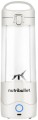 |
|---|---|
| NutriBullet Portable NBP003 | |
from $93.20 | |
| User reviews | |
| TOP sellers | |
| Device type | portable blender |
Specs | |
| Shaker volume | 475 ml |
| Pulse mode |  |
| Shaker (travel bowl) | 1 pcs |
General | |
| Power source | battery |
| Hanging hook | |
| Dimensions | 26.7x9.5x9.5 cm |
| Weight | 0.86 kg |
| Color | |
| Added to E-Catalog | december 2023 |


You may be interested in
Glossary
Device type
— Hand mixer. Mixers are kitchen appliances designed for mixing and whipping liquids. They are equipped with beaters and may come with additional nozzles. Hand mixers are held in the hand during use, making them more compact and easier to store than stationary mixers. However, they may not be as convenient for long-term use and tend to be less expensive.
— Stationary mixer. Stationary mixers are a type of mixer that comes with a stand-base for stable placement on a table or counter. This eliminates the need to hold the device while in use. However, the size of the bowl that can be used may be limited, and some models may require the use of a specific bowl. Some models also allow for the mixer to be removed from the stand and used as a hand mixer. Stationary mixers tend to be more expensive and bulkier than hand mixers, but they offer more convenience and stability during use.
— Stationary mixer (non-removable). A variation of the mixers described above, which cannot be separated from the stand and imply only stationary tabletop use.
— Immersion blender. This is a simpler version of the previously described blenders, which doesn't include a bowl. It's a handheld appliance with a blender leg-shaped nozzle that can be used with any container. However, it may not be very convenient for long-term use, unlike immersion blenders, which offer more versatili...ty in terms of container size. Also on sale there are immersible blenders without nozzles.
— Blender. Devices used mainly for chopping various products, mashing, crushing ice, etc. The blender consists of a base, which houses the motor and control electronics, and a bowl with a paddle knife located above it. The bowl is usually made removable; this makes it easy to drain (or unload) the resulting product, and also facilitates washing.
— Soup blender. This type of blender not only blends ingredients but also has cooking functions. It typically comes with a variety of preset programs to expand the range of dishes that can be prepared. However, the amount of food that can be produced is limited by the size of the bowl, which is usually around 1.7 liters.
— Chopper. Choppers are similar to blenders in terms of their function and usage (as mentioned earlier). The main difference lies in their design: the bowl is typically situated at the bottom of the device, and it can only be removed by taking apart the top block and axis with the blades. While choppers are less convenient compared to blenders, they are smaller, simpler, and more affordable.
— Chopper (manual, mechanical). A manual chopper doesn't require any electrical connection to function. It relies on manual labor to shred, chop, and mix ingredients within the bowl, utilizing knife blades for these processes.
— Vegetable cutter. These devices can be thought of as mechanized kitchen graters that are primarily intended for processing vegetables. They come with different attachments for grating, chopping, and slicing food, which is much more convenient than using traditional manual graters. Additionally, they are often safer to use, as they are designed to prevent fingers from coming into contact with the blades, unlike conventional graters where there is a risk of injury when working with small food pieces.
— Frother. Frothers are primarily used to create frothy foam, especially when making milkshakes or cappuccino. They can either be stationary, with a container attached to a base that houses a whipping nozzle, or portable, resembling immersion blenders (as described earlier) without a regular container.
— Frother (manual cappuccinatore). A manual frother is a device used for creating a high and fluffy crema, typically for milkshakes and milk-coffee drinks. It consists of a bowl and a special disc whisk designed for this purpose. Unlike electric frothers, manual frothers do not require a power source and are operated by hand.
— Mixer for cocktails. These are variations of the stand mixers discussed earlier, specifically designed for making milkshakes and similar cocktails. The primary function of these devices is to whip foam, usually from milk and dairy products. They typically feature a metal bowl that can safely accommodate crushed ice, and are designed with a high support leg and glass holder for stability.
— Portable blender. A small, low-power blender designed for making single servings of cocktails is available in a compact model. It comes equipped with a built-in battery pack, enabling it to be used in locations where a 220 V power supply is not available. Portable blenders are also equipped with USB or microUSB connectors, making them ideal for travel, hiking, or extended trips.
— Stationary mixer. Stationary mixers are a type of mixer that comes with a stand-base for stable placement on a table or counter. This eliminates the need to hold the device while in use. However, the size of the bowl that can be used may be limited, and some models may require the use of a specific bowl. Some models also allow for the mixer to be removed from the stand and used as a hand mixer. Stationary mixers tend to be more expensive and bulkier than hand mixers, but they offer more convenience and stability during use.
— Stationary mixer (non-removable). A variation of the mixers described above, which cannot be separated from the stand and imply only stationary tabletop use.
— Immersion blender. This is a simpler version of the previously described blenders, which doesn't include a bowl. It's a handheld appliance with a blender leg-shaped nozzle that can be used with any container. However, it may not be very convenient for long-term use, unlike immersion blenders, which offer more versatili...ty in terms of container size. Also on sale there are immersible blenders without nozzles.
— Blender. Devices used mainly for chopping various products, mashing, crushing ice, etc. The blender consists of a base, which houses the motor and control electronics, and a bowl with a paddle knife located above it. The bowl is usually made removable; this makes it easy to drain (or unload) the resulting product, and also facilitates washing.
— Soup blender. This type of blender not only blends ingredients but also has cooking functions. It typically comes with a variety of preset programs to expand the range of dishes that can be prepared. However, the amount of food that can be produced is limited by the size of the bowl, which is usually around 1.7 liters.
— Chopper. Choppers are similar to blenders in terms of their function and usage (as mentioned earlier). The main difference lies in their design: the bowl is typically situated at the bottom of the device, and it can only be removed by taking apart the top block and axis with the blades. While choppers are less convenient compared to blenders, they are smaller, simpler, and more affordable.
— Chopper (manual, mechanical). A manual chopper doesn't require any electrical connection to function. It relies on manual labor to shred, chop, and mix ingredients within the bowl, utilizing knife blades for these processes.
— Vegetable cutter. These devices can be thought of as mechanized kitchen graters that are primarily intended for processing vegetables. They come with different attachments for grating, chopping, and slicing food, which is much more convenient than using traditional manual graters. Additionally, they are often safer to use, as they are designed to prevent fingers from coming into contact with the blades, unlike conventional graters where there is a risk of injury when working with small food pieces.
— Frother. Frothers are primarily used to create frothy foam, especially when making milkshakes or cappuccino. They can either be stationary, with a container attached to a base that houses a whipping nozzle, or portable, resembling immersion blenders (as described earlier) without a regular container.
— Frother (manual cappuccinatore). A manual frother is a device used for creating a high and fluffy crema, typically for milkshakes and milk-coffee drinks. It consists of a bowl and a special disc whisk designed for this purpose. Unlike electric frothers, manual frothers do not require a power source and are operated by hand.
— Mixer for cocktails. These are variations of the stand mixers discussed earlier, specifically designed for making milkshakes and similar cocktails. The primary function of these devices is to whip foam, usually from milk and dairy products. They typically feature a metal bowl that can safely accommodate crushed ice, and are designed with a high support leg and glass holder for stability.
— Portable blender. A small, low-power blender designed for making single servings of cocktails is available in a compact model. It comes equipped with a built-in battery pack, enabling it to be used in locations where a 220 V power supply is not available. Portable blenders are also equipped with USB or microUSB connectors, making them ideal for travel, hiking, or extended trips.
Shaker volume
The working volume of the shaker supplied with the device.
For more information about such containers, see "Shaker (travel bowl)". And on the one hand, the actual capacity of the shaker directly depends on the volume, on the other hand, its dimensions, as well as the requirements for engine power. However, in most models, this indicator ranges from 300 to 700 mL, less often up to 1 liter — these values are considered optimal, taking into account the specifics of the use of shakers.
For more information about such containers, see "Shaker (travel bowl)". And on the one hand, the actual capacity of the shaker directly depends on the volume, on the other hand, its dimensions, as well as the requirements for engine power. However, in most models, this indicator ranges from 300 to 700 mL, less often up to 1 liter — these values are considered optimal, taking into account the specifics of the use of shakers.
Pulse mode
In pulse mode, the mixer motor does not work constantly, but with short pauses. This allows you to increase efficiency and avoid unnecessary load on the motor when processing particularly solid foods, such as frozen fruits or ice.
Shaker (travel bowl)
The number of travel shaker bowls supplied with the appliance.
These bowls are supplied exclusively with blenders of different types (see "Type of device"). A shaker is a capacity, most often in the form of a tall glass, which can be removed from the device, tightly closed and carried with you without fear of pouring the contents. In such capacities, two lids are usually used: a working lid with chopping knives (a bowl with such a lid is placed on the blender with the bottom up), and a “travel” lid, which can be equipped with a valve for easy drinking. Shakers are very popular among smoothie lovers: they allow you to prepare your favorite drink and take it with you without fiddling with pouring from a bowl to another capacity.
These bowls are supplied exclusively with blenders of different types (see "Type of device"). A shaker is a capacity, most often in the form of a tall glass, which can be removed from the device, tightly closed and carried with you without fear of pouring the contents. In such capacities, two lids are usually used: a working lid with chopping knives (a bowl with such a lid is placed on the blender with the bottom up), and a “travel” lid, which can be equipped with a valve for easy drinking. Shakers are very popular among smoothie lovers: they allow you to prepare your favorite drink and take it with you without fiddling with pouring from a bowl to another capacity.
Power source
Regular way to power the device.
— Mains. The device is designed to be plugged into a standard 230 V outlet, which is commonly available in most modern kitchens. It can accommodate models with various power requirements, and the duration of use is only restricted by the device's heat tolerance. Although the power cord may restrict mobility and potentially cause inconvenience in certain situations, these factors are generally not considered significant issues. It is worth noting that the majority of contemporary mixers, blenders, and other similar devices operate on mains power.
— Battery. This type of equipment operates using a built-in rechargeable battery and provides the advantage of mobility without requiring an electrical outlet. However, it tends to be more expensive, heavier, and less powerful than its corded counterparts. Its operation time is limited by the battery charge, and it needs to be recharged after a certain period of use. Therefore, rechargeable models are produced in smaller quantities and are only recommended if mobility is an essential factor.
— Batteries. This type of device is powered by replaceable standard-sized batteries such as AA. It offers even more independence from power outlets as dead batteries can be quickly replaced with fresh ones. However, the need to purchase separate batteries can be expensive and not suitable for more powerful motors. This option is rare and mainly fou...nd in low-power devices such as frothers (see "Type").
— Mains. The device is designed to be plugged into a standard 230 V outlet, which is commonly available in most modern kitchens. It can accommodate models with various power requirements, and the duration of use is only restricted by the device's heat tolerance. Although the power cord may restrict mobility and potentially cause inconvenience in certain situations, these factors are generally not considered significant issues. It is worth noting that the majority of contemporary mixers, blenders, and other similar devices operate on mains power.
— Battery. This type of equipment operates using a built-in rechargeable battery and provides the advantage of mobility without requiring an electrical outlet. However, it tends to be more expensive, heavier, and less powerful than its corded counterparts. Its operation time is limited by the battery charge, and it needs to be recharged after a certain period of use. Therefore, rechargeable models are produced in smaller quantities and are only recommended if mobility is an essential factor.
— Batteries. This type of device is powered by replaceable standard-sized batteries such as AA. It offers even more independence from power outlets as dead batteries can be quickly replaced with fresh ones. However, the need to purchase separate batteries can be expensive and not suitable for more powerful motors. This option is rare and mainly fou...nd in low-power devices such as frothers (see "Type").
Hanging hook
Hook or loop device for hanging the appliance on the wall. In some cases, storing the appliance in this way is more convenient than in a box or kitchen cupboard. Hanging hooks are mainly used for smaller hand blenders.
Weight
The weight in this section can be confusing, since manufacturers do not indicate the mass of the main working tools of the equipment. Accordingly, the greater the number of accessories in the kit, the greater the total weight and this parameter will be necessary only at the time of purchase in order to understand how many extra kilograms you will have to carry home.