
Comparison ZTE MF79N vs ZTE MF79U
Add to comparison |  | 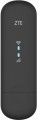 |
|---|---|---|
| ZTE MF79N | ZTE MF79U | |
| Outdated Product | from $47.00 | |
| TOP sellers | ||
| Device type | USB modem | USB modem |
| Wi-Fi | Wi-Fi 3 (802.11g) Wi-Fi 4 (802.11n) | Wi-Fi 3 (802.11g) Wi-Fi 4 (802.11n) |
| Connected devices, up to | 10 | 10 |
| Effective range | 10 m | |
Connection | ||
| Communication generation | 2G 3G 4G (LTE) | 2G 3G 4G (LTE) |
| 4G (LTE) | Cat.4 (150/50 Mbps) | Cat.4 (150/50 Mbps) |
| Transmission technology | LTE | GPRS EDGE W-CDMA HSUPA HSDPA HSPA+ LTE |
| Ports | USB | USB |
Features | ||
| External antenna connector |  | |
| MIMO antenna connection | | |
| Memory card slot | | |
| SIM card slot | | |
General | ||
| Dimensions | 102x32x14 mm | 100x32x14 mm |
| Weight | 32 g | |
| Added to E-Catalog | february 2025 | november 2017 |


Compare ZTE MF79N and MF79U
What is the difference between ZTE MF79N and MF79U?
ZTE MF79N and MF79U are very similar everyday LTE USB modems since both are Cat.4 devices with 2G/3G/4G support, share Wi‑Fi 4, and can connect up to 10 devices. The practical difference is in flexibility: MF79N clearly specifies dual TS9 external antenna connectors, while MF79U only lists an external antenna connector without the connector type, and MF79U explicitly supports microSD up to 32 GB and specifies a 10 m Wi‑Fi range, whereas MF79N does not state those limits.
Which is better?
Better overall choice: ZTE MF79U. It matches MF79N on the key basics, while giving you a specified Wi‑Fi range and a clearly defined microSD limit.
Both MF79U and MF79N are Cat.4 LTE USB modems, so real-world mobile speed expectations are essentially the same. Each can share internet over Wi‑Fi 3 and Wi‑Fi 4 to up to 10 devices, which fits a small group or a couple of gadgets. Both include an external antenna connector and MIMO support, which matters if you rely on weak-signal areas. MF79U additionally lists a 10 m effective range, while MF79N does not specify range. MF79U also specifies microSD support up to 32 GB, while MF79N only states there is a card slot without the limit.
You may be interested in
ZTE MF79U often compared


Glossary
Effective range
The greatest distance at which the modem's built-in router is capable of providing communication via the Wi-Fi interface (see "Connection").
It should be taken into account that in fact the range strongly depends on a number of factors that are not related to the main specs of the modem: the presence of interference and obstacles in the signal path, the specs of the Wi-Fi module of the connected device, the battery charge in this device or the modem itself, etc. Therefore, the actual range indicators can be noticeably lower than the claimed ones: for example, when working through a wall, they are noticeably reduced. However, this spec quite clearly describes the overall range of the device, and comparisons of different models on it are quite acceptable.
Also note that it does not always make sense to purchase a device with a maximum range — although a long range provides additional convenience, it requires high transmitter power, which significantly increases the size and price of the modem. Therefore, when choosing, it is worth proceeding primarily from the intended scenarios of use. For example, if you need a 3G connection to access the Internet on the road from your tablet, a range of several metres will be enough. But for installation in a large private house, it makes sense to look for a model with increased effective range.
It should be taken into account that in fact the range strongly depends on a number of factors that are not related to the main specs of the modem: the presence of interference and obstacles in the signal path, the specs of the Wi-Fi module of the connected device, the battery charge in this device or the modem itself, etc. Therefore, the actual range indicators can be noticeably lower than the claimed ones: for example, when working through a wall, they are noticeably reduced. However, this spec quite clearly describes the overall range of the device, and comparisons of different models on it are quite acceptable.
Also note that it does not always make sense to purchase a device with a maximum range — although a long range provides additional convenience, it requires high transmitter power, which significantly increases the size and price of the modem. Therefore, when choosing, it is worth proceeding primarily from the intended scenarios of use. For example, if you need a 3G connection to access the Internet on the road from your tablet, a range of several metres will be enough. But for installation in a large private house, it makes sense to look for a model with increased effective range.
Transmission technology
Data transfer technologies supported by the modem.
— GPRS. The oldest communication technology in use today. It was developed as a standard for GSM cellular networks, allowing data to be transmitted in parallel with voice communications and text messages, as well as charging network access by the amount of data transmitted, and not by connection time (as in the previous CSD standard). At the time of its creation, it was very progressive, but now it is considered completely obsolete and is used only in cases where more advanced standards cannot be used.
— EDGE. A technology created as a modification of the GPRS described above, which would increase the channel throughput and improve communication reliability. Otherwise, this standard is completely similar to GPRS in terms of its main practical features.
— W-CDMA. One of the early third generation ( 3G) communication standards. Used in UMTS networks. One of the main advantages of such networks is the ability to build networks based on the existing GSM infrastructure. Therefore, UMTS, and specifically W-CDMA, is being used by many mobile operators in the early stages of their transition from 2G to 3G.
— HSUPA. Third generation (3G) communication technology, an evolution of W-CDMA described above. The name stands for "Hi...gh-Speed Uplink Packet Access" — high-speed packet data transmission in the "from the subscriber" direction. This, in fact, describes the purpose of this technology: it increases the speed of data transfer from the modem to the base station, which can be useful for some specific tasks — for example, video communications.
— HSDPA. Further, after HSUPA, improvement of the W-CDMA standard (see above). It belongs to third generation (3G) networks, but is considered an “extended” standard, which is why HSUPA-enabled networks can be referred to as 3.5G, 3G+, etc. The name itself — "High-Speed Downlink Packet Access" — translates as "high-speed packet data transmission from the base station to the device."
— HSPA+. Today's most advanced third-generation communication standard based on UMTS networks (W-CDMA). Thanks to a number of improvements, it allows to achieve higher speeds than the options described above, approaching fourth-generation networks in terms of capabilities; therefore, sometimes conventionally referred to as 3.75G.
— WiMAX. Initially, WiMAX was created in two versions — "mobile" and "stationary"; the vast majority of modern cellular modems use the second option. It belongs to the fourth generation standards — 4G (whereas "mobile" was a competitor to 3G technologies, although sometimes it is also referred to as a 4th generation connection for marketing purposes). Some time ago, WiMAX was actively promoted as an alternative to wired broadband Internet connection (in particular, as the best option for areas, where it is difficult to reach the cable). However, now this standard is gradually losing popularity — in particular, in connection with the development and promotion of a more advanced LTE (which also does not have a division into "mobile" and "stationary" varieties).
— LTE (up to 173 Mbps). The fourth generation cellular communication standard, the most popular 4G technology today — in particular, due to the fact that it is a further development of W-CDMA/UMTS and can be implemented by improving existing networks (both UMTS and CDMA2000). Another reason for the popularity is the same convenience for both stationary and mobile equipment. On the other hand, when choosing a modem of this standard, you should keep in mind that LTE bands and channels may differ in different countries, so the support of this technology does not guarantee compatibility with a particular network. It should also be taken into account that in some countries LTE networks are only at the deployment stage, and in some they are not available at all.
When evaluating the capabilities of a modem, note that the speed values given for each technology are the maximum, which in fact is achievable only under perfect conditions. The actual values of the speed, usually, are lower than the potential ones; they may depend both on the specs of the network, signal strength and other technical issues, and on the policy of the operator and the conditions of a particular tariff.
— GPRS. The oldest communication technology in use today. It was developed as a standard for GSM cellular networks, allowing data to be transmitted in parallel with voice communications and text messages, as well as charging network access by the amount of data transmitted, and not by connection time (as in the previous CSD standard). At the time of its creation, it was very progressive, but now it is considered completely obsolete and is used only in cases where more advanced standards cannot be used.
— EDGE. A technology created as a modification of the GPRS described above, which would increase the channel throughput and improve communication reliability. Otherwise, this standard is completely similar to GPRS in terms of its main practical features.
— W-CDMA. One of the early third generation ( 3G) communication standards. Used in UMTS networks. One of the main advantages of such networks is the ability to build networks based on the existing GSM infrastructure. Therefore, UMTS, and specifically W-CDMA, is being used by many mobile operators in the early stages of their transition from 2G to 3G.
— HSUPA. Third generation (3G) communication technology, an evolution of W-CDMA described above. The name stands for "Hi...gh-Speed Uplink Packet Access" — high-speed packet data transmission in the "from the subscriber" direction. This, in fact, describes the purpose of this technology: it increases the speed of data transfer from the modem to the base station, which can be useful for some specific tasks — for example, video communications.
— HSDPA. Further, after HSUPA, improvement of the W-CDMA standard (see above). It belongs to third generation (3G) networks, but is considered an “extended” standard, which is why HSUPA-enabled networks can be referred to as 3.5G, 3G+, etc. The name itself — "High-Speed Downlink Packet Access" — translates as "high-speed packet data transmission from the base station to the device."
— HSPA+. Today's most advanced third-generation communication standard based on UMTS networks (W-CDMA). Thanks to a number of improvements, it allows to achieve higher speeds than the options described above, approaching fourth-generation networks in terms of capabilities; therefore, sometimes conventionally referred to as 3.75G.
— WiMAX. Initially, WiMAX was created in two versions — "mobile" and "stationary"; the vast majority of modern cellular modems use the second option. It belongs to the fourth generation standards — 4G (whereas "mobile" was a competitor to 3G technologies, although sometimes it is also referred to as a 4th generation connection for marketing purposes). Some time ago, WiMAX was actively promoted as an alternative to wired broadband Internet connection (in particular, as the best option for areas, where it is difficult to reach the cable). However, now this standard is gradually losing popularity — in particular, in connection with the development and promotion of a more advanced LTE (which also does not have a division into "mobile" and "stationary" varieties).
— LTE (up to 173 Mbps). The fourth generation cellular communication standard, the most popular 4G technology today — in particular, due to the fact that it is a further development of W-CDMA/UMTS and can be implemented by improving existing networks (both UMTS and CDMA2000). Another reason for the popularity is the same convenience for both stationary and mobile equipment. On the other hand, when choosing a modem of this standard, you should keep in mind that LTE bands and channels may differ in different countries, so the support of this technology does not guarantee compatibility with a particular network. It should also be taken into account that in some countries LTE networks are only at the deployment stage, and in some they are not available at all.
When evaluating the capabilities of a modem, note that the speed values given for each technology are the maximum, which in fact is achievable only under perfect conditions. The actual values of the speed, usually, are lower than the potential ones; they may depend both on the specs of the network, signal strength and other technical issues, and on the policy of the operator and the conditions of a particular tariff.