
Comparison Maxxter Lumina vs Maxxter Nova
Add to comparison | 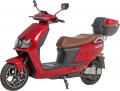 | 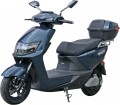 |
|---|---|---|
| Maxxter Lumina | Maxxter Nova | |
| Outdated Product | Outdated Product | |
| TOP sellers | ||
LCD display with battery and speed indicator. Spacious storage box under the seat. | This model has seats for the convenient location of two passengers. The model is equipped with a display for displaying information about the trip, a USB port and two trunks. Front disc brake, rear - drum. | |
| Product type | electric scooterbike | electric scooterbike |
| Max. load | 200 kg | 200 kg |
Driving performance | ||
| Range | 80 km | 80 km |
| Power | 2 hp | 1.35 hp |
| Power | 1.5 kW | 1 kW |
| Max speed | 45 km/h | 45 km/h |
| Speed modes | 3 | 3 |
| Parking mode |  |  |
| Max. climb angle | 20 ° | |
| Wheels | rubber inflatable tubeless 12 " | rubber inflatable tubeless 16 " |
| Front brake | disk | disk |
| Rear brake | disk | drum |
Battery | ||
| Battery type | lead-acid | |
| Battery capacity | 20 Ah | 20 Ah |
| Full charge time | 8 h | 8 h |
| Removable battery | | |
| USB output for charging | | |
Functions and features | ||
| Headlight and position lamps | | |
| Turn signals | | |
| Horn | | |
| Anti-theft system | | |
| Passenger seat | | |
| Carrier | | |
| Luggage box | | |
| Kickstand | | |
General | ||
| Weight | 119 kg | 105 kg |
| Added to E-Catalog | june 2023 | june 2023 |


Compare Maxxter Lumina and Nova
You may be interested in
Maxxter Lumina often compared


Maxxter Nova often compared


Glossary
Power
The motor power of a vehicle, in horsepower.
In general, the power of electric motors is indicated in watts. However, in electric transport, this designation is also often indicated. This is done for the convenience of comparison with internal combustion engines: for internal combustion engines, especially in vehicles, horsepower is traditionally used, and it is more convenient for some users to evaluate the power of motors by this designation. At the same time, if the need arises, some units are easily converted to others: 1 hp. ≈ 735 W.
For the power value in general, see the relevant paragraph below.
In general, the power of electric motors is indicated in watts. However, in electric transport, this designation is also often indicated. This is done for the convenience of comparison with internal combustion engines: for internal combustion engines, especially in vehicles, horsepower is traditionally used, and it is more convenient for some users to evaluate the power of motors by this designation. At the same time, if the need arises, some units are easily converted to others: 1 hp. ≈ 735 W.
For the power value in general, see the relevant paragraph below.
Power
The motor power of a vehicle, in kilowatts. In addition to them, horsepower is also used (for more details, see above).
Let us clarify that in this case, we are talking about maximum power; the actual power can be adjusted while driving with the help of the accelerator. And in some models, it may even be possible to set a limit on the maximum power.
A more powerful motor allows you to carry more weight, reach higher speeds and/or have more torque. However, the energy consumption from the battery will also be high, and the battery life, with the same battery capacity, will be correspondingly less than when using a less powerful motor. Also note that in many countries, motor power is a criterion for classifying an electric vehicle as one or another variety. For example, according to this criterion, motorcycles and scooters can be formally separated, requiring different driving licences.
Let us clarify that in this case, we are talking about maximum power; the actual power can be adjusted while driving with the help of the accelerator. And in some models, it may even be possible to set a limit on the maximum power.
A more powerful motor allows you to carry more weight, reach higher speeds and/or have more torque. However, the energy consumption from the battery will also be high, and the battery life, with the same battery capacity, will be correspondingly less than when using a less powerful motor. Also note that in many countries, motor power is a criterion for classifying an electric vehicle as one or another variety. For example, according to this criterion, motorcycles and scooters can be formally separated, requiring different driving licences.
Parking mode
The electronic motion lock mode allows temporarily disabling the throttle response to prevent accidental movement of the vehicle. The parking mode is useful during stops, boarding, short breaks at a store, or when the scooter is near people. Unlike a complete power shutdown, parking mode usually allows for a quick return to the ride without restarting the entire system.
Max. climb angle
The maximum incline that the vehicle can overcome.
Most vehicles, even the most inexpensive ones, can cope with angles of 10 – 12 ° without problems. So you should pay special attention to this parameter only if you have to deal with very steep slopes.
It is also worth mentioning that on road signs the angle of elevation is usually indicated not in degrees, but as a percentage. This means that to evaluate the capabilities of a particular unit, it may be necessary to convert degrees to percentages or vice versa. For this, there are special tables and calculators.
Most vehicles, even the most inexpensive ones, can cope with angles of 10 – 12 ° without problems. So you should pay special attention to this parameter only if you have to deal with very steep slopes.
It is also worth mentioning that on road signs the angle of elevation is usually indicated not in degrees, but as a percentage. This means that to evaluate the capabilities of a particular unit, it may be necessary to convert degrees to percentages or vice versa. For this, there are special tables and calculators.
Wheels
— Rubber Inflatable Tubeless. Tires without an inner tube, where the air is held by the tire itself on a sealed rim. They comfortably handle small bumps, tiles, and poor asphalt, and they better withstand small punctures: pressure usually doesn't drop immediately, and the rider often manages to reach a repair point. Unlike tubed wheels, they are less dependent on the condition of the tube and require less frequent replacement. However, they are more demanding in terms of rim quality and installation, making this type more common on practical city electric scooters, where reliability and daily use convenience are important.
— Rubber Inflatable. In the classic sense, they have a separate tube inside the tire that retains air and cushions road shocks. In terms of comfort, they are close to tubeless, making them well-suited for riding in yards, on tiles, uneven asphalt, and suburban areas. The main difference from tubeless wheels is their behavior when punctured: the tube usually loses pressure faster, but it is simpler and cheaper to patch or replace. This option is often found on affordable electric mopeds and electric scooters, where smoothness, simple construction, and inexpensive maintenance are important.
— Rubber Inflatable. In the classic sense, they have a separate tube inside the tire that retains air and cushions road shocks. In terms of comfort, they are close to tubeless, making them well-suited for riding in yards, on tiles, uneven asphalt, and suburban areas. The main difference from tubeless wheels is their behavior when punctured: the tube usually loses pressure faster, but it is simpler and cheaper to patch or replace. This option is often found on affordable electric mopeds and electric scooters, where smoothness, simple construction, and inexpensive maintenance are important.
Rear brake
The rear brake on an electric scooter or e-moped helps stabilize the vehicle when decelerating and complements the front brake. It is especially useful at low speeds, for smooth stopping, riding with a passenger, or on slippery surfaces where it's important not to overload the front wheel.
— Disc. A disc rear brake uses a brake disc and pads that quickly and confidently slow the wheel. This option is better suited for more powerful electric scooters as it withstands active braking, overheats less, and gives the rider more precise control.
— Drum. A drum rear brake has a closed mechanism inside the hub, making it well-protected from dirt, dust, and moisture. It is simpler and cheaper to maintain but usually less effective during sharp braking, so it is more commonly found on lightweight e-mopeds and models for relaxed city riding.
— Disc. A disc rear brake uses a brake disc and pads that quickly and confidently slow the wheel. This option is better suited for more powerful electric scooters as it withstands active braking, overheats less, and gives the rider more precise control.
— Drum. A drum rear brake has a closed mechanism inside the hub, making it well-protected from dirt, dust, and moisture. It is simpler and cheaper to maintain but usually less effective during sharp braking, so it is more commonly found on lightweight e-mopeds and models for relaxed city riding.
Battery type
— Lead-acid. The most popular type today. Their design is based on a combination of electrodes made of lead compounds and an electrolyte, the role of which is played by sulfuric acid diluted with water. It is the classic type of batteries that use a conventional liquid electrolyte. Their widespread use is due to their simple design and low cost, combined with good capacity and starting currents characteristic of all lead-acid batteries, as well as resistance to low temperatures (compared to other types of batteries).
— Lithium-ion (Li-Ion). Lithium-ion technology was originally used in batteries for portable gadgets such as mobile phones, but such batteries are being used more and more recently in vehicles. Among the advantages of such batteries, one can note smaller dimensions and weight, the ability to deliver high starting currents and the ability to be charged with high currents (the latter significantly reduces the charging time), as well as numerous charge-discharge cycles. In addition, such batteries contain a minimum of harmful substances, do not use acids and heavy metals, and some models are even directly positioned as absolutely harmless to the environment. The main disadvantage of lithium-ion models is the high price.
— Gel. A type of lead-acid battery in which the electrolyte is not liquid, but condensed to a gel state. This design prov...ides several advantages compared to the classic version (see above): more charge-discharge cycles (which means longer service life); minimum leakage of electrolyte and associated gases; no need for maintenance; resistance to deep discharges and temperature fluctuations, etc. On the other hand, such batteries cost significantly more.
— Lithium-ion (Li-Ion). Lithium-ion technology was originally used in batteries for portable gadgets such as mobile phones, but such batteries are being used more and more recently in vehicles. Among the advantages of such batteries, one can note smaller dimensions and weight, the ability to deliver high starting currents and the ability to be charged with high currents (the latter significantly reduces the charging time), as well as numerous charge-discharge cycles. In addition, such batteries contain a minimum of harmful substances, do not use acids and heavy metals, and some models are even directly positioned as absolutely harmless to the environment. The main disadvantage of lithium-ion models is the high price.
— Gel. A type of lead-acid battery in which the electrolyte is not liquid, but condensed to a gel state. This design prov...ides several advantages compared to the classic version (see above): more charge-discharge cycles (which means longer service life); minimum leakage of electrolyte and associated gases; no need for maintenance; resistance to deep discharges and temperature fluctuations, etc. On the other hand, such batteries cost significantly more.
Weight
The total weight of the vehicle without cargo and rider.
The lighter the unit, the greater the range and, accordingly, the weight of the payload that can be carried on it. On the other hand, too little weight adversely affects the stability, and sometimes the overall strength of the structure.
The lighter the unit, the greater the range and, accordingly, the weight of the payload that can be carried on it. On the other hand, too little weight adversely affects the stability, and sometimes the overall strength of the structure.