
Comparison Maxxter Falcon III vs AIMA Power Eagle
Add to comparison | 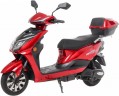 | 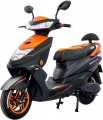 |
|---|---|---|
| Maxxter Falcon III | AIMA Power Eagle | |
| Outdated Product | Outdated Product | |
| User reviews | ||
| TOP sellers | ||
| Product type | electric scooterbike | electric scooterbike |
| Max. load | 200 kg | 180 kg |
Driving performance | ||
| Range | 80 km | 60 km |
| Power | 1.35 hp | 1.6 hp |
| Power | 1 kW | 1.2 kW |
| Max speed | 45 km/h | 40 km/h |
| Max. climb angle | 30 ° | |
| Wheels | 16 " | 10 " |
Battery | ||
| Battery type | lead-acid | gel |
| Battery capacity | 20 Ah | 20 Ah |
| Energy capacity | 1440 Wh | |
| Full charge time | 8 h | 8 h |
Functions and features | ||
| Headlight and position lamps |  | |
| Turn signals | | |
| Horn | | |
| Anti-theft system |  | |
| Passenger seat | | |
| Carrier | | |
| Luggage box | | |
| Kickstand | | |
General | ||
| Wheelbase | 1285 mm | |
| Dimensions | 175x68x112 cm | |
| Weight | 105 kg | 128 kg |
| Color | ||
| Added to E-Catalog | may 2020 | august 2017 |


Compare Maxxter Falcon III and AIMA Power Eagle
You may be interested in
My comparisons
Maxxter Falcon III often compared


AIMA Power Eagle often compared


Glossary
Max. load
The maximum additional weight that a vehicle is designed to carry is, in fact, the weight of the payload that it is allowed to carry.
The maximum load includes both the passenger himself and the things he carries. In this case, the value is usually indicated based on a flat road and a quiet ride. So, ideally, it is best to have a maximum weight margin of at least 10-15 kg — this will give an additional guarantee in case of emergencies, such as a wheel falling into a pothole.
The maximum load includes both the passenger himself and the things he carries. In this case, the value is usually indicated based on a flat road and a quiet ride. So, ideally, it is best to have a maximum weight margin of at least 10-15 kg — this will give an additional guarantee in case of emergencies, such as a wheel falling into a pothole.
Range
The range of a vehicle is the distance it can travel on a single battery charge.
Note that the range usually indicates the value for perfect operating conditions: driving at optimal speed with a small load, flat road, no ups and downs, etc. The actual range may differ from the claimed one, sometimes quite noticeably. In addition, to improve range, manufacturers can deliberately use low-power motors that consume little energy.
Note that the range usually indicates the value for perfect operating conditions: driving at optimal speed with a small load, flat road, no ups and downs, etc. The actual range may differ from the claimed one, sometimes quite noticeably. In addition, to improve range, manufacturers can deliberately use low-power motors that consume little energy.
Power
The motor power of a vehicle, in horsepower.
In general, the power of electric motors is indicated in watts. However, in electric transport, this designation is also often indicated. This is done for the convenience of comparison with internal combustion engines: for internal combustion engines, especially in vehicles, horsepower is traditionally used, and it is more convenient for some users to evaluate the power of motors by this designation. At the same time, if the need arises, some units are easily converted to others: 1 hp. ≈ 735 W.
For the power value in general, see the relevant paragraph below.
In general, the power of electric motors is indicated in watts. However, in electric transport, this designation is also often indicated. This is done for the convenience of comparison with internal combustion engines: for internal combustion engines, especially in vehicles, horsepower is traditionally used, and it is more convenient for some users to evaluate the power of motors by this designation. At the same time, if the need arises, some units are easily converted to others: 1 hp. ≈ 735 W.
For the power value in general, see the relevant paragraph below.
Power
The motor power of a vehicle, in kilowatts. In addition to them, horsepower is also used (for more details, see above).
Let us clarify that in this case, we are talking about maximum power; the actual power can be adjusted while driving with the help of the accelerator. And in some models, it may even be possible to set a limit on the maximum power.
A more powerful motor allows you to carry more weight, reach higher speeds and/or have more torque. However, the energy consumption from the battery will also be high, and the battery life, with the same battery capacity, will be correspondingly less than when using a less powerful motor. Also note that in many countries, motor power is a criterion for classifying an electric vehicle as one or another variety. For example, according to this criterion, motorcycles and scooters can be formally separated, requiring different driving licences.
Let us clarify that in this case, we are talking about maximum power; the actual power can be adjusted while driving with the help of the accelerator. And in some models, it may even be possible to set a limit on the maximum power.
A more powerful motor allows you to carry more weight, reach higher speeds and/or have more torque. However, the energy consumption from the battery will also be high, and the battery life, with the same battery capacity, will be correspondingly less than when using a less powerful motor. Also note that in many countries, motor power is a criterion for classifying an electric vehicle as one or another variety. For example, according to this criterion, motorcycles and scooters can be formally separated, requiring different driving licences.
Max speed
The highest speed that a vehicle can reach.
When choosing according to this parameter, it is worth considering that in dense city traffic, it is rarely possible to accelerate faster than 40 km/h; so if the vehicle is bought mainly for a comfortable ride through traffic jams, then there is no need to look for a high-speed model. In addition, for the same motor power, low speed means more torque, which makes it easier to climb hills.
When choosing according to this parameter, it is worth considering that in dense city traffic, it is rarely possible to accelerate faster than 40 km/h; so if the vehicle is bought mainly for a comfortable ride through traffic jams, then there is no need to look for a high-speed model. In addition, for the same motor power, low speed means more torque, which makes it easier to climb hills.
Max. climb angle
The maximum incline that the vehicle can overcome.
Most vehicles, even the most inexpensive ones, can cope with angles of 10 – 12 ° without problems. So you should pay special attention to this parameter only if you have to deal with very steep slopes.
It is also worth mentioning that on road signs the angle of elevation is usually indicated not in degrees, but as a percentage. This means that to evaluate the capabilities of a particular unit, it may be necessary to convert degrees to percentages or vice versa. For this, there are special tables and calculators.
Most vehicles, even the most inexpensive ones, can cope with angles of 10 – 12 ° without problems. So you should pay special attention to this parameter only if you have to deal with very steep slopes.
It is also worth mentioning that on road signs the angle of elevation is usually indicated not in degrees, but as a percentage. This means that to evaluate the capabilities of a particular unit, it may be necessary to convert degrees to percentages or vice versa. For this, there are special tables and calculators.
Wheels
— Rubber Inflatable Tubeless. Tires without an inner tube, where the air is held by the tire itself on a sealed rim. They comfortably handle small bumps, tiles, and poor asphalt, and they better withstand small punctures: pressure usually doesn't drop immediately, and the rider often manages to reach a repair point. Unlike tubed wheels, they are less dependent on the condition of the tube and require less frequent replacement. However, they are more demanding in terms of rim quality and installation, making this type more common on practical city electric scooters, where reliability and daily use convenience are important.
— Rubber Inflatable. In the classic sense, they have a separate tube inside the tire that retains air and cushions road shocks. In terms of comfort, they are close to tubeless, making them well-suited for riding in yards, on tiles, uneven asphalt, and suburban areas. The main difference from tubeless wheels is their behavior when punctured: the tube usually loses pressure faster, but it is simpler and cheaper to patch or replace. This option is often found on affordable electric mopeds and electric scooters, where smoothness, simple construction, and inexpensive maintenance are important.
— Rubber Inflatable. In the classic sense, they have a separate tube inside the tire that retains air and cushions road shocks. In terms of comfort, they are close to tubeless, making them well-suited for riding in yards, on tiles, uneven asphalt, and suburban areas. The main difference from tubeless wheels is their behavior when punctured: the tube usually loses pressure faster, but it is simpler and cheaper to patch or replace. This option is often found on affordable electric mopeds and electric scooters, where smoothness, simple construction, and inexpensive maintenance are important.
Battery type
— Lead-acid. The most popular type today. Their design is based on a combination of electrodes made of lead compounds and an electrolyte, the role of which is played by sulfuric acid diluted with water. It is the classic type of batteries that use a conventional liquid electrolyte. Their widespread use is due to their simple design and low cost, combined with good capacity and starting currents characteristic of all lead-acid batteries, as well as resistance to low temperatures (compared to other types of batteries).
— Lithium-ion (Li-Ion). Lithium-ion technology was originally used in batteries for portable gadgets such as mobile phones, but such batteries are being used more and more recently in vehicles. Among the advantages of such batteries, one can note smaller dimensions and weight, the ability to deliver high starting currents and the ability to be charged with high currents (the latter significantly reduces the charging time), as well as numerous charge-discharge cycles. In addition, such batteries contain a minimum of harmful substances, do not use acids and heavy metals, and some models are even directly positioned as absolutely harmless to the environment. The main disadvantage of lithium-ion models is the high price.
— Gel. A type of lead-acid battery in which the electrolyte is not liquid, but condensed to a gel state. This design prov...ides several advantages compared to the classic version (see above): more charge-discharge cycles (which means longer service life); minimum leakage of electrolyte and associated gases; no need for maintenance; resistance to deep discharges and temperature fluctuations, etc. On the other hand, such batteries cost significantly more.
— Lithium-ion (Li-Ion). Lithium-ion technology was originally used in batteries for portable gadgets such as mobile phones, but such batteries are being used more and more recently in vehicles. Among the advantages of such batteries, one can note smaller dimensions and weight, the ability to deliver high starting currents and the ability to be charged with high currents (the latter significantly reduces the charging time), as well as numerous charge-discharge cycles. In addition, such batteries contain a minimum of harmful substances, do not use acids and heavy metals, and some models are even directly positioned as absolutely harmless to the environment. The main disadvantage of lithium-ion models is the high price.
— Gel. A type of lead-acid battery in which the electrolyte is not liquid, but condensed to a gel state. This design prov...ides several advantages compared to the classic version (see above): more charge-discharge cycles (which means longer service life); minimum leakage of electrolyte and associated gases; no need for maintenance; resistance to deep discharges and temperature fluctuations, etc. On the other hand, such batteries cost significantly more.
Energy capacity
The capacity of the battery that is installed in the vehicle, in watt-hours.
To correctly compare batteries of different capacities and voltages, the designation in watt-hours is used. In addition, such a designation is convenient for estimating the operating time on a charge: for example, with an engine power of 2 kW, a battery of 3000 Wh is enough to power it at maximum power for 3000/2000 = 1.5 hours.
As for the capacity of the battery as a whole, theoretically, the battery life of the vehicle directly depends on it. However, the operating time will also be determined by the power consumption of the unit itself — and it is influenced by both the mentioned motor power and several other parameters.
To correctly compare batteries of different capacities and voltages, the designation in watt-hours is used. In addition, such a designation is convenient for estimating the operating time on a charge: for example, with an engine power of 2 kW, a battery of 3000 Wh is enough to power it at maximum power for 3000/2000 = 1.5 hours.
As for the capacity of the battery as a whole, theoretically, the battery life of the vehicle directly depends on it. However, the operating time will also be determined by the power consumption of the unit itself — and it is influenced by both the mentioned motor power and several other parameters.