
Comparison Oukitel P1201 vs Choetech BS005
Add to comparison | 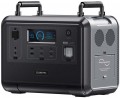 | 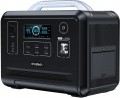 |
|---|---|---|
| Oukitel P1201 | Choetech BS005 | |
from $699.00 | from $1,315.76 | |
| User reviews | ||
| TOP sellers | ||
2 USB A ports, 4 USB-C ports. LiFePO4 – Lithium Iron Phosphate Battery. Jumps up to 2400 W are allowed. Battery capacity is 960 Wh. | New models (from 2026) feature smartphone control functionality (check with the store before purchasing). | |
| In box | charging station | charging station |
| Rated power | 1200 W | 1200 W |
| Peak power | 2400 W | 2400 W |
| Output waveform | sinusoid (PSW) | sinusoid (PSW) |
| UPS function |  | |
| Switchover time to battery | 10 ms | 10 ms |
Outputs | ||
| Sockets (230 V) | 2 | 2 |
| USB-A | 2 pcs 5В/2.4А 12 W | 2 pcs 5В/2.4А 12 W |
| USB-C | 4 pcs 5 A 100 W | 4 pcs 3 A 100 W |
| Car cigarette lighter | | |
| DC output | 2 pcs (12 H / 3 A) | |
Inputs (station charging) | ||
| From solar panels | | |
| Input port XT60 | |  |
| Anderson port | 11.5 – 50 H / 500 W | |
Battery and charging time | ||
| Battery type | LiFePO4 | LiFePO4 |
| Battery capacity | 960 Wh | 960 Wh |
| Charging cycles | 3500 | 3500 |
| Charging time (socket) ≈ | 90 min | 82 min |
| Charging time (solar panel) ≈ | 120 min | |
| Charging power (socket) | 700 W | 700 W |
| Charging power (solar panel) | 500 W | |
| Charging power (cigarette lighter) | 240 W | |
General | ||
| Smartphone synchronization | Bluetooth and WiFi | |
| PSU | built into the body | built into the body |
| Display | | |
| Backlight | | |
| Carrying handle | | |
| Operating temperature | 0 °C ~ +40 °C | -10 °C ~ +40 °C |
| Dimensions (LxWxH) | 386x229x300 mm | 387x228x316 mm |
| Weight | 12.5 kg | 14 kg |
| Warranty | 3 years | 2 years |
| Added to E-Catalog | august 2023 | december 2022 |


Compare Oukitel P1201 and Choetech BS005
Charging stations Oukitel P1201 and Choetech BS005 have similar specifications, such as a rated power of 1200W and peak power of 2400W, however, users note some differences. Oukitel P1201 stands out with a higher battery capacity of 960 Wh and a charging time from a socket of about 90 minutes, making it more efficient for long-term use. Choetech BS005, on the other hand, has a 20 Ah battery, which also provides good performance, but the charging time is about 82 minutes. Both devices have similar outputs, including USB and car lighter ports, but Oukitel offers more USB outputs. In terms of weight, Oukitel is lighter (12.5 kg versus 14 kg for Choetech), which can be important for portability. The warranty for Oukitel is 3 years, while Choetech offers 2 years, which can also influence the choice.
You may be interested in
My comparisons
Oukitel P1201 often compared


Choetech BS005 often compared


Glossary
USB-C
USB type C ports are smaller compared to classic USB ports and have a convenient reversible design that allows connecting the plug either way. USB type C was initially created to implement various advanced features: increased power, fast charging technologies, etc.
Since the port is relatively new and quite powerful (you can find USB type C with 60W, even 100W and 140W), the total number of such connectors is often limited to one port, or sometimes two).
— Current. The maximum current delivered through the USB type C port to the device being charged. Note that different ports of a charging station may deliver different currents (for example, 1.5A and 2.1A). In such cases, the highest current is usually specified.
— Power. The maximum power in watts (W) that the charging station can deliver to one charging gadget. The high output power of the USB type C port allows for faster charging. However, the device being charged must support the corresponding power; otherwise, the speed of the process will be limited by the gadget's specifications.
Since the port is relatively new and quite powerful (you can find USB type C with 60W, even 100W and 140W), the total number of such connectors is often limited to one port, or sometimes two).
— Current. The maximum current delivered through the USB type C port to the device being charged. Note that different ports of a charging station may deliver different currents (for example, 1.5A and 2.1A). In such cases, the highest current is usually specified.
— Power. The maximum power in watts (W) that the charging station can deliver to one charging gadget. The high output power of the USB type C port allows for faster charging. However, the device being charged must support the corresponding power; otherwise, the speed of the process will be limited by the gadget's specifications.
DC output
The presence of a DC connector (or several such outputs) in the device to power external gadgets with direct current. The standard DC jack is round and has a pin in the center. However, its dimensions may differ in depth and diameter. The voltage output to the DC output may be different. The most popular options are 18 - 20 V for powering laptops, 12 V for various specialized devices and automotive electrical accessories.
Input port XT60
Power connector with two round connectors, used to replenish energy reserves in the battery cells of the charging station. For the most part, the input port of the XT60 is for charging the device from solar panels using the appropriate cable.
Anderson port
A large two-pole connector for connecting batteries, chargers and all kinds of equipment where reliable contact is required for the sake of ensuring stable operation of the equipment. Anderson Port is resistant to moisture changes, can be used both for indoor and outdoor mechanisms. Thanks to identical mating parts, a pair is formed by two identical connectors, which are rotated 180 ° relative to each other. Most often, Anderson port is used in mobile homes on wheels.
Charging time (socket) ≈
Time to charge the portable power station from a fully discharged state to 100% charge when using the power adapter from a household outlet. This refers to the original battery and standard charger.
Charging time (solar panel) ≈
Time spent on a full charge when using the original panel in bright sunlight. In cloudy weather, the charging time of the device from the solar panel can be strikingly different downwards.
Charging power (solar panel)
The power in watts provided when charging a device from a solar panel.
The higher the charging power, all other things being equal, the less time it will take to replenish the energy reserves in the cells of the device's own battery. This section provides the maximum power value that the charging station can accept. Accordingly, this indicator is supposed to be taken into account when choosing compatible solar panels.
The higher the charging power, all other things being equal, the less time it will take to replenish the energy reserves in the cells of the device's own battery. This section provides the maximum power value that the charging station can accept. Accordingly, this indicator is supposed to be taken into account when choosing compatible solar panels.
Charging power (cigarette lighter)
The power normally received by the charging station when connected from the car's cigarette lighter socket (12 V).
Smartphone synchronization
Synchronization with a smartphone allows you to control the operation of the charging station remotely. Pairing the device with mobile gadgets is carried out via a Wi-Fi network or a Bluetooth connection. Some charging stations provide both of the above wireless modules. Additionally , synchronization with a smartphone allows you to monitor battery charge, energy consumption, voltage and current parameters remotely in real time. This will require a permanent connection to the Internet and specialized software that must be installed on your smartphone.