
Comparison EcoPlay P1201 vs Choetech BS005
Add to comparison | 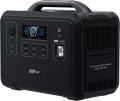 | 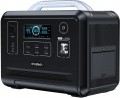 |
|---|---|---|
| EcoPlay P1201 | Choetech BS005 | |
| Outdated Product | from $1,315.76 | |
| User reviews | ||
| TOP sellers | ||
New models (from 2026) feature smartphone control functionality (check with the store before purchasing). | ||
| In box | charging station | charging station |
| Rated power | 1200 W | 1200 W |
| Peak power | 2400 W | 2400 W |
| Output waveform | sinusoid (PSW) | sinusoid (PSW) |
| UPS function |  | |
| Switchover time to battery | 10 ms | 10 ms |
Outputs | ||
| Sockets (230 V) | 2 | 2 |
| USB-A | 2 pcs 5В/2.4А 12 W | 2 pcs 5В/2.4А 12 W |
| USB-C | 4 pcs 100 W | 4 pcs 3 A 100 W |
| Car cigarette lighter | | |
Inputs (station charging) | ||
| From solar panels | | |
| Anderson port | 11.5 – 50 H / 500 W | 11.5 – 50 H / 500 W |
| Add. ports | C13/14 (charging) | |
Battery and charging time | ||
| Battery type | LiFePO4 | LiFePO4 |
| Battery capacity | 1248 Wh | 960 Wh |
| Charging cycles | 3500 | 3500 |
| Charging time (socket) ≈ | 60 min | 82 min |
| Charging power (socket) | 700 W | 700 W |
| Charging power (solar panel) | 500 W | |
General | ||
| Smartphone synchronization | Bluetooth and WiFi | |
| PSU | built into the body | built into the body |
| Display | | |
| Backlight | | |
| Carrying handle | | |
| Operating temperature | 0 °C ~ +45 °C | -10 °C ~ +40 °C |
| Dimensions (LxWxH) | 386x225x317 mm | 387x228x316 mm |
| Weight | 15 kg | 14 kg |
| Warranty | 2 years | |
| Added to E-Catalog | february 2023 | december 2022 |


Compare EcoPlay P1201 and Choetech BS005
Both charging stations, EcoPlay P1201 and Choetech BS005, have the same nominal and peak power (1200 W and 2400 W respectively), as well as a sine wave output signal (PSW) and a UPS function with a switching time of 10 ms. However, the EcoPlay P1201 stands out with a higher battery capacity (1248 Wh compared to 20 Ah for the Choetech BS005) and a shorter grid charging time (60 minutes compared to 82 minutes). In terms of outputs, both models offer 2 outlets and 2 USB A ports, but EcoPlay has a higher current on USB (2.4 A compared to 3 A for Choetech). Choetech BS005, on the other hand, offers more listings on E-Katalog and a longer warranty (2 years). Both devices have similar dimensions and weight, but EcoPlay is slightly heavier (15 kg compared to 14 kg for Choetech). Overall, EcoPlay P1201 might be preferable for those seeking faster charging and higher capacity, whereas Choetech BS005 can offer more purchase options and better support.
You may be interested in
My comparisons
EcoPlay P1201 often compared


Choetech BS005 often compared


Glossary
USB-C
USB type C ports are smaller compared to classic USB ports and have a convenient reversible design that allows connecting the plug either way. USB type C was initially created to implement various advanced features: increased power, fast charging technologies, etc.
Since the port is relatively new and quite powerful (you can find USB type C with 60W, even 100W and 140W), the total number of such connectors is often limited to one port, or sometimes two).
— Current. The maximum current delivered through the USB type C port to the device being charged. Note that different ports of a charging station may deliver different currents (for example, 1.5A and 2.1A). In such cases, the highest current is usually specified.
— Power. The maximum power in watts (W) that the charging station can deliver to one charging gadget. The high output power of the USB type C port allows for faster charging. However, the device being charged must support the corresponding power; otherwise, the speed of the process will be limited by the gadget's specifications.
Since the port is relatively new and quite powerful (you can find USB type C with 60W, even 100W and 140W), the total number of such connectors is often limited to one port, or sometimes two).
— Current. The maximum current delivered through the USB type C port to the device being charged. Note that different ports of a charging station may deliver different currents (for example, 1.5A and 2.1A). In such cases, the highest current is usually specified.
— Power. The maximum power in watts (W) that the charging station can deliver to one charging gadget. The high output power of the USB type C port allows for faster charging. However, the device being charged must support the corresponding power; otherwise, the speed of the process will be limited by the gadget's specifications.
Add. ports
Additional input connectors provided in the design of the charging station in addition to those described above.
Battery capacity
Nominal battery capacity, in fact - the amount of energy that is supposed to be stored. The larger it is, the longer the battery life of the charging station will be, all other things being equal. On the other hand, this parameter also affects the dimensions, weight and price of the battery, despite the fact that an energy-intensive battery is not always required. By the indicator of capacity in watt-hours, you can compare batteries with each other.
Charging time (socket) ≈
Time to charge the portable power station from a fully discharged state to 100% charge when using the power adapter from a household outlet. This refers to the original battery and standard charger.
Charging power (solar panel)
The power in watts provided when charging a device from a solar panel.
The higher the charging power, all other things being equal, the less time it will take to replenish the energy reserves in the cells of the device's own battery. This section provides the maximum power value that the charging station can accept. Accordingly, this indicator is supposed to be taken into account when choosing compatible solar panels.
The higher the charging power, all other things being equal, the less time it will take to replenish the energy reserves in the cells of the device's own battery. This section provides the maximum power value that the charging station can accept. Accordingly, this indicator is supposed to be taken into account when choosing compatible solar panels.
Smartphone synchronization
Synchronization with a smartphone allows you to control the operation of the charging station remotely. Pairing the device with mobile gadgets is carried out via a Wi-Fi network or a Bluetooth connection. Some charging stations provide both of the above wireless modules. Additionally , synchronization with a smartphone allows you to monitor battery charge, energy consumption, voltage and current parameters remotely in real time. This will require a permanent connection to the Internet and specialized software that must be installed on your smartphone.
Operating temperature
The temperature range in which the charging station normally operates in normal mode. Exceeding the specified norms in any direction leads to a rapid discharge of the battery, its accelerated degradation and other unpleasant consequences.
Warranty
Warranties for charging stations usually provide users with protection against manufacturing defects and malfunctions for a certain period, which may vary depending on the manufacturer. Warranty service includes free repair or replacement of components if the problem is not the user's fault. The warranty period can be from one year to several years, and it is important to consider conditions such as correct installation, use of the station for its intended purpose, and compliance with technical requirements.