
Comparison BLUETTI AC500 vs BLUETTI AC300
Add to comparison | 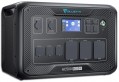 | 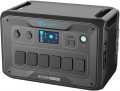 |
|---|---|---|
| BLUETTI AC500 | BLUETTI AC300 | |
from $1,199.00 | from $329.00 | |
| TOP sellers | ||
Can connect 6 B300S battery packs or 4 B300 packs The AC500 model is supplied without a battery module. | Up to 4 B300 battery packs can be connected The AC300 model is supplied without a battery module. | |
| In box | charging station | charging station |
| Rated power | 5000 W | 3000 W |
| Peak power | 10000 W | 6000 W |
| Output waveform | sinusoid (PSW) | sinusoid (PSW) |
| UPS function |  | |
Outputs | ||
| Sockets (230 V) | 6 | 6 |
| USB-A | 2 pcs 5В/3A 15 W | 2 pcs 5В/3A 15 W |
| USB-A (quick charge) | 2 3.6-12В/3A 18 W | 2 3.6-12В/3A 18 W |
| USB-C | 2 pcs 3 A, 5 A 100 W | 1 pcs 3 A, 5 A 100 W |
| Wireless charging | 2 zones 15 W | 2 zones 15 W |
| Car cigarette lighter | | |
| Add. ports | DC1/DC2 Port | DC1/DC2 Port |
Inputs (station charging) | ||
| From solar panels | | |
| Add. ports | Communication port | |
Battery and charging time | ||
| Connecting an additional battery | | |
General | ||
| Smartphone synchronization | Bluetooth and WiFi | Bluetooth and WiFi |
| Display | | |
| Carrying handle | | |
| Operating temperature | -20 °C ~ +40 °C | -20 °C ~ +40 °C |
| Dimensions (LxWxH) | 520x325x358 mm | 520x320x358 mm |
| Weight | 30 kg | 21.6 kg |
| Added to E-Catalog | april 2026 | april 2026 |


Compare BLUETTI AC500 and AC300
The BLUETTI AC500 and AC300 charging stations have similar features but differ in power and specifications. The AC500 offers a rated power of 5000 W and a peak power of 10000 W, making it more powerful for serious loads, whereas the AC300 has a rated power of 3000 W and a peak power of 6000 W. Both devices support sine wave output and have 6 outlets at 230 V, but the AC300 offers one additional outlet for 100-120 V. Both devices allow for the connection of additional batteries, but neither model includes a battery module in the package. Users note the convenience of both models, the presence of Bluetooth and Wi-Fi for smartphone synchronization, as well as a display and carrying handle. The AC500 weighs 30 kg, while the AC300 is lighter at 21.6 kg, which can be an important factor in the selection.
You may be interested in
My comparisons
BLUETTI AC500 often compared


BLUETTI AC300 often compared


Glossary
Rated power
Power that a device can consistently produce for an indefinitely long time without any unpleasant consequences. For normal operation of the charging station, the rated power must be at least 15 - 20% higher than the total power of all devices simultaneously connected to it.
Peak power
Some electrical appliances (in particular, units with electric motors - refrigerators, air conditioners, etc.) consume significantly more energy at startup than after reaching the operating mode. For such a load, the peak power of the charging station must be taken into account - its indicator must be higher than the starting power of the load.
USB-C
USB type C ports are smaller compared to classic USB ports and have a convenient reversible design that allows connecting the plug either way. USB type C was initially created to implement various advanced features: increased power, fast charging technologies, etc.
Since the port is relatively new and quite powerful (you can find USB type C with 60W, even 100W and 140W), the total number of such connectors is often limited to one port, or sometimes two).
— Current. The maximum current delivered through the USB type C port to the device being charged. Note that different ports of a charging station may deliver different currents (for example, 1.5A and 2.1A). In such cases, the highest current is usually specified.
— Power. The maximum power in watts (W) that the charging station can deliver to one charging gadget. The high output power of the USB type C port allows for faster charging. However, the device being charged must support the corresponding power; otherwise, the speed of the process will be limited by the gadget's specifications.
Since the port is relatively new and quite powerful (you can find USB type C with 60W, even 100W and 140W), the total number of such connectors is often limited to one port, or sometimes two).
— Current. The maximum current delivered through the USB type C port to the device being charged. Note that different ports of a charging station may deliver different currents (for example, 1.5A and 2.1A). In such cases, the highest current is usually specified.
— Power. The maximum power in watts (W) that the charging station can deliver to one charging gadget. The high output power of the USB type C port allows for faster charging. However, the device being charged must support the corresponding power; otherwise, the speed of the process will be limited by the gadget's specifications.
Add. ports
Additional input connectors provided in the design of the charging station in addition to those described above.