
Comparison Iron Angel ELS 2200M vs HECHT 6500
Add to comparison | 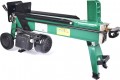 | 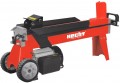 |
|---|---|---|
| Iron Angel ELS 2200M | HECHT 6500 | |
| Outdated Product | Outdated Product | |
| TOP sellers | ||
| Type | hydraulic | hydraulic |
| Operating position | horizontal | horizontal |
| Splitting force | 6 t | 5 t |
| Max. log length | 52 cm | 52 cm |
| Max. log diameter | 25 cm | 25 cm |
| Oil volume (hydraulic system) | 2.8 L | |
Motor | ||
| Motor type | electric | electric |
| Voltage | 230 В | 230 В |
| Max. power | 2.2 kW | 2.2 kW |
General | ||
| Wheels |  | |
| Country of origin | Netherlands | Czech Republic |
| Weight | 43 kg | 45 kg |
| Added to E-Catalog | november 2021 | september 2018 |


Compare Iron Angel ELS 2200M and HECHT 6500
You may be interested in
Iron Angel ELS 2200M often compared

HECHT 6500 often compared

Glossary
Splitting force
The greatest force that the wood splitter is able to apply to the workpiece in the process of splitting.
This parameter is relevant for hydraulic and rack units (see "Type"). Even in the simplest such devices, the splitting force reaches several tons. In general, high force allows you to cope with hard and thick workpieces, however, it requires high power and strength, which significantly affects the price and weight of the entire unit. Therefore, it is worth choosing a model according to this characteristic, taking into account the specifics of the work.
So, for use in the private sector, a wood splitter with a splitting force of up to 5 tons is considered quite sufficient, for boiler rooms and other relatively large consumers — 5-8 tons (up to 10 tons), and more powerful devices are intended mainly for industrial use.
This parameter is relevant for hydraulic and rack units (see "Type"). Even in the simplest such devices, the splitting force reaches several tons. In general, high force allows you to cope with hard and thick workpieces, however, it requires high power and strength, which significantly affects the price and weight of the entire unit. Therefore, it is worth choosing a model according to this characteristic, taking into account the specifics of the work.
So, for use in the private sector, a wood splitter with a splitting force of up to 5 tons is considered quite sufficient, for boiler rooms and other relatively large consumers — 5-8 tons (up to 10 tons), and more powerful devices are intended mainly for industrial use.
Oil volume (hydraulic system)
The total amount of oil that can fit into the hydraulic system of the respective log splitter (see "Type"). This parameter allows you to estimate how much oil is required for one refueling or refilling of the unit.
Country of origin
Country of origin of the brand under which the log splitter is presented on the market. This country does not necessarily coincide with the place of actual production — on the contrary, it is not uncommon for individual parts to be produced in one state, assembled in another, and the brand generally comes from a third.
Also note that the country of origin itself does not affect the quality of the goods — a lot depends on the specific brand and even specific models. So it makes sense to pay attention to this information mainly in those cases when you fundamentally want (or do not want) to support a manufacturer from a certain country. Among the countries producing wood splitters are: Austria, Belarus, Germany, Denmark, China, Poland, Russia, USA, Slovenia, Ukraine, Czech Republic, Japan.
Also note that the country of origin itself does not affect the quality of the goods — a lot depends on the specific brand and even specific models. So it makes sense to pay attention to this information mainly in those cases when you fundamentally want (or do not want) to support a manufacturer from a certain country. Among the countries producing wood splitters are: Austria, Belarus, Germany, Denmark, China, Poland, Russia, USA, Slovenia, Ukraine, Czech Republic, Japan.