
Comparison Samsung EB-P3300 vs Samsung EB-U3300
Add to comparison | 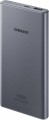 | 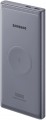 |
|---|---|---|
| Samsung EB-P3300 | Samsung EB-U3300 | |
from $130.03 | from $87.00 | |
| User reviews | ||
| TOP sellers | ||
Durable aluminium body. Support for Power Delivery 3.0 and Samsung Adaptive Fast Charging. High power multi-channel charging. | Area for wireless charging of smart watches and smartphones. Wireless + fast wired charging (up to 25 W). Two USB-C. Variety of supported fast charging protocols. Simultaneously power 3 devices. | |
| Battery capacity | 10000 mAh 37 W*h | 10000 mAh 37 W*h |
| Real capacity | 6400 mAh | 6300 mAh |
| Battery type | Li-Pol | Li-Pol |
Charging gadgets / outputs | ||
| Wireless charger | 7.5 W | |
| USB-C | 1 pcs | 1 pcs |
| USB-A | 1 pcs | |
| USB-C1 | 25 W | 25 W |
| USB-A1 | 18 W | |
Power bank charging | ||
| Power bank charging inputs | USB-C | USB-C |
| Power bank charge power | 25 W | 25 W |
Features | ||
| Low current charging |  |  |
| Fast charge | Quick Charge 3.0 Power Delivery | Quick Charge 3.0 Power Delivery 3.0 |
| Bundled cables (adapters) | USB-C | USB-C |
General | ||
| Body material | aluminium | plastic |
| Dimensions | 142x72x14 mm | 154x72x15 mm |
| Weight | 240 g | 251 g |
| Color | ||
| Added to E-Catalog | august 2020 | august 2020 |


Compare Samsung EB-P3300 and EB-U3300
You may be interested in
My comparisons
Samsung EB-U3300 often compared


Glossary
Real capacity
The real capacity of the power bank.
Real capacity is the amount of energy that a power bank is able to transfer to rechargeable gadgets. This amount is inevitably lower than the nominal capacity (see above) — most often by about 1.6 times (due to the fact that part of the energy goes to additional features and transmission losses). However, it is by real capacity that it is easiest to evaluate the actual capabilities of an external battery: for example, if this figure is 6500 mAh, this model is guaranteed to be enough for two full charges of a smartphone with a 3000 mAh battery and smartwatches for 250 mAh.
The capacity in this case is indicated for 5 V — the standard USB charging voltage. At the same time, the features of milliamp-hours as a unit of capacity are such that the actual amount of energy in the battery depends not only on the number of mAh, but also on the operating voltage. In fact, this means that when using fast charging technologies (see below) that involve increased voltage, the actual value of the actual capacity will differ from the claimed one (it will be lower). There are formulas and methods for calculating this value, they can be found in special sources.
Real capacity is the amount of energy that a power bank is able to transfer to rechargeable gadgets. This amount is inevitably lower than the nominal capacity (see above) — most often by about 1.6 times (due to the fact that part of the energy goes to additional features and transmission losses). However, it is by real capacity that it is easiest to evaluate the actual capabilities of an external battery: for example, if this figure is 6500 mAh, this model is guaranteed to be enough for two full charges of a smartphone with a 3000 mAh battery and smartwatches for 250 mAh.
The capacity in this case is indicated for 5 V — the standard USB charging voltage. At the same time, the features of milliamp-hours as a unit of capacity are such that the actual amount of energy in the battery depends not only on the number of mAh, but also on the operating voltage. In fact, this means that when using fast charging technologies (see below) that involve increased voltage, the actual value of the actual capacity will differ from the claimed one (it will be lower). There are formulas and methods for calculating this value, they can be found in special sources.
Wireless charger
The power supplied by the power bank in wireless charging mode.
In accordance with the name, with such charging, energy is transferred to the device being charged literally via the air. However the range of such a transmission is only a few centimeters, so the gadget usually has to be placed directly on the power bank. However, it's still much easier and more convenient than fussing with wires, and the connectors don't wear out.
As for the power, the higher it is, the faster the external device can be charged. Initially, wireless technologies did not differ in power, but nowadays, even for power banks, the minimum is actually 5 W — this is comparable to the power of a modest, but far from the weakest USB port. There are also models with 10 W — this is comparable to the highest power that can be achieved at the USB output in a standard format, without the use of special fast charging technologies.
Of course, in order to use all the possibilities of wireless charging, the charging gadget must also support the appropriate power.
In accordance with the name, with such charging, energy is transferred to the device being charged literally via the air. However the range of such a transmission is only a few centimeters, so the gadget usually has to be placed directly on the power bank. However, it's still much easier and more convenient than fussing with wires, and the connectors don't wear out.
As for the power, the higher it is, the faster the external device can be charged. Initially, wireless technologies did not differ in power, but nowadays, even for power banks, the minimum is actually 5 W — this is comparable to the power of a modest, but far from the weakest USB port. There are also models with 10 W — this is comparable to the highest power that can be achieved at the USB output in a standard format, without the use of special fast charging technologies.
Of course, in order to use all the possibilities of wireless charging, the charging gadget must also support the appropriate power.
USB-A
The number of USB-A ports available for charging smartphones, headphones, accessories, and other devices. This format is still in demand because USB-A is widely used and fits a large number of existing cables and devices, although it usually falls behind USB-C in terms of relevance and power. A single USB-A output is typically sufficient for basic everyday use, while two, three, four, or more are convenient for connecting multiple gadgets simultaneously.
USB-A1
The power on USB-A1 port shows the maximum output power of the main USB-A port, which among USB-A connectors is usually the most powerful. Values around 10 – 18 W are typically sufficient for regular or fast charging of smartphones, 22.5 – 33 W are already interesting for faster charging of compatible models, while higher values for USB-A are significantly rarer than for USB-C. Compared to USB-A2, USB-A3, or USB-A4, it often makes more sense to connect the most demanding device to USB-A1 if maximum speed from this type of port is needed.
However, the USB-A format itself is already less promising today than USB-C, so such a port is more often used for smartphones, headphones, watches, speakers, and other mobile devices rather than heavy-duty applications like laptops.
However, the USB-A format itself is already less promising today than USB-C, so such a port is more often used for smartphones, headphones, watches, speakers, and other mobile devices rather than heavy-duty applications like laptops.
Low current charging
Low current charging allows you to seamlessly charge devices that do not require high current. This allows you to extend the life cycle of the devices and protect them as much as possible during charging. Such devices include smartwatches, headphones, headsets, etc.
Fast charge
Fast charging technologies supported by the power bank. This is primarily about charging external gadgets, but the same technology can also be used when replenishing the power bank itself.
The fast charging feature, hence the name, can significantly reduce the time spent on the procedure. This is achieved through increased current and/or voltage, as well as smart process control (at each stage, the current and voltage correspond to the optimal parameters).
Fast charging is especially important for devices with high-capacity batteries that take a long time to charge normally. However, to fully use this feature, the power source and the gadget being charged must support the same charging technology; at the same time, different technologies are not compatible with each other, although occasionally there are exceptions. The most popular fast charging formats these days are QuickCharge (versions 3.0, 4.0 and 4.0+), Power Delivery (Power Delivery 3.0 and Power Delivery 3.1), Pump Express, Samsung Adaptive Fast Charging, Huawei Fast Charge Protocol, Huawei SuperCharge Protocol..., OPPO VOOC, OnePlus Dash Charge ; Here are the specific features of these, as well as some other options:
— Quick Charge (1.0, 2.0, 3.0, 4.0, 5.0). Technology created by Qualcomm and used in gadgets with Qualcomm CPUs. The later the version, the more advanced the technology: for example, Quick Charge 2.0 has 3 fixed voltage options, and version 3.0 has a smooth adjustment in the range from 3.6 to 20 V. Most often, gadgets with a newer version of Quick Charge are also compatible with older devices for charging, but for full use, an exact match in versions is desirable.
Also note that certain versions of Quick Charge have become the basis for some other technologies. However, again, the mutual compatibility of chargers/power banks and gadgets supporting these technologies needs to be clarified separately.
— Pump Express. Own development of MediaTek, used in portable devices with CPUs of this brand. Also available in several versions, with improvements and additions as it develops.
— Power delivery. Native fast charging technology for the USB type C connector. Used by many brands, found mainly in chargers (including power banks) and gadgets using this type of connector. Presented in several versions.
— Samsung Adaptive Fast Charging. Samsung's proprietary fast charging technology. It has been used without any changes since 2015, in light of which it looks quite modest compared to newer standards. Nevertheless, it is able to provide good speed, especially in the first 50% of the charge.
— Huawei FastCharge Protocol. One of Huawei's proprietary technologies. Formally similar to Quick Charge 2.0, but used with both Qualcomm and other brands of mobile processors, so compatibility is not guaranteed. In general, it is considered obsolete, gradually being replaced by more advanced standards like the SuperCharge Protocol.
— Huawei SuperCharge Protocol. Another proprietary technology from Huawei introduced in 2016; for 2021 is available in several versions. In some devices, the power of such charging exceeds 60 V — not a record, but quite an indicator.
— Oppo VOOC. OPPO technology, used both in branded smartphones and in equipment from other brands. Available in several versions; The latest (for 2021) version of SuperVOOC is for 2-cell batteries and is sometimes listed as a separate technology called Oppo SuperVOOC Flash Charge.
— OnePlus Dash Charge. A relatively old proprietary standard from OnePlus. An interesting feature is that in some gadgets, the effectiveness of Dash Charge is practically independent of the use of the screen: when the display is on, the battery charges at almost the same rate as when it is off. Technically a licensed version of OPPO's VOOC, however, these technologies are not compatible. Since 2018, Dash Charge has been phased out by Warp Charge, but this newer technology is still rare in separately sold chargers and power banks.
— PowerIQ. Technology developed by the Anker brand. The key feature of PowerIQ is that it is not a standalone standard, but a combined format of operation that combines a wide range of popular fast charging formats. In particular, version 3.0 claims the ability to work with Quick Charge, Power Delivery, Apple Fast Charging, Samsung Adaptive Fast Charging and others.
The fast charging feature, hence the name, can significantly reduce the time spent on the procedure. This is achieved through increased current and/or voltage, as well as smart process control (at each stage, the current and voltage correspond to the optimal parameters).
Fast charging is especially important for devices with high-capacity batteries that take a long time to charge normally. However, to fully use this feature, the power source and the gadget being charged must support the same charging technology; at the same time, different technologies are not compatible with each other, although occasionally there are exceptions. The most popular fast charging formats these days are QuickCharge (versions 3.0, 4.0 and 4.0+), Power Delivery (Power Delivery 3.0 and Power Delivery 3.1), Pump Express, Samsung Adaptive Fast Charging, Huawei Fast Charge Protocol, Huawei SuperCharge Protocol..., OPPO VOOC, OnePlus Dash Charge ; Here are the specific features of these, as well as some other options:
— Quick Charge (1.0, 2.0, 3.0, 4.0, 5.0). Technology created by Qualcomm and used in gadgets with Qualcomm CPUs. The later the version, the more advanced the technology: for example, Quick Charge 2.0 has 3 fixed voltage options, and version 3.0 has a smooth adjustment in the range from 3.6 to 20 V. Most often, gadgets with a newer version of Quick Charge are also compatible with older devices for charging, but for full use, an exact match in versions is desirable.
Also note that certain versions of Quick Charge have become the basis for some other technologies. However, again, the mutual compatibility of chargers/power banks and gadgets supporting these technologies needs to be clarified separately.
— Pump Express. Own development of MediaTek, used in portable devices with CPUs of this brand. Also available in several versions, with improvements and additions as it develops.
— Power delivery. Native fast charging technology for the USB type C connector. Used by many brands, found mainly in chargers (including power banks) and gadgets using this type of connector. Presented in several versions.
— Samsung Adaptive Fast Charging. Samsung's proprietary fast charging technology. It has been used without any changes since 2015, in light of which it looks quite modest compared to newer standards. Nevertheless, it is able to provide good speed, especially in the first 50% of the charge.
— Huawei FastCharge Protocol. One of Huawei's proprietary technologies. Formally similar to Quick Charge 2.0, but used with both Qualcomm and other brands of mobile processors, so compatibility is not guaranteed. In general, it is considered obsolete, gradually being replaced by more advanced standards like the SuperCharge Protocol.
— Huawei SuperCharge Protocol. Another proprietary technology from Huawei introduced in 2016; for 2021 is available in several versions. In some devices, the power of such charging exceeds 60 V — not a record, but quite an indicator.
— Oppo VOOC. OPPO technology, used both in branded smartphones and in equipment from other brands. Available in several versions; The latest (for 2021) version of SuperVOOC is for 2-cell batteries and is sometimes listed as a separate technology called Oppo SuperVOOC Flash Charge.
— OnePlus Dash Charge. A relatively old proprietary standard from OnePlus. An interesting feature is that in some gadgets, the effectiveness of Dash Charge is practically independent of the use of the screen: when the display is on, the battery charges at almost the same rate as when it is off. Technically a licensed version of OPPO's VOOC, however, these technologies are not compatible. Since 2018, Dash Charge has been phased out by Warp Charge, but this newer technology is still rare in separately sold chargers and power banks.
— PowerIQ. Technology developed by the Anker brand. The key feature of PowerIQ is that it is not a standalone standard, but a combined format of operation that combines a wide range of popular fast charging formats. In particular, version 3.0 claims the ability to work with Quick Charge, Power Delivery, Apple Fast Charging, Samsung Adaptive Fast Charging and others.
Body material
The main material used in the the body of a power bank.
In addition to traditional plastic, nowadays, external batteries are produced in cases made of more advanced and/or "prestigious" materials. Of these materials, aluminium is the most widely used; also you can find products made of steel, zinc, leather, fabric and even wood. Here are the main features of each option:
— Plastic. The most popular material for the bodies of modern power banks. Plastic, on the one hand, is inexpensive, on the other hand, it is quite durable and has a small weight, on the third hand, it makes it easy to create cases of any shape and colour, which is especially important for devices with an unusual design. In terms of strength and reliability, ordinary plastic is somewhat inferior to metals; however, in everyday use, this difference is not critical — except that scratches on such a case will appear faster. And for extreme conditions, cases can be produced from special impact-resistant plastic.
— Aluminium. Aluminium alloy housings are highly durable and lightweight; in addition, they look stylish, and the appearance is retained for a long time due to scratch resistance. The main disadvantage of aluminium is that it is more expensive than plastic.
...— Steel. Steel is notable for its high durability and reliability; according to these indicators, it surpasses even aluminium, not to mention plastic. On the other hand, this material has a significant weight, and therefore is used much less frequently.
— Leather. Solid body (plastic or metal) with additional leather cover. Such a coating does not affect the functionality and plays a purely aesthetic role: it gives the device a stylish and eye-catching appearance, allowing you to turn the power bank into a stylish accessory. However, note that in the design of such products (especially inexpensive ones), artificial leather (leatherette) is often used, which is noticeably inferior to natural leather in reliability, durability, and sometimes in appearance. Genuine leather, on the other hand, significantly affects the price — its cost can be more than half of the total price of the entire power bank.
— Fabric. A hard case (usually plastic) with a fabric outer covering. Such a coating not only gives the device a rather original appearance, but also gives some practical advantages: the fabric is pleasant to the touch and does not slip in the hand, which reduces the risk of dropping the power bank. On the other hand, various contaminants are poorly removed from such a surface, it has no fundamental advantages over plastic or metal, but it costs much more. Therefore, fabric cases are not very popular.
— Wood. Another design material used mainly for its original appearance than practical advantages. Nevertheless, wood is not inferior to plastic; and some users also consider the natural origin of this material to be an important advantage. On the other hand, wooden cases do not have noticeable advantages over plastic ones, and they cost much more.
— Zinc. Zinc alloys are similar in most properties to the aluminium alloys described above, however, for a number of reasons (in particular, due to the greater complexity in production), they are used extremely rarely.
In addition to traditional plastic, nowadays, external batteries are produced in cases made of more advanced and/or "prestigious" materials. Of these materials, aluminium is the most widely used; also you can find products made of steel, zinc, leather, fabric and even wood. Here are the main features of each option:
— Plastic. The most popular material for the bodies of modern power banks. Plastic, on the one hand, is inexpensive, on the other hand, it is quite durable and has a small weight, on the third hand, it makes it easy to create cases of any shape and colour, which is especially important for devices with an unusual design. In terms of strength and reliability, ordinary plastic is somewhat inferior to metals; however, in everyday use, this difference is not critical — except that scratches on such a case will appear faster. And for extreme conditions, cases can be produced from special impact-resistant plastic.
— Aluminium. Aluminium alloy housings are highly durable and lightweight; in addition, they look stylish, and the appearance is retained for a long time due to scratch resistance. The main disadvantage of aluminium is that it is more expensive than plastic.
...— Steel. Steel is notable for its high durability and reliability; according to these indicators, it surpasses even aluminium, not to mention plastic. On the other hand, this material has a significant weight, and therefore is used much less frequently.
— Leather. Solid body (plastic or metal) with additional leather cover. Such a coating does not affect the functionality and plays a purely aesthetic role: it gives the device a stylish and eye-catching appearance, allowing you to turn the power bank into a stylish accessory. However, note that in the design of such products (especially inexpensive ones), artificial leather (leatherette) is often used, which is noticeably inferior to natural leather in reliability, durability, and sometimes in appearance. Genuine leather, on the other hand, significantly affects the price — its cost can be more than half of the total price of the entire power bank.
— Fabric. A hard case (usually plastic) with a fabric outer covering. Such a coating not only gives the device a rather original appearance, but also gives some practical advantages: the fabric is pleasant to the touch and does not slip in the hand, which reduces the risk of dropping the power bank. On the other hand, various contaminants are poorly removed from such a surface, it has no fundamental advantages over plastic or metal, but it costs much more. Therefore, fabric cases are not very popular.
— Wood. Another design material used mainly for its original appearance than practical advantages. Nevertheless, wood is not inferior to plastic; and some users also consider the natural origin of this material to be an important advantage. On the other hand, wooden cases do not have noticeable advantages over plastic ones, and they cost much more.
— Zinc. Zinc alloys are similar in most properties to the aluminium alloys described above, however, for a number of reasons (in particular, due to the greater complexity in production), they are used extremely rarely.