
Comparison MSI MPG GF A750GF vs Asus ROG Strix Gold ROG Strix 750W Gold
Add to comparison | 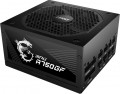 | 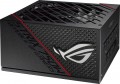 |
|---|---|---|
| MSI MPG GF A750GF | Asus ROG Strix Gold ROG Strix 750W Gold | |
| Compare prices 5 | Compare prices 1 | |
| User reviews | ||
| TOP sellers | ||
| Power | 750 W | 750 W |
| Form factor | ATX | ATX |
Specs | ||
| PFC | active | active |
| Efficiency | 90 % | 90 % |
| Cooling system | active | semi-passive |
| Fan size | 140 mm | 135 mm |
| Certification | 80+ Gold | 80+ Gold |
| Cybenetics Efficiency | Platinum | |
| Cybenetics Noise | Standard ++ | |
Power connectors | ||
| MB/CPU power supply | 24+8+8(4+4) pin | 24+8+8(4+4) pin |
| SATA | 8 | 8 |
| MOLEX | 4 | 3 |
| PCIe 8pin (6+2) | 6 | 4 |
| Floppy |  |  |
| Cable system | modular | modular |
Cable length | ||
| MB | 600 mm | 610 mm |
| CPU | 700 mm | 1000 mm |
| SATA | 950 mm | 810 mm |
| MOLEX | 1100 mm | 450 mm |
| PCIe | 500 mm | 675 mm |
Max. power | ||
| +3.3V | 22 А | 20 А |
| +5V | 22 А | 20 А |
| +12V1 | 35 А | 62 А |
| +12V2 | 35 А | |
| -12V | 0.3 А | 0.3 А |
| +5Vsb | 2.5 А | 3 А |
| +12V | 750 W | |
| +3.3V +5V | 120 W | |
General | ||
| Over voltage protection (OVP) | | |
| Over power protection (OPP) | | |
| Short circuit protection (SCP) | | |
| Protection | OCP, OTP, UVP | OPP, OCP, OTP |
| Manufacturer's warranty | 10 years | 10 years |
| Dimensions (HxWxD) | 86x150x160 mm | 86x150x160 mm |
| Added to E-Catalog | january 2021 | june 2019 |




Compare MSI MPG GF and Asus ROG Strix Gold MSI A750GF и Asus ROG Strix 750W Gold?
Price comparison
You may be interested in
My comparisons
MSI MPG GF often compared


Asus ROG Strix Gold often compared
Glossary
Cooling system
— Active cooling system. Uses a fan that constantly operates to remove heat from internal components. Unlike passive cooling, the active system provides better heat dissipation and stability under high loads, preventing overheating. However, it creates noise. To eliminate this, fans in such power supplies can have dynamic speed control (AFC – Automatic Fan Control), reducing speed at low power consumption.
— Semi-passive. Active cooling systems with automatic fan shutdown in situations where the load on the power supply is low and heat generation is reduced. Let us remind you that systems of this type are more efficient than passive ones, but they consume additional energy and create noise during operation. Accordingly, at low loads, when intensive cooling is not required, it is wiser to turn off the fans — this saves energy and reduces the noise level.
— Passive(radiators). Compared to fans, radiators have a number of advantages: for example, they do not create any noise and do not require their own power supply (thus reducing overall energy consumption). On the other hand, they are significantly less efficient, as a result — the power of power supplies with passive cooling does not exceed 600 W. In addition, such power supplies are quite expensive.
— Semi-passive. Active cooling systems with automatic fan shutdown in situations where the load on the power supply is low and heat generation is reduced. Let us remind you that systems of this type are more efficient than passive ones, but they consume additional energy and create noise during operation. Accordingly, at low loads, when intensive cooling is not required, it is wiser to turn off the fans — this saves energy and reduces the noise level.
— Passive(radiators). Compared to fans, radiators have a number of advantages: for example, they do not create any noise and do not require their own power supply (thus reducing overall energy consumption). On the other hand, they are significantly less efficient, as a result — the power of power supplies with passive cooling does not exceed 600 W. In addition, such power supplies are quite expensive.
Fan size
The diameter of the fan(s) in the power supply cooling system.
The large diameter allows to achieve good efficiency at relatively low RPMs, which in turn reduces noise and power consumption. On the other hand, large fans are more expensive than small ones and take up a lot of space, which affects the dimensions of the entire PSU. We also emphasize that a small fan is not yet a sign of a cheap power supply — quite advanced models can also have such equipment, in order to reduce dimensions.
As for specific diameters, the smallest value that can be found in modern consumer-grade PSUs is 80 mm. The most popular option is 120 mm, this size gives good efficiency and a relatively low noise level at a reasonable price and dimensions. Larger diameters are somewhat less common — 135 mm and 140 mm.
The large diameter allows to achieve good efficiency at relatively low RPMs, which in turn reduces noise and power consumption. On the other hand, large fans are more expensive than small ones and take up a lot of space, which affects the dimensions of the entire PSU. We also emphasize that a small fan is not yet a sign of a cheap power supply — quite advanced models can also have such equipment, in order to reduce dimensions.
As for specific diameters, the smallest value that can be found in modern consumer-grade PSUs is 80 mm. The most popular option is 120 mm, this size gives good efficiency and a relatively low noise level at a reasonable price and dimensions. Larger diameters are somewhat less common — 135 mm and 140 mm.
Cybenetics Efficiency
Cybenetics Efficiency is a power supply unit (PSU) energy efficiency certification system that serves as an alternative to the 80 PLUS standard. It is more accurate as it considers efficiency at various load levels (10%, 20%, 50%, 100%) and at different input voltages (115V, 230V). The labeling of this system is identical to 80 PLUS:
Bronze — overall efficiency from 82% to 85% at 115V input voltage and from 84% to 87% at 230V;
Silver — 85 – 87% and 87 – 89% respectively;
Gold — from 87% to 89% (115V) and from 89% to 91% (230V);
Platinum — 89 – 91% at 115V and 91 – 93% at 230V;
Titanium — 91 – 93% (115V) and 93 – 95% (230V);
Diamond — ≥ 93/95%.
Bronze — overall efficiency from 82% to 85% at 115V input voltage and from 84% to 87% at 230V;
Silver — 85 – 87% and 87 – 89% respectively;
Gold — from 87% to 89% (115V) and from 89% to 91% (230V);
Platinum — 89 – 91% at 115V and 91 – 93% at 230V;
Titanium — 91 – 93% (115V) and 93 – 95% (230V);
Diamond — ≥ 93/95%.
Cybenetics Noise
The Cybenetics Lambda Certification System evaluates the noise levels of power supply units (PSUs), providing consumers with information about their acoustic characteristics. As a result, you can rely not only on the efficiency of the PSU but also on its noise level. Cybenetics Lambda certification levels include:
Standard — from 40 dB(A) to 45 dB(A) – noticeable noise;
Standard+ — from 35 dB(A) to 40 dB(A) – noticeable noise;
Standard++ — from 30 dB(A) to 35 dB(A) – moderate noise;
A- — from 25 dB(A) to 30 dB(A) – moderately quiet;
A — from 20 dB(A) to 25 dB(A) – quiet;
A+ — from 15 dB(A) to 20 dB(A) – very quiet;
A++ — less than 15 dB(A) – nearly silent.
Standard — from 40 dB(A) to 45 dB(A) – noticeable noise;
Standard+ — from 35 dB(A) to 40 dB(A) – noticeable noise;
Standard++ — from 30 dB(A) to 35 dB(A) – moderate noise;
A- — from 25 dB(A) to 30 dB(A) – moderately quiet;
A — from 20 dB(A) to 25 dB(A) – quiet;
A+ — from 15 dB(A) to 20 dB(A) – very quiet;
A++ — less than 15 dB(A) – nearly silent.
MOLEX
The number of Molex (IDE) connectors provided in the design of the power supply.
Initially, such a connector was intended to power peripherals for the IDE interface, primarily hard drives. And although the IDE itself is completely obsolete today and is not used in new components, however, the Molex power connector continues to be installed in power supplies, and almost without fail. Almost any modern PSU has at least 1 – 2 of these connectors, and in high-end models this number can be 7 or more. This situation is due to the fact that Molex IDE is a fairly universal standard, and with the help of the simplest adapters, components with a different power interface can be powered from it. For example, there are Molex - SATA adapters for drives, Molex - 6 pin for video cards, etc.
Initially, such a connector was intended to power peripherals for the IDE interface, primarily hard drives. And although the IDE itself is completely obsolete today and is not used in new components, however, the Molex power connector continues to be installed in power supplies, and almost without fail. Almost any modern PSU has at least 1 – 2 of these connectors, and in high-end models this number can be 7 or more. This situation is due to the fact that Molex IDE is a fairly universal standard, and with the help of the simplest adapters, components with a different power interface can be powered from it. For example, there are Molex - SATA adapters for drives, Molex - 6 pin for video cards, etc.
PCIe 8pin (6+2)
Number of 8-pin PCIe power connectors (6+2) provided in the PSU design.
Additional PCIe power connectors (of all formats) are used for additional power to types of internal peripherals that require more than the 75W supplied directly through the PCIe slot on the motherboard (a typical example is graphics cards). In PC components, there are two types of such connectors — 6-pin, providing up to 75W of additional power, and 8-pin, giving up to 150W. The 8-pin (6+2) connectors used in power supplies are universal: they can work with both 6-pin and 8-pin connectors on the expansion board. Therefore, this type of connector is the most popular in modern PSUs.
As for the quantity, there are models on sale with 1 PCIe 8-pin (6+2) connector, 2 such connectors, 3 connectors, 4 connectors, and in some cases — 6 or more. Several of these connectors can be useful, for example, when connecting multiple graphics cards — or for a powerful high-performance video adapter equipped with multiple additional PCIe power connectors.
Additional PCIe power connectors (of all formats) are used for additional power to types of internal peripherals that require more than the 75W supplied directly through the PCIe slot on the motherboard (a typical example is graphics cards). In PC components, there are two types of such connectors — 6-pin, providing up to 75W of additional power, and 8-pin, giving up to 150W. The 8-pin (6+2) connectors used in power supplies are universal: they can work with both 6-pin and 8-pin connectors on the expansion board. Therefore, this type of connector is the most popular in modern PSUs.
As for the quantity, there are models on sale with 1 PCIe 8-pin (6+2) connector, 2 such connectors, 3 connectors, 4 connectors, and in some cases — 6 or more. Several of these connectors can be useful, for example, when connecting multiple graphics cards — or for a powerful high-performance video adapter equipped with multiple additional PCIe power connectors.
Floppy
The presence of at least one Floppy power connector in the PSU.
Initially, this connector was intended to power floppy disk drives, hence the name. It is also known under the designation "mini-Molex". Anyway, this standard is generally considered obsolete, but it is still used by some specific types of components, and therefore continues to be used in power supplies.
Initially, this connector was intended to power floppy disk drives, hence the name. It is also known under the designation "mini-Molex". Anyway, this standard is generally considered obsolete, but it is still used by some specific types of components, and therefore continues to be used in power supplies.
+3.3V
The maximum values of current and power that the PSU can provide on individual power lines.
The power line can be simply described as a pair of contacts for connecting a particular load; one of these contacts is “ground” (with zero voltage), and the second has a certain voltage with a plus or minus sign, this voltage corresponds to the voltage of the power line. In this paragraph, it is + 3.3V (such power is present in 20- and 24-pin connectors for motherboards, in SATA power connectors and some other types of connectors).
In general, power and currents are rather specific parameters that the average user rarely needs — mainly when connecting high-power components such as video cards, as well as when starting a PSU without a computer to power other electronics (for example, amateur radio stations). It is also worth mentioning that the sum of the maximum powers on all lines can be higher than the total output power of the PSU — this means that all lines cannot operate at full power at the same time. Accordingly, when the PSU is fully loaded, some of them will produce less power than the maximum possible.
The power line can be simply described as a pair of contacts for connecting a particular load; one of these contacts is “ground” (with zero voltage), and the second has a certain voltage with a plus or minus sign, this voltage corresponds to the voltage of the power line. In this paragraph, it is + 3.3V (such power is present in 20- and 24-pin connectors for motherboards, in SATA power connectors and some other types of connectors).
In general, power and currents are rather specific parameters that the average user rarely needs — mainly when connecting high-power components such as video cards, as well as when starting a PSU without a computer to power other electronics (for example, amateur radio stations). It is also worth mentioning that the sum of the maximum powers on all lines can be higher than the total output power of the PSU — this means that all lines cannot operate at full power at the same time. Accordingly, when the PSU is fully loaded, some of them will produce less power than the maximum possible.
+5V
The maximum current that the PSU is capable of issuing + 5V to the power line. For more information about power lines in general, see "+3.3V". Also note here that + 5V power, in addition to connectors for motherboards (for 20 and 24 pins), is also found in Molex and SATA plugs, as well as some other specific types of connectors.