
Comparison Tekhmann BCE-2014 B vs Tekhmann BCE-2014
Add to comparison | 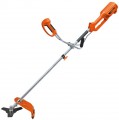 | 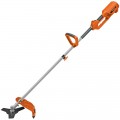 |
|---|---|---|
| Tekhmann BCE-2014 B | Tekhmann BCE-2014 | |
| Outdated Product | Outdated Product | |
| User reviews | ||
| TOP sellers | ||
| Type | grass trimmer | grass trimmer |
| Motor type | electric (mains) | electric (mains) |
Mowing | ||
| Cutting width | 38 cm | 38 cm |
| Trimmer blade width | 25.5 cm | 25.5 cm |
| Cutting system | rotary | rotary |
Trimmer design | ||
| Motor location | top | top |
| Shaft type | straight | straight |
| Handle type | bike handle | loop-shaped (D-shaped) |
| Line diameter | 2.5 mm | |
| More features | foldable shaft shoulder strap | foldable shaft shoulder strap |
In box | ||
| Nozzles | 2-tooth blade spool of line | 2-tooth blade spool of line |
Motor | ||
| Motor power | 2000 W | 2000 W |
| Soft start |  | |
General | ||
| Deck material | plastic | plastic |
| Weight | 5.3 kg | 4.7 kg |
| Added to E-Catalog | june 2019 | june 2019 |


Compare Tekhmann BCE-2014 B and BCE-2014
Tekhmann lawn mowers BCE-2014 B and Tekhmann BCE-2014 have similar characteristics, such as engine type (electric), cutting width (38 cm), and power (2000 W). However, they have some differences. The BCE-2014 B weighs 5.3 kg, making it slightly heavier than the BCE-2014, which weighs 4.7 kg. Additionally, the BCE-2014 has a different handle shape — loop-shaped (D-shaped), while the BCE-2014 B has a bicycle handle. Overall, both models have positive reviews, but the BCE-2014 might be preferable for those looking for a lighter and more convenient option.
You may be interested in
My comparisons
Tekhmann BCE-2014 B often compared


Tekhmann BCE-2014 often compared


Glossary
Handle type
The type of handle provided in the design of the trimmer or combisystem (see "Type").
The choice for this parameter depends primarily on the personal preferences of the user, however, there are also quite objective differences between different types. The types themselves can be:
— Bicycle. A handle in the form of a pair of characteristic "horns" on either side of the trimmer bar, reminiscent, in accordance with the name, of a bicycle handlebar. This design allows you to comfortably mow the grass and perform other similar work; it is good in that the user's hands are in the most natural position when holding the tool. In addition, we note that the handles are convenient for both right-handers and left-handers. The disadvantage of models with bicycle handles is the relatively large weight and dimensions, as well as poor suitability for cutting branches and other work "at height". However, in the case of trimmers, such a need arises extremely rarely (especially since there are specialized varieties of garden tools for this — brush cutters and pole saws). Therefore, it is this option that has received the greatest popularity in modern trimmers.
— Loop -shaped. The handle, which looks like a characteristic loop, usually in the shape of the letter D. The role of the second handle in such a tool is usually played by the back of the bar, and the trimmer controls are also located there....In general, this design is considered less convenient than a bicycle one: the user has to either hold the tool with the barbell to the side, or pull one hand back strongly. On the other hand, the loop-shaped handle gives good vertical manoeuvrability and allows you to work both at ground level and much higher, and you can easily change the height of the nozzle. As a result of all this, although this option is less popular than the “bike”, it is still quite common, mainly on relatively light and low-power trimmers.
The choice for this parameter depends primarily on the personal preferences of the user, however, there are also quite objective differences between different types. The types themselves can be:
— Bicycle. A handle in the form of a pair of characteristic "horns" on either side of the trimmer bar, reminiscent, in accordance with the name, of a bicycle handlebar. This design allows you to comfortably mow the grass and perform other similar work; it is good in that the user's hands are in the most natural position when holding the tool. In addition, we note that the handles are convenient for both right-handers and left-handers. The disadvantage of models with bicycle handles is the relatively large weight and dimensions, as well as poor suitability for cutting branches and other work "at height". However, in the case of trimmers, such a need arises extremely rarely (especially since there are specialized varieties of garden tools for this — brush cutters and pole saws). Therefore, it is this option that has received the greatest popularity in modern trimmers.
— Loop -shaped. The handle, which looks like a characteristic loop, usually in the shape of the letter D. The role of the second handle in such a tool is usually played by the back of the bar, and the trimmer controls are also located there....In general, this design is considered less convenient than a bicycle one: the user has to either hold the tool with the barbell to the side, or pull one hand back strongly. On the other hand, the loop-shaped handle gives good vertical manoeuvrability and allows you to work both at ground level and much higher, and you can easily change the height of the nozzle. As a result of all this, although this option is less popular than the “bike”, it is still quite common, mainly on relatively light and low-power trimmers.
Line diameter
The diameter of the fishing line supplied with the trimmer (more precisely, with a reel attachment, see "Tips").
In modern models, this parameter can be from 1 to 4 mm. At the same time, a thicker fishing line handles better with dense thickets, but it works rougher, the treated lawn is not particularly even, and for the effective operation of such a nozzle, a fairly powerful engine is needed. On the other hand, a fine line provides a clean and neat cut, but is not suitable for heavy vegetation and large stems. Thus, thick fishing line is usually equipped with powerful units designed for "launched" lawns with an abundance of thick stems. Thin, on the other hand, is found mainly in low-power electric trimmers with a lower engine location, designed for neat lawns with regularly cut grass.
We also recall that many trimmers have the ability to replace the standard reel with another one that differs in line thickness.
In modern models, this parameter can be from 1 to 4 mm. At the same time, a thicker fishing line handles better with dense thickets, but it works rougher, the treated lawn is not particularly even, and for the effective operation of such a nozzle, a fairly powerful engine is needed. On the other hand, a fine line provides a clean and neat cut, but is not suitable for heavy vegetation and large stems. Thus, thick fishing line is usually equipped with powerful units designed for "launched" lawns with an abundance of thick stems. Thin, on the other hand, is found mainly in low-power electric trimmers with a lower engine location, designed for neat lawns with regularly cut grass.
We also recall that many trimmers have the ability to replace the standard reel with another one that differs in line thickness.