
Comparison Deepcool AK400 vs Deepcool GAMMAXX 400 V2
Add to comparison | 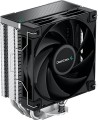 | 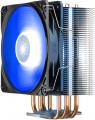 |
|---|---|---|
| Deepcool AK400 | Deepcool GAMMAXX 400 V2 | |
from $8.99 | from $61.99 | |
| User reviews | ||
| TOP sellers | ||
Low noise level. PWM speed control. Possibility of self-replacement of the turntable. Current socket mounts. | Monochromatic lighting. Fan with PWM. | |
Main specs | ||
| Features | for CPU | for CPU |
| Product type | air cooler | air cooler |
| Air flow direction | sideways (dispersion) | sideways (dispersion) |
| Max. TDP | 220 W | 180 W |
Fan | ||
| Number of fans | 1 | 1 |
| Fan size | 120 mm | 120 mm |
| Fan thickness | 25 mm | |
| Bearing | hydrodynamic | hydrodynamic |
| Min. RPM | 500 rpm | 500 rpm |
| Max. RPM | 1850 rpm | 1650 rpm |
| Speed controller | auto (PWM) | auto (PWM) |
| Max. air flow | 66.47 CFM | 64.5 CFM |
| Static pressure | 2.04 mm H2O | 2.1 mm H2O |
| replaceable |  | |
| Noise level | 29 dB | 28 dB |
| Power source | 4-pin | 4-pin |
Radiator | ||
| Heat pipes | 4 | 4 |
| Heatpipe contact | straight | straight |
| Heatsink material | aluminium / copper | aluminium / copper |
| Plate material | aluminum | aluminum |
| RAM space | 27 mm | |
| Socket | AMD AM4 AMD AM5 Intel 1150 Intel 1155/1156 Intel 1151 / 1151 v2 Intel 1200 Intel 1700 / 1851 | AMD AM2/AM3/FM1/FM2 AMD AM4 AMD AM5 Intel 1150 Intel 1155/1156 Intel 1366 Intel 1151 / 1151 v2 Intel 1200 Intel 1700 / 1851 |
General | ||
| Lighting |  | |
| Lighting colour | blue or red | |
| Mount type | bilateral (backplate) | bilateral (backplate) |
| Dimensions | 127x73x155 mm | 129x77x155 mm |
| Height | 155 mm | 155 mm |
| Weight | 661 g | 606 g |
| Added to E-Catalog | april 2022 | november 2019 |


Compare Deepcool AK400 and GAMMAXX 400 V2
You may be interested in
My comparisons
Deepcool AK400 often compared


Deepcool GAMMAXX 400 V2 often compared


Glossary
Max. TDP
The maximum TDP provided by the cooling system. Note that this parameter is indicated only for solutions equipped with heatsinks (see "Type"); for separately made fans, the efficiency is determined by other parameters, primarily by the air flow values (see above).
TDP can be described as the amount of heat that a cooling system is able to remove from a serviced component. Accordingly, for the normal operation of the entire system, it is necessary that the TDP of the cooling system is not lower than the heat dissipation of this component (heat dissipation data is usually indicated in the detailed characteristics of the components). And it is best to select coolers with a power margin of at least 20 – 25% — this will give an additional guarantee in case of forced operation modes and emergency situations (including clogging of the case and reduced air exchange efficiency).
As for specific numbers, the most modest modern cooling systems provide TDP up to 100 W, the most advanced — up to 250 W and even higher.
TDP can be described as the amount of heat that a cooling system is able to remove from a serviced component. Accordingly, for the normal operation of the entire system, it is necessary that the TDP of the cooling system is not lower than the heat dissipation of this component (heat dissipation data is usually indicated in the detailed characteristics of the components). And it is best to select coolers with a power margin of at least 20 – 25% — this will give an additional guarantee in case of forced operation modes and emergency situations (including clogging of the case and reduced air exchange efficiency).
As for specific numbers, the most modest modern cooling systems provide TDP up to 100 W, the most advanced — up to 250 W and even higher.
Fan thickness
This parameter must be considered in the context of whether the fan will fit into the computer case. Standard case fans are available in the order of 25 mm in thickness. Low-profile coolers with a thickness of about 15 mm are designed for small-sized cases, where saving space is extremely important. Fans of large thickness (30-40 mm) boast high cooling efficiency due to the increased impeller dimensions. However, they are noisier than standard models at the same speed and do not always fit into the case normally, sometimes touching other components.
Max. RPM
The highest speed at which the cooling system fan is capable of operating; for models without a speed controller (see below), this item indicates the nominal rotation speed. In the "slowest" modern fans, the maximum speed does not exceed 1000 rpm, in the "fastest" it can be up to 2500 rpm and even more.
Note that this parameter is closely related to the fan diameter (see above): the smaller the diameter, the higher the speed must be to achieve the desired airflow values. In this case, the rotation speed directly affects the level of noise and vibration. Therefore, it is believed that the required volume of air is best provided by large and relatively "slow" fans; and it makes sense to use "fast" small models where compactness is crucial. If we compare the speed of models of the same size, then higher speeds have a positive effect on performance, but increase not only the noise level, but also the price and power consumption.
Note that this parameter is closely related to the fan diameter (see above): the smaller the diameter, the higher the speed must be to achieve the desired airflow values. In this case, the rotation speed directly affects the level of noise and vibration. Therefore, it is believed that the required volume of air is best provided by large and relatively "slow" fans; and it makes sense to use "fast" small models where compactness is crucial. If we compare the speed of models of the same size, then higher speeds have a positive effect on performance, but increase not only the noise level, but also the price and power consumption.
Max. air flow
The maximum airflow that a cooling fan can create; measured in CFM — cubic feet per minute.
The higher the CFM number, the more efficient the fan. On the other hand, high performance requires either a large diameter (which affects the size and cost) or high speed (which increases the noise and vibration levels). Therefore, when choosing, it makes sense not to chase the maximum air flow, but to use special formulas that allow you to calculate the required number of CFM depending on the type and power of the cooled component and other parameters. Such formulas can be found in special sources. As for specific numbers, in the most modest systems, the performance does not exceed 30 CFM, and in the most powerful systems it can be up to 80 CFM and even more.
It is also worth considering that the actual value of the air flow at the highest speed is usually lower than the claimed maximum; see Static Pressure for details.
The higher the CFM number, the more efficient the fan. On the other hand, high performance requires either a large diameter (which affects the size and cost) or high speed (which increases the noise and vibration levels). Therefore, when choosing, it makes sense not to chase the maximum air flow, but to use special formulas that allow you to calculate the required number of CFM depending on the type and power of the cooled component and other parameters. Such formulas can be found in special sources. As for specific numbers, in the most modest systems, the performance does not exceed 30 CFM, and in the most powerful systems it can be up to 80 CFM and even more.
It is also worth considering that the actual value of the air flow at the highest speed is usually lower than the claimed maximum; see Static Pressure for details.
Static pressure
The maximum static air pressure generated by the fan during operation.
This parameter is measured as follows: if the fan is installed on a blind pipe, from which there is no air outlet, and turned on for blowing, then the pressure reached in the pipe will correspond to the static one. In fact, this parameter determines the overall efficiency of the fan: the higher the static pressure (ceteris paribus), the easier it is for the fan to “push” the required amount of air through a space with high resistance, for example, through narrow slots of a radiator or through a case full of components.
Also, this parameter is used for some specific calculations, however, these calculations are quite complex and, usually, are not necessary for an ordinary user — they are associated with nuances that are relevant mainly for computer enthusiasts. You can read more about this in special sources.
This parameter is measured as follows: if the fan is installed on a blind pipe, from which there is no air outlet, and turned on for blowing, then the pressure reached in the pipe will correspond to the static one. In fact, this parameter determines the overall efficiency of the fan: the higher the static pressure (ceteris paribus), the easier it is for the fan to “push” the required amount of air through a space with high resistance, for example, through narrow slots of a radiator or through a case full of components.
Also, this parameter is used for some specific calculations, however, these calculations are quite complex and, usually, are not necessary for an ordinary user — they are associated with nuances that are relevant mainly for computer enthusiasts. You can read more about this in special sources.
Noise level
The standard noise level generated by the cooling system during operation. Usually, this paragraph indicates the maximum noise during normal operation, without overloads and other "extreme".
Note that the noise level is indicated in decibels, and this is a non-linear value. So it is easiest to evaluate the actual loudness using comparative tables. Here is a table for values found in modern cooling systems:
20 dB — barely audible sound (quiet whisper of a person at a distance of about 1 m, sound background in an open field outside the city in calm weather);
25 dB — very quiet (normal whisper at a distance of 1 m);
30 dB — quiet (wall clock). It is this noise that, according to sanitary standards, is the maximum allowable for constant sound sources at night (from 23.00 to 07.00). This means that if the computer is planned to sit at night, it is desirable that the volume of the cooling system does not exceed this value.
35 dB — conversation in an undertone, sound background in a quiet library;
40 dB — conversation, relatively quiet, but already in full voice. The maximum permissible noise level for residential premises in the daytime, from 7.00 to 23.00, according to sanitary standards. However, even the noisiest cooling systems usually do not reach this indicator, the maximum for such equipment is about 38 – 39 dB.
Note that the noise level is indicated in decibels, and this is a non-linear value. So it is easiest to evaluate the actual loudness using comparative tables. Here is a table for values found in modern cooling systems:
20 dB — barely audible sound (quiet whisper of a person at a distance of about 1 m, sound background in an open field outside the city in calm weather);
25 dB — very quiet (normal whisper at a distance of 1 m);
30 dB — quiet (wall clock). It is this noise that, according to sanitary standards, is the maximum allowable for constant sound sources at night (from 23.00 to 07.00). This means that if the computer is planned to sit at night, it is desirable that the volume of the cooling system does not exceed this value.
35 dB — conversation in an undertone, sound background in a quiet library;
40 dB — conversation, relatively quiet, but already in full voice. The maximum permissible noise level for residential premises in the daytime, from 7.00 to 23.00, according to sanitary standards. However, even the noisiest cooling systems usually do not reach this indicator, the maximum for such equipment is about 38 – 39 dB.
RAM space
The height of the space for RAM (random access memory) provided by the design of the cooling system.
Such a space is found predominantly in processor systems (see "Purpose"). Modern CPU coolers can be very large, and when installed, they often cover the RAM slots closest to the processor. This can be avoided by making the design narrow enough — however, this, in turn, negatively affects efficiency. That's why many manufacturers use another option — they don't limit the width of the cooler, but place its components at a high height, allowing you to place RAM bars of a certain height under them. Sometimes a special cutout is even made at the bottom of the radiator, which further increases the available space. And in this paragraph, the maximum height of the bar that can be placed under the cooling system is indicated.
Such a space is found predominantly in processor systems (see "Purpose"). Modern CPU coolers can be very large, and when installed, they often cover the RAM slots closest to the processor. This can be avoided by making the design narrow enough — however, this, in turn, negatively affects efficiency. That's why many manufacturers use another option — they don't limit the width of the cooler, but place its components at a high height, allowing you to place RAM bars of a certain height under them. Sometimes a special cutout is even made at the bottom of the radiator, which further increases the available space. And in this paragraph, the maximum height of the bar that can be placed under the cooling system is indicated.
Socket
Lighting
The presence of its own illumination in the design of the cooling system.
The backlight serves a purely aesthetic function — it gives the device a stylish appearance that blends well with other components in the original design. Thanks to this, such cooling systems are especially appreciated by gamers and fans of external PC modding — especially since the lighting can be different, and the most advanced models even provide backlight synchronization with other components (see below). On the other hand, this function does not affect the efficiency and performance, and the overall cost is inevitably affected, sometimes quite noticeably. Therefore, if the appearance does not play a fundamental role for you, the best choice, most likely, will be a cooling system without backlight.
The backlight serves a purely aesthetic function — it gives the device a stylish appearance that blends well with other components in the original design. Thanks to this, such cooling systems are especially appreciated by gamers and fans of external PC modding — especially since the lighting can be different, and the most advanced models even provide backlight synchronization with other components (see below). On the other hand, this function does not affect the efficiency and performance, and the overall cost is inevitably affected, sometimes quite noticeably. Therefore, if the appearance does not play a fundamental role for you, the best choice, most likely, will be a cooling system without backlight.