
Comparison Razer Basilisk V3 vs Razer Basilisk V2
Add to comparison | 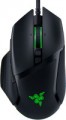 | 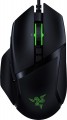 |
|---|---|---|
| Razer Basilisk V3 | Razer Basilisk V2 | |
| Compare prices 47 | Compare prices 1 | |
| User reviews | ||
| TOP sellers | ||
Razer HyperScroll Smart Wheel that automatically switches from tactile mode (with clear steps) to free scrolling (for fast scrolling) and vice versa when you change the scroll speed. Each button can be programmed with 2 actions — the Hypershift button allows you to switch between them. With this in mind, the mouse can be programmed with 11 actions for buttons | Removable DPI switch. Variable scroll wheel resistance. Each button can be programmed with 2 actions — the Hypershift button allows you to switch between them. With this in mind, the mouse can be programmed with 11 actions for buttons | |
| Product type | mouse | mouse |
| Connection | wired | wired |
| Sensor | optical | optical |
| Type | for game | for game |
Sensor and control | ||
| Sensor | Razer Focus+ | Razer Focus+ |
| Sensor resolution | 26000 DPI | 800 – 20000 DPI |
| Max. acceleration | 50 G | 50 G |
| Max. speed | 650 ips | 650 ips |
| Max. polling rate | 1000 Hz (1 ms) | |
| Number of buttons | 6 | 6 |
| Sniper button |  |  |
| Side buttons | | |
| DPI-button | | |
| Switch type | optical | optical |
| Switches | Razer Gen-2 | Razer |
| Switch resource | 70 mln | 70 mln |
| Scroll wheels | 1 | 1 |
| 4D wheel | | |
| Inertial wheel | | |
Additional features | ||
| Programmable buttons | | |
| Built-in memory | | |
| Lighting | RGB | RGB |
| Lighting effects | Razer Chroma | Razer Chroma |
| Feet material | teflon (PTFE) | |
Connection and power supply | ||
| Cable | USB-A braided | USB-A braided |
| Cable length | 1.8 m | 2.1 m |
General | ||
| Size (LxWxH) | 130x60x43 mm | 130x60x42 mm |
| Weight | 101 g | 92 g |
| Color | ||
| Added to E-Catalog | september 2021 | january 2020 |




Compare Razer Basilisk V3 and Basilisk V2
Comparing the Razer Basilisk V3 and Razer Basilisk V2, several key differences can be highlighted. The Basilisk V3 features a more advanced Razer Focus+ sensor with a maximum resolution of 26000 DPI, whereas the V2 is limited to 20000 DPI. Additionally, the V3 offers improved switches rated for up to 70 million clicks, while the V2 - up to 70 million. Users note that the V3 has a more comfortable and ergonomic design, as well as enhanced RGB lighting with Razer Chroma effects. Overall, the V3 offers higher specifications and improvements, making it a more preferable choice for gamers.
Price comparison
You may be interested in
My comparisons
Razer Basilisk V3 often compared


Razer Basilisk V2 often compared


Glossary
Sensor resolution
Resolution of the sensor responsible for tracking mouse movements on the work surface. Specified in DPI — dots per inch.
The physical meaning of DPI as a whole is as follows. The sensor of a modern mouse works on the same principle as the camera matrix, and consists of pixels. And DPI is the number of pixels that fall on 1 inch of the underlying surface (length or width), "visible" by the sensor.
It is believed that more DPI means a more advanced sensor and mouse in general; nowadays, models for 3500 – 5000 DPI, 12000 DPI, 16000 DPI even more are not uncommon. In a way, it is — high resolution contributes to accuracy. However, the only thing that is directly determined by this indicator is the speed at which the cursor moves across the screen: the higher the resolution of the sensor, the greater the number of pixels that the cursor will move when the mouse itself moves a certain distance. At the same time, it is worth recalling that too high a speed is even more undesirable than too low. So the real need for high DPI ( 1000 and above) arises mainly when working on large screens (4K resolution and more); for more modest displays (HD and Full HD), smaller values are often enough.
The physical meaning of DPI as a whole is as follows. The sensor of a modern mouse works on the same principle as the camera matrix, and consists of pixels. And DPI is the number of pixels that fall on 1 inch of the underlying surface (length or width), "visible" by the sensor.
It is believed that more DPI means a more advanced sensor and mouse in general; nowadays, models for 3500 – 5000 DPI, 12000 DPI, 16000 DPI even more are not uncommon. In a way, it is — high resolution contributes to accuracy. However, the only thing that is directly determined by this indicator is the speed at which the cursor moves across the screen: the higher the resolution of the sensor, the greater the number of pixels that the cursor will move when the mouse itself moves a certain distance. At the same time, it is worth recalling that too high a speed is even more undesirable than too low. So the real need for high DPI ( 1000 and above) arises mainly when working on large screens (4K resolution and more); for more modest displays (HD and Full HD), smaller values are often enough.
Max. polling rate
The polling rate shows how often the mouse sensor exchanges data with the computer about cursor movement. This parameter is measured in hertz (Hz), with one second being taken as the unit of time for its assessment. The smoothness and speed of cursor movement directly depend on the polling rate of the sensor. Directly connected to it is the mouse response time — this is the time interval required for the signal about the manipulator's movement to reach the display of the cursor position change on the screen. Response time is measured in milliseconds (ms). The higher the mouse's "hertz rate," the lesser the response time it demonstrates. The most common value can be considered 1000 Hz with a response time of 1 millisecond. For competitive games, attention should be paid to faster mice, including 2000 Hz, 4000 Hz, and 8000 Hz. Values below might negatively manifest just in gaming scenarios.
Sniper button
The presence of a separate "sniper button" on the mouse.
This feature is found mainly in game models (see "By Direction"). When you press the sniper button, the mouse sensitivity (DPI) is significantly reduced (usually by half) and, accordingly, the movement of the cursor / sight slows down; to restore the original settings, just release the button. One of the most popular uses for this feature is sniping in shooter games. This is due to the fact that when using an optical sight with magnification (especially high), the standard mouse sensitivity may be too high for comfortable aiming, and it will be more convenient to reduce it.
Most often , the sniper button in the mouse is located on the side, under the thumb.
This feature is found mainly in game models (see "By Direction"). When you press the sniper button, the mouse sensitivity (DPI) is significantly reduced (usually by half) and, accordingly, the movement of the cursor / sight slows down; to restore the original settings, just release the button. One of the most popular uses for this feature is sniping in shooter games. This is due to the fact that when using an optical sight with magnification (especially high), the standard mouse sensitivity may be too high for comfortable aiming, and it will be more convenient to reduce it.
Most often , the sniper button in the mouse is located on the side, under the thumb.
Switches
The switches in a mouse indicate which specific switches are installed under the main buttons, such as Omron, Huano, Kailh, TTC, or proprietary solutions from the manufacturer. These determine the click characteristics, actuation force, click volume, lifespan, and the likelihood of double-clicking over time.
Unlike the general switch type, which refers to the working principle—mechanical or optical—the brand and model provide a more precise understanding of the performance level. For example, two mice with mechanical switches might feel different when clicked: some may be softer and quieter, while others could be stiffer, louder, and feel more "gaming-like."
Unlike the general switch type, which refers to the working principle—mechanical or optical—the brand and model provide a more precise understanding of the performance level. For example, two mice with mechanical switches might feel different when clicked: some may be softer and quieter, while others could be stiffer, louder, and feel more "gaming-like."
Inertial wheel
A wheel with an accelerated scrolling mode that allows you to scroll through a large “sheet” of pages in text documents, spreadsheets or on Internet resources in just one movement. The inertial wheel is a hallmark of a number of Logitech mouse models.
Feet material
- Teflon (PTFE). Polytetrafluoroethylene (PTFE) glides - also known as Teflon - are characterized by an extremely low coefficient of friction. As a result, mice with Teflon feet boast excellent glide and high cursor speed on any type of surface. The minimum level of friction allows you to easily control the movements of the mouse. Manipulators with Teflon gliders perform well in dynamic games and reduce wrist strain during prolonged work at the computer.
— Metal. When properly sanded, the metal feet provide excellent glide for the mouse, and they also have a long service life before abrasion. Note that manipulators with metal gliders are best used on plastic or other hard-wearing playing surfaces. Using a mouse without a mouse pad runs the risk of scratching the surface.
— Metal. When properly sanded, the metal feet provide excellent glide for the mouse, and they also have a long service life before abrasion. Note that manipulators with metal gliders are best used on plastic or other hard-wearing playing surfaces. Using a mouse without a mouse pad runs the risk of scratching the surface.
Cable length
The length of the cable that is equipped with a mouse with the possibility of a wired connection (see "Type of connection").
When choosing this parameter, you should first of all take into account the distance from the manipulator to the connection port: a cable that is too short may simply not reach the connector, and a cable that is too long may get tangled at hand and create inconvenience. As for specific values, the most modest wire length in modern mice is 1 m or less ; such devices are intended mainly for laptops. Most desktop manipulators come with cables that are 1.1-1.5m or 1.6-2m long, with some models running longer than 2m.
When choosing this parameter, you should first of all take into account the distance from the manipulator to the connection port: a cable that is too short may simply not reach the connector, and a cable that is too long may get tangled at hand and create inconvenience. As for specific values, the most modest wire length in modern mice is 1 m or less ; such devices are intended mainly for laptops. Most desktop manipulators come with cables that are 1.1-1.5m or 1.6-2m long, with some models running longer than 2m.
Weight
The total weight of the mouse. For models with a wired connection, usually, it is indicated without cable, and for devices with weight adjustment (see above) — without weights.
This parameter is important primarily for professional gaming applications, although it is often relevant for ordinary users. Theoretically, less weight promotes speed and reduces fatigue. At the same time, in fact, much depends on the personal habits and preferences of the user: a mouse that is too light may “not be felt in the hands” and not give familiar feedback. Therefore, although most mice have a lower weight limit of 60 – 80 g, however, even among professional gaming models there are much more massive devices — 120 – 140 g or more. The lightest variety of "rodents" is laptop (see "In the direction"), among them devices come across and less than 60 g.
Also note that the weight to some extent depends on the size and “tricked out” of the device, but there is no unambiguous dependence here: models similar in size and functionality can differ markedly in weight.
This parameter is important primarily for professional gaming applications, although it is often relevant for ordinary users. Theoretically, less weight promotes speed and reduces fatigue. At the same time, in fact, much depends on the personal habits and preferences of the user: a mouse that is too light may “not be felt in the hands” and not give familiar feedback. Therefore, although most mice have a lower weight limit of 60 – 80 g, however, even among professional gaming models there are much more massive devices — 120 – 140 g or more. The lightest variety of "rodents" is laptop (see "In the direction"), among them devices come across and less than 60 g.
Also note that the weight to some extent depends on the size and “tricked out” of the device, but there is no unambiguous dependence here: models similar in size and functionality can differ markedly in weight.