
Comparison Google Pixel Buds Pro vs Google Pixel Buds 2
Add to comparison | 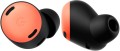 | 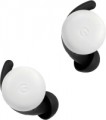 |
|---|---|---|
| Google Pixel Buds Pro | Google Pixel Buds 2 | |
| Compare prices 11 | from $59.99 | |
| User reviews | ||
| TOP sellers | ||
Real time translation function. Headphones let ambient sounds through. Automatic volume control. Support for Google Assistant voice assistant. Microphones focus on your voice for better communication. Range — 100 m in open areas. Indoors, the working radius covers 3 rooms. | ||
Connection and design | ||
| Features | for active sports | |
| Design | in-ear | in-ear |
| Connection type | wireless | wireless |
| Connection | Bluetooth v5.0 | Bluetooth v5.0 |
| Range | 10 m | 100 m |
Specs | ||
| Speaker size | 11 mm | 12 mm |
| Emitter type | dynamic | dynamic |
Microphone specs | ||
| Microphone | built into the case | built into the case |
| Microphone noise canceling | ENC | |
Features | ||
| Online translator |  |  |
| Volume control | | |
| Autopause | | |
| Noise cancellation | ANC | |
| Transparent mode | | |
| Voice assistant | Google Assistant | |
Power supply | ||
| Power source | battery | battery |
| Operating time (music) | 7 h | 5 h |
| Operating time (no noise canceling) | 11 h | |
| Operating time (with case) | 20 h | |
| Battery life (with case, without ANC) | 31 h | |
| Fast charge | 15 minutes for 3 hours of work | |
| Wireless charger | | |
| Charging port | USB-C | |
General | ||
| Touch control | | |
| Waterproof | IPX4 | IPX4 |
| Weight | 6 g | 5 g |
| In box | silicone tips charging case | charging case |
| Color | ||
| Added to E-Catalog | september 2022 | october 2019 |





Compare Google Pixel Buds Pro and Pixel Buds 2
The headphones Google Pixel Buds Pro and Google Pixel Buds 2 have similar features, but there are a few key differences. Pixel Buds Pro offer active noise cancellation (ANC) and transparency mode, making them more versatile. The battery life with the case for the Pro is up to 31 hours without noise cancellation, while the Buds 2 provide 24 hours. Additionally, the Pro has larger drivers (11 mm compared to 12 mm in Buds 2). In terms of connectivity, Pixel Buds Pro have a range of 10 m, whereas Buds 2 can operate at distances up to 100 m. If noise cancellation features and longer battery life are important to you, it is worth considering the Pixel Buds Pro.
Price comparison
You may be interested in
My comparisons
Google Pixel Buds Pro often compared


Google Pixel Buds 2 often compared
Glossary
Features
This parameter is specified only for specialized models, not related to general-purpose earphones. Nowadays, headphones can be found with such specializations as: gaming, for active sports, office, monitor (aka studio), for DJs, for children, for sleeping. Here is a more detailed description of these varieties:
— Gaming. Headphones mainly intended for use in games, primarily with PCs and laptops (a separate variety is produced for consoles, see more about it below). They stand out externally primarily by their design, which is usually quite bright and aggressive. Most of these models have an overhead design, most often the full-size “Over Ear” format (see “Design”), which provides the maximum immersive effect in the game. Other designs are also available, though much less frequently. A microphone is practically an obligatory feature for voice communication in online games. Additionally, most multi-channel models belong to this category (see “Sound”), as such sound is particularly important for games.
— For active sports. Headphones well-suited for sports activities. Firstly, such devices must have additional fixation in the ears or on the head to keep their position during intense moveme...nts; secondly, they should be resistant to sweat (ideally to rain, snow, and other atmospheric conditions). With rare exceptions, sports headphones are wireless to avoid inconvenience during movement. Sport models usually refer to in-ear, earbuds, and some on-ear headphones. Their key common traits are a secure fit and some level of IP water resistance (see “Protection level (IP)”).
— Office. Office headphones are intended for consultants, support operators, and other employees who frequently engage in voice communication via phone or Internet. Therefore, one of the main features of such models is the presence of a microphone. Among office headphones, models for one ear (see “Sound — mono”) are quite popular, allowing the user to hear both the conversation and the surrounding environment simultaneously. Many of these headphones connect via USB (see “Connection”), considering that inexpensive office computers may lack specialized audio outputs. A small control panel for IP telephony may be included on the USB plug, allowing functions such as accepting and rejecting calls. There are also wireless models (usually connecting via a radio channel, less often via Bluetooth) and specialized solutions for connecting to telephones with specific connectors.
— Monitor (studio). Headphones designed for professional sound recording and sound equipment tuning. They are wired only. However, the key feature of these models lies elsewhere: they have a flat frequency response, providing nearly equal loudness across all frequency bands, and a wide working range, often exceeding the limits of the human-audible frequency range. As a result, these headphones can clearly reveal any audio signal flaws, including details unnoticeable with traditional headphones; these capabilities are invaluable in professional sound work. On the other hand, for this reason, there's no point in using monitor models for everyday music listening: they not only reveal different recording flaws but also impart a sound coloration that is unusual and even unpleasant for the average user.
— For DJs. Headphones initially designed for professional DJs to use when mixing tracks. They are quite similar to the monitor models described above - particularly featuring a very flat frequency response for accurate sound reproduction and a wide frequency range. In addition, DJ headphones are usually closed-back and generally have high sound isolation quality, ensuring good audibility even in quite noisy environments.
— For kids. They differ from “adult” models mainly in appearance - both in smaller sizes and (in most models) in distinctive bright designs. Additionally, children's hearing is more sensitive to loud sounds, and excessively high volume is highly undesirable for a child (including psychological reasons). In this light, children's headphones may have specific features - for instance, slightly reduced sensitivity to prevent high sound levels or a volume limiter that only adults can control.
— For sleeping. Miniature headphones with a special anatomical design, allowing comfortable sleep while lying on your side without ear discomfort. To reduce surrounding noise, passive noise cancellation is typically included in their design. Such headphones can be used for listening to music, broadcasting white noise, nature sounds, or waves. Advanced models also monitor sleep quality, and the alarm clock function plays a melody for waking up at a set time. These headphones are frequently called electronic earplugs.
— Gaming. Headphones mainly intended for use in games, primarily with PCs and laptops (a separate variety is produced for consoles, see more about it below). They stand out externally primarily by their design, which is usually quite bright and aggressive. Most of these models have an overhead design, most often the full-size “Over Ear” format (see “Design”), which provides the maximum immersive effect in the game. Other designs are also available, though much less frequently. A microphone is practically an obligatory feature for voice communication in online games. Additionally, most multi-channel models belong to this category (see “Sound”), as such sound is particularly important for games.
— For active sports. Headphones well-suited for sports activities. Firstly, such devices must have additional fixation in the ears or on the head to keep their position during intense moveme...nts; secondly, they should be resistant to sweat (ideally to rain, snow, and other atmospheric conditions). With rare exceptions, sports headphones are wireless to avoid inconvenience during movement. Sport models usually refer to in-ear, earbuds, and some on-ear headphones. Their key common traits are a secure fit and some level of IP water resistance (see “Protection level (IP)”).
— Office. Office headphones are intended for consultants, support operators, and other employees who frequently engage in voice communication via phone or Internet. Therefore, one of the main features of such models is the presence of a microphone. Among office headphones, models for one ear (see “Sound — mono”) are quite popular, allowing the user to hear both the conversation and the surrounding environment simultaneously. Many of these headphones connect via USB (see “Connection”), considering that inexpensive office computers may lack specialized audio outputs. A small control panel for IP telephony may be included on the USB plug, allowing functions such as accepting and rejecting calls. There are also wireless models (usually connecting via a radio channel, less often via Bluetooth) and specialized solutions for connecting to telephones with specific connectors.
— Monitor (studio). Headphones designed for professional sound recording and sound equipment tuning. They are wired only. However, the key feature of these models lies elsewhere: they have a flat frequency response, providing nearly equal loudness across all frequency bands, and a wide working range, often exceeding the limits of the human-audible frequency range. As a result, these headphones can clearly reveal any audio signal flaws, including details unnoticeable with traditional headphones; these capabilities are invaluable in professional sound work. On the other hand, for this reason, there's no point in using monitor models for everyday music listening: they not only reveal different recording flaws but also impart a sound coloration that is unusual and even unpleasant for the average user.
— For DJs. Headphones initially designed for professional DJs to use when mixing tracks. They are quite similar to the monitor models described above - particularly featuring a very flat frequency response for accurate sound reproduction and a wide frequency range. In addition, DJ headphones are usually closed-back and generally have high sound isolation quality, ensuring good audibility even in quite noisy environments.
— For kids. They differ from “adult” models mainly in appearance - both in smaller sizes and (in most models) in distinctive bright designs. Additionally, children's hearing is more sensitive to loud sounds, and excessively high volume is highly undesirable for a child (including psychological reasons). In this light, children's headphones may have specific features - for instance, slightly reduced sensitivity to prevent high sound levels or a volume limiter that only adults can control.
— For sleeping. Miniature headphones with a special anatomical design, allowing comfortable sleep while lying on your side without ear discomfort. To reduce surrounding noise, passive noise cancellation is typically included in their design. Such headphones can be used for listening to music, broadcasting white noise, nature sounds, or waves. Advanced models also monitor sleep quality, and the alarm clock function plays a melody for waking up at a set time. These headphones are frequently called electronic earplugs.
Range
Range of wireless-capable headphones (see "Connection type").
When evaluating the range, it should be taken into account that this parameter is rather conditional and the actual range may differ slightly from the claimed one (usually in a smaller direction). So, when connecting via a radio channel, the range is indicated for perfect conditions — without interference and obstacles in the signal path. For Bluetooth models, the range also depends on the power of the Bluetooth module in the device to which the “ears” are connected. And the effectiveness of the IR channel may be reduced in hot weather or in bright sunlight. So when choosing according to this indicator, it's ok to take a certain margin.
On the other hand, there are two points worth noting. Firstly, in general, the specified range accurately describes the capabilities of the headphones, and it is quite possible to evaluate and compare different models with each other. Secondly, even in the most modest wireless “ears”, the communication range is about 8–10 m, 11–20 m is considered an average, and a fairly large number of devices can operate at distances of tens and even hundreds of metres. So paying attention to the range makes sense mainly in cases where you plan to move away from the signal source at a considerable distance — from 5 m or more — or listen to sound through walls.
When evaluating the range, it should be taken into account that this parameter is rather conditional and the actual range may differ slightly from the claimed one (usually in a smaller direction). So, when connecting via a radio channel, the range is indicated for perfect conditions — without interference and obstacles in the signal path. For Bluetooth models, the range also depends on the power of the Bluetooth module in the device to which the “ears” are connected. And the effectiveness of the IR channel may be reduced in hot weather or in bright sunlight. So when choosing according to this indicator, it's ok to take a certain margin.
On the other hand, there are two points worth noting. Firstly, in general, the specified range accurately describes the capabilities of the headphones, and it is quite possible to evaluate and compare different models with each other. Secondly, even in the most modest wireless “ears”, the communication range is about 8–10 m, 11–20 m is considered an average, and a fairly large number of devices can operate at distances of tens and even hundreds of metres. So paying attention to the range makes sense mainly in cases where you plan to move away from the signal source at a considerable distance — from 5 m or more — or listen to sound through walls.
Speaker size
The diameter of the speaker installed in the headphones; models with multiple drivers (see "Number of drivers"), usually, the size of the largest speaker is taken into account, other dimensions can be specified in the notes.
In general, this parameter is relevant primarily for over-ear headphones (see "Design"). In them, emitters can have different sizes; the larger it is, the more saturated the sound is and the better the speaker reproduces the bass, however, large emitters have a corresponding effect on the dimensions, weight and price of the headphones. But in-ear "ears" and earbuds, by definition, have very small speakers, and rich bass in them is achieved due to other design features.
In general, this parameter is relevant primarily for over-ear headphones (see "Design"). In them, emitters can have different sizes; the larger it is, the more saturated the sound is and the better the speaker reproduces the bass, however, large emitters have a corresponding effect on the dimensions, weight and price of the headphones. But in-ear "ears" and earbuds, by definition, have very small speakers, and rich bass in them is achieved due to other design features.
Microphone noise canceling
The presence of a noise reduction system in its own headphone microphone.
In accordance with the name, such a system is designed to eliminate extraneous noise - primarily during conversations. It is usually based on an electronic filter that passes the sound of a human voice and cuts off background sounds such as city noise, the rumble of wind in the microphone grille, etc. As a result, even in noisy environments, thanks to the noise reduction of the microphone, speech is clear and intelligible; True, the system inevitably introduces distortions into the final sound, but they are not critical in this case.
— ENC. ENC (Environment Noise Cancellation) technology significantly reduces ambient noise with directional microphones. It is used both in gaming devices so that gamers can easily communicate in voice chat, and in TWS earphone models so that you can comfortably talk on the phone in a noisy environment.
— cVc. Microphone noise reduction cVc (Clear Voice Capture) is an advanced technology that is found mainly in expensive headphone models. cVc algorithms effectively suppress echo and noise from the environment. Sound processing using this technology is carried out at several levels at once - the algorithm determines the reference signal-to-noise level, automatically adjusts speech to the desired volume level, applies adaptive equalizers to process the entire voice, as well as specialized filters to remove...low-frequency bubbling, sibilants and hissing.
In accordance with the name, such a system is designed to eliminate extraneous noise - primarily during conversations. It is usually based on an electronic filter that passes the sound of a human voice and cuts off background sounds such as city noise, the rumble of wind in the microphone grille, etc. As a result, even in noisy environments, thanks to the noise reduction of the microphone, speech is clear and intelligible; True, the system inevitably introduces distortions into the final sound, but they are not critical in this case.
— ENC. ENC (Environment Noise Cancellation) technology significantly reduces ambient noise with directional microphones. It is used both in gaming devices so that gamers can easily communicate in voice chat, and in TWS earphone models so that you can comfortably talk on the phone in a noisy environment.
— cVc. Microphone noise reduction cVc (Clear Voice Capture) is an advanced technology that is found mainly in expensive headphone models. cVc algorithms effectively suppress echo and noise from the environment. Sound processing using this technology is carried out at several levels at once - the algorithm determines the reference signal-to-noise level, automatically adjusts speech to the desired volume level, applies adaptive equalizers to process the entire voice, as well as specialized filters to remove...low-frequency bubbling, sibilants and hissing.
Online translator
In the headphones, the online translator feature focuses on live speech: the device captures phrases with microphones, sends them for processing to the app/cloud, and returns the translation as voice prompts or real-time audio. Compared to regular TWS earbuds, this is convenient for travel and business trips since there's no need to constantly look at a screen or hold a separate translator, but there are nuances: the quality depends on the connection, language/accent, background noise, and the translation delay and battery consumption are usually higher. Usage examples include asking for directions at the airport, quickly communicating with a taxi driver, understanding questions at a hotel reception, or maintaining a brief business dialogue at an exhibition or store.
Volume control
The headphones have their own volume control. Such a regulator can be placed both on the wire and on one of the cups (the latter is typical for wireless models). Anyway, this function allows you to easily adjust the volume: for this you do not need to go into the computer settings, press the buttons on the player or smartphone, etc., just use the control at hand. On the other hand, additional equipment complicates and increases the cost of the design, and also increases the likelihood of distortion. In light of the latter, volume control is almost never found in professional headphones.
Autopause
A function that allows you to automatically pause the playback track when you remove the headphones (or one headphone).
Autopause is found mainly in wireless models (see "Connection Type") true wireless format (see "Cable Type"); however, there are other types of headphones with this function — for example, with a combined connection and an overhead design. Anyway, the proximity sensor is usually responsible for the auto-pause operation, which is triggered when the earpiece moves away from the ear. This feature is especially useful in situations where, after removing the headphones, there is no time to manually pause playback — for example, you need to urgently respond to what is happening nearby. At the same time, some models are able to automatically resume playback when the earpiece is returned to its place, however, this function is not strictly required — it will not hurt to clarify its presence separately.
Autopause is found mainly in wireless models (see "Connection Type") true wireless format (see "Cable Type"); however, there are other types of headphones with this function — for example, with a combined connection and an overhead design. Anyway, the proximity sensor is usually responsible for the auto-pause operation, which is triggered when the earpiece moves away from the ear. This feature is especially useful in situations where, after removing the headphones, there is no time to manually pause playback — for example, you need to urgently respond to what is happening nearby. At the same time, some models are able to automatically resume playback when the earpiece is returned to its place, however, this function is not strictly required — it will not hurt to clarify its presence separately.
Noise cancellation
A system that reduces the influence of ambient noise on the audibility of sound through headphones. "Noise reduction" with the help of a separate microphone (or several micro) "listens" to external sounds and sends the same sounds to the headphones, but in antiphase. Due to this, the noise heard by the ears is attenuated almost to zero and the user can enjoy the sound of the headphones without interference even in a rather “loud” environment. For filtering in headphones, Active Noise Cancellation (ANC) and Environment Noise Cancellation (ENC) systems are used. The first suppresses all the noise around the listener, the second - reduces the noise level of the environment. Active noise cancellation affects the purity of the sound, but the noise from the outside spoils the picture when listening to audio tracks even more.
Also in the headphones there is an adaptive active noise reduction system Adaptive ANC, aimed at automatically adjusting the sound of the headphones depending on the level of ambient noise. In a noisy environment (for example, when traveling on the subway), the Adaptive ANC system enhances the work of “noise reduction”, in the absence of loud sounds from outside, it weakens the noise reduction.
Also in the headphones there is an adaptive active noise reduction system Adaptive ANC, aimed at automatically adjusting the sound of the headphones depending on the level of ambient noise. In a noisy environment (for example, when traveling on the subway), the Adaptive ANC system enhances the work of “noise reduction”, in the absence of loud sounds from outside, it weakens the noise reduction.
Transparent mode
A feature that allows the user to hear the sounds of the surrounding world without removing the headphones.
This possibility is relevant mainly for models with a high degree of sound insulation; so the transparent mode can be found mainly among in-ear models, as well as overhead "ears" of the Over Ear format in a closed acoustic design. A special microphone is responsible for the operation of the function, which “listens” to the surrounding sounds and broadcasts them to the headphones. In Talk Through mode, you can, for example, listen to the interlocutor or control the environment on a busy street. And some headphones with this feature also have more advanced functions, including automatic adjustment to the situation: such models turn on on their own to transmit speech, “hearing” the loud voice of a person nearby. Individual headphones react to loud street noises in the transparent Ambient Aware mode — it means broadcasting noises through the speaker that can be potential danger signals (screams, car signals, etc.).
Note that most models with Talk through also have an active noise reduction function (see above), and the “transparent mode” in them is one of the noise reduction modes. However, exceptions to this rule are possible — technically transparent mode does not have to be combined with noise reduction.
This possibility is relevant mainly for models with a high degree of sound insulation; so the transparent mode can be found mainly among in-ear models, as well as overhead "ears" of the Over Ear format in a closed acoustic design. A special microphone is responsible for the operation of the function, which “listens” to the surrounding sounds and broadcasts them to the headphones. In Talk Through mode, you can, for example, listen to the interlocutor or control the environment on a busy street. And some headphones with this feature also have more advanced functions, including automatic adjustment to the situation: such models turn on on their own to transmit speech, “hearing” the loud voice of a person nearby. Individual headphones react to loud street noises in the transparent Ambient Aware mode — it means broadcasting noises through the speaker that can be potential danger signals (screams, car signals, etc.).
Note that most models with Talk through also have an active noise reduction function (see above), and the “transparent mode” in them is one of the noise reduction modes. However, exceptions to this rule are possible — technically transparent mode does not have to be combined with noise reduction.