
Comparison Aula S2022 vs Cobra MK-101
Add to comparison | 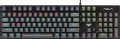 | 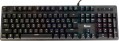 |
|---|---|---|
| Aula S2022 | Cobra MK-101 | |
| Compare prices 1 | Outdated Product | |
| User reviews | ||
| TOP sellers | ||
| Connection | wired | wired |
| Cable length | 1.6 m | 1.5 m |
| Type | for game | for game |
| Form factor | 100% (full size) | 100% (full size) |
| Layout | JIS | JIS |
Keyboard | ||
| Key profile | high | high |
| Key type | classic type | classic type |
| Switch technology | mechanical | mechanical |
| Switches | KRGD Blue (Clicky) | |
| Anti-Ghosting |  | |
| #KRO | N-KRO | |
| Fn key | | |
Features | ||
| Application of symbols (Latin) | laser engraving | |
| Application of symbols (Cyrillic) | laser engraving | |
| Volume control | fn | fn |
| Game mode | |  |
| Lighting | multicolor | multicolor |
| Lighting effects | + | |
Connection and power supply | ||
| Cable | USB-A | USB-A |
General | ||
| Skeleton keyboard | | |
| Size | 435x125x40 mm | 443x137x37 mm |
| Weight | 664 g | 765 g |
| Color | ||
| Added to E-Catalog | august 2023 | november 2021 |



Compare Aula S2022 and Cobra MK-101
Keyboards Aula S2022 and Cobra MK-101 have similar features, but there are key differences. Both models are wired gaming keyboards with mechanical switches and high key travel. However, Aula S2022 offers a gaming mode and multicolor backlighting with effects, while Cobra MK-101 does not have a gaming mode, but also supports multicolor backlighting. The cable length for Aula is 1.6 m, which is slightly longer than the 1.5 m of the Cobra. The dimensions and weight of the keyboards also differ: Aula S2022 is lighter (664 g) and more compact (435x125x40 mm) compared to Cobra MK-101 (765 g and 443x137x37 mm). If gaming mode and lightness are important to you, Aula S2022 would be preferable.
Price comparison
You may be interested in
My comparisons
Aula S2022 often compared


Cobra MK-101 often compared

Glossary
Cable length
The length of the cable that the keyboard is equipped with for wired connection (see "Connection type").
When choosing this parameter, you should first of all take into account the distance from the device to the connection port: a cable that is too short may simply not reach the connector, and a cable that is too long may get confused at hand and create inconvenience. As for specific values, the reference length is 1.8 m. However, there are cables both shorter and longer.
When choosing this parameter, you should first of all take into account the distance from the device to the connection port: a cable that is too short may simply not reach the connector, and a cable that is too long may get confused at hand and create inconvenience. As for specific values, the reference length is 1.8 m. However, there are cables both shorter and longer.
Switches
The model of switches (switches) used in the keyboard - switching mechanisms installed under each individual key. These details are given if the design uses advanced mechanics, positioned as a better option than traditional switches. Mostly gaming keyboards are equipped with such mechanics.
The most popular switch brands in our time are Cherry MX, considered the "classic of the genre" for high-quality mechanics; Gateron, practically not inferior to him; not so advanced, but also cheaper Kailh and Keychron, as well as ultra-budget Outemu. For all these brands, different types of switches have a different stem color, which can be used to determine the features of the keyboard. It is also worth saying that modern mechanical switches are divided into three main varieties: linear, tactile and clicky.
- Linear. Such solutions are closest to conventional membrane keyboards: the key travel is uniform along the entire length, with minimal resistance and the absence of a clear actuation point. There is an opinion that the linear "mechanics" is best suited for games where you have to deal with fast and frequent clicks; however, in practice, this moment largely depends on the personal tastes of th...e user, nothing prevents the use of such keyboards for working with texts.
- Tactile. Switches with a clearly defined actuation point - a kind of barrier to the path of the key. Such a "barrier" allows you to clearly determine by touch whether the key has worked or not. Tactile keyboards are valued primarily by tech who have to type large volumes of texts.
- Tactile-auditory (Clicky). In such switches, the actuation point is felt not only by touch, but also by ear: the actuation of the key is accompanied by a clearly audible click, which is often compared to the sound of the keys of a typewriter. Due to this, this option is also very popular among users dealing with texts. Some people consider switches of this type not very suitable for games, since they are supposedly not very convenient for frequent, fast pressing; however, a quality Clicky switch is as good as a linear switch in this regard, and the choice depends solely on personal preference. But the unequivocal disadvantages of such keyboards include a rather loud click sound, which in some situations may be superfluous.
As for specific colors, here are their features:
- Red (red). Linear type switches with minimum resistance. They are popular, in particular, among professional gamers who deal with dynamic games and try by all means to speed up their reaction to gaming events. On the other hand, a low force increases the likelihood of accidentally pressing an unnecessary button.
— Black. Another type of linear switches. They have a tighter move compared to Red, which, on the one hand, requires a little more effort, on the other hand, minimizes the chance of accidentally pressing the wrong key.
Blue. Switches in clicky format, with tactile feedback and a click.
— Brown. Switches with tactile feedback, but no "click". The Brown action is great for when you want a keyboard with tactile feedback and at the same time you want to avoid unnecessary noise (although the sound is still louder than on a membrane keyboard). In addition, it is considered a good option for tech who are just starting to get acquainted with mechanical keyboards.
— Silver. Linear switches designed for maximum operating speed. They have a very low stroke - about 1 - 1.2 mm - as well as a very small pressing force, which contributes to high speed. At the same time, the use of such a keyboard requires a certain skill, since even a small effort from an accidental touch usually leads to the operation of a key.
The most popular switch brands in our time are Cherry MX, considered the "classic of the genre" for high-quality mechanics; Gateron, practically not inferior to him; not so advanced, but also cheaper Kailh and Keychron, as well as ultra-budget Outemu. For all these brands, different types of switches have a different stem color, which can be used to determine the features of the keyboard. It is also worth saying that modern mechanical switches are divided into three main varieties: linear, tactile and clicky.
- Linear. Such solutions are closest to conventional membrane keyboards: the key travel is uniform along the entire length, with minimal resistance and the absence of a clear actuation point. There is an opinion that the linear "mechanics" is best suited for games where you have to deal with fast and frequent clicks; however, in practice, this moment largely depends on the personal tastes of th...e user, nothing prevents the use of such keyboards for working with texts.
- Tactile. Switches with a clearly defined actuation point - a kind of barrier to the path of the key. Such a "barrier" allows you to clearly determine by touch whether the key has worked or not. Tactile keyboards are valued primarily by tech who have to type large volumes of texts.
- Tactile-auditory (Clicky). In such switches, the actuation point is felt not only by touch, but also by ear: the actuation of the key is accompanied by a clearly audible click, which is often compared to the sound of the keys of a typewriter. Due to this, this option is also very popular among users dealing with texts. Some people consider switches of this type not very suitable for games, since they are supposedly not very convenient for frequent, fast pressing; however, a quality Clicky switch is as good as a linear switch in this regard, and the choice depends solely on personal preference. But the unequivocal disadvantages of such keyboards include a rather loud click sound, which in some situations may be superfluous.
As for specific colors, here are their features:
- Red (red). Linear type switches with minimum resistance. They are popular, in particular, among professional gamers who deal with dynamic games and try by all means to speed up their reaction to gaming events. On the other hand, a low force increases the likelihood of accidentally pressing an unnecessary button.
— Black. Another type of linear switches. They have a tighter move compared to Red, which, on the one hand, requires a little more effort, on the other hand, minimizes the chance of accidentally pressing the wrong key.
Blue. Switches in clicky format, with tactile feedback and a click.
— Brown. Switches with tactile feedback, but no "click". The Brown action is great for when you want a keyboard with tactile feedback and at the same time you want to avoid unnecessary noise (although the sound is still louder than on a membrane keyboard). In addition, it is considered a good option for tech who are just starting to get acquainted with mechanical keyboards.
— Silver. Linear switches designed for maximum operating speed. They have a very low stroke - about 1 - 1.2 mm - as well as a very small pressing force, which contributes to high speed. At the same time, the use of such a keyboard requires a certain skill, since even a small effort from an accidental touch usually leads to the operation of a key.
#KRO
A parameter that determines the maximum number of simultaneously pressed keys, the signal from which the keyboard is able to process and transmit to the computer. Instead of the "lattice" symbol in the abbreviation KRO, a number is indicated showing the allowable number of simultaneously pressed buttons. Most membrane keyboards come in the 2KRO and 3KRO grades, mechanical models usually start at 6KRO. The NKRO marking says that it is possible to issue a signal from an unlimited number of keys in one sitting.
Application of symbols (Latin)
Legend application indicates how the Latin characters on the keys are made and how well they will survive years of heavy typing.
— Double-shot. The keycap is molded from two different plastics: the main “body” and a separate legend insert are formed together in a single mold, so the letters don’t wear off or fade at all. This method is ideal for RGB backlighting: if the legend layer is semi-transparent, light passes through the symbols without halos. ABS double-shot is more common (bright glow, pleasantly smooth feel), while the pricier PBT double-shot is rarer and offers higher surface wear resistance. Compared to laser engraving, the lifespan is an order of magnitude higher, and it beats the dye-sub method for backlighting (dye-sub doesn’t shine through). Downsides include cost and sometimes visible seams/thick walls that can affect the click’s sound profile. In practice, these keycaps are in demand for mechanical gaming keyboards, esports arenas, developers, and frequent hotkey typing—where double-shot keeps legends readable for years.
— Sublimation. A method of applying Latin symbols to keycaps where, under heat and pressure, the dye penetrates the top layer of plastic, creating a durable, “absorbed” legend. The print won’t rub off from fingers, resists household cleaners and UV light, preserves a matte texture, and maintains high contrast on light backgrounds, but it doesn’t let RGB shine through the symbols and is limited in palette. Compared to laser...engraving, it offers higher lifespan and readability, and versus double-shot it only loses in shine-through effects. Typical use cases include mechanical keyboards for typing, developers, and office work, where durability, the tactile matte PBT feel, and stable readability over years matter.
— Laser engraving. Burning/removing the top coating layer with a beam to form highly precise symbols. Legends last for years, but over time the fill paint can wear and contrast can drop in high-contact areas. Advantages include thin typefaces, clean contours, RGB compatibility, and low cost. Compared to double-shot, engraving is cheaper and more flexible in design, but not “forever”; versus dye-sub it wins on backlighting, but loses in tactile uniformity and longevity. Typical applications are mass-market office and gaming models with backlighting.
— Double-shot. The keycap is molded from two different plastics: the main “body” and a separate legend insert are formed together in a single mold, so the letters don’t wear off or fade at all. This method is ideal for RGB backlighting: if the legend layer is semi-transparent, light passes through the symbols without halos. ABS double-shot is more common (bright glow, pleasantly smooth feel), while the pricier PBT double-shot is rarer and offers higher surface wear resistance. Compared to laser engraving, the lifespan is an order of magnitude higher, and it beats the dye-sub method for backlighting (dye-sub doesn’t shine through). Downsides include cost and sometimes visible seams/thick walls that can affect the click’s sound profile. In practice, these keycaps are in demand for mechanical gaming keyboards, esports arenas, developers, and frequent hotkey typing—where double-shot keeps legends readable for years.
— Sublimation. A method of applying Latin symbols to keycaps where, under heat and pressure, the dye penetrates the top layer of plastic, creating a durable, “absorbed” legend. The print won’t rub off from fingers, resists household cleaners and UV light, preserves a matte texture, and maintains high contrast on light backgrounds, but it doesn’t let RGB shine through the symbols and is limited in palette. Compared to laser...engraving, it offers higher lifespan and readability, and versus double-shot it only loses in shine-through effects. Typical use cases include mechanical keyboards for typing, developers, and office work, where durability, the tactile matte PBT feel, and stable readability over years matter.
— Laser engraving. Burning/removing the top coating layer with a beam to form highly precise symbols. Legends last for years, but over time the fill paint can wear and contrast can drop in high-contact areas. Advantages include thin typefaces, clean contours, RGB compatibility, and low cost. Compared to double-shot, engraving is cheaper and more flexible in design, but not “forever”; versus dye-sub it wins on backlighting, but loses in tactile uniformity and longevity. Typical applications are mass-market office and gaming models with backlighting.
Application of symbols (Cyrillic)
Legend application indicates how the Latin letters are made on the keys and how well they will survive years of heavy typing.
— Double-shot. The keycap is molded from two different plastics: the main “body” and a separate insert with the legend are formed in the mold as a single piece, so the letters don’t wear off or fade at all. This method is ideal for RGB backlighting: if the legend layer is semi‑transparent, light passes through the symbols without halos. ABS double-shot is more common (bright glow, pleasantly smooth feel), while the more expensive PBT double-shot is rarer and offers higher surface durability. Compared to laser engraving, the lifespan is an order of magnitude higher, and it beats the sublimation method in backlighting (dye-sub doesn’t shine through). Downsides include the price and sometimes visible seams/thick walls that can affect key sound. In practice, these keycaps are in demand for mechanical gaming keyboards, esports arenas, developers, and frequent hotkey typing—situations where double-shot preserves legibility for years.
— Dye-sublimation. A method of applying Latin symbols to keycaps where dye penetrates the top layer of plastic under heat and pressure, creating a durable “soaked-in” legend. The print doesn’t rub off from fingers, isn’t afraid of household chemicals or UV light, keeps a matte texture, and offers high contrast on light backgrounds, but it doesn’t let RGB backlighting shine through the symbols and has palette li...mitations. Compared to laser engraving, durability and legibility are higher, and versus double-shot it only loses in shine-through effects. Typical use cases include mechanical keyboards for typing, developers, and office work, where long life, tactile matte PBT, and stable legibility over years are important.
— Laser engraving. Burning/removing the top coating layer with a beam to form a highly precise symbol. The symbols last for years, but over time the paint fill can wear off and contrast can drop in high-contact areas. Advantages include thin fonts, clean contours, RGB compatibility, and affordable cost. Compared to double-shot, engraving is cheaper and more flexible in design, but not “forever”; against dye-sub it wins with backlighting, but loses in tactile uniformity and longevity. Typical applications include mass-market office and gaming models with backlighting, as well as bilingual layouts where the Latin legends are made with a more durable technology and Cyrillic is added by laser.
— Double-shot. The keycap is molded from two different plastics: the main “body” and a separate insert with the legend are formed in the mold as a single piece, so the letters don’t wear off or fade at all. This method is ideal for RGB backlighting: if the legend layer is semi‑transparent, light passes through the symbols without halos. ABS double-shot is more common (bright glow, pleasantly smooth feel), while the more expensive PBT double-shot is rarer and offers higher surface durability. Compared to laser engraving, the lifespan is an order of magnitude higher, and it beats the sublimation method in backlighting (dye-sub doesn’t shine through). Downsides include the price and sometimes visible seams/thick walls that can affect key sound. In practice, these keycaps are in demand for mechanical gaming keyboards, esports arenas, developers, and frequent hotkey typing—situations where double-shot preserves legibility for years.
— Dye-sublimation. A method of applying Latin symbols to keycaps where dye penetrates the top layer of plastic under heat and pressure, creating a durable “soaked-in” legend. The print doesn’t rub off from fingers, isn’t afraid of household chemicals or UV light, keeps a matte texture, and offers high contrast on light backgrounds, but it doesn’t let RGB backlighting shine through the symbols and has palette li...mitations. Compared to laser engraving, durability and legibility are higher, and versus double-shot it only loses in shine-through effects. Typical use cases include mechanical keyboards for typing, developers, and office work, where long life, tactile matte PBT, and stable legibility over years are important.
— Laser engraving. Burning/removing the top coating layer with a beam to form a highly precise symbol. The symbols last for years, but over time the paint fill can wear off and contrast can drop in high-contact areas. Advantages include thin fonts, clean contours, RGB compatibility, and affordable cost. Compared to double-shot, engraving is cheaper and more flexible in design, but not “forever”; against dye-sub it wins with backlighting, but loses in tactile uniformity and longevity. Typical applications include mass-market office and gaming models with backlighting, as well as bilingual layouts where the Latin legends are made with a more durable technology and Cyrillic is added by laser.
Game mode
The presence in the keyboard of a special game mode.
This function is found exclusively in models of the corresponding specialization (see "Intended use"). Enabling Game Mode disables some of the keys and keyboard shortcuts used by the system, such as the Windows Start menu button and the context menu button. Thanks to this, you do not have to worry that an accidental key press will call a system function and interrupt the game.
In many models, you can customize a specific set of keys that are deactivated in the game mode.
This function is found exclusively in models of the corresponding specialization (see "Intended use"). Enabling Game Mode disables some of the keys and keyboard shortcuts used by the system, such as the Windows Start menu button and the context menu button. Thanks to this, you do not have to worry that an accidental key press will call a system function and interrupt the game.
In many models, you can customize a specific set of keys that are deactivated in the game mode.
Lighting effects
The presence of additional effects in the backlight provided in the keyboard (see above). For models with the backlight synchronization function, this item indicates the synchronization technology.
Additional backlight effects can be different: multi-coloured backlighting of individual keyboard zones, smooth “flowing” of one colour into another, response to system or game events, etc.; specific features should be clarified for each model separately. As for synchronization, it allows you to coordinate the backlighting of various system components — keyboards, case mice, graphics cards, etc.; this opportunity is especially appreciated by the owners of high-end gaming stations. Coordination requires that all highlighted components support the same technology; usually, each manufacturer has its own — Aura Sync for Asus, RGB Fusion for Gigabyte, etc.
Additional backlight effects can be different: multi-coloured backlighting of individual keyboard zones, smooth “flowing” of one colour into another, response to system or game events, etc.; specific features should be clarified for each model separately. As for synchronization, it allows you to coordinate the backlighting of various system components — keyboards, case mice, graphics cards, etc.; this opportunity is especially appreciated by the owners of high-end gaming stations. Coordination requires that all highlighted components support the same technology; usually, each manufacturer has its own — Aura Sync for Asus, RGB Fusion for Gigabyte, etc.