
Comparison Myatu C0126 vs Maxxter City
Add to comparison | 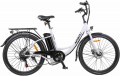 | 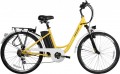 |
|---|---|---|
| Myatu C0126 | Maxxter City | |
| Outdated Product | Outdated Product | |
| TOP sellers | ||
| Type | tourist | road |
| Maximum load | 130 kg | 110 kg |
Performance specification | ||
| Operating mode | electric drive + hybrid | electric drive + hybrid |
| Range | 40 km | 35 km |
| Motor power | 250 W | 250 W |
| Maximum speed | 25 km/h | |
| Drive | rear | rear |
| Wheel diameter | 26 " | 26 " |
| Depreciation | absent | front |
| Front fork | spring-elastomer | |
| Front brake | disk mechanical | rim |
| Rear brake | disc mechanical | drum-like |
Features | ||
| Speeds | 6 no. | 6 no. |
| Rear derailleur | Shimano | Shimano |
| Shifter type | triggered | triggered |
| Shifter model | Shimano | Shimano |
| Onboard computer |  |  |
Battery | ||
| Battery capacity | 10 Ah | 10 Ah |
| Battery capacity | 360 Wh | |
| Full charging time | 5 h | 8 h |
| Battery location | under the seat | under the seat |
General | ||
| In box | fenders chain guard kickstand carrier signal / ring headlight and parking lights | fenders spring saddle chain guard kickstand carrier headlight and parking lights |
| Frame material | aluminum | steel |
| Weight | 27 kg | |
| Color | ||
| Added to E-Catalog | may 2023 | june 2018 |


Compare Myatu C0126 and Maxxter City
You may be interested in
Myatu C0126 often compared

Maxxter City often compared


Glossary
Type
Type of Electric Bicycle — a structural class of model that defines the seating position, frame geometry, wheels, suspension, and main purpose of the bike.
— Mountain (MTB). An electric bicycle for rough terrain, dirt roads, forest trails, and moderate off-road conditions. It usually has a strong frame, wide tires, a suspension fork, or full suspension, and the motor helps to climb hills and navigate difficult sections of the route more easily.
— Downhill / freeride / enduro. Reinforced mountain e-bikes for aggressive riding, steep descents, rocks, roots, jumps, and complex trails. These models often feature powerful brakes, long-travel suspension, and robust frames but are heavier, more expensive, and less practical for regular city rides.
— Trail. A versatile type of mountain electric bicycle for forest trails, hilly terrain, dirt roads, and moderately difficult descents. Compared to a regular MTB, it is often better prepared for active trail riding, and compared to enduro or downhill models, it remains lighter, more practical, and more convenient for everyday routes.
— Urban. A model for daily city rides, bike lanes, and smooth asphalt. For this type, comfortable seating, fenders, a luggage rack, lighting, a kickstand, and convenience are more important than maximum passability or sports speed.
— Road. An electric bicycle for riding on asphalt, in parks, along...embankments, and on suburban roads. In essence, it is closer to a universal bike for smooth surfaces: faster and lighter than an urban bike but usually not as sporty and demanding in terms of seating as a road bike.
— Touring. A bike for long trips, cycling journeys, and routes with baggage. It is usually designed for stability, comfortable seating, range, and mounts for racks, bags, and fenders, making it well-suited for trips outside the city and multi-day routes.
— Cruiser. A comfortable electric bicycle with a relaxed seating position, wide handlebars, and a design for leisurely rides. This type is convenient for strolling, resort areas, and smooth city routes but not intended for a fast pace, steep climbs, or sporty handling.
— Road bike. A lightweight high-speed e-bike for asphalt, long distances, and sports riding. It usually has narrow tires, aerodynamic seating, and a minimal set of extra equipment, with electric assistance used not for “moped” riding but to maintain pace on climbs and long routes.
— Gravel. An electric bicycle for mixed routes: asphalt, dirt roads, packed forest roads, and light off-road. It is faster and sportier than a touring bike but more stable and versatile than a road bike thanks to wider tires, baggage mounts, and a relaxed geometry.
— Fatbike. An electric bicycle with very wide tires for sand, snow, loose terrain, and rough roads. The large tires provide good passability and absorb bumps, but they increase weight and rolling resistance, so the motor is particularly useful here.
— Mountain (MTB). An electric bicycle for rough terrain, dirt roads, forest trails, and moderate off-road conditions. It usually has a strong frame, wide tires, a suspension fork, or full suspension, and the motor helps to climb hills and navigate difficult sections of the route more easily.
— Downhill / freeride / enduro. Reinforced mountain e-bikes for aggressive riding, steep descents, rocks, roots, jumps, and complex trails. These models often feature powerful brakes, long-travel suspension, and robust frames but are heavier, more expensive, and less practical for regular city rides.
— Trail. A versatile type of mountain electric bicycle for forest trails, hilly terrain, dirt roads, and moderately difficult descents. Compared to a regular MTB, it is often better prepared for active trail riding, and compared to enduro or downhill models, it remains lighter, more practical, and more convenient for everyday routes.
— Urban. A model for daily city rides, bike lanes, and smooth asphalt. For this type, comfortable seating, fenders, a luggage rack, lighting, a kickstand, and convenience are more important than maximum passability or sports speed.
— Road. An electric bicycle for riding on asphalt, in parks, along...embankments, and on suburban roads. In essence, it is closer to a universal bike for smooth surfaces: faster and lighter than an urban bike but usually not as sporty and demanding in terms of seating as a road bike.
— Touring. A bike for long trips, cycling journeys, and routes with baggage. It is usually designed for stability, comfortable seating, range, and mounts for racks, bags, and fenders, making it well-suited for trips outside the city and multi-day routes.
— Cruiser. A comfortable electric bicycle with a relaxed seating position, wide handlebars, and a design for leisurely rides. This type is convenient for strolling, resort areas, and smooth city routes but not intended for a fast pace, steep climbs, or sporty handling.
— Road bike. A lightweight high-speed e-bike for asphalt, long distances, and sports riding. It usually has narrow tires, aerodynamic seating, and a minimal set of extra equipment, with electric assistance used not for “moped” riding but to maintain pace on climbs and long routes.
— Gravel. An electric bicycle for mixed routes: asphalt, dirt roads, packed forest roads, and light off-road. It is faster and sportier than a touring bike but more stable and versatile than a road bike thanks to wider tires, baggage mounts, and a relaxed geometry.
— Fatbike. An electric bicycle with very wide tires for sand, snow, loose terrain, and rough roads. The large tires provide good passability and absorb bumps, but they increase weight and rolling resistance, so the motor is particularly useful here.
Maximum load
The maximum weight for which the frame, wheels, suspension, brakes, and other components of the electric bike are designed. This usually implies the weight of the rider along with baggage and accessories: for example, a backpack, basket, child seat, or load on the luggage rack. It is not advisable to exceed this limit, as the additional weight reduces maneuverability, increases braking distance, and accelerates wear on the wheels, spokes, hubs, and frame.
Range
Approximate distance that an electric bike can travel on a single battery charge. Specifications usually indicate an estimated value, as the actual range depends on the chosen level of assistance, rider's weight, terrain, speed, temperature, and tire pressure. For example, in economy mode, an e-bike can travel significantly further than when constantly riding with maximum support and speed downhill.
Maximum speed
The maximum speed at which an electric bike can accelerate using the electric motor. For relaxed city rides and bike paths, models with a limit of around 25 km/h are usually sufficient, while options with speeds of approximately 30–35 km/h are found for suburban routes and more dynamic riding. Higher speeds are more common in powerful off-road bikes, fat bikes, and high-speed models.
It is worth considering that the actual speed depends on the motor's power, rider's weight, battery charge, terrain, wind, and controller settings. In some cases, it may also be limited by traffic regulations or firmware.
It is worth considering that the actual speed depends on the motor's power, rider's weight, battery charge, terrain, wind, and controller settings. In some cases, it may also be limited by traffic regulations or firmware.
Depreciation
A system of spring, air, or elastomer elements that softens bumps and makes the ride more comfortable. Suspension affects the purpose of the bicycle.
— Front. The suspension fork is installed at the front and softens impacts on the front wheel. This is the most common option for city, recreational, mountain, and touring e-bikes: it helps with curbs, potholes, tiles, gravel, and light off-road without making the bike too heavy and complicated.
— Front and rear. Suspension is available both in the front and rear, so bumps are absorbed by both wheels. This setup is better suited for trails, forest roads, rocks, roots, descents, and active riding but makes the electric bicycle more expensive, heavier, and more demanding to maintain.
— Rear. A shock absorber is installed at the rear, softening impacts from the rear wheel or the saddle part of the frame. This option is less common than front suspension and can be useful for enhancing comfort on rough roads, especially if the main load falls on the saddle and rear of the bicycle.
— None. A rigid design without shock absorbers is simpler, lighter, and cheaper to maintain. It is well-suited for smooth asphalt, bike paths, and calm urban routes, but on potholes, tiles, dirt, and curbs, it will transmit more shocks to the hands, back, and frame.
— Front. The suspension fork is installed at the front and softens impacts on the front wheel. This is the most common option for city, recreational, mountain, and touring e-bikes: it helps with curbs, potholes, tiles, gravel, and light off-road without making the bike too heavy and complicated.
— Front and rear. Suspension is available both in the front and rear, so bumps are absorbed by both wheels. This setup is better suited for trails, forest roads, rocks, roots, descents, and active riding but makes the electric bicycle more expensive, heavier, and more demanding to maintain.
— Rear. A shock absorber is installed at the rear, softening impacts from the rear wheel or the saddle part of the frame. This option is less common than front suspension and can be useful for enhancing comfort on rough roads, especially if the main load falls on the saddle and rear of the bicycle.
— None. A rigid design without shock absorbers is simpler, lighter, and cheaper to maintain. It is well-suited for smooth asphalt, bike paths, and calm urban routes, but on potholes, tiles, dirt, and curbs, it will transmit more shocks to the hands, back, and frame.
Front fork
The type of front fork describes the internal construction: how the unit compresses upon impact and how it absorbs rebound. In e-bikes, this aspect is essential not only for comfort but also for handling on rough terrains, as the heavy e-bike places more stress on the suspension.
— Spring-elastomer. A metal spring is used inside, with an elastomer that helps soften impacts and limit sharp vibrations. This is a simple and affordable solution for city rides, leisurely outings, and light off-road, but it lacks the smoothness and adjustability of oil systems, and the elastomer may become stiffer in cold conditions.
— Spring-oil. Elasticity is provided by a metal spring, while oil dampens oscillations and makes the suspension operation more controllable. This option is heavier than the air-oil type but generally more reliable and stable than the spring-elastomer version, making it suitable for versatile e-bikes, poor roads, off-road, and moderately active riding.
— Air-oil. In this suspension, air acts as the elastic element, while oil ensures smooth operation and damping of oscillations. It is lighter and can be more precisely adjusted to the rider's weight using air pressure, making it well-suited for mountain, trail, and more advanced e-bikes, but usually costs more and requires more attentive maintenance.
— Spring-elastomer. A metal spring is used inside, with an elastomer that helps soften impacts and limit sharp vibrations. This is a simple and affordable solution for city rides, leisurely outings, and light off-road, but it lacks the smoothness and adjustability of oil systems, and the elastomer may become stiffer in cold conditions.
— Spring-oil. Elasticity is provided by a metal spring, while oil dampens oscillations and makes the suspension operation more controllable. This option is heavier than the air-oil type but generally more reliable and stable than the spring-elastomer version, making it suitable for versatile e-bikes, poor roads, off-road, and moderately active riding.
— Air-oil. In this suspension, air acts as the elastic element, while oil ensures smooth operation and damping of oscillations. It is lighter and can be more precisely adjusted to the rider's weight using air pressure, making it well-suited for mountain, trail, and more advanced e-bikes, but usually costs more and requires more attentive maintenance.
Front brake
The braking mechanism on the front wheel, which is responsible for a significant portion of the bike's deceleration. For an e-bike, this component is particularly important due to the higher weight and speed: on descents, wet asphalt, dirt, and during sudden stops, the type of brake affects not only comfort but also safety.
— Rim. The pads are pressed against the wheel rim and slow down the bike through friction. This brake is simple, lightweight, and inexpensive to maintain, but performs poorly in rain, mud, and under heavy load, making it more suitable for calm city riding and budget models.
— Mechanical disc. Brake pads clamp the disc on the hub of the wheel, and the force from the handle is transmitted via a cable. Compared to rim brakes, the disc brake performs more reliably on wet roads and is better suited for heavy e-bikes, but requires periodic adjustment of the cable and pads.
— Hydraulic disc. The force from the handle is transmitted to the brake caliper through hydraulic fluid. This brake generally provides the most powerful and precise stopping, making it well-suited for mountain e-bikes, fat bikes, descents, high speeds, and riding with loads, but it is more expensive and complex to maintain.
— Roller. An enclosed hub brake where deceleration occurs inside a special mechanism with rollers. It is well-protected from dirt and rain, requires infrequent adjustments, and is convenient for...city bikes, but is less powerful than disc brakes during active riding and long descents.
— Drum. The braking mechanism is located inside the hub, where the pads press against the inner surface of the drum. This design is protected from moisture and contamination, durable, and low-maintenance, but typically heavier and less effective in sharp stops compared to disc systems.
— Rim. The pads are pressed against the wheel rim and slow down the bike through friction. This brake is simple, lightweight, and inexpensive to maintain, but performs poorly in rain, mud, and under heavy load, making it more suitable for calm city riding and budget models.
— Mechanical disc. Brake pads clamp the disc on the hub of the wheel, and the force from the handle is transmitted via a cable. Compared to rim brakes, the disc brake performs more reliably on wet roads and is better suited for heavy e-bikes, but requires periodic adjustment of the cable and pads.
— Hydraulic disc. The force from the handle is transmitted to the brake caliper through hydraulic fluid. This brake generally provides the most powerful and precise stopping, making it well-suited for mountain e-bikes, fat bikes, descents, high speeds, and riding with loads, but it is more expensive and complex to maintain.
— Roller. An enclosed hub brake where deceleration occurs inside a special mechanism with rollers. It is well-protected from dirt and rain, requires infrequent adjustments, and is convenient for...city bikes, but is less powerful than disc brakes during active riding and long descents.
— Drum. The braking mechanism is located inside the hub, where the pads press against the inner surface of the drum. This design is protected from moisture and contamination, durable, and low-maintenance, but typically heavier and less effective in sharp stops compared to disc systems.
Rear brake
The braking mechanism on the rear wheel, which helps control speed, stabilize the bicycle, and safely modulate deceleration. On an electric bike, it is especially important when riding downhill, on rough terrain, wet roads, and with additional load, although the main braking force is usually on the front wheel.
— Rim. Pads press against the rim of the rear wheel and slow the bike down through friction. This brake is simple, lightweight, and inexpensive to maintain, but performs worse in rain, mud, and when the rim is worn, so it is better suited for calm city rides.
— Mechanical disc. Pads clamp the brake disc on the rear wheel, and the force from the handle is transmitted by a cable. This is a more stable option for an electric bike than a rim brake: it handles moisture and dirt better but requires periodic adjustment of the cable and pad position.
— Hydraulic disc. The brake disc is clamped by a caliper, and the force is transferred through hydraulic fluid. This rear brake is well-modulated, requires less effort on the handle, and is suitable for heavy e-bikes, mountain routes, fat bikes, descents, and active riding.
— Roller. A closed hub brake, with a mechanism containing rollers located inside the housing. It is protected from dirt and rain, requires almost no attention in daily use, and is convenient for city models, but is less powerful than disc brakes during sharp deceleration and extended descents.
— Drum. Pads work inside a drum in the hub of the rear wheel. T...his design is durable, protected from the environment, and suitable for leisurely rides, but usually heavier and less effective at intensive braking than the disc system.
— Coaster. Braking is activated by pedaling backward, and the mechanism is usually located in the rear hub. This is a simple and dirt-protected solution for city and leisure bikes, but it is less suitable for high-speed electric bikes, steep descents, and situations requiring precise modulation of braking force.
Onboard computer
Electronic module with a display and controls that shows the key data on the operation of the e-bike. It typically displays speed, mileage, battery level, selected motor assistance mode, trip time, and possible system errors. In more advanced models, the on-board computer can also manage lighting, e-drive settings, cruise control, or smartphone connectivity.