
Comparison Maxxter Road Master vs Maxxter City
Add to comparison | 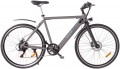 | 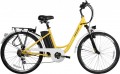 |
|---|---|---|
| Maxxter Road Master | Maxxter City | |
| Outdated Product | Outdated Product | |
| TOP sellers | ||
| Type | road | road |
| Maximum load | 110 kg | 110 kg |
Performance specification | ||
| Motor operating mode | electric drive + pedal assist | electric drive + pedal assist |
| Range | 35 km | 35 km |
| Motor power | 350 W | 250 W |
| Maximum speed | 25 km/h | 25 km/h |
| Drive | rear | rear |
| Wheel diameter | 28 " | 26 " |
| Depreciation | absent | front |
| Front fork | spring-elastomer | |
| Front brake | disk mechanical | rim |
| Rear brake | disc mechanical | drum-like |
Features | ||
| Speeds | 6 no. | 6 no. |
| Rear derailleur | Shimano Tourney | Shimano |
| Shifter type | triggered | triggered |
| Shifter model | Shimano | Shimano |
| Onboard computer |  |  |
Battery | ||
| Battery capacity | 7.8 Ah | 10 Ah |
| Battery capacity | 281 Wh | |
| Supply voltage | 36 В | |
| Full charging time | 8 h | 8 h |
| Battery location | in the frame (hidden) | under the seat |
General | ||
| In box | fenders chain guard kickstand signal / ring headlight and parking lights | fenders spring saddle chain guard kickstand carrier headlight and parking lights |
| Frame material | aluminum | steel |
| Weight | 21 kg | 27 kg |
| Color | ||
| Added to E-Catalog | february 2023 | june 2018 |


Compare Maxxter Road Master and City
You may be interested in
Maxxter Road Master often compared

Maxxter City often compared


Glossary
Motor power
The electric motor rating in watts, which shows how actively it assists during acceleration, uphill riding, and riding with a load. For relaxed city trips and bike paths, a motor of around 250 W is often sufficient; for suburban routes, hills, and heavier riders, a reserve of 350–500 W is more convenient, while ratings of 750 W and above are more common on powerful fat bikes, cargo, and off-road models. When choosing, keep in mind that high power drains the battery faster and does not always mean higher speed: actual performance is also affected by torque, bike weight, battery capacity, and controller settings.
Wheel diameter
The wheel size of an electric bicycle in inches affects compactness, stability, rolling, and passability. The larger the wheel, the easier it rolls over bumps and maintains speed, but the bigger the bike itself becomes.
Small 20″ wheels and below are typical for folding e-bikes, 26″ is well-suited for city rides, leisure, and basic off-roading, while 27.5″, 28″, and 29″ are often chosen for mountain, road, touring, and high-speed models.
Small 20″ wheels and below are typical for folding e-bikes, 26″ is well-suited for city rides, leisure, and basic off-roading, while 27.5″, 28″, and 29″ are often chosen for mountain, road, touring, and high-speed models.
Depreciation
A system of spring, air, or elastomer elements that softens impacts from bumps and makes riding more comfortable. Suspension affects the intended use of the bicycle.
— Front. A suspension fork is installed at the front and softens impacts on the front wheel. This is the most common option for city, leisure, mountain, and touring e-bikes: it helps with curbs, potholes, paving stones, gravel, and light off-road terrain without making the bicycle too heavy or complicated.
— Front and rear. Suspension is provided both at the front and rear, so bumps are absorbed by both wheels. This setup is better suited for trails, forest roads, rocks, roots, descents, and active riding, but makes the e-bike more expensive, heavier, and more demanding to maintain.
— Rear. A shock absorber is installed at the rear and softens impacts from the rear wheel or the seat area of the frame. This option is less common than front suspension and can be useful for increasing comfort on uneven roads, especially if the main load falls on the saddle and rear of the bicycle.
— None. A rigid design without shock absorbers is simpler, lighter, and cheaper to maintain. It is well suited for smooth asphalt, bike paths, and relaxed city routes, but on potholes, paving stones, dirt roads, and curbs it will transfer more impacts to the hands, back, and frame.
— Front. A suspension fork is installed at the front and softens impacts on the front wheel. This is the most common option for city, leisure, mountain, and touring e-bikes: it helps with curbs, potholes, paving stones, gravel, and light off-road terrain without making the bicycle too heavy or complicated.
— Front and rear. Suspension is provided both at the front and rear, so bumps are absorbed by both wheels. This setup is better suited for trails, forest roads, rocks, roots, descents, and active riding, but makes the e-bike more expensive, heavier, and more demanding to maintain.
— Rear. A shock absorber is installed at the rear and softens impacts from the rear wheel or the seat area of the frame. This option is less common than front suspension and can be useful for increasing comfort on uneven roads, especially if the main load falls on the saddle and rear of the bicycle.
— None. A rigid design without shock absorbers is simpler, lighter, and cheaper to maintain. It is well suited for smooth asphalt, bike paths, and relaxed city routes, but on potholes, paving stones, dirt roads, and curbs it will transfer more impacts to the hands, back, and frame.
Front fork
The type of front fork describes the internal construction: how the unit compresses upon impact and how it absorbs rebound. In e-bikes, this aspect is essential not only for comfort but also for handling on rough terrains, as the heavy e-bike places more stress on the suspension.
— Spring-elastomer. A metal spring is used inside, with an elastomer that helps soften impacts and limit sharp vibrations. This is a simple and affordable solution for city rides, leisurely outings, and light off-road, but it lacks the smoothness and adjustability of oil systems, and the elastomer may become stiffer in cold conditions.
— Spring-oil. Elasticity is provided by a metal spring, while oil dampens oscillations and makes the suspension operation more controllable. This option is heavier than the air-oil type but generally more reliable and stable than the spring-elastomer version, making it suitable for versatile e-bikes, poor roads, off-road, and moderately active riding.
— Air-oil. In this suspension, air acts as the elastic element, while oil ensures smooth operation and damping of oscillations. It is lighter and can be more precisely adjusted to the rider's weight using air pressure, making it well-suited for mountain, trail, and more advanced e-bikes, but usually costs more and requires more attentive maintenance.
— Spring-elastomer. A metal spring is used inside, with an elastomer that helps soften impacts and limit sharp vibrations. This is a simple and affordable solution for city rides, leisurely outings, and light off-road, but it lacks the smoothness and adjustability of oil systems, and the elastomer may become stiffer in cold conditions.
— Spring-oil. Elasticity is provided by a metal spring, while oil dampens oscillations and makes the suspension operation more controllable. This option is heavier than the air-oil type but generally more reliable and stable than the spring-elastomer version, making it suitable for versatile e-bikes, poor roads, off-road, and moderately active riding.
— Air-oil. In this suspension, air acts as the elastic element, while oil ensures smooth operation and damping of oscillations. It is lighter and can be more precisely adjusted to the rider's weight using air pressure, making it well-suited for mountain, trail, and more advanced e-bikes, but usually costs more and requires more attentive maintenance.
Front brake
Brake mechanism on the front wheel, responsible for a significant part of the bicycle’s deceleration. This component is especially important for an e-bike due to its greater weight and higher speed: on descents, wet asphalt, dirt roads, and during sudden stops, the type of brake affects not only comfort but also safety.
— Rim. The pads press against the wheel rim and slow the bicycle through friction. This type of brake is simple, lightweight, and inexpensive to maintain, but performs worse in rain, mud, and under heavy loads, so it is better suited for relaxed city riding and budget models.
— Mechanical disc. The brake pads clamp a disc on the wheel hub, with force from the lever transmitted via a cable. Compared with a rim disc brake, it performs more consistently on wet roads and is better suited for a heavy e-bike, but requires periodic adjustment of the cable and pads.
— Hydraulic disc. Force from the lever is transmitted to the brake caliper through hydraulic fluid. This type of brake usually provides the most powerful and precise stopping performance, making it well suited for electric mountain bikes, fat bikes, descents, high speeds, and riding with loads, but it costs more and is more difficult to maintain.
— Roller. An enclosed hub brake in which deceleration takes place inside a special mechanism with rollers. It is well protected from dirt and rain, does not require frequent adjustment,...and is convenient for city bicycles, but is less powerful than disc brakes during active riding and long descents.
— Drum. The brake mechanism is located inside the hub, where the pads press against the inner surface of the drum. This design is protected from moisture and dirt, durable, and low-maintenance, but is usually heavier and less effective during sudden braking than disc systems.
— Rim. The pads press against the wheel rim and slow the bicycle through friction. This type of brake is simple, lightweight, and inexpensive to maintain, but performs worse in rain, mud, and under heavy loads, so it is better suited for relaxed city riding and budget models.
— Mechanical disc. The brake pads clamp a disc on the wheel hub, with force from the lever transmitted via a cable. Compared with a rim disc brake, it performs more consistently on wet roads and is better suited for a heavy e-bike, but requires periodic adjustment of the cable and pads.
— Hydraulic disc. Force from the lever is transmitted to the brake caliper through hydraulic fluid. This type of brake usually provides the most powerful and precise stopping performance, making it well suited for electric mountain bikes, fat bikes, descents, high speeds, and riding with loads, but it costs more and is more difficult to maintain.
— Roller. An enclosed hub brake in which deceleration takes place inside a special mechanism with rollers. It is well protected from dirt and rain, does not require frequent adjustment,...and is convenient for city bicycles, but is less powerful than disc brakes during active riding and long descents.
— Drum. The brake mechanism is located inside the hub, where the pads press against the inner surface of the drum. This design is protected from moisture and dirt, durable, and low-maintenance, but is usually heavier and less effective during sudden braking than disc systems.
Rear brake
The braking mechanism on the rear wheel, which helps control speed, stabilize the bicycle, and safely modulate deceleration. On an electric bike, it is especially important when riding downhill, on rough terrain, wet roads, and with additional load, although the main braking force is usually on the front wheel.
— Rim. Pads press against the rim of the rear wheel and slow the bike down through friction. This brake is simple, lightweight, and inexpensive to maintain, but performs worse in rain, mud, and when the rim is worn, so it is better suited for calm city rides.
— Mechanical disc. Pads clamp the brake disc on the rear wheel, and the force from the handle is transmitted by a cable. This is a more stable option for an electric bike than a rim brake: it handles moisture and dirt better but requires periodic adjustment of the cable and pad position.
— Hydraulic disc. The brake disc is clamped by a caliper, and the force is transferred through hydraulic fluid. This rear brake is well-modulated, requires less effort on the handle, and is suitable for heavy e-bikes, mountain routes, fat bikes, descents, and active riding.
— Roller. A closed hub brake, with a mechanism containing rollers located inside the housing. It is protected from dirt and rain, requires almost no attention in daily use, and is convenient for city models, but is less powerful than disc brakes during sharp deceleration and extended descents.
— Drum. Pads work inside a drum in the hub of the rear wheel. T...his design is durable, protected from the environment, and suitable for leisurely rides, but usually heavier and less effective at intensive braking than the disc system.
— Coaster. Braking is activated by pedaling backward, and the mechanism is usually located in the rear hub. This is a simple and dirt-protected solution for city and leisure bikes, but it is less suitable for high-speed electric bikes, steep descents, and situations requiring precise modulation of braking force.
Rear derailleur
Bicycle drivetrain component that moves the chain between gears to select the desired gear. Specifications usually include the series or manufacturer name, such as Shimano, SRAM, Microshift, Shimano Tourney, Altus, Acera, Alivio, Deore, and other options. This helps to roughly understand the drivetrain class, shifting precision, compatibility with the number of speeds, and maintenance level.
Onboard computer
Electronic unit with a display and controls that shows key data about the e-bike’s operation. It usually displays speed, mileage, battery charge level, selected motor assistance mode, ride time, and possible system errors. In more advanced models, the on-board computer can also control the backlight, electric drive settings, cruise control, or smartphone connection.
Battery capacity
Ampere-hours indicate the electric charge that an e-bike battery can deliver during operation. This value helps roughly estimate how long the motor can be powered, but on its own it does not provide an accurate understanding of the range, because it does not take the battery voltage into account. For example, 10 Ah batteries at 36 V and 48 V will have different energy reserves, even though their ampere-hour rating is the same. Therefore, it is useful to consider Ah together with voltage and capacity in Wh.