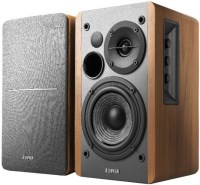
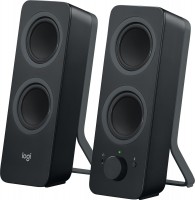
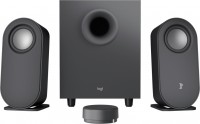
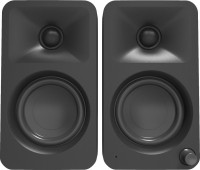
TOP 5 two-channel computer speakers for all occasions

We independently test the products and technologies that we recommend.

That is why we undertook to choose from the whole variety of 5 best multimedia speakers. To narrow down the choices, we focused on two-channel speakers with a built-in amplifier, leaving out options with subwoofers, full-range speakers and multi-channel systems. Still, comparing them is like comparing coffee with beer — both liquids, but they taste completely different. We divided the most interesting, in our opinion, models into conditional classes according to the price and purpose of the speakers. From simple and inexpensive "speakers" for games and movies to classic multimedia sound, unusual design solutions and almost Hi-Fi acoustics.

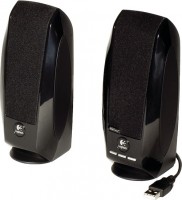
If you need to "voice" a computer or laptop without unnecessary stress for the wallet, then compact entry-level USB speakers are quite suitable for this. And, perhaps, one of the best solutions in this matter will be the 247 model from Sven.
These kids look more interesting than competitors due to the largest and heaviest speaker for this type of speaker (76 mm), which allows them to play loudly, sound decently at low frequencies and not choke at high volumes. For comparison, most low-cost USB speakers have speakers one and a half to two times smaller in diameter. Naturally, the question of the size of the speakers is much more critical for expensive acoustics, and you should not expect dense bass, a wide panorama and other miracles from the 247 USB. But for watching videos, listening to pop music and scoring games, they will do with a bang.
If you move away from the sound and look at the amenities, then the 247s look more interesting here than most competitors. First, most multimedia speakers look like the designer went out to lunch and never came back. 247 USBs are unlikely to receive praise from Apple chief designer Johnny Ive, but they look pretty decent both in photographs and on the table near the computer.
Secondly, the guys from Sven moved all the controls to the front side of the speakers, saving users from having to fumble around the end and “back” of the speakers in search of a volume switch. In addition to the volume slider and headphone output, you can also find a microphone output on the front side, which is very convenient if you often use a headset. By the way, some buyers complain that the headphone input is “noisy” if the speakers are powered by a computer and not the network.

In the last couple of years, it's easy to see the trend of computer speakers to pretend to be multimedia combiners and even music centers. In addition to the usual remote control, manufacturers began to equip acoustics with Bluetooth receivers, memory card slots, FM radio and other useful features. And it's very convenient. In the end, most owners of inexpensive music centers once bought them precisely for the sake of battery life and a convenient remote control.
One of the most interesting representatives of this trend is the SVEN MC-20 model. Externally, the MC-20 also gravitate towards the classics. No light bulbs, ruffles and inserts made of multi-coloured plastic, with which manufacturers often “tune” inexpensive acoustics. Instead, buyers are waiting for a strict design and a base made of fairly dense wood (MDF 8 mm thick). This regularity is slightly diluted with 2 aggressive front phase inverters and a control panel with volume control, digital menu and a slot for a memory card.
As for the most important question, the MC-20s can hardly be called the loudest or "rocking". Continuing the theme of classic design, their sound is best described with the words "measured" and "honest". The bass doesn't jump out of the speakers, the mids are full of detail, and the treble is almost hi-fi, without the gritty overtones that midrange speakers suffer from. If the soul requires maximum volume and songs of the Leningrad group, then for these cases there is a Loud mode, which raises the low and high frequency curves, making the sound more dense and deep.
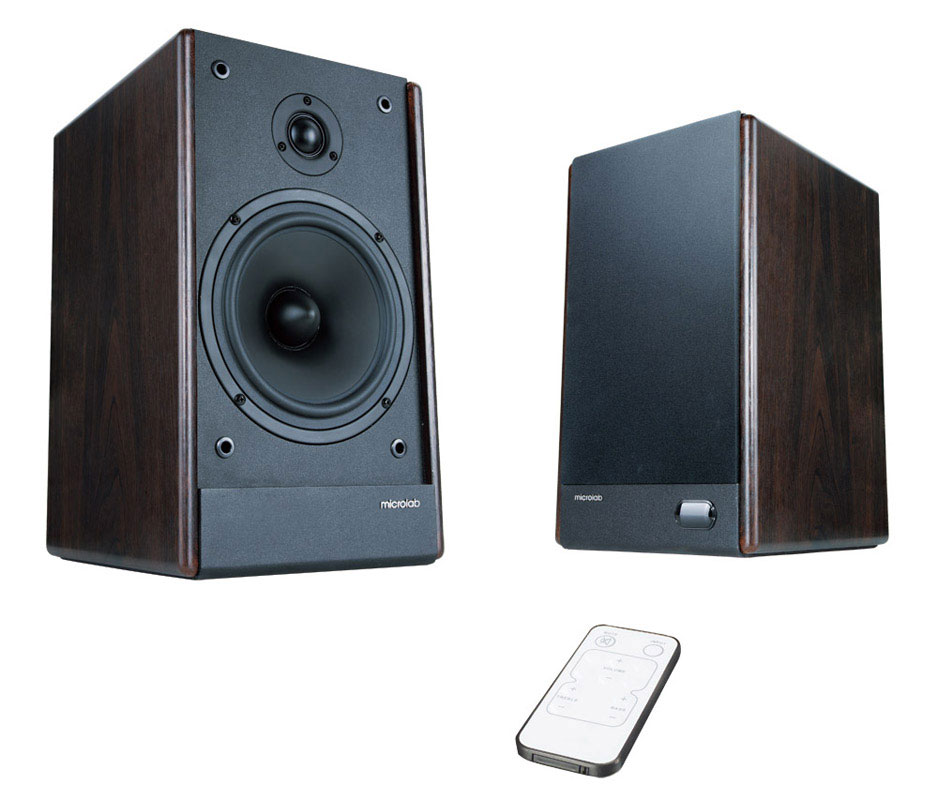
The Solo series is at least an ageless classic. And as a maximum — a measure of the quality of multimedia speakers. If you google old reviews of this series, you will see nothing but rave reviews and headlines like "crystal sound", "10 out of 10" and "I want to marry them".
All this is due to the fact that they were developed by a talented Danish specialist Peter Larsen, known for his work in Vifa, Scan-Speak and Dynaudio. He probably brought with him a little hi-fi philosophy — to release new models rarely, but accurately, and not to shoot back once a year, like Apple did with the iPhone. Otherwise, how else to explain their popularity after so much time?
The Solo 6C model is the golden mean in this line — more powerful than the 5C, but not as bulky as the three-speaker 7C. Outwardly, these are quite large and not the prettiest two-way speakers. They are not friendly with USB, Bluetooth, and generally do not know how to do anything except play music and voice games. But when they turn on, they work out every penny by 110%.
Their feature is a natural transmission of timbres with extremely scrupulous attention to detail. And, most importantly, versatility. Have you ever seen wording in reviews like “the speakers play aggressively and will suit rock lovers”? So, Solo will suit everyone, regardless of musical tastes, ear sensitivity and party affiliation. Another big plus is the deep and rounded bass at any volume, which eliminates the spontaneous desire to buy a subwoofer for the speakers.

| Amazon.com | $159.99 | To Store |
Finding multimedia speakers that look different and sound good is almost as hard as playing football against the Brazilians when you're Korean. And, lo and behold, Edifier Luna E25 can do it all. The iF Product Design Award-winning speakers are Bluetooth-enabled, play big, and look like a motorcycle helmet that Ferrari will release 100 years from now.
Let's start with appearance. Small oval speakers draw attention with aggressive coloring and high-gloss finishes. On the front side of the speakers are 2 speakers, controls and a remote control signal receiver. The bottom of both speakers is seriously rubberized so that they do not slide on the table at high volume. Thanks to Bluetooth support and compact dimensions, Luna E25 can be easily carried from place to place. In this case, it is important not to forget that glossy plastic is easily scratched, and the speakers are not covered with a protective mesh for the sake of external aesthetics.
In addition to the front speakers, a couple of 3-inch passive radiators are hidden in the back of the case, which are tuned to the low-frequency range and actually replace the usual phase inverters. They play the role of an elixir of power that allows these little ones to work comfortably with basses. They still lack bass depth, but, as the hero of Sam Jackson from the movie "Kingsman" said, this is another movie. But with medium and high frequencies, things are much better. Especially potential buyers will be pleased with the level of detail in the sound, even in the case of complex and rich in nuances of music like fusion jazz or progressive rock. Moreover, this detail does not disappear even at high volume.
In general, Edifier Luna E25 is that rare case when the manufacturer does not put a question in front of the buyer in the spirit of “appearance or quality” and does not require a wallet with all the available cash for this.

S1000DB literally walk on the edge and blur the boundaries of class. According to the passport, these are pure multimedia speakers with a minimum of bells and whistles. In spirit, this is a hi-fi acoustic that dreams of standing on the same shelf as Yamaha, Tannoy and JBL. They are all made with the idea of high-quality sound.
Each speaker weighs about 8 kilograms and boasts an impressive (14 cm) speaker with an aluminium cone. More to come: instead of a single active amp like conventional multimedia speakers, the S1000DB uses 4 amps for each specific band like professional studio monitors.
The next example of an emphasis on sound is working with Bluetooth. Most speakers that connect to a smartphone wirelessly have to put up with audio stream compression up to 160 kbps and frequencies cut off above 14 kHz. The S1000DB also supports the aptX codec, which allows you to wirelessly transfer music in 24-bit Hi-Res audio format.
But if thoroughbred hi-fi implies a ton of complexities like an expensive sound source, lossless music and textbook gold-plated wires, then the S1000DB is as picky as a brick in the sun. Want to hear all the details of your favorite jazz album in Lossless? Easily. Do you need "tanks" in WOW to rumble like in a war? And this is possible. Why, thanks to a power reserve of 120 kW and deep low frequencies, the S1000DB is quite capable of voicing a spontaneous house party.
Vacuum Bluetooth headphones that will charge you with musical energy during sports.
Self-balancing transport is not a luxury, but a means of transportation and entertainment.
Check out these five high-precision, fast-measuring electronic thermometers.
The fashion for mining has almost subsided, and it's time to update the list of the most balanced video cards in terms of price and power.
A good processor is needed for games, and for streaming, and it will come in handy in editing gameplay.